US revives narrative that new coronavirus was created in Chinese laboratory

Biden urges intelligence agencies to prepare a report on the origin of the virus, clearly violating scientific principles for political interests.

One of the most curious points about the COVID-19 pandemic is that, for the first time, the topic of biological weapons left the sphere of “conspiracy theories” and was brought to public debate, with representatives of governments and state institutions claiming to believe in the possibility that the new coronavirus has been the result of biological experiments for military purposes. This happened last year, during the first wave of the pandemic and at a time of sensitive international tensions and uncertainty about the near future. After that, for many months, the topic was not discussed, and the international society reached almost a consensus about the natural origin of the virus. However, recently, the topic has resurfaced in Western media, with authors pointing to a possible [Chinese] artificial origin of the virus, which motivated the American government to take investigative measures on the case, generating another diplomatic crisis with China.

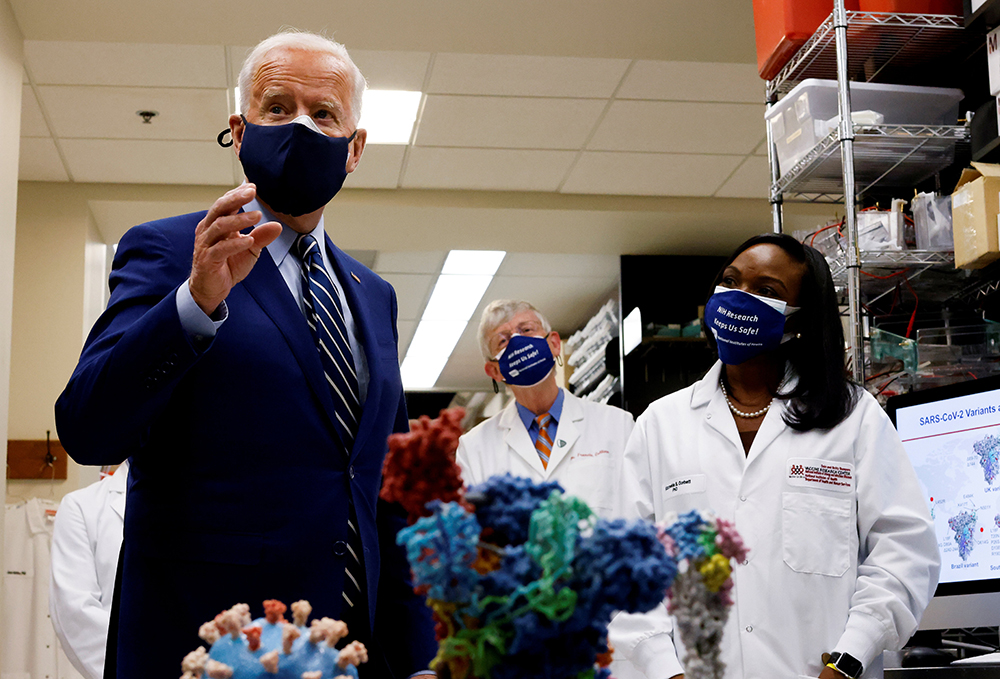
A few weeks ago, discussion about a possible artificial origin of the new coronavirus began to increase in the western world. Suddenly, experts have begun to claim that “evidence” is appearing that the virus that causes COVID-19 has emerged in Chinese laboratories. Several media outlets began publishing articles emphasizing the possibility of an artificial origin of the virus. Some of these analysis were made by leading experts on the subject, such as the former head of the Food and Drug Administration (FDA), Scott Gottlieb, who stated that “there is growing circumstantial evidence” that COVID-19 may have originated in a lab and not in nature. In the same vein, Anthony Fauci, chief medical adviser to President Biden, stated that he is not convinced that the virus is of natural origin and that “it could have been something else”.

Also, the Daily Mail published a piece sharing a study by British Professor Angus Dalgleish and Norwegian scientist Dr. Birger Sørensen, in which they supposedly expose evidences that the virus was artificially created by Chinese scientists, “who then tried to cover their tracks with ‘retro-engineering’ to make it seem like it naturally arose from bats”.

These factors motivated the US government to demand a more detailed report on the origin of the virus, requiring deeper investigations into the case. The problem, however, is that the Biden team did not demand such a report from doctors or biologists, but from intelligence agents. It is curious that an investigation of a strictly scientific nature is carried out by intelligence agencies. And this makes us question what methods will be used to obtain and analyze data. The report is currently in production and must be submitted to Biden within 90 days. In the same manner, on May 30, The Sunday Times newspaper published an article stating that “British intelligence agencies now believe it is “feasible” that the global pandemic began with a coronavirus leak from a Chinese research laboratory”.

Commenting on the American decision to investigate the virus through its intelligence agents, Beijing said that it is a “politicization” of the origin of the virus. Chinese Foreign Ministry spokesperson Zhao Lijiansaid: “This fully shows that the US side does not care about facts and truth, nor is it interested in serious scientific origin tracing, but wants to use the epidemic to engage in stigmatization and political manipulation, and to shirk responsibility.”

Also, Wang Wenbin, another spokesman for the Chinese Chancellery, stated: “I would like to stress again that the study of the origins of COVID-19 is a matter of science, not a political tool. It should be conducted by scientists all over the world in collaboration, not by the intelligence community or a few finger-pointing politicians”.

In fact, the American decision to find the origin of the virus through intelligence services is extremely dangerous because, not containing the empirical methods of science, intelligence agents can conclude anything from their investigations and certainly the research result will be influenced by political notions and pre-existing rivalries with China. Intelligence serves the country’s interests, not science – and the narrative that China created the virus serves American interests.

It is interesting, however, how the discourse of the Western media changes depending on which countries endorse the same narrative. At the beginning of the pandemic, Chinese, Russian and Iranian experts discussed the possibility that the virus had been created in a laboratory, which the West considered pseudoscience and conspiracy theory. The absence of evidence in the investigations stopped this narrative in these countries, but, months later, Washington resumes the same narrative, but accusing China – which is considered to be perfectly scientific and empirically valid by Western media.

The evidence points to a clear conclusion: Washington wants to endorse the narrative that the virus was artificially created by China – and then it will claim that Beijing produces biological weapons. This will further aggravate the strained relations between Chinese and Americans, but it will serve the plans of Biden, who tends to a more aggressive US policy towards China.

There is still hope, however, that WHO will not join the American discourse, supporting science, not political interests.

—Lucas Leiroz, research fellow in international law at the Federal University of Rio de Janeiro.
Hydrogen fuel cells deployed at 1 Military Hospital in response to COVID-19

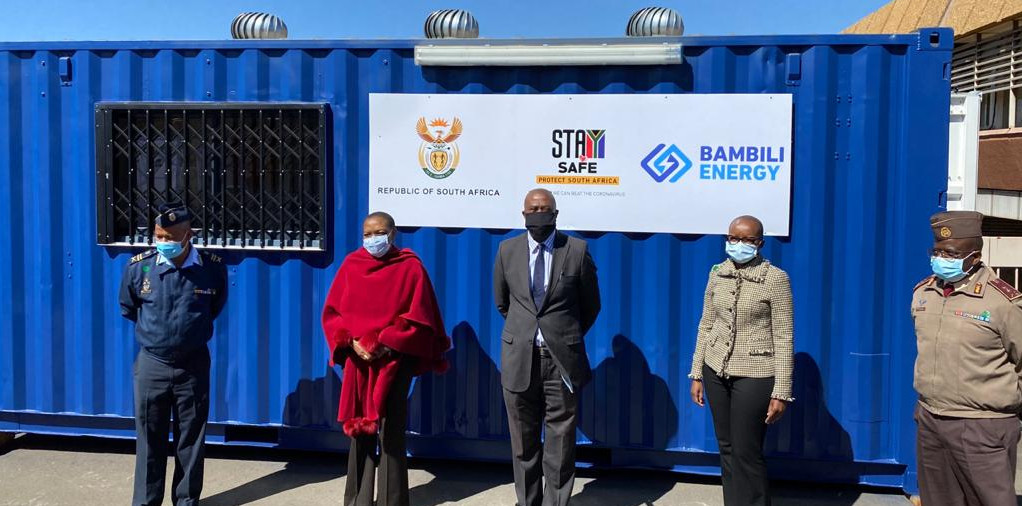
JOHANNESBURG, South Africa, August 21, 2020/ — The Department of Science and Innovation (DSI) on Wednesday, 19 August 2020 unveiled seven hydrogen fuel cell systems which are being used as the primary power source for the field hospital established at 1 Military Hospital in Pretoria as part of the government’s response to COVID-19.

The project is a public-private partnership between the DSI, the Department of Public Works and Infrastructure (DPWI), the Department of Defence (DoD), local companies Bambili Energy and HyPlat, and international companies PowerCell Sweden, Horizon Fuel Cell Technologies (Singapore) and Element 1 Corporation (United States). Further contributions, in the form of methanol and hydrogen fuel for the fuel cell units, were also received from Air Products South Africa, Protea Chemicals and Sasol.

Bambili Energy focuses on the hydrogen economy, providing solutions to complement various forms of alternative energy, and is committed to commercialising intellectual property developed through the Hydrogen South Africa (HySA) programme.

The COVID-19 pandemic has highlighted the need to respond with speed and flexibility, particularly in providing high care facilities for those who need them most. Containerised hydrogen fuel cells can be deployed at short notice to provide a clean source of energy, even when the need is only temporary.

The support provided to 1 Military Hospital will be complemented by hands-on training to ensure that the skills required to operate and manage the fuel cell systems are institutionalised within government. The first two phases of training will focus on officials from the DoD and DPWI, while the third phase will involve unemployed TVET college graduates with N4 electrical and light and heavy current qualifications.

Hydrogen fuel cell technology is globally recognised for its potential to decarbonise the energy and transport sectors. Hydrogen fuel cells produce electricity by means of a chemical reaction, using hydrogen as the basic fuel together with platinum-based catalysts. They are efficient, reliable, safe and quiet, ensuring a non-intrusive standby and primary power solution. Being modular in nature, they can be deployed rapidly and scaled up easily as the need arises, and their maintenance cost is relatively low.

Solutions for a Canadian recovery in this crisis

While the world has seen quite a few economic crises, both global and local, the current situation is different to all of them, triggered as it has been by a pandemic. COVID-19 has meant that a number of small businesses all over the world have been hit the worst, and these were the ones who were struggling before the pandemic hit as well. With wafer-thin margins and small client bases, the fact that people cannot safely step out of their homes has led to a huge drop in revenues across the board, causing millions of people to lose their jobs and small businesses to shut down. A recovery will require the use of tools and tricks which are new, since the old ways of coping with a financial crisis may not be effective in this instance.

It has already been seen that small businesses have seen twice as many job losses as larger businesses during the crisis, and so any recovery plan needs to focus on them first. In Canada, 98% of employers are small businesses, which shows just how necessary it is to help these enterprises out, especially as a recent survey by the Canadian Federation of Independent Business recently found that one in seven small businesses could go bankrupt due to the impact of the crisis. This will have a snowball effect, as jobs will be lost, not to mention the loss in tax revenue and the drop in GDP that will follow. It is therefore essential that small businesses form the focus of any recovery plan in Canada.

The Canadian economy is expected to contract by 6% in 2020, but the expectation is that there will be an almost immediate rebound, with 6% growth projected for 2021. The likelihood of this rebound will depend on the success of any recovery plan. Research has shown that there are a few key areas which can help the economy to rebound faster than expected.

For starters, businesses in Toronto and its surroundings should not be hit too badly, as the region continues to show growth despite a slow reopening. Elsewhere, it will be important for the government to focus on the digital economy and technological solutions, as these have been resilient in the face of the pandemic. Online businesses and service providers have seen an increase in demand, as people who cannot step outside their homes turn to the internet for their needs. We have even seen traditional physical businesses turn to the internet to continue to provide their services to customers. For example, casinos have been shut in the country since March, but many operators have created new Canadian casino online websites to try and continue operations and provide a similar experience to customers as far as possible. Land-based casinos in Canada will therefore be well-advised to focus on their online presence as well, as the popularity of this medium will not go away anytime soon. This is a part of the wider technological trend in the Canadian economy. The IT and communications sectors contributed 4.8% to Canadian GDP in 2019, and increased to over 5% in 2020. These tech solutions have been utilised across sectors, from agriculture to financial services, showing just how widespread their impact on the economy can be if given the right support.

Manufacturing will be another significant sector to focus recovery efforts on. Many businesses have responded quickly to the changing environment by moving to new products, and altering their supply chains to be able to meet the demand for those new products. Healthcare products such as personal protective equipment is the best example of this, as many businesses have pivoted to manufacture PPE where possible. This shows the need to be agile and efficient, and the government will need to ensure that the right environment is provided to companies to allow them to thrive in this new scenario.

South Africa to receive R5 billion in Covid-19 funding from African Development Bank

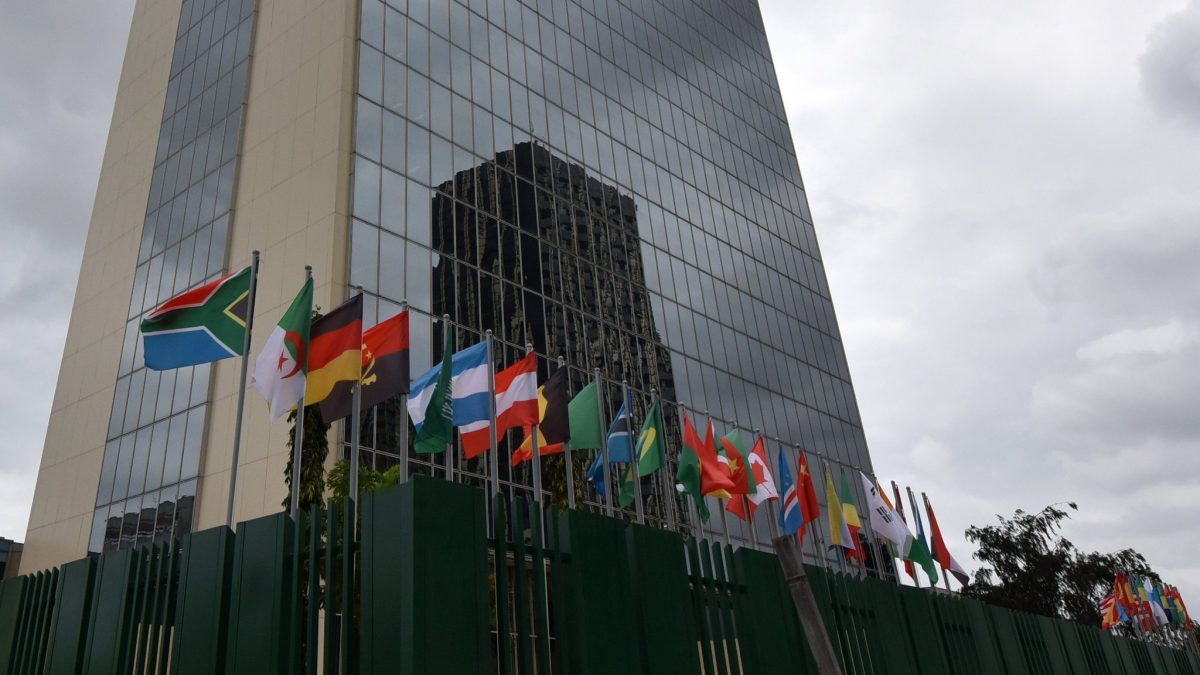
ABIDJAN, Ivory Coast. The Board of Directors of the African Development Bank (www.AfDB.org) has approved a loan of approximately R5 billion ($288 million) to the government of South Africa, as the country battles one of the largest COVID-19 caseloads in the world.

South Africa confirmed its first case of COVID-19 on 5 March 2020 and is currently the most affected in Africa, and among the top five in the world in terms of confirmed cases (381,798 as at 22 July, with 5,368 deaths).

The loan falls under the Bank’s $10 billion COVID-19 Response Facility and will finance South Africa’s COVID-19 Response Support Program, and represents the Bank’s first ever budget support to the country. The operation is designed as a Crisis Response Budget Support Operation prepared following a request from the government of South Africa.

The purpose of the program is to: (i) protect lives and promote access to essential equipment to prevent infection, such as protective personal equipment, sanitizers and gloves (ii) protect livelihoods by preserving jobs, incomes, food security and access to essential public services (iii) protect firms by supporting enterprises in the formal and informal economy to withstand the impacts of COVID-19 and prepare for economic recovery.

South Africa’s ability to respond to the pandemic has implications for neighbouring countries as well as the continent as a whole, given its position as Africa’s second-largest economy after Nigeria.

Even before the pandemic, South Africa was experiencing an economic slump. In 2019, the country registered GDP growth of 0.2% – the lowest in a decade – and according to Bank estimates it could drop to the worst in 90 years in 2020. Projections show a GDP contraction of 6.3% and 7.5% under baseline and worst-case scenarios, respectively.

These growth forecasts have placed budgetary constraints on the government’s ability to deal with the health crisis.

In order to ensure a complementary intervention, the African Development Bank operation was designed in collaboration with other partners, including the International Monetary Fund, World Bank and the New Development Bank.

South Africa is ranked as the most prepared African country to deal with a pandemic, according to a Global Health Security (GHS) Index. Yet significant challenges remain in the public health sector, including underfunding and human resource shortages. While the private health sector is better equipped, it remains unaffordable to the majority of South Africans.

The COVID-19 outbreak is also likely to adversely affect the gains made in controlling other infectious diseases such as TB and HIV/AIDS. South Africa’s scaling up of mass testing has also put pressure on capacity at public sector laboratories, and concerns have been raised about the rising numbers of infections among health workers.

South African prisoners riot for a ‘mass release’, citing Covid-19

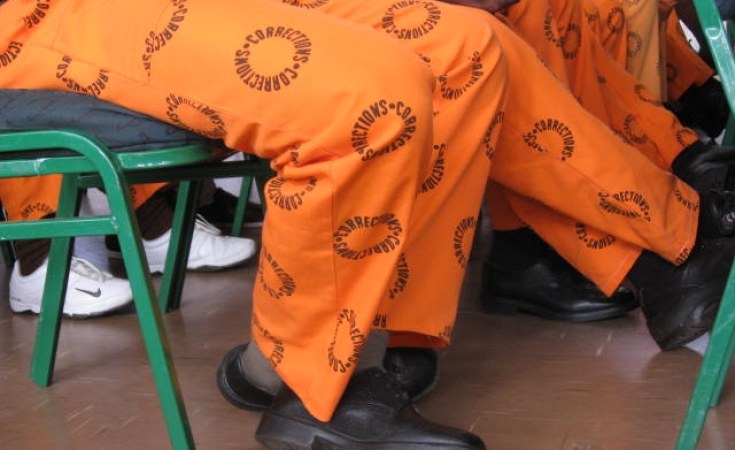
Whereas President Cyril Ramaphosa already released 19 000 inmates out of a total prison population of 155 000 in May this year, prisoners in Gauteng province are rioting for another mass release. They claim that they are at risk of the Covid-19 virus that has already cause a number of deaths among both warders and prisoners.

One of the prisons where riots have been noted, is the vicious “Sun City” prison in Soweto, ironically nick-named after the famous casino and hotel complex in the former homeland of Bophutatswana.

The country’s Department of Correctional Services (DCS) has declines to react to their demands, saying that the riots are being “orchestrated… by unruly elements intent on forcing the government into a mass release of prisoners”

Prisoners are alleging that not all of the 19 000 “low-risk inmates” have been freed, following upon Ramaphosa’s parole announcement. According to them, overcrowding is still at 30% in all prisons. Despite a rise in South African crime rates and convictions since the ANC regime took over, the regime has not built any new prisons.

A DCS spokesperson, Singabakho Nxumalo, said out that infections in prisons have been rising in line with national trends; that 1012 active cases existed for inmates and officials, with only 88 active cases out of a community 146 732 offenders countrywide.

Sources within the prisons, however, said over the past week alone, clinics, kitchens, security and records offices at Sun City – Johannesburg Correctional Centre – and at Kgosi Mampuru II in Pretoria, had to close down as numbers of Covid-19 infections increased inside the facilities.

An anoymous inmate told the Sunday Independent newspaper “there were delays in the preparation of food after some prisoners were quarantined because of the virus” at the hat a Kgosi Mampuru II prison in Pretoria (formerly Pretoria Central Prison).

An internal memo posted on the prison walls at the facility announced that it had 28 active cases and one death. But an official said the notice was two weeks out of date because more people had tested positive and a colleague was buried just last week.

“There are inmates who worked in the kitchen, who are currently under quarantine. These are inmates who prepared meals for us, so we’ve seen a delay in our meal preparations.

“This is supposed to be a rehabilitation centre, but there is no rehabilitation, whatsoever.

“We were told that 19000 low-risk inmates would be released to curb the spread of the virus, but not even 40 were released from this side, Kgosi Mampuru,” he said.

However, Nxumalo is adamant that there isn’t a crisis in correctional facilities saying: “Our officials do report for duty. Those who were in direct contact with positive cases have been placed in quarantine, so as isolating those who have tested positive.

“No sections in any of our facilities have been closed down due to Covid-19. We decontaminate sites where there are positive cases and open them for operations.

“This is going to be the norm moving forward across all institutions in the country”.

He said a picture is being painted of a chaotic environment with the hope that the public will be mobilised and pushed for the mass release of prisoners.

“Fortunately, numbers do tell the truth. Unfortunately, some individuals purporting to be representing the interest of offenders have engaged in an offensive campaign, misinforming the public.

“Only 195 inmates in the whole country have the virus in their system and thus require daily monitoring and treatment.

“It must be emphasised that such will never happen (the mass release). We live in a democratic state where the rule of law is supreme.”