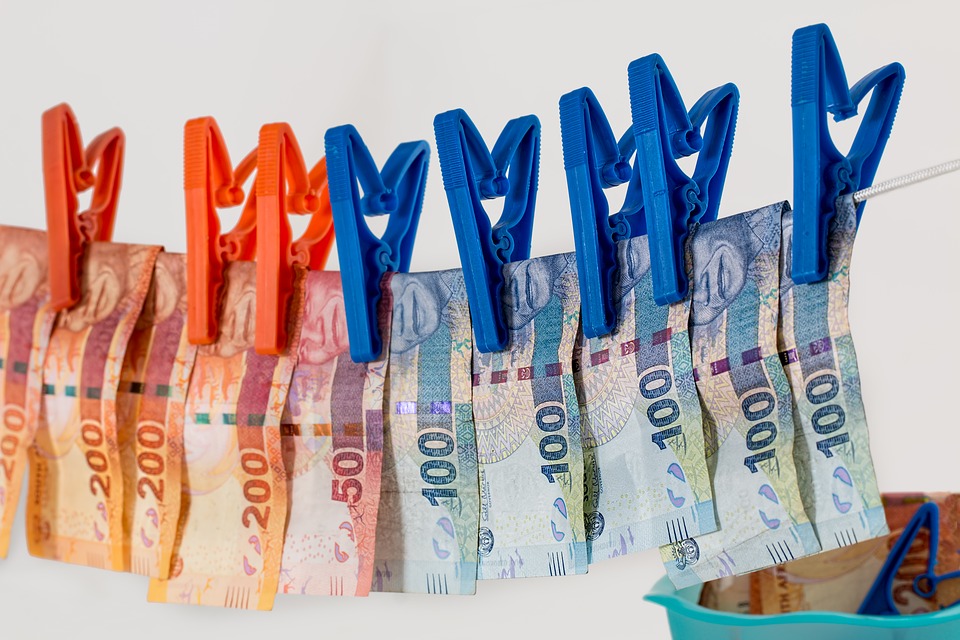
Karel Combrinck: Too good to be true

Recently it was announced that very large sums of money emanating fom various sources have been ear-marked for aid to the South African government to help it address problems arising from the Covid-19 epidemic. An amount of 4,3 billion Dollars (US$ 4 300 000 000) was among others allocated by the International Monetary Fund. Even more amazingly, a loan was made to the South African government by (believe it it not ) by the African Development Bank. As is generally known in South Africa, a considerable portion of these funds have already been stolen or misappropriated (in South Africa “misappropriated” is a euphemism for stolen). How much, if any,  of these funds will ever go towards relieving the plight of ordinary South Africans remains to be seen. What we do know is that nothing will go to South African whites as has been decided by the racist ANC government.

Questions that arise are first of all, where do the immense sums of money come from which the IMF so lavishly throws around and whence the generosity towards the incompetent and corrupt South African government? The question is made more poignant by the fact that all three the most important credit-rating agencies have awarded South Africa the well-deserved distinction of junk status.

The IMF was established in 1944 at the UN Monetary and Financial Conference in Bretton Woods, USA. The original purpose was to place the world economy back on track after the devastation of the World War. Twenty-nine countries signed the treaty at the time and 189 countries subsequently joined. The activities of the IMF are therefore funded largely by contributions made by member states on a quota basis, that is to say each member contributes according to the size of its economy. The moneys in the final instance come from the pockets of ordinary tax payers as usual.

A further question concerns the generosity of the IMF towards South Africa. Voices have been heard expressing surprise, indeed dismay,  at the billions “lent” to a bankrupt state from which there is little chance that the moneys will ever be recovered. Over the explanation for this apparent idiocy we can only speculate. A purely economic initiative it is clearly not. One possible explanation is that the ” international community ” represented in the IMF which were largely responsible for the creation of a junk democracy in South Africa cannot stand by idly while their creature is failing. Under normal circumstances too many questions would have been asked, but now, of course, they have the Covid-19 smokescreen to hide behind.

In the unlikely event of the loan ever being repaid after having been plundered,  then it will be at the expense, once again, of the South African taxpayer. Paying taxes is the one right to which white South Africans are fully entitled. But, we suppose, this is what the international community regard as ” fair “.

There is also the possibility that in the case of non-repayment of their loan that the IMF could force the South African Government to sell national assets as happened in Greece where the Greek government had to sell their main sea port of Piraeus, a number of islands, historical monuments and art works as well as fourteen airports in order to repay their loan debts. It is dangerous to place oneself at the mercy of the great financial forces of this world. Such concerns are however immaterial in the eyes of the ANC fat cats interested only in the short-term gravy train. And at the moment, for them, the going is too good to be true.
South Africa to receive R5 billion in Covid-19 funding from African Development Bank

ABIDJAN, Ivory Coast. The Board of Directors of the African Development Bank (www.AfDB.org) has approved a loan of approximately R5 billion ($288 million) to the government of South Africa, as the country battles one of the largest COVID-19 caseloads in the world.

South Africa confirmed its first case of COVID-19 on 5 March 2020 and is currently the most affected in Africa, and among the top five in the world in terms of confirmed cases (381,798 as at 22 July, with 5,368 deaths).

The loan falls under the Bank’s $10 billion COVID-19 Response Facility and will finance South Africa’s COVID-19 Response Support Program, and represents the Bank’s first ever budget support to the country. The operation is designed as a Crisis Response Budget Support Operation prepared following a request from the government of South Africa.

The purpose of the program is to: (i) protect lives and promote access to essential equipment to prevent infection, such as protective personal equipment, sanitizers and gloves (ii) protect livelihoods by preserving jobs, incomes, food security and access to essential public services (iii) protect firms by supporting enterprises in the formal and informal economy to withstand the impacts of COVID-19 and prepare for economic recovery.

South Africa’s ability to respond to the pandemic has implications for neighbouring countries as well as the continent as a whole, given its position as Africa’s second-largest economy after Nigeria.

Even before the pandemic, South Africa was experiencing an economic slump. In 2019, the country registered GDP growth of 0.2% – the lowest in a decade – and according to Bank estimates it could drop to the worst in 90 years in 2020. Projections show a GDP contraction of 6.3% and 7.5% under baseline and worst-case scenarios, respectively.

These growth forecasts have placed budgetary constraints on the government’s ability to deal with the health crisis.

In order to ensure a complementary intervention, the African Development Bank operation was designed in collaboration with other partners, including the International Monetary Fund, World Bank and the New Development Bank.

South Africa is ranked as the most prepared African country to deal with a pandemic, according to a Global Health Security (GHS) Index. Yet significant challenges remain in the public health sector, including underfunding and human resource shortages. While the private health sector is better equipped, it remains unaffordable to the majority of South Africans.

The COVID-19 outbreak is also likely to adversely affect the gains made in controlling other infectious diseases such as TB and HIV/AIDS. South Africa’s scaling up of mass testing has also put pressure on capacity at public sector laboratories, and concerns have been raised about the rising numbers of infections among health workers.

World Bank warms to Zim

THE World Bank and donors will next year contribute more than $100 million to the Zimbabwe Reconstruction Fund as the Bretton Woods institute warms up to re-engagement with Zimbabwe following years of acrimony.

Six donors, the European Union, United Kingdom, Germany, Norway, Denmark and Sweden and the World Bank State and Peace Building Fund are contributing $44 million to the Zimref currently but the fund is expected to be topped up next year.

Addressing the media yesterday, WB country director for Zimbabwe, Malawi and Zambia Ms Kundhavi Kadiresan said Zimref will expand the bank’s support to include investment projects and to channel some financing directly through Government systems.

Zimref will allow Government flexibility to tackle some of the urgent reform measures in the areas of parastatals reform which will include a comprehensive due diligent audit to cover issues of management systems and capacity and will include turnaround strategies.

“Under Zimref there is going to be $15 million to be made readily available next year. It is giving me the discretion to use the money to carry out these audits. We will start naturally with the strategic ones,” said Minister Chinamasa.

“The audit is not just with respect to parastatals but also with respect to local authorities because between them the State enterprises and the local authorities are a pain and an albatross around the neck of the fiscus,” he said.

Early this month the WB executive board approved the Kariba Dam rehabilitation project financed to the tune of $75 million from the International Development Association and co-financing from the Government of Sweden of $25 million.

In addition, African Development Bank will provide $75 million and the European Union $100 million, for a total project financing of $300 million.

The Zimbabwe Government is also contributing counterpart financing through the Zambezi River Authority.

The project was approved on an exceptional basis that allows World Bank financing to be on-lent by the Zambian government to the Zambezi River Authority and to ultimately benefit Zimbabwe.

The bank is also providing a $6 million grant from Co-operation in International Waters Africa to support preparation of the Batoka Gorge Hydro-Electric Scheme.

Finance and Economic Development Minister Patrick Chinamasa said the Government will, in the next couple of months, start “a conversation” with the WB on Zimbabwe’s arrears to the financial institution.

Source: The Herald