Karel Combrinck: Too good to be true

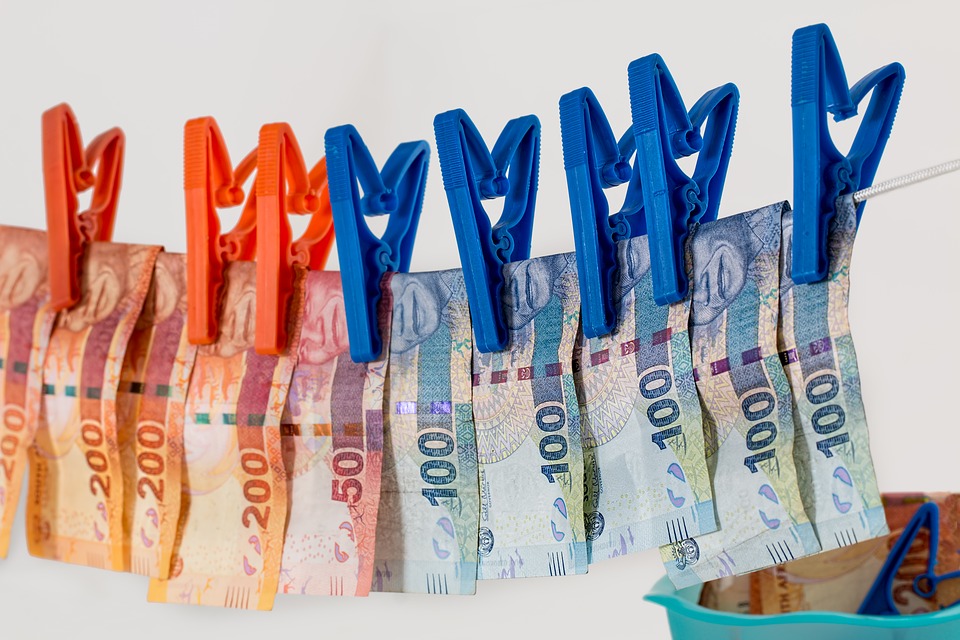
Recently it was announced that very large sums of money emanating fom various sources have been ear-marked for aid to the South African government to help it address problems arising from the Covid-19 epidemic. An amount of 4,3 billion Dollars (US$ 4 300 000 000) was among others allocated by the International Monetary Fund. Even more amazingly, a loan was made to the South African government by (believe it it not ) by the African Development Bank. As is generally known in South Africa, a considerable portion of these funds have already been stolen or misappropriated (in South Africa “misappropriated” is a euphemism for stolen). How much, if any,  of these funds will ever go towards relieving the plight of ordinary South Africans remains to be seen. What we do know is that nothing will go to South African whites as has been decided by the racist ANC government.

Questions that arise are first of all, where do the immense sums of money come from which the IMF so lavishly throws around and whence the generosity towards the incompetent and corrupt South African government? The question is made more poignant by the fact that all three the most important credit-rating agencies have awarded South Africa the well-deserved distinction of junk status.

The IMF was established in 1944 at the UN Monetary and Financial Conference in Bretton Woods, USA. The original purpose was to place the world economy back on track after the devastation of the World War. Twenty-nine countries signed the treaty at the time and 189 countries subsequently joined. The activities of the IMF are therefore funded largely by contributions made by member states on a quota basis, that is to say each member contributes according to the size of its economy. The moneys in the final instance come from the pockets of ordinary tax payers as usual.

A further question concerns the generosity of the IMF towards South Africa. Voices have been heard expressing surprise, indeed dismay,  at the billions “lent” to a bankrupt state from which there is little chance that the moneys will ever be recovered. Over the explanation for this apparent idiocy we can only speculate. A purely economic initiative it is clearly not. One possible explanation is that the ” international community ” represented in the IMF which were largely responsible for the creation of a junk democracy in South Africa cannot stand by idly while their creature is failing. Under normal circumstances too many questions would have been asked, but now, of course, they have the Covid-19 smokescreen to hide behind.

In the unlikely event of the loan ever being repaid after having been plundered,  then it will be at the expense, once again, of the South African taxpayer. Paying taxes is the one right to which white South Africans are fully entitled. But, we suppose, this is what the international community regard as ” fair “.

There is also the possibility that in the case of non-repayment of their loan that the IMF could force the South African Government to sell national assets as happened in Greece where the Greek government had to sell their main sea port of Piraeus, a number of islands, historical monuments and art works as well as fourteen airports in order to repay their loan debts. It is dangerous to place oneself at the mercy of the great financial forces of this world. Such concerns are however immaterial in the eyes of the ANC fat cats interested only in the short-term gravy train. And at the moment, for them, the going is too good to be true.

Why the world needs a new reserve currency

It is symbolic that the recent BRICS summit in Fortaleza, Brazil, took place exactly seven decades after the Bretton Woods Conference that created the International Monetary Fund and the World Bank. The upshot of the BRICS meeting was the announcement of the New Development Bank, which will mobilize resources for infrastructure and sustainable development projects, and a Contingent Reserve Arrangement to provide liquidity through currency swaps.

The Bretton Woods Conference marked one of history’s greatest examples of international economic cooperation. And while no one can say yet whether the BRICS’ initiatives will succeed, they represent a major challenge to the Bretton Woods institutions, which should respond. Rethinking the role of the US dollar in the international monetary system is a case in point.

One key feature of the Bretton Woods system was that countries would tie their exchange rates to the US dollar. While the system was effectively eliminated in 1971, the US dollar’s central role in the international monetary system has remained intact – a reality that many countries are increasingly unwilling to accept.

Dissatisfaction with the dollar’s role as the dominant global reserve currency is not new. In the 1960s, French Finance Minister Valéry Giscard d’Estaing famously condemned the “exorbitant privilege” that the dollar’s status bestowed upon the United States.

The issue is not merely one of fairness. According to the Belgian economist Robert Triffin, an international monetary system based on a national currency is inherently unstable, owing to the resulting tensions among the inevitably divergent interests of the issuing country and the international system as a whole.

Triffin issued his warning more than 50 years ago, but it has recently gained traction, as China’s rise has made the world increasingly disinclined to tolerate the instability caused by a dollar-denominated system. The solution, however, lies not in replacing the dollar with the renminbi, but in strengthening the role of the world’s only truly global currency: the IMF’s Special Drawing Rights.

Following the creation of SDRs in 1969, IMF members committed to make them “the principle reserve asset in the international monetary system,” as stated in the Articles of Agreement. But the peculiar way in which SDRs were adopted limited their usefulness.

For starters, the separation of the IMF’s SDR account from its general account made it impossible to use SDRs to finance IMF lending. Furthermore, though countries accrue interest on their holdings of SDRs, they have to pay interest on the allocations they receive. In other words, SDRs are both an asset and a liability, functioning like a guaranteed credit line for the holder – a sort of unconditional overdraft facility.

Nonetheless, SDRs have proved to be useful. After initial allocations in 1970-1972, more were issued to increase global liquidity during major international crises: in 1979-1981, in 1997, and, in particular, in 2009, when the largest issue – the equivalent of $250 billion – was made.

While developed countries, including the US and the United Kingdom, have drawn on their allocations, the major users have been developing and, in particular, low-income countries. In fact, this is the only way in which developing countries (China aside) share in the creation of international money.

Several estimates indicate that, given the additional demand for reserves, the world could absorb annual allocations of $200-300 billion or even more. This has prompted many – including People’s Bank of China Governor Zhou Xiaochuan; the United Nations-backed Stiglitz Commission; the Palais-Royal Initiative, led by former IMF Managing Director Michel Camdessus; and the Triffin International Foundation – to call for changes to the international monetary system.

In 1979, the IMF economist Jacques Polak, who had been part of the Dutch delegation at the Bretton Woods conference, outlined a plan for doing just that. His recommendations include, first and foremost, making all of the IMF’s operations in SDRs, which would require ending the separation of the IMF’s SDR and general accounts.

The simplest way to fulfill this vision would be to allocate SDRs as a full reserve asset, which countries could either use or deposit in their IMF accounts. The IMF would use those deposits to finance its lending operations, rather than having to rely on quota allocations or “arrangements to borrow” from members.

Other provisions could be added. To address developing countries’ high currency demands, while enhancing their role in the creation of international money, a formula could be created to give them a larger share in SDR allocations than they now receive.

The private use of SDRs could also be encouraged, though that would likely be met with strong opposition from countries currently issuing international reserve currencies, especially the US. Keeping SDRs as pure “central bank money” would eliminate such opposition, enabling them to complement and stabilize the current system, rather than upend it.

Just as the Bretton Woods framework restored order to the global economy after WWII, a new monetary framework, underpinned by a truly international currency, could strengthen much-needed economic and financial stability. Everyone – even the US – would benefit from that.

By José Antonio Ocampo, former United Nations Under-Secretary-General for Economic and Social Affairs and former Finance Minister of Colombia, is Professor and Member of the Committee on Global Thought at Columbia University.

New BRICS bank to challenge IMF

A new development bank launched by emerging economies will help all nations in distress to return to health, South African President Jacob Zuma said Monday.

The so-called Brics – Brazil, China, India, Russia and South Africa – announced last month that they were setting up a development bank and emergency reserve fund. This was seen as a major challenge to the Washington-based International Monetary Fund and World Bank, which some emerging powers see as biased towards Western policy positions.

Zuma, visiting Washington for a US-Africa summit, argued that the IMF has few success stories to show despite the often austere regimens it imposes on troubled economies in return for emergency loans.

For now, only the Brics nations will be able to draw from the $50-billion in the New Development Bank and $100-billion in the Contingent Reserve Arrangement. The IMF, set up with the World Bank during the Bretton Woods conference in 1944, has faced criticism for imposing onerous conditions and for not giving wider representation to developing nations on its controlling committees.

The Brics bank plan came after an agreement to give China and other emerging powers more voting power in the IMF got bogged down in the US Senate due to opposition by conservative Republicans.

Source: Sapa

John Maynard Keynes: Where’s The Genius?! (Part 2)

mercer_ilanaby Ilana Mercer

[followbutton username=’IlanaMercer’ count=’true’ lang=’en’ theme=’light’]

Like Ilana Mercer’s Facebook page

The following is the conclusion of my conversation with Benn Steil. (Read part 1.) Dr. Steil is senior fellow and director of international economics at the Council on Foreign Relations. His latest book is “The Battle of Bretton Woods: John Maynard Keynes, Harry Dexter White, and the Making of a New World Order.”

ILANA MERCER: After reading a negative review of your book in The Times Literary Supplement,I decided to go cold turkey on what had been a guilty pleasure for over a decade. I did not renew my TLS subscription. The TLS had stupidly assigned the review to one Eric Rauchway, a left-coast history teacher. Rauchway would not let an argument favorable to the gold standard—yours—stand. Your case against the Bretton Woods system of “managed currencies” he turned on its head. Rauchway credited Harry Dexter White, one of Bretton Woods’ architects, with helping to lift the “cross of gold” from the shoulders of the world’s working classes. Since White was also a Soviet spy, Rauchway quickly concluded that the Soviets saved capitalism (an “unknown ideal” for a very long time). Sound money is suspect, but a Soviet spy is capitalism’s savior. How do you unpack that!?

BENN STEIL: You can’t get blood from a stone, and you can’t get logic from Rauchway’s review, just gobs of nonsense and libel (as I documented onon my blog). The review’s title, “How the Soviets saved capitalism,” is so inane that the only explanation for it is that Rauchway, or his TLS editors, fell in love with the sheer childish cheekiness of it. It certainly bears no relation to Rauchway’s account of Bretton Woods, nor that of anyone who can actually claim to know anything about it. Rauchway would no doubt mock the economist who wrote the following of the 19th century classical gold standard: “[t]he various currencies, which were all maintained on a stable basis in relation to gold and to one another, facilitated the easy flow of capital and of trade to an extent the full value of which we only realize now, when we are deprived of its advantages.”Unless, that is, Rauchway knew who it was – none other than J. M. Keynes.

MERCER: We can both agree that John Maynard Keynes’ opposition to WWI and his “bitterness over the terms of the peace” were admirable. Priceless too was Keynes’ description of President Woodrow Wilson as “slowminded and bewildered”; a “blind and deaf Don Quixote.” (pages 70-71) On the other hand, also quite admirable was the following unflattering description of Keynes’ “General Theory of Employment, Interest and Money.” It comes courtesy of our author: “It is only slightly outlandish to liken the book to the Bible: powerful in its message, full of memorable, mellifluous passages; at times obscure, tedious, tendentious, and contradictory; a work of passion driven by intuition, with tenuous logic and observation offered as placeholders until disciples could be summoned to supply the proofs.” (page 88) Have Keynes’ disciples really delivered? It would appear that the Keynesian faithful have foisted on free-market capitalists an unfalsifiable theory. Evidence that contradicts it, Keynesian kooks enlist as evidence for the correctness of their theory.

STEIL: Yes, if the economy sinks, then Paul Krugman was right about the need for massive stimulus; if it recovers in the face of plunging deficits, from spending cuts and tax increases, then Krugman was right that deficits were not a problem. Heads he wins, tails you lose.

Into the Cannibal's Pot

MERCER: Keynes assessed Karl Marx’s “economic value” as “nil… apart from occasional flashes of insight.” (page 87) I would venture that in the United States, Marxism has been far less destructive to free-market capitalism than Keynesianism. Marxists honestly wish for capitalism’s demise and say as much. We can fight such an enemy. Conversely, Keynesians have redefined capitalism and banished our definition therefrom. The Keynesians then proceeded to cripple capitalism so as to ostensibly save it. Positively Orwellian.

STEIL: Keynes said that “if economists could manage to get themselves thought of as humble, competent people on a level with dentists, that would be splendid.” Yet Keynes’s “General Theory of Employment, Interest and Money” had the effect of elevating economists to the status of technocratic wizards, even saviors. At Bretton Woods, Keynes also quite literally created the persona of the celebrity economist. Today, we are used to economists like Paul Krugman and Nouriel Roubini jetting around the world with eager journalists waiting on their every pronouncement. They owe it all to Keynes.

MERCER: A busybody. A planner. A Keynesian before his time. That is the impression I got of Harry Dexter White from your penetrating study. Not even from the unpublished handwritten essay you unearthed did I get the impression that White, who spied for the USSR, was a communist ideologue. Something occurred to me as I listened to the founder of PayPal—a patriotic, productive American who professes libertarianism—tout the merits of income distribution and progressive taxation to broadcaster Charlie Rose. Mr. PayPal sounded far more socialist than White, who, to go by your nuanced portrayal, was a “tinkerer, an engineer.” (page 20) Indeed, in his statement before the House Un-American Activities Committee, White better expressed the American Creed than most Republicans could today. All this was most revealing. It told me that even those who profess a love of freedom nowadays are less familiar intellectually with the American Creed than were freedom’s enemies during Bretton Woods.

STEIL: In terms of the economics White advocated for, he was boringly Keynesian. Yet, as that essay you mention illustrates, he believed passionately that the bold Soviet experiment with socialist economics was a success, and that the world would be moving in the direction of greater state control of industry and trade after WWII. He was also – which was not unusual in FDR’s Treasury – dangerously naïve about Soviet geopolitical ambitions and intentions towards the United States.

MERCER: How the mighty have fallen. The US, post WWII, was a creditor country that ran trade surpluses and rejected the demands of the Keynes camp that surplus countries be forced to reduce their surplus positions. (page 338) Libertarians generally dismiss the gap between U.S. exports and imports as an insignificant economic indicator. To me that sounds … Keynesian. Yes, I run a trade deficit with Costco, my hair stylist, or my GTI dealer. But I pay for my purchases. The data demonstrate that, in general, Americans circa 2013 don’t. What’s your verdict about America’s aggregate, negative balance of trade?

STEIL: I explain in the book’s epilogue why persistent American current account deficits were an inevitable feature of a U.S.-dollar based international monetary system, and why those deficits had, ultimately, to spell the demise for Harry White’s system – as it did in 1971, when President Nixon closed the gold window. Ending the dollar’s convertibility into gold should have, according to White’s thinking, which I explain at length in the book, ended the dollar’s global monetary role and precipitated economic chaos. Yet the globe limps on, on its fiat-dollar crutch, periodic financial crises notwithstanding.

MERCER: The US, a world superpower, is not the only country that has fallen from grace since Bretton Woods. South Africa, the superpower of Africa, is mentioned in “The Battle” as “the preeminent gold-mining nation.” (page 165) Prime Minister Jan Smuts was something of a power player on the international stage. Other than in Africa and in Hollywood, the South Africa of Mandela, Mbeki and Zuma—exposed in “Into the Cannibal’s Pot: Lessons for America from Post-Apartheid South Africa”—doesn’t count economically ever since the Anglo-American axis “delivered” that country from the likes of Smuts. Your book is replete with accounts of US hypocrisy. Any thoughts about my former homeland, South Africa?

STEIL: You’re taking me out of my depths, as I’ve only been to South Africa once in my life. But I would say this: one reason why I believe New York City has become so much more livable, even civil, since the Giuliani-Bloomberg era began is that tribal politics has died down immeasurably. I pray that the next mayor will be wise enough not to take us back to the bad old days of playing one group off against another for political gain. New Yorkers should be New Yorkers. Period.

MERCER: The American press’s commentary throughout the battle of Bretton Woods is quite a shock to the system for what it reveals about the same press’s prevailing intellectual bankruptcy, in 2013. Back then, the New York Times was scathing about “the British financial expert’s” advocacy of “deficit financing and cheap money.” Other major media had mocked the worthless “product of the printing press.” The same sources lambasted “currency devaluation and credit expansion,” and warned against helping a debtor nation (Britain) at the expense of US solvency? (page 166) Have at it.

STEIL: The famed Henry Hazlitt, a 19th-century style classical liberal, was from 1934 to 1946 the New York Times’ principal editorial writer on economics; he wrote a weekly column along with many of the unsigned economics editorials. This almost certainly explains the Times’ hostile position on Bretton Woods. It also seems fair to say that a Hazlitt could never reprise such a role at the Times today.
[followbutton username=’IlanaMercer’ count=’true’ lang=’en’ theme=’light’]

[followbutton username=’IlanaMercer’ count=’true’ lang=’en’ theme=’light’]

Like Ilana Mercer’s Facebook page

©2013 By ILANA MERCER

For syndication rights to http://BarelyABlog.com or http://IlanaMercer.com, contact ilana@ilanamercer.com. Read more.

John Maynard Keynes: Where’s The Genius?! (Part 1)

mercer_ilanaby Ilana Mercer

[followbutton username=’IlanaMercer’ count=’true’ lang=’en’ theme=’light’]

Like Ilana Mercer’s Facebook page

The following is the first part of my conversation with Benn Steil. Dr. Steil is senior fellow and director of international economics at the Council on Foreign Relations. His latest book is“The Battle of Bretton Woods: John Maynard Keynes, Harry Dexter White, and the Making of a New World Order.”

ILANA MERCER: Congratulations on a beautifully written book, so carefully researched, with both archival and secondary material. Followers of the Austrian School of economics, as I believe we both are, havea reflexive disdain for John Maynard Keynes.Nevertheless, the portrait you drew of him was powerful and persuasive. For example, it is easy to sympathize with Keynes’ frustration with the American mind—so prosaic and anti-intellectual—during the critical Bretton-Woods negotiations. There is much to admire too about Keynes’ “unrelenting nationalism.” I had never before thought of Keynes as an English patriot, first. You, a Hayekian thinker, managed to humanize J. M. Keynes. How did that happen?

BENN STEIL: Thanks Ilana. I’m a great admirer of Hayek’s writing, as you know, but I’ve never been one to wear the Austrian (or any other) label. More importantly, “The Battle of Bretton Woods” is in large measure a parallel biography of Keynes and Harry Dexter White, and no biographer succeeds in engaging readers of any stripe without empathy towards his subjects. In the case of Keynes, I may not sympathize with his economics in the way that his greatest biographer, Robert Skidelsky, does, but I found it not in the least bit difficult to admire him as a gifted public intellectual and to warm to him as a human being, with all his obvious flaws and foibles. One aspect of Keynes that I tried to bring out is how fundamental his English upbringing and nationalism were to shaping both his economic and political thinking. He was a defective diplomat, no doubt, but he took to the role with ease and enthusiasm.2)

MERCER: My mistake. You were awarded the 2010 Hayek Book Prize, so I presumed you favored Austrian economics. But back to Keynes. As you reveal, he “never bothered with a [doctorate]; he hadn’t even a degree in economics,” and “he formally studied economics for a brief period” only. (page 61) His election to “a life fellowship at Kings College, Cambridge, at twenty-six” seemed to rely on familial membership in Britain’s intellectual peerage. Yet, as you contend, he amalgamated the qualities of “mathematician, historian, statesman, philosopher” “with a genius that no economist has ever matched.” (page 62) Guide the perplexed, please.

STEIL: It’s important to understand that in Keynes’s day, and particularly in the “Oxbridge” environment in which he was schooled, it was not abnormal to become an economics “don” without a PhD. Also, there was and still is a powerful element of “nature over nurture” in Oxbridge thinking about a person’s capacity, and the combination of Keynes’s natural polymorphic intelligence and lineage (his father was a Cambridge economist) no doubt influenced his tutor and patron, the great economist Alfred Marshall. Hayek was critical of what he felt was Keynes’s lack of knowledge of important elements of classical economics, which was – in Hayek’s view – partly due to the fact that Keynes did not read German, which was still an important language for economics theorizing in the late 19th century.

Into the Cannibal's Pot

MERCER: By extension, I didn’t see in “The Battle of Bretton Woods” evidence for Keynes’ asserted brilliance. Clearly, John Maynard Keynes possessed an “effortless facility with words.” There were, moreover, a few wonderfully enjoyable quips that showed Keynes to be likeably bourgeoisie. Those of us on the Old Right can identify with what you call Keynes’ “Burkean conservatism.” Namely, his view that “society should never be forced to bend itself to abstract economic principles.” But public works, economic protectionism, cheap money, “deficit-financed government spending,” and“the animal spirits of the spendthriftin the service of boosting “consumption demand”: Where’s the genius in these? Doesn’t Keynesianism simply appeal to the worst in human nature?

STEIL: Keynes, I should emphasize, was not a redistributionist. He wrote, for example, that “the immense accumulations of fixed capital which, to the great benefits of mankind, were built up during the half century before the [first world] war, could never have come about in a Society where wealth was divided equally.” Keynes’s aim was to save capitalism, which we must understand was under great intellectual assault after WWI and the Russian revolution, and particularly during the Great Depression.

MERCER: Twice do you compare Keynes to Albert Einstein, writing that Keynes had “assaulted the intellectual orthodoxy of the economics profession the way Einstein had done with physics two decades earlier.” (pages 3, 89) However, for good or ill, Einstein unearthed laws of nature. Keynes’ theories perverted the natural laws of economics, did they not?

STEIL: I argue in the book that Keynes was transparently mimicking Einstein, whom he greatly admired, in titling his opus magnum “The General Theory” (of Employment, Interest and Money) – as in “The General Theory” of Relativity. Here’s the crux of the problem you touch on (somewhat brutally, in your second batch of questions) – Einstein’s induced laws of physics were falsifiable, whereas Keynes’s laws of economics were not. This is why economists can argue with such passion about the same phenomena decade after decade without the matters ever getting “settled.” I explain in my book economist Jacques Rueff’s critique of Keynes’s critical concept of “liquidity preference,” which underlies the whole intellectual structure of “The General Theory” as a universal theory. It matters who is right – if Keynes is right, then a depression can literally go on forever unless government steps in to substitute for fallen aggregate demand, whereas if Rueff is right, and depressions are manifestations of remediable policy failures (say, inappropriate monetary policy) or institutional blockages, then massive Keynesian fiscal interventions will cause new problems.

MERCER: You omitted another option derived deductively: the Austrian Business Cycle theory of Mises and Hayek, which is most assuredly correct. In any event, let us return to the character of Keynes. In your book you remark that, “What is striking is that Keynes did not support his position with economic theory. It was purely a matter of political viability.” (page 83) In 1917, British Prime Minister David Lloyd George captured the essence of Maynard’s “mercurial” mind, referring to him as an impulsive man who “dashed at conclusions with acrobatic ease,” and “rushed into opposite conclusions with the same agility.” (page 70) Again: Where’s the genius?

STEIL: Well, regarding the first quote you do cut out the middle of the sentence, which said “at this point in time.” The context was 1931, when, as I explain, Keynes’s stimulus ideas were a political nonstarter. So he publicly backed import tariffs as, what he considered, a second-best policy alternative to revive the British economy in the face of internationally uncompetitive but sticky wages. Keynes, as a scholar, pundit, and government adviser, did dash back and forth during his career between positions he believed were fundamentally right and those he believed were better than the most likely alternative policy stance. As for Lloyd George’s comments, they are spot on. Despite fundamental shifts and reversals through time in Keynes’s thinking on matters such as the virtues of free trade and price and currency stability, his writing sustained one supreme constant: biting disdain toward those who remained wedded to either old heresies, as he saw them, or old orthodoxies. If consistency were a mark of genius, then Keynes was surely not one. But he was right about much in his career – important stuff, like deriving the grave economic and political consequences of British war debts, or of the Versailles treaty – and, when he was wrong, he was typically wrong with sparkling flair.

[followbutton username=’IlanaMercer’ count=’true’ lang=’en’ theme=’light’]

Like Ilana Mercer’s Facebook page

©2013 By ILANA MERCER

For syndication rights to http://BarelyABlog.com or http://IlanaMercer.com, contact ilana@ilanamercer.com. Read more.