Solutions for a Canadian recovery in this crisis

While the world has seen quite a few economic crises, both global and local, the current situation is different to all of them, triggered as it has been by a pandemic. COVID-19 has meant that a number of small businesses all over the world have been hit the worst, and these were the ones who were struggling before the pandemic hit as well. With wafer-thin margins and small client bases, the fact that people cannot safely step out of their homes has led to a huge drop in revenues across the board, causing millions of people to lose their jobs and small businesses to shut down. A recovery will require the use of tools and tricks which are new, since the old ways of coping with a financial crisis may not be effective in this instance.

It has already been seen that small businesses have seen twice as many job losses as larger businesses during the crisis, and so any recovery plan needs to focus on them first. In Canada, 98% of employers are small businesses, which shows just how necessary it is to help these enterprises out, especially as a recent survey by the Canadian Federation of Independent Business recently found that one in seven small businesses could go bankrupt due to the impact of the crisis. This will have a snowball effect, as jobs will be lost, not to mention the loss in tax revenue and the drop in GDP that will follow. It is therefore essential that small businesses form the focus of any recovery plan in Canada.

The Canadian economy is expected to contract by 6% in 2020, but the expectation is that there will be an almost immediate rebound, with 6% growth projected for 2021. The likelihood of this rebound will depend on the success of any recovery plan. Research has shown that there are a few key areas which can help the economy to rebound faster than expected.

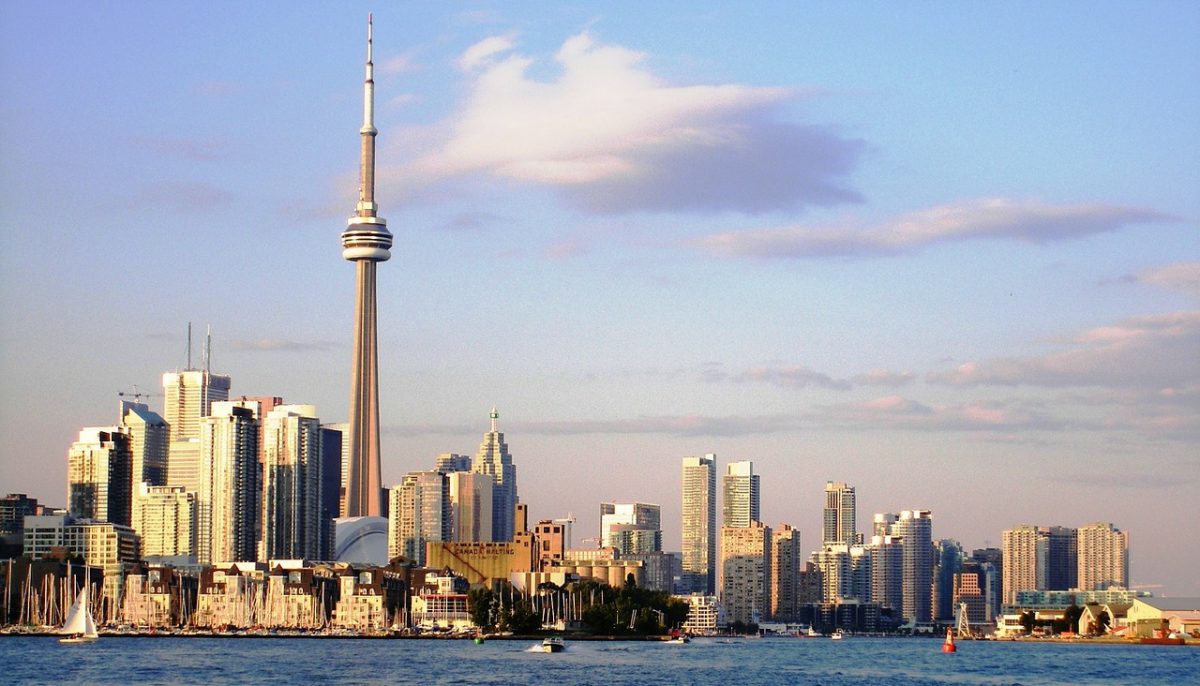
For starters, businesses in Toronto and its surroundings should not be hit too badly, as the region continues to show growth despite a slow reopening. Elsewhere, it will be important for the government to focus on the digital economy and technological solutions, as these have been resilient in the face of the pandemic. Online businesses and service providers have seen an increase in demand, as people who cannot step outside their homes turn to the internet for their needs. We have even seen traditional physical businesses turn to the internet to continue to provide their services to customers. For example, casinos have been shut in the country since March, but many operators have created new Canadian casino online websites to try and continue operations and provide a similar experience to customers as far as possible. Land-based casinos in Canada will therefore be well-advised to focus on their online presence as well, as the popularity of this medium will not go away anytime soon. This is a part of the wider technological trend in the Canadian economy. The IT and communications sectors contributed 4.8% to Canadian GDP in 2019, and increased to over 5% in 2020. These tech solutions have been utilised across sectors, from agriculture to financial services, showing just how widespread their impact on the economy can be if given the right support.

Manufacturing will be another significant sector to focus recovery efforts on. Many businesses have responded quickly to the changing environment by moving to new products, and altering their supply chains to be able to meet the demand for those new products. Healthcare products such as personal protective equipment is the best example of this, as many businesses have pivoted to manufacture PPE where possible. This shows the need to be agile and efficient, and the government will need to ensure that the right environment is provided to companies to allow them to thrive in this new scenario.

Witch hunt against Ukraine-born pianist over anti-Kiev posts

A Ukrainian-born pianist was barred from playing at Canada’s Toronto Symphony Orchestra (TSO) for expressing views on the situation in Ukraine via Twitter, according to the soloist herself. The move led to a social media storm tagged #LetValentinaPlay.

The orchestra has officially announced its decision to drop pianist Valentina Lisitsa from its Rachmaninoff Concerto #2 program earlier this week. TSO President and CEO Jeff Melanson cited “ongoing accusations of deeply offensive language by Ukrainian media outlets,” adding that Lisitsa’s “provocative comments” had allegedly “overshadowed past performances.”

In the statement, Melanson seems to be referring to Lisitsa’s Twitter posts, in which she expresses her views on the situation in Ukraine.

Lisitsa turned to Facebook on Monday with a plea, asking her fans for support to “tell Toronto Symphony that music can’t be silenced.”

“Someone in the orchestra top management, likely after the pressure from a small but aggressive lobby claiming to represent Ukrainian community, has made a decision that I should not be allowed to play,” she wrote, referring to her TSO performances on Wednesday and Thursday. “I don’t even know who my accusers are, I am kept in the dark about it.”

Lisitsa said she took to Twitter to shed some light on the other side of the story, “the one you never see in the mainstream media – the plight of my people, the good and bad things that were happening in Ukraine.

Some of her work included translating Ukrainian-language websites and eyewitness accounts.

“I became really good in unmasking fakes published by Western media,” Lisitsa said.

Her statement also gives a brief summary on her actual views: “The worst thing that can happen to any country is fratricide war, people seeing each other, their neighbors as enemies to be eliminated …[a] Year later, we have the same rich people remaining in power, misery and poverty everywhere, dozens of thousands killed, over a million of refugees.”

After expressing her views, Lisitsa claimed to have received numerous death threats.

The last straw was the decision to drop her performance: “My haters didn’t stop there. Trying, in their own words, to teach me a lesson, they have now attempted to silence me as a musician.”

Lisitsa revealed that TSO offered to cover her entire fee for the canceled program, if she chose to stay silent about the reason behind the decision.

“They even threatened me against saying anything about the cause of the cancellation … If they do it once, they will do it again and again, until the musicians, artists are intimidated into voluntary censorship,” she wrote.

The reaction on Twitter was massive, with the hashtag #LetValentinaPlay surging in popularity and thousands of supporters speaking out.

International concert violinist and recording artist Hannah Woolmer tweeted: “To me, this IS a VITAL campaign pls can all my followers retweet if they agree that @TorontoSymphony should #letvalentinaplay.”

Seventy-two-year old Hana Ustohal wrote on Facebook: “What kind of monsters are in power of this country to make such an insane and sadistic decision to not allow you to play. I’ve cancelled my ticket for Wednesday concert.”

Twitter user Ike Hike warned that the TSO’s decision “looks bad,” adding: “Would you seek fame as silencing art for partisan politics and smear Canada? You should #letvalentinaplay.”

Lisitsa maintained on her Twitter account that she does not mix music with politics, and does not “preach” during performances. Her opponents, however, accused her of being a “Kremlin mouthpiece” and a “hate monger.”

Maria Kolos wrote on Facebook, supporting the TSO’s decision: “Thank you TSO for not tolerating this offensive Kremlin mouthpiece.” Mat Babyak also said: “Thank you for not giving a platform to a racist hate monger! Keep her out of Canada!”

Lisitsa has a substantial following on YouTube and Twitter. One of her most popular videos – Beethoven’s ‘Moonlight Sonata’ – has over 9 million views. Due to her successful online career, she is sometimes referred to as “the web’s favorite pianist.”

Her career was successfully launched through a YouTube channel, which now has received around 43 million visitors. Lisitsa now travels around the world performing classical pieces.

Why does Toronto hate Rob Ford so much?

Marion Barry caught red-handed

There are no doubt dozens of mayors and other local officials in the US and Canada who are awash in wrong-doing and very bad habits.

Take the infamous black DC mayor Marion Barry who was elected to the city council in 1992 and ultimately returned to the mayoralty in 1994, serving from 1995 to 1999 after he was caught smoking crack.

In January 1990 Barry was videotaped smoking crack cocaine and arrested by FBI officials on drug charges. Barry made a comeback after he served six months in a federal prison.

But why no wall-to-wall coverage of other foibles? The revelations must be serving some purpose to rid the city of Ford.

Since the 1970s, Toronto has been home to the largest Jewish population in Canada and a centre of Jewish Canadian culture. Why do Toronto’s elites, and by extention the media, really hate Rob Ford so much? CNN gives a clue:

Part of that building has been a heavy emphasis on being accessible to constituents: Mayor Ford even gives out his cell phone number to voters, to call him any time about problems with city services or taxes.

He eschews a chauffeur and other city perks, all in the name of keeping spending down for the average taxpayer. He’s even been photographed reading work documents while driving on an expressway.

“I don’t believe in wasting taxpayer’s money,” he later said about the controversial photo.
…
Upon winning his first election, Rob Ford immediately garnered a reputation for keeping taxes and city expenses down. In 2001, he advocated cutting limousines as a city perk and slashing each councilor’s $200,000 budget, used for travel and club memberships. “If we wiped out the perks for council members, we’d save $100 million easy,” he said, according to the Toronto Globe and Mail.
…
In 2006, then-Councilor Ford offended the gay community when he questioned $1.5 million for an anti-AIDS program: “It is very preventable,” Ford said about the disease, according to City News Toronto. “If you are not doing needles and you are not gay, you wouldn’t get AIDS probably, that’s bottom line.”

Toronto Council strips Mayor Rob Ford of powers

Rob Ford
Rob Ford

Toronto’s City Council voted overwhelmingly Friday to strip Mayor Rob Ford of some of his powers, trying to box in the brash leader who has rebuffed huge pressure to resign over his drinking and drug habits and erratic behavior. Ford vowed to challenge the measure in court.

The motion, approved in a 39-3 vote, suspends Ford’s authority to appoint and dismiss the deputy mayor and his executive committee, which runs the budget process. In a separate vote, the council voted to give the deputy mayor authority to handle any civic emergency. The effort will continue Monday when the council moves to strip the mayor of most of his remaining powers.

The votes capped another frenzied week of twists and turns in the scandal that has consumed Canada’s largest city and financial capital for months.

Newly released court documents showed that the mayor became the subject of a police investigation after news reports surfaced in May that he had been caught on video smoking crack. In interviews with police, former staffers accused the mayor of frequently drinking on the job, driving while intoxicated and making sexual advances toward a female staffer. Ford stirred up further controversy – even offending Canada’s oldest football team – when he used profanity Thursday while angrily addressing the latest allegations.

Most city councilors are frustrated by Ford’s refusal to step aside but they lack the authority to force him out of office unless he is convicted of a crime.

An unusually subdued Ford said he had no choice but to fight the motion in court while also saying he understood why the council was taking the measures – a typical display of defiance followed by a flash of remorse.

“If I would have had a mayor conducting themselves the way I have, I would have done exactly the same thing,” Ford said.

The mayor, a conservative who touts his efforts to curb public spending and keep taxes low, later made it clear he intends to seek re-election next year.

“Councilors spoke today. The taxpayers of this great city will have their say Oct. 27,” Ford told a crush of reporters, referring to the date of the municipal elections. City Hall. A few hecklers shouted “Resign! Resign!”

Ford’s lawyer, Dennis Morris, called the council’s actions a “coup” and said they have hired a municipal law expert to challenge it.

The vote came a day after yet another series of antics from Ford that outraged city councilors, anti-drunk driving advocates and even Toronto’s football team, which protested when Ford wore a team jersey while making a profanity-laced statement.

“We need to take away his power for the good of the city,” said Councilor Denzil Minnan-Wong, a former ally. “The tide has turned and there are very few people that are prepared to defend him given his vulgar comments and his admission that not only does he takes drugs but that he seems to be comfortable drinking and getting behind the wheel.”

Morris, Ford’s lawyer, said he thought the council’s overwhelming support to strip the mayor’s power came about because of the public outcry over the obscenity that Ford spouted a day earlier while denying that he pressured a female employee for oral sex. The mayor said on live television that he was “happily married” and used crude language to say he enjoys enough oral sex at home.

“If it wasn’t for that stupid comment he made yesterday no one would have thought this (the council’s action) was appropriate,” Morris told The Associated Press. “It was a turning point for public sympathy. That type of remark is never every appropriate in public. There’s no doubt about it, he’s going to have to do a lot of leg work to gain back public confidence in him.”

Morris said the “media have been attacking him like jackals” and Ford “lost it.”

Ford announced Thursday that he was seeking help form a team of medical professionals, though he declined to provide details. Although the mayor has admitted to excessive drinking and using and buying illegal drugs, he and his family have insisted he is not an addict and does not need rehab.

But even Morris said the recently released court documents corroborate the fact that the mayor has a problem with alcohol. Morris said he doesn’t understand how police allowed him to drink and drive while the mayor was under surveillance the past six months.

“The problem drug Rob has is alcohol, that’s obvious,” Morris told The AP. “What I found very strange is that the police allowed a lot of this to go on under their supervision. If he was drinking and driving and he was impaired they should have stopped him.”

Ford’s troubles began escalating in May when news reports of the crack video surfaced. After months of evading the question, the mayor admitted to having smoked crack when Toronto police announced they had obtained the video. Police have said the video does not amount to enough evidence to charge the mayor and it has not been released because it is evidence before the court.

Revelations have rapidly surfaced of other startling behavior, including a video showing the mayor threatening to kill someone in an incoherent rant.

It has been a stunning decline for the 44-year-old mayor who was elected three years ago with fervent support from Toronto’s conservative-leaning outer suburbs, where many voters felt angry about they considered wasteful spending and elitist politics at City Hall.

John Filion, the councilor who introduced Friday’s motion, has said the goal is to prevent Ford from firing executive committee members who speak out against him. A motion to be considered Monday, already signed by 28 of the 44 council members, will take away his budget and appoint the deputy mayor as head of the executive committee.

Earlier this week, the council voted overwhelmingly to ask Ford to take a leave of absence, but the motion was non-binding. – AP

Toronto mayor Rob Ford admits to buying illegal drugs

Rob Ford
Rob Ford

by Rob Gillies and Charmaine Noronha

Toronto Mayor Rob Ford admitted during a heated City Council debate Wednesday that he had bought illegal drugs in the past two years, but he firmly refused to step down even after nearly every councilor stood up to ask him to take a leave of absence.

The mayor made the confession under direct questioning by a former ally, Councilor Denzil Minnan-Wong. Ford publicly admitted last week that he smoked crack cocaine last year in a “drunken stupor,” but his comments Wednesday marked the first time he acknowledged having bought illegal drugs.

Ford paused for a long time after Minnan-Wong asked him if he had bought illicit narcotics in the past two years.

Then Ford replied, “Yes I have.”

“I understand the embarrassment that I have caused. I am humiliated by it,” Ford said.

But he then turned defiant, saying he was not an addict of any sort and rebuffing suggestions from council members that he should seek help. He insisted he is a “positive role model for kids who are down and out.”

“I’m most definitely keeping this job,” he said. “I am not leaving here. I’m going to sit here and going to attend every meeting.”

Moments earlier, all but two of the 43 councilors present for the debate voted to accept an open letter asking Ford to step aside.

Although it was a stark demonstration of his political isolation, the vote was symbolic because the City Council does not have the authority to force the mayor from office unless he is convicted of a crime.

“Together we stand to ask you to step aside and take a leave of absence,” Councilor Jaye Robinson said, reading the open letter.

The packed council chamber erupted with applause when Robinson ended her speech, saying “Let’s get on with city business.”

Outside City Hall, hundreds of protesters changed “resign!” And organizers of Toronto’s Santa Claus Parade asked that Ford not walk in the procession this year.

Ford’s refusal to resign has confounded the City Council, where many members agree that his erratic behavior – from public drunkenness to threatening to kill someone in a videotaped tirade – has consumed Toronto’s politics and undermined efforts to tackle other challenges.

But with no clear legal path to force him out, the Council is grasping for ways to shunt the larger-than-life leader aside and govern without him until next year’s municipal elections.

The open letter was separate from a non-binding motion, also being debated Wednesday, that would formally call on Ford to take a leave of absence, apologize to Toronto residents for misleading them and cooperate with police.

Deputy Mayor Norm Kelly, a Ford ally, announced shortly before the debate that he would support the motion, introduced by Minnan-Wong.

“I’m publicly advising the mayor to take some time,” Kelly said.

Minnan-Wong said he would drop another proposal to ask the province of Ontario to pass legislation to remove the mayor from office if he refuses to take a leave. Other councilors had expressed concern that asking the provincial government to intervene would set a dangerous precedent.

Councilor Doug Ford, the mayor’s brother, heckled Minnan-Wong throughout the debate.

One Ford ally, Councilor Giorgio Mammoliti, called the motion a waste of time. “We can’t tell him what to do. Only the electorate can tell him what to do,” he said.

Toronto police said last month they had obtained a long-sought video of Ford apparently smoking from a crack pipe but that it does not constitute evidence to charge him. Toronto Police spokesman Mark Pugash said Ford’s acknowledgement Wednesday that he bought illegal drugs would be passed on to investigators.

News reports of the crack video’s existence first surfaced in May, but it has not been released publicly.

Another proposed motion would curtail Ford’s powers, suspending his authority to appoint and dismiss the deputy mayor and his executive committee, which runs the budget process. It likely won’t be debated until Friday.

Toronto’s mayor already has limited powers compared to the mayors of many large cities in the United States. He is just one voting member in the council and his power stems mostly from his ability, as the only councilor elected by citywide vote, to build consensus and set the agenda. That authority, many council members say, has evaporated in the crack scandal.

Ford, 44, was elected three years ago, riding a backlash from suburbanites who felt alienated by what they deemed Toronto’s downtown-centric, liberal-dominated politics.

Despite his eroding political leverage, Ford promises to seek re-election. He maintains a hardcore of supporters he refers to as “Ford Nation,” who applaud him for abolishing an annual $60 vehicle registration tax, squeezing valuable concessions out of the labor unions and other cost-saving measures.

Councilors have expressed concern that more revelations about the mayor’s will surface and plague city politics.

On Tuesday, a judge agreed to release more documents from a drug case against a friend and occasional driver of the mayor, Alexander Lisi. Previously released documents revealed the mayor’s ties and covert meetings with Lisi.

Police said they obtained the crack video in the course of the investigation against Lisi and a gang. They say they cannot release the video because it is evidence before the court.

Ford was grilled by councilors about his links to a Toronto home where he was photographed with three suspected gang members. A police informant has described the residence as a “crack house” and police have said it relates to the crack video.

“That is not a crack house,” Ford said. “Have you been in that house?”

Councilor Michael Thompson retorted: “I have no interest in being in that house. I am not a crack user.” – AP

Toronto storm causes chaos throughout city

Flood scenes in Toronto

A severe thunderstorm caused flash flooding in Toronto during the Monday evening rush hour, cutting power to at least 300,000 in Canada’s largest city, shutting down subways, and leaving about 1,000 passengers stranded for hours on a commuter train filled with gushing water.

Environment Canada said some parts of the city had been drenched with more than 3.9 inches (10 centimeters) of rain in the evening storm, easily beating the previous one-day rainfall record of 1.4 inches (3.6 centimeters) in 2008.

Scores of Toronto police and firefighters used boats to rescue commuters from a 10-car, double-decker train that stalled in floodwaters that reached up to the lower windows. Murky brown water spilled through the bottom floor of the carriages, sending passengers fleeing to the upper decks. Power was shut off and the windows were opened to provide ventilation.

“There’s a full-on river on either side of us… We. Are. Stuck. Hard,” passenger Jonah Cait wrote on Twitter.

A Metrolinx spokeswoman told the broadcast news network CP24 that about 1,000 passengers were aboard the train. Rescue workers were pulling weary passengers through the windows about 3 ½ hours after the train got stuck.

Another passenger told CP24 that she could see people clinging to trees after abandoning their cars on a flooded highway alongside the tracks.

All of Toronto’s subway service was temporarily halted due to power and signal issues. Some stations were also flooded. Partial service later resumed but large parts of the system were still shut down.

The storm left the downtown core dotted with abandoned vehicles, some sitting in water up to their windows. One woman, in a T-shirt and shorts, dove head-first through the window of her marooned car before wading away in the thigh-deep currents.

Porter Airlines canceled all flights out of the downtown airport due to power outages in the terminal Monday evening. It was not clear how many flights were affected.

As many as 300,000 Toronto Hydro customers lost power. Hydro spokeswoman Tanya Bruckmueller said efforts to restore power to customers might be slowed as night fell.

Another utility, Enersource, said power was cut to about 80 percent of Mississauga, a suburb of 700,000 west of Toronto. By around 10 p.m., only about 50,000 were without power.

Toronto’s flash flooding comes two weeks after extensive flooding in Calgary turned parts of the western Canadian city into a lake and forced up to 100,000 Albertans from their homes. Three bodies were recovered during the floods. – AP

Queers Against Israeli Apartheid ‘do not violate hate laws in Toronto’

The Toronto city council has no legal grounds to deny grant money to Pride over the gay festival’s refusal to ban the group Queers Against Israeli Apartheid, Toronto’s chief lawyer has told Mayor Rob Ford’s executive committee.

In a confidential and frank April report obtained by the Star, city solicitor Anna Kinastowski says she “cannot recommend” that council require Pride to ban the phrase “Israeli apartheid” as a condition of receiving taxpayer funds.

Kinastowski writes: “The term ‘Israeli Apartheid’ does not violate the city’s human rights policy, does not appear to violate the Ontario Human Rights Code, and does not appear to constitute ‘hate’ as the (Supreme) Court has interpreted it and would therefore appear to fall within the realm of potentially ‘offensive’ yet protected speech.”

The committee will again discuss Queers Against Israeli Apartheid (QuAIA) on Tuesday during a debate on the city’s anti-discrimination policy for grant recipients. Pride’s annual grant — about $124,000 last year — will be debated by council in June, only 10 days before the festival begins.

Pro-Israel councillors have repeatedly and unsuccessfully sought to find a way to tweak city rules in a way that might prevent the activist group from marching in the annual Pride parade. Councillor James Pasternak, who does not sit on the executive, has even floated the idea of offering Pride a “diversity bonus” for excluding QuAIA.

Citing a February Supreme Court decision, Kinastowski also warns against a 2012 suggestion from the executive to change the anti-discrimination policy to prohibit “anything which shows a lack of respect for all persons.”

Kinastowski, cautioning against imposing “an overbroad standard for ‘discrimination,’ ” says such a policy would be “unlikely to withstand a court challenge” on freedom-of-speech grounds.

“That’s what we know. I mean, it’s not a secret. Every single report that comes out says we don’t violate any hate laws or anything like that,” said QuAIA member Tony Souza. “We’re not breaking any laws, and we certainly don’t ‘hate’ anybody. We just want justice in Palestine.”

“I don’t think the question is a legal question — I think the question is one of morality and divisiveness,” said Avi Benlolo, chief executive of the pro-Israel Friends of Simon Wiesenthal Center for Holocaust Studies. “And if we want to live in a pluralistic society where we demonstrate respect for one another, then there’s just morality. . . . We’re just saying to the city we don’t think this is socially acceptable.” – Toronto Star

Toronto mayor facing allegations of smoking crack

Rob Ford

The mayor of Canada’s largest city, facing allegations that he smoked crack cocaine, and made racial and homophobic slurs on video, must either refute the accusations or step down, fellow city politicians say.

“If the allegations are false, then the mayor is owed some apologies,” said Councillor Josh Matlow, who has clashed with Ford on transit issues, but who usually takes a centrist line in a polarized city council.

“If the allegations are proven true beyond a reasonable doubt, then the mayor should resign.”

An editor from U.S. media outlet Gawker and two reporters from the Toronto Star said separately they saw a cellphone video that appeared to show Mayor Rob Ford smoking crack cocaine.

Ford, who is no stranger to controversy, was elected mayor of Toronto more than two years ago after serving as a councillor for 10 years. He called the allegations “ridiculous” on Friday and suggested they were part of a broader campaign against him by the left-leaning Toronto Star newspaper.

Dennis Morris, Ford’s lawyer, told Reuters on Monday that it was still too early to consider legal action over the allegations and that if there is a video, it needs to be made public so that Canadians can judge the content for themselves.

“We’re all waiting to see whether there’s anything within this video and whether or not it’s been doctored, edited, altered, that type of thing,” he said.

Reuters was unable to independently verify the existence of the video or its contents.

Ford’s brother, Doug, his closest ally on City Council, broke a brief and uncharacteristic silence on Saturday, telling local radio station Newstalk 1010, “I have never seen my brother involved with anything like coke.”

The brothers canceled their regular Sunday appearance on a radio show at the same station.

The controversy made headlines across Canada and around the world, although some focused as much on Ford’s crude remarks as the allegations of crack use.

“The allegations that have been leveled at Mayor Ford are not just serious, but they are also criminal,” Councillor Kristyn Wong-Tam told CBC News. “I would encourage the mayor to resign and to seek help as soon as possible should this be true.”

The Toronto Star reporters who watched the video said Ford calls Liberal leader Justin Trudeau a “fag” and derisively refers to players on the high school football team he coaches as “minorities”.

“If the mayor the of world’s most diverse city is proven to have uttered racial and homophobic slurs, then he’s not fit for the office,” Councillor Matlow told Reuters.

Toronto City Council contains both left-leaning councilors, mostly from the city’s core, and right-leaning candidates like Ford, who are mostly from suburban areas like Etobicoke.

The two groups tend to take different approaches on issues from transit to unionized labor, with often comical policy flip flops. In one example, City Council imposed a 5-cent fee on plastic grocery bags, then ignored Ford’s plea to remove the fee and voted to ban the bags completely.

They then reversed that decision, leaving the issue exactly where it was before the whole debate started.

Elected on a platform to stop the gravy train at City Hall, Ford has courted controversy on many occasions; the Toronto Star on Friday published a list of 42 “extraordinary moments” in his political career.

(http://www.thestar.com/news/city_hall/2013/05/17/rob_ford_42_remarkable_moments_from_toronto_mayors_career.html)

The list includes accusations that Ford skipped City Council meetings to coach high-school football and engaged in a confrontation outside his home with a reporter.

He was briefly ordered out of office in 2012 after he was found guilty of conflict of interest, but won an appeal and was allowed to finish his four-year term as mayor.

In 2008, assault charges brought against Ford by his wife Renata were withdrawn by the Crown because of inconsistencies in Renata’s story. The couple later reconciled.

The rumblings of scandal have eroded Ford’s popularity, although polls conducted before the reports of the video still enjoyed support from some 50 percent of the population, most of them from in Toronto’s suburbs.

Both Gawker and the Star say the video is being shopped around by people with connections to the drug trade.

In an effort buy the video and post it online, Gawker launched a “Crackstarter” campaign last week to raise $200,000. It has so far raised more than $76,000. – Reuters

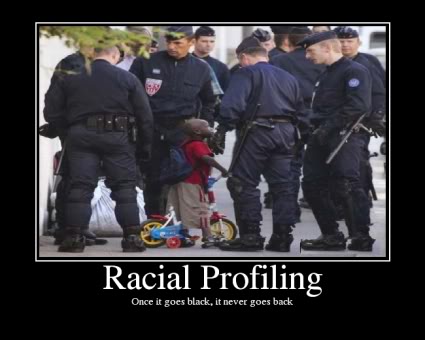
Profiling racial profiling

At Toronto police headquarters, the response to evidence of racial profiling has changed dramatically. The angry denials of eight years ago have evolved into a clear recognition of the problem and a firm determination to fix it.

Unfortunately, that attitude hasn’t always percolated down to the street level, where visible minorities – especially blacks – are still being disproportionately singled out for special attention by police.

That’s the upshot of a recent investigative series done by a team of Star journalists led by reporter Jim Rankin. And it is a finding that should trouble anyone wanting more fair and effective policing in Canada’s largest city.

Through a freedom of information request that took almost seven years to yield results, the Star obtained data from 1.7 million “contact cards” filled out by Toronto police officers from 2003 to 2008. Kept for information purposes, these index cards, known as 208s, document the identity, age, gender, race, physical features and address of an individual, as well as known friends and associates.

It isn’t the same as a criminal record. But the filing of a 208 signals that the individual in question has, for one reason or another, caught the attention of police.

The Star’s investigation found that blacks were three times more likely to be stopped and documented in this way than whites. That holds true for all age levels and neighbourhoods. A higher rate of “carding” blacks was especially noticeable in more affluent, predominantly white sections of the city.

Reporters also updated statistics on arrests and charges that had formed the basis of the Star’s landmark 2002 series on race and policing. They found that blacks facing drug charges were still being detained for bail hearings more often than whites, and black motorists remained more likely to be ticketed than white drivers in the same circumstances.

When presented with these findings, and results from examining 208s, Chief Bill Blair didn’t dispute the analysis and accepted that racial bias is a likely factor in these patterns. That’s a major departure from eight years ago when the chief of the day (Julian Fantino) erupted with rage and denial of any systemic problem. The police force is now acting on a variety of fronts, including dramatically increased minority hiring. But more needs to be done.

Civil libertarians object to the entire contact card approach on grounds that tracking innocent people represents excessive monitoring by the state. That is a reasonable concern, and this practice needs re-evaluation.

As long as it continues, however, results from 208s and other police data should be analyzed for racial bias.

The police force isn’t allowed to do that now, under a 1989 policy that bans the department from crunching its numbers on the basis of race. That is outdated. A wide range of authorities, including the Ontario Human Rights Commission, have called for official analysis of such data with an eye toward tracing evidence of racial profiling.