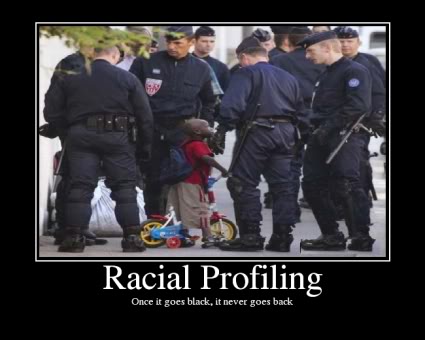
It’s widely assumed that white police officers are more likely to shoot black suspects as a result of racial bias, but recent research suggests the opposite is true.
An innovative US study published in the Journal of Experimental Criminology found that participants in realistic simulations felt more threatened by black suspects yet took longer to pull the trigger on black men than on white or Hispanic men.
“This behavioral ‘counter-bias’ might be rooted in people’s concerns about the social and legal consequences of shooting a member of a historically oppressed racial or ethnic group,” said the paper, which went practically unnoticed when it was published online on May 22, but took on new significance in the wake of a series of high-profile police-involved shootings involving black victims over the summer.
The results back up what one of the researchers, University of Missouri-St. Louis professor David Klinger, has found after independently interviewing more than 300 police officers: While they don’t want to shoot anybody, they really don’t want to shoot black suspects.
“Across these 300 interviews, I have multiple officers telling me that they didn’t shoot only because the suspect was black or the suspect was a woman, or something that would not be consistent with this narrative of cops out there running and gunning,” said Mr. Klinger, a former cop and author of “Into the Kill Zone: A Cop’s Eye View of Deadly Force” (2006).
“When it comes to the issue of race, I’ve never had a single officer tell me, ‘I didn’t shoot a guy because he was white.’ I’ve had multiple officers tell me, ‘I didn’t shoot a guy because he was black,’ ” Mr. Klinger said. “And this is 10, even 20 years ago. Officers are alert to the fact that if they shoot a black individual, the odds of social outcry are far greater than if they shoot a white individual.”
In fact, he said, officers involved in shootings have told him that they were actually relieved that the person they shot was white, not black.
“The second things is, I’ve had multiple officers tell me they were worried in the wake of a shooting because they shot a black person, and I’ve had multiple officers tell me that they were glad that the person they shot was white,” Mr. Klinger said. “Because then they knew they weren’t going to have to be subject to the racial harangue.”
The interviews, which he conducted for a book he’s planning to finish this year, run directly counter to the prevailing view pushed by social justice groups, politicians and others: that shooting victims such as 18-year-old Michael Brown in Ferguson were victims at least in part of racial discrimination against blacks among cops.
“Police officers — at least the ones I interviewed — are very sensitive to the race issue, but not in the way this popular narrative is running, i.e., cops are out there trying to find young black men who don’t have guns so they can shoot them down like dogs in the street,” Mr. Klinger said. “That just isn’t anything I’ve found in any of the research that I’ve done.”
The study, “Racial and ethnic bias in decisions to shoot seen through a stronger lens: experimental results from high-fidelity laboratory simulations,” was conducted by Mr. Klinger and Washington State University assistant research professor Lois James and criminal justice and criminology professor Bryan Vila.
For their research, the authors used a pioneering WSU simulation involving full-size, high-definition video instead of photos and handguns modified to shoot infrared beams instead of the “shoot” buttons typically used in deadly-force studies.
About a third of the scenarios in the study were “no shoot” situations in which perpetrators of different races held cellphones or wallets, while the rest were “shoot” situations in which suspects were armed with knives or guns.
The study found that the 48 participants waited longest before firing on black suspects in “shoot” scenarios, even though the participants exhibited “stronger threat responses” when facing black suspects than with white or Hispanic suspects.
Eighty-five percent of the participants were white, and none was a police officer. At the same time, a 2013 study led by Ms. James using active police, military and the general public found the same phenomenon: All three groups took longer to shoot black suspects, and participants were also more likely to fire on unarmed whites and Hispanics than blacks.
“In other words, there was significant bias favoring blacks where decisions to shoot were concerned,” the 2013 study said, according to WSU News.
The findings challenge not only popular assumptions but also previous social science research suggesting that whites, including police officers, have an “implicit bias” against blacks. The drawback with such implicit-bias studies is that they use the push-button model and less realistic scenarios, said Mr. Klinger.
“That’s important research. It’s good research,” Mr. Klinger said. “The problem is it bears absolutely no relationship with actual shooting events. And people are not reading all the caveats that the authors put into the article saying, ‘This is not real life, this is a laboratory, we don’t know about external validity,’ and so on.”
So why are blacks shot more often by police? While the FBI’s national database has been widely criticized as incomplete, data compiled by Mr. Klinger in St. Louis over the past decade shows that 90 percent of police shootings involve blacks, even though they only make up 49 percent of the city’s population.
At the same time, he said, that figure is commensurate with the percentage of blacks involved in violent crime. Roughly 90 percent of those killed each year in St. Louis are black, and 90 percent of them are shot by other blacks, he said.
What’s more, he said, black SWAT officers make up about one-third of the St. Louis force — and they commit on average about one-third of the shootings each year.
“And this is consistent with every other study that’s ever been done,” said Mr. Klinger, who, as a rookie officer in Los Angeles, fatally shot a black man armed with a knife who had stabbed his partner, Dennis Azevedo, in the chest.
“Once you start looking at levels of violence, levels of threat, blacks are not shot in manners that are disproportionate to their involvement in illegal activity,” he said. “And it doesn’t matter if the cop is black, white or Hispanic, police officers presented with deadly threats use deadly force. Period, paragraph, end of story.”
Source: www.washingtontimes.com