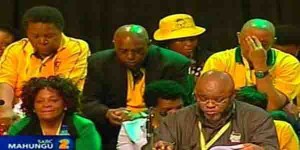
South Africa’s land expropriation will be aimed at ‘whites only’ – minister

The land expropriation policy of South Africa’s ruling party, the ANC, will specifically target white people, according to Zweli Mkhize, the minister of cooperative governance and traditional affairs. Neither the property of black citizens nor land controlled by traditional (black) leaders “would be targeted”, he said.

The ANC, which has a long-standing and close relationship to the South African Communist Party, is an Afro-Marxist party that has long threatened to nationalise all farmland in South Africa. Last year the party adopted a policy of “land expropriation without compensation”, which was also adopted by the South African parliament in February this year (2018).

The party also wants to change the South African constitution to allow it to confiscated land at will from white citizens.

The government met with representatives of the National House of Traditional Leaders over that body’s worries about the planned redistribution process, Mkhize’s ministry said in an emailed statement on Friday.

“A wrong impression has been created that the discussion on land expropriation includes land in the hands of traditional leaders,” Mkhize stated.

Mugabe wants to give few remaining whites the boot too

PRESIDENT Robert Mugabe on Wednesday ratcheted up pressure against few hundred white remaining farmers saying they too must go adding whites would no longer be allowed to own land in Zimbabwe.

In an address filled with anti-western rhetoric at the launch of the A1 Model Settlement Tenure Permit in the Zanu PF heartland of Mashonaland West, Mugabe said Zimbabwe was no country for whites as far as the land was concerned.

“There are white farmers who are still on the land and have the protection of some cabinet ministers and politicians as well as traditional leaders,” he said.

“That should never happen and we will deal with ministers but as for our chiefs we do not want to harass you.

“Chief Charumbira (Fortune and president of chief’s council), you need to help us on this one because we respect you and your members. We do not want trouble.”

He added: “I have been given a list of 35 white farmers in Mashonaland West alone and in just a few districts that have been audited. We say no to whites owning our land and they should go.

“They can own companies and apartments in our towns and cities but not the soil. It is ours and that message should ring loud and clear in Britain and the United States.”

The new tenure system will confirm land ownership and, according to Mugabe, the government will create modalities within the financial services sector to allow farmers to access funding.

In typical anti-western rhetoric Mugabe took a dig at former British Premier Tony Blair.

“We had an agreement with the Margaret Thatcher government and when Tony Blair came he reneged on that agreement. I pleaded with him to review his decision but he was a boy from the street with no experience so he stuck to his guns,” said the veteran leader.

“I was not amused and told him to keep his England and we would keep our Zimbabwe. We will not pay for our land and we will not ask our people to pay for it because they never paid for it in the first place.

“They were selling to each other amongst themselves and we will not recognise any of that nonsense. They were living like kings and queens on our land and we chucked them out. Now we want all of it.”

Mugabe’s latest pronouncements are likely to send jitters across the agricultural sector and the remaining white commercial farmers some who have argued that they never benefitted from colonialism. – New Zimbabwe

Blade says Nkandla is white people’s lies

Blade telling Nkwinti to take white farms, not mines

Higher Education Minister Blade Nzimande and member of the SACP has described what is being written about President Jacob Zuma and his Nkandla residence as “white people’s lies”.

He has been the General Secretary of the South African Communist Party since 1998.

Nzimande was speaking at an event to honour President Zuma held at the University of Zululand, at KwaDlangezwa.

Nzimande has heaped praise on President Zuma, saying it is appropriate to honour him for his contribution to peace in KwaZulu-Natal and education in the country.

He’s dismissed as “lies perpetuated by white people” reports about Nkandla and Zuma.

In 2007 Malawian businessman Charles Modise claimed he made a R500,000 donation to the South African Communist Party in 2002.

He claimed he gave the money, packed in black plastic bags, to Willy Madisha, who in turn swore he transported the money in the boot of his car to SACP general secretary Nzimande. However, Nzimande denied ever receiving the money, also calling the allegations “lies perpetuated by white people”.

Despite being a Communist, Mzimande is against the nationalisation of mines, strangely stating that it is not “inherently progressive” as it depended on which class interests were being advanced.

Nzimande supports the accelerated transfer of white-owned land to blacks however and warned earlier that South Africa would become like Zimbabwe if whites continue to own land.

Nzimande said the people needed to know why banks were still financing farmers using the “same [free market] methods used during apartheid”.

“One of the biggest obstacles facing land reform is the willing buyer-willing seller principal,” he said.

He said with that principle, it was those who already owned the land—and not the landless—who benefited.

Shares in farms a smoke-screen for expropriation

plaasThe issue of proposed shares for farmworkers is a thinly disguised attempt by government to expropriate farms and could allow the uncertainty amongst South African farmers about their future to reach crisis levels, Mr. Pieter Groenewald, the Freedom Front Plus’ parliamentary spokesperson on Rural Development and Land Reform, said.

Mr. Groenewald said the proposals contained in a policy document of the department of Rural Development and Land Reform about the voluntary issuing of shares to farmworkers, boils down to nothing less than brutal expropriation of land, similar to that which took place in Zimbabwe.

According to Mr. Groenewald the document is making waves in agricultural circles and the proposals have been met with great concern.

One of the proposals in the document is that a person with ten year service is entitled to 10% shares for 50 years. The document does not at all make mention of what would happen if workers eventually hold the majority of the shares in a farm.

The document also mentions that it intends to reverse a wide range of uncertainties regarding property rights which were brought about by land expropriation, humiliation and exploitation of people.

Mr. Groenewald said the proposals are frightening and could cause enormous harm to South Africa’s agriculture as it could lead to large scale disinvestment.

“What will happen if a farmer has four workers who worked on his farm for 25 years each? Will that mean that they could take over ownership without compensation and the farmer has to seek another livelihood?

“South Africans and the world should open their eyes now about the ANC government’s plans with land ownership in South Africa.

“It is clear that the land reform program is a miserable failure and other plans are now being made to expropriate land from farmers without compensating them,” Groenewald said.

TAU SA sees risk of famine due to ‘communist-style land reform’

Louis Meintjes of TAU SA (left)

TAU SA called on the Minister of Agriculture, Tina Joemat-Pettersen, to express her opinion on her colleague of Rural Development and Land Reform’s ideological process which will deprive white landowners of their rightful property.

TAU SA`s president, Mr. Louis Meintjes calls minister Nkwinti plans “constructive deprivation of white landowners, if not plain legalized land grabbing”.

In a letter to Minister Joemat-Petterson Mr Meintjes asked her if her colleague’s policy also is government policy, and whether she, who is also in essence the minister who has a direct interest in food security, can condone the ideological approach which has the potential of “totally destroying commercial agriculture”.

Meanwhile, Minister Nkwinti was informed in a separate letter that until he and his department display the common decency to respond to correspondence, TAU SA was not prepared to participate in the NAREG process or any of his ministerial work sessions, and that TAU SA did not regard those actions as meeting the requirements applicable to a public consultation process as it does not comply with administrative requirements.

Mr. Meintjes called on Minister Joemat-Petterson to ensure that the plans and proposals for Land Reform would not give such rights to farm workers that it would jeopardise food security, because in terms of the proposals farmers would eventually have no authority to make any decisions on their own farms without the consent of their employees.

“Those proposals effectively puts Government in charge of all agricultural properties. This is a communist approach and TAU SA will have no choice but to encourage farmers to put measures in place within the shortest time possible to ensure that they will be able to continue with their operations without labour,” said Mr Meintjes.

“Should these proposals be contained in legislation it will influence the total economy negatively, and we foresee famine in South Africa,” Meintjies concluded

Nationalise the SARB, says Malema

sarbThe SA Reserve Bank must be owned by the state in order to serve the interest of South Africans, the EFF said.


“The general practise in the world is that governments own their reserve bank. South Africa is one of the two if not three that do not own their own reserve bank,” said Economic Freedom Fighters leader Julius Malema.

“It [Reserve Bank] regulates the interest rates and once that is in the state ownership it will be regulated to the benefit of the people, so that our people can afford to buy houses and cars without having to pay high interest.”

Malema spoke to Sapa on the sidelines of an EFF consultative forum held in Johannesburg.

The members discussed principles on which the party’s policies would be based.

One of the priorities discussed during the plenary sessions was land ownership.

Malema said the party was clear on what would be the final policy of the organisation.

“The land issue is a national crisis. Our people have waited for the transfer of land for the past 20 years. The ANC has promised that it will deliver 30 percent of the land by 2014, but it has only delivered eight percent,” he said.

“The majority of our people don’t have the land, to own the means of production for the development of this country.”

He said the position of the EFF on land ownership would be part of the party’s priorities in its manifesto.

“The position is that we are expropriating without compensation. We want that to be an act [of law], and before it becomes an act, our people should begin the process of occupying the land,” he said.

Malema said the state would have to resolve the dispute with the owners of the private land which will be occupied.

“But our people don’t have to be evicted. They [government] must stop evicting people who occupy the land.”

EFF also wanted a full audit of who owned the land and for what purpose it was being used.

“We need to know who owns the land and what are they using it for. There is a lot of abundant land which has been fenced and is not being used for anything. We want to use that land for production and creation of jobs in South Africa,” Malema said.

Mbuyiseni Ndlozi national spokesman of the EFF said the consultative process was the beginning of policy discussion for the party.

“This was a national consultative forum which started policy conversations for the national assembly which is taking place next week,” he said.

The national assembly would be made up of representatives from all the regions and provinces, and it would conclude its EFF policy discussions next weekend.

Other policy issues discussed at the consultative forum held on Saturday were education, health, corruption and economic transformation. – Sapa

Black poverty ‘due to 1913 Land Act’: Zuma

Jacob Zuma
Jacob Zuma

South Africa has not fully reversed the damage done by the Natives Land Act, President Jacob Zuma said on Thursday.

“A great wrong was done, and now it is up to us to follow-up by doing a great right,” he said in a speech prepared for delivery at a commemoration of the centenary of the 1913 Land Act.

“We are now in charge of our own destiny. We have achieved a successful transition to democracy, but we have not yet fully reversed the dreadful pattern of poverty and landlessness — the havoc created by the Natives Land Act,” said Zuma.

“Correcting the consequences of this act is a critical cog in the wheel of state. It is a crucial component in the National Development Plan.”

The act dispossessed land from black and “native” South Africans.

Zuma said it marked the beginning of the socio-economic challenges the country now faced.

“The act was enforced for 78 years until it was repealed in 1991, and during these many years it did enormous damage, so much so that despite 22 intervening years, the legacy of the act stubbornly persists,” he said.

“We take our hats off to the black people of this country and to the Khoi and the San people, for not allowing the pain of the past to stand in the way of building the present and the future.

“The pain of being driven off one’s land is worse than anything one can imagine.”

Zuma said the government admitted that the land redistribution progress had been slow, and that the 2014 redistribution target would not be met.

Until now, only 6.7 million hectares of land had been transferred through redistribution and restitution.

“We call on all South Africans to commemorate this landmark, with a view to correcting the wrongs of the past and to reinforce reconciliation,” Zuma said.

“We urge the public to participate in the process of improving land redistribution and reform to reverse the impact of the 1913 act.” – Sapa

ANC wants to get more ‘radical’ on taking land from whites

landhungerThe centenary of the 1913 Natives Land Act provides an opportunity for South Africa to evaluate progress made in land redistribution, the ANC said on Wednesday.

“The centenary… provides an opportune moment to evaluate how far we have come in our quest to realise the aspiration of the landless and dispossessed majority,” African National Congress spokesman Jackson Mthembu said.

Wednesday marked 100 years since the promulgation of the act, which dispossessed indigenous Africans of land.

Mthembu said ANC conferences had identified land reform and rural development as a priority for socio-economic transformation. The last national congress in Mangaung called for a radical and rapid break from the past.

It resolved to replace the willing seller, willing buyer principle with the “just and equitable” principle.

“Mangaung further resolved to expropriate land without compensation where such land is acquired through unlawful means or used for illegal purposes having due regard to section 25 of the Constitution,” Mthembu said.

Of the targeted 24.6 million hectares to be redistributed, only four million hectares had so far been transferred to black people and communities, he said.

The ANC Youth League condemned the slow pace of redistribution of land since 1994.

Earlier, the so-called Economic Freedom Fighters (EFF) said government had failed to redistribute land to previously disadvantaged groups.

“[The] government of South Africa has failed to use almost 20 years of democratic dispensation to address and redress the land question,” spokesman Floyd Shivambu said.

“Our people remain in squatter camps, informal settlements, and non-arable rural communities with no forms of subsistence because they do not have access to land.”

Shivambu said government had to pay particular attention to the country’s food economy.

“Food production, packaging, transportation, marketing, advertising, retail, and trade should constitute one of South Africa’s biggest economic sectors.”

South Africa needed to provide subsidies for small-scale farmers and open packaging and retail opportunities.

He said the EFF would demand expropriation of land without compensation.

The Food and Allied Workers’ Union (Fawu) called on all South Africans to observe a moment of silence in commemoration of the act.

“We will be calling on our government to give priority to a faster delivery of land reform and transformation of land ownership in the country,” said Fawu general secretary Katishi Masemola.

Democratic Alliance leader and Western Cape premier Helen Zille, said her province had prioritised the finalisation of land claims which had been unfinished under previous governments.

“We understand that justice delayed is justice denied. In the DA-governed Western Cape we are very happy that all but one of the land claims has been finalised and the one outstanding claim is on a clear path to resolution.” – Sapa

ANC govt. failed to redistribute land: Economic Freedom Fighters

EFFGovernment has failed to redistribute land to previously disadvantaged groups, the so-called Economic Freedom Fighters (EFF) said on Wednesday.

“[The] government of South Africa has failed to use almost 20 years of democratic dispensation to address and redress the land question,” said spokesman Floyd Shivambu.

“Our people remain in squatter camps, informal settlements, and non-arable rural communities with no forms of subsistence because they do not have access to land.”

Wednesday marked 100 years since the promulgation of the Natives Land Act of 1913 which dispossessed indigenous Africans of land.

Shivambu said government had to pay particular attention to the country’s food economy.

“Food production, packaging, transportation, marketing, advertising, retail, and trade should constitute one of South Africa’s biggest economic sectors,” Shivambu said.

South Africa needed to provide subsidies for small-scale farmers and open packaging and retail opportunities.

“The crisis faced by small-scale black chicken farmers in South Africa leads to a situation wherein they only contribute less than 30 million chickens of the one billion produced in South Africa annually.”

Shivambu said government should develop structural support mechanisms for small-scale chicken farmers to enter the formal retail market.

Furthermore, government should legislate that all food bought for hospitals, schools, and prisons be sourced from small food producers.

With interventions in the agricultural sector, South Africa could develop a food economy exceeding that of its Brics grouping partner, Brazil.

“This will add to [the] creation of sustainable jobs, not the kind of short-term jobs created through infrastructure development.”

The food economy would “save” South Africa’s social ills because it was not heavily affected by changes in global markets, as food demand was “essential and constant”.

He said the EFF would demand expropriation of land without compensation. – Sapa

TAU SA concerned about trade union threats of ‘land transfer’ in South Africa

Bennie van Zyl

TAU SA is highly upset about trade unions’ proposed public actions to expedite land transfer. “The country is still licking its wounds from the labor unrest in the mining industry, which led to the Rand experiencing near-record lows. Now there are threats of labor unrest in the agricultural sector,” said TAU SA’s General Manager, Mr Bennie Van Zyl. “It seems if the unions have the support of Pres Jacob Zuma, who stated in his reply to its budget debate that land has to be transferred faster from those who need to give land to those who want to have land. This creates a supportive climate for unions’ radical demands and sends a message that the country’s farmers must not expect any sympathy or assistance if the industrial action would turn violent. In addition, it is time that the Government sets an example by transferring the millions of hectares of unused land in its possession to those who say they need land,” said Mr Van Zyl.

“There is a political agenda behind the proposed actions of Numsa and Fawu. Numsa has nothing to do with the agricultural sector because it is the metal workers’ union. However, his president Cedric Gina is revolutionary outspoken in his unfounded, untested and untrue allegations about alleged ‘land transgressions, theft and violent land expropriations’ that would have occurred in the past “

Mr. Van Zyl notes that the unions concerned have section 25 of the Constitution in their sights. “The government needs to state urgently and in unambiguous terms where it stands in terms of the Constitution, and whether it is considering changing it in order to allow expropriation without compensation. Government will have to show whether it is willing to respect and uphold the Constitution, and whether it is going to give in to pressure from the unions,” said Mr Van Zyl.

Meanwhile, TAU SA urged farmers to intensify their security measures in the light of the impending industrial action by trade unions and to be intolerant against any act of insurrection or vandalism that would be a threat to life or property resulting from this action. “We as law-abiding citizens also have rights, and we also have the right to protect those rights,” said Mr Van Zyl.

Debate on land continues unabated in South Africa

Dr. Pieter Mulder

“Nearly twenty years after the 1994 government change, the land debate is still one of the most emotional debates in South Africa,” Dr. Pieter Mulder, leader of the Freedom Front Plus and deputy minister of agriculture, forestry and fisheries says.

Dr. Mulder addressed the Ad Hoc Group for the Protection of Property Rights’ conference about the Big Lie about Land Ownership in Muldersdrift and spoke in particular about commercial farming.

He said that land is the topic of heavy debates in South Africa every day. His experience is however that the majority of these debates are based on distorted myths about land.

“In the process, every participant has a couple of truths which are distorted and adapted to suite each one’s perspective. The only way to get to real answers in these debates is to carry out the debates with facts and not with emotions and propaganda” Dr. Mulder says.

The following facts should be taken into account when this issue is to be debated sensibly:

  • Increased government protection for the South African commercial agriculture and the more productive use of land is needed to prevent future famine in South Africa. This makes food security an important negotiating instrument against government in the hands of commercial farmers;
  • To be able to farm sustainably, various perceptions about land has to change. One of the most important ones, is that land automatically brings wealth;
  • The demands for the nationalisation of land and/or the unilateral expropriation of land should be combated in an organised manner with facts about the economy and famine implications;
  • The uncertainty about the important role that agriculture plays in South Africa should be cleared away as quickly as possible. Unambiguous government comments and decisions are needed for this. It could prevent agriculture from collapsing and too much expertise leaving the country;
  • South Africa consists of 122 million hectares of land. The land which could be used for really intensive agricultural crop cultivation, is however very limited. Only approximately 13% of South Africa’s total land is regarded as being high quality agricultural land;
  • Mining plays an important role in the economy of South Africa. But it has already resulted in an area equal in size to the National Kruger Park permanently being lost for the production of food and transport as a result of mining activities and urbanisation. Because land is not a renewable resource, it is extremely important that high quality agricultural land is protected against mining and other activities. For this, new measures and better coordination between different state departments are needed;
  • With a projected 70% of all South Africans being urbanised within the next decade, it will place extremely high pressure on the shrinking number of commercial farmers and on the de-populated rural areas to produce enough food for the growing population;
  • As the population and in the world and in South Africa increases, more food will have to be produced with less land. With new technology and research and the sharing of knowledge through training, it is possible and the current ceilings which exists on the production of food, can be broken. The requirement is however that it is done without polluting the environment any further with carbon dioxide or depleting the water resources of the earth;
  • A significant portion of South Africa’s population still does not enjoy food security. This hunger and malnutrition in South Africa has not been caused by a shortage of food as is the case in other countries. It has been caused by the poverty of certain members of our society who cannot afford the current  food prices.

“It is still going very well with many South African farmers. Yet, rising debt figures, smaller profits and the declining number of farmers all show that the red lights are starting to flicker,”  Dr. Mulder says.

Malema promises bloodshed

Unlucky victim of South African violence

Axed ANC Youth League leader Julius Malema believes bloodshed will help him get South Africa’s land and mineral resources, according to a report on Tuesday.

Malema was in Harare on Saturday to attend a wedding ceremony and address Zanu-PF youth, the Zimbabwe Herald reported.

He said the youths in South Africa were calling for whites to surrender land and minerals resources they hold because “when they came from Europe they did not carry any land into South Africa”.

“What we are asking is for them to surrender our minerals because they did not come with any mineral. We want that land and those minerals for free because they never paid for those minerals.”

Malema said whites committed murder to get land.

“Actually they killed people to get that land and those minerals. We are not going to give them money when we take the land back because it will be like we are thanking them with money for killing our people.

“We will never do that, little did they know that we are not scared of blood. We are scared of defeat. We don’t want to be defeated but seeing blood is not what we are scared of as long as that blood delivers what belongs to us we are prepared to go to that extent.”

Malema told the youth he was in Zimbabwe to gain inspiration and wisdom, so that when he returned home he could “double the spirit of fighting against imperialist forces”.

He said Zimbabwe was an inspiration to Africa, in that it is now wholly independent and has divested itself of external control.

Malema faces a money-laundering charge relating to a R52m tender awarded to On-Point engineers, which he allegedly benefited from. – Sapa

WSJ trashes SA’s black government

The Wall Street Journal has published an article painting a bleak picture of South Africa’s economy, saying labour unrest has caused its economic growth to fall behind other African states.

“The unrest is exposing a stark reality – South Africa is falling behind, even in Africa,” read the Wall Street Journal article, published on its website on Friday.

The article said Rwanda, which had 800 000 people killed in the same year the ANC took power, had managed to achieve annual economic growth near 8% since 2004, more than double South Africa’s 3.7% growth rate during the same period.

It said that when Zambia held its democratic elections in 1991, it scrapped nationalisation, but South Africa “is debating nationalisation and other ways to intervene in the mining sector”.

Countrywide strikes coupled with unemployment and income disparity were posing a grave challenge to the ruling party, read the Wall Street Journal article.

Brazil’s economy had grown around the same pace as South Africa’s but its income disparity had diminished, it added. – Sapa

ANC wants ‘strategic nationalisation’

The ANC has rejected “wholesale nationalisation” in favour of “strategic nationalisation”, according to recommendations from its national policy conference.

The African National Congress called for “transformative state intervention in the economy” which could take many forms.

One form is “state ownership, including more strategic use of existing state-owned companies, as well as strategic nationalisation, where deemed appropriate on the balance of evidence”.

“However, [the] conference has rejected wholesale nationalisation.”

The recommendations came out of the party’s policy conference in June and will be considered at its national conference in Mangaung in December.

The party said the economic transformation it wanted would not happen without bold state intervention.

This included financial regulation and control, including through a state owned bank, and progressive and redistributive taxation.

The ANC also called for wage policies which promote growth and address poverty and inequality, as well as progressive competition policies.

The ANC favoured state intervention in the minerals sector, with a focus on beneficiation.

“At the forefront of this intervention should be the strengthening of the recently created state mining company, by consolidating state mining assets into a single institution.

“This state mining company will expand or contract depending on the balance of evidence, including by partnering with the private sector in strategic mining ventures.”

This was the outcome of a debate on the ANC’s discussion document –“Maximising the developmental impact of the people’s mineral assets: state intervention in the minerals sector” — known as Sims.

Sims is based on an extensive study commissioned by the ANC to find out how best to leverage South Africa’s mineral wealth to grow the economy and create more jobs.

The study found that nationalisation of mineral assets was not affordable, as it would cost just over R1 trillion to acquire a 100 percent stake in all listed and non-listed mining companies.

The ANC said there was broad consensus at the policy conference that the minerals belonged to all South Africans through “state custodianship”.

“Exploitation of minerals must optimise the developmental impact, especially job creation, across the economy,” the party said.

It called for a greater degree of beneficiation, or transforming minerals into a higher-value product, which could either be consumed locally or exported.

The Sims report suggested introducing state control through the introduction of a 50 percent resource rent tax, or a super tax, which would kick in only when an investor had made a reasonable return, so as not to deter investors.

The ANC recommendations do not mention a percentage, but said the “state must capture an equitable share of mineral resource rents and deploy them in the interests of long-term economic growth, development and transformation”.

It also recommended that the state develop strategies to identify and manage strategic minerals in the national interest.

“Instruments to support beneficiation and competitive pricing of these strategic resources include the use of targeted export taxes.”

The ANC said other issues raised in the Sims report could be dealt with by the party’s national executive committee.

The willing-buyer, willing-seller principle of land reform would be replaced with the “just and equitable” requirement of section 25 of the Constitution, the ANC said.

The party proposed that expropriation without compensation be allowed on land acquired through unlawful means or used for illegal purposes.

[ad 1]

However, it also proposed in terms of land: “Keep nationalisation as an option.”

The ANC has recommended that the number of provinces be reduced, and that a presidential commission be appointed to review the provinces.

It also proposed keeping the system of separate local government and national elections.

“Election campaigns give the ANC an opportunity to connect with the masses and renew our mandates, so we shouldn’t reduce them.”

Recommendations made at the policy conference would be taken back to ANC branches for further discussion and input.

They would be presented at the ANC’s national conference where they could be adopted as official policy.

This would in turn inform government legislation and policies.