Dr. Pieter Mulder, leader of the Freedom Front Plus, yesterday asked for an urgent parliamentary debate on affirmative action to be held in Parliament.
According to Dr. Mulder, affirmative action is the basis of the South African government’s policy initiatives to correct inequalities in the country’s community.
Dissatisfaction regarding the controversial policy has however spread to such an extent that it is at present the subject of intense discussions and even court cases.
“I have for these reasons requested that a parliamentary debate on affirmative action, and in particular about the manner in which the department of correctional services enforces it, is held as soon as possible as a matter of national importance,” Dr. Mulder says
By Richard Haass. Whenever something bad happens – Iran moving closer to acquiring nuclear weapons, North Korea firing another missile, civilian deaths reaching another grim milestone in Syria’s civil war, satellites revealing an alarming rate of polar-ice melt – some official or observer will call upon the international community to act. There is only one problem: there is no “international community.”
Part of the reason stems from the absence of any mechanism for “the world” to come together. The United Nations General Assembly comes closest, but little can be expected from an organization that equates the United States or China with, say, Fiji or Guinea-Bissau.
To be fair, those who founded the UN after World War II created the Security Council as the venue in which major powers would meet to determine the world’s fate. But even that has not worked out as planned, partly because the world of 2013 bears little resemblance to that of 1945. How else could one explain that Britain and France, but not Germany, Japan, or India, are permanent, veto-wielding members?
Alas, there is no agreement on how to update the Security Council. Efforts like the G-20 are welcome, but they lack authority and capacity, in addition to suffering from excessive size. The result is “multilateralism’s dilemma”: the inclusion of more actors increases an organization’s legitimacy at the expense of its utility.
No amount of UN reform could make things fundamentally different. Today’s major powers do not agree on the rules that ought to govern the world, much less on the penalties for breaking them. Even where there is accord in principle, there is little agreement in practice. The result is a world that is messier and more dangerous than it should be.
Consider climate change. Burning fossil fuels is having a measurable impact on the earth’s temperature. But reducing carbon emissions has proved impossible, because such a commitment could constrain GDP growth (anathema to developed countries mired in economic malaise) and impede access to energy and electricity for billions of people in developing countries, which is unacceptable to China and India.
Stopping the spread of nuclear weapons would seem a more promising issue for global collaboration. The Nuclear Non-Proliferation Treaty (NPT) limits the right to possess nuclear weapons to the Security Council’s five permanent members, and then only temporarily.
But agreement is thinner than it appears. The NPT allows countries the right to develop nuclear energy for purposes such as electricity generation, a loophole that allows governments to build most of what is necessary to produce the fuel for a nuclear weapon.
The inspection regime created in 1957 under the International Atomic Energy Agency (IAEA) is a gentlemen’s agreement; inspectors can inspect only those facilities that are made known to them by the government in question. Governments (such as Iran’s) can and do carry out illegal nuclear activities in secret sites that international inspectors either do not know about or cannot enter. At least as important, there is no agreement on what to do when a country violates the NPT, as Iran and North Korea (which withdrew from the treaty in 2003) have done.
More international cooperation exists in the economic realm. There has been real progress toward reducing tariff barriers; the World Trade Organization has also established a dispute-resolution mechanism for its 159 members. But progress on expanding free trade at the global level has stalled, as many countries disagree on the treatment of agricultural goods, the elimination of subsidies, and trade in services.
Meanwhile, cooperation in the realm of cyberspace is just getting started – with difficulty. The US is most concerned about cyber security and the protection of intellectual property and infrastructure. Authoritarian governments are more concerned about information security – the ability to control what is available on the Internet in order to maintain political and social stability. There is no agreement on what, if anything, constitutes an appropriate target for espionage. The prevalence of non-state actors is further complicating efforts.
Another area where there is less international community than meets the eye is human suffering. Governments that attack their own people on a large scale, or allow such attacks to be carried out, expose themselves to the threat of outside intervention. This “Responsibility to Protect,” or R2P, was enshrined by the UN in 2005.
But many governments are concerned that R2P raises expectations that they will act, which could prove costly in terms of lives, military expenditure, and commercial priorities. Some governments are also worried that R2P could be turned on them. Russian and Chinese reticence about pressuring governments that deserve censure and sanction stems partly from such concerns; the absence of consensus on Syria is just one result.
In short, those looking to the international community to deal with the world’s problems will be disappointed. This is not reason for despair or grounds for acting unilaterally. But so long as “international community” is more hope than reality, multilateralism will have to become more varied.
In the trade area, this implies regional and bilateral accords. On climate change, it makes sense to seek “mini-agreements” that set minimum common standards for fuel efficiency, slow deforestation, or limit the largest economies’ carbon output.
In these and other areas, governments will need to rally around regional undertakings, form coalitions of the relevant or willing, or simply seek understandings among countries to do their best to adopt common policies. Such approaches may lack the reach and legitimacy of formal global undertakings, but they do have the advantage of getting something done.
Richard N. Haass is President of the Council on Foreign Relations
An old map from 1922 showing British South Africa and the protectorates
During a debate on the 1913 Land Act today, Dr. Pieter Mulder of the Freedom Front Plus said that the former British protectorates Botswana, Lesotho and Swaziland should be included when calculating the percentage of black-owned land in South Africa. All three territories formed part of British South Africa in 1913 and were also administered by South Africa.
Dr. Mulder said: “In the thoughts of many, the surface of these areas was included in the land of 1913. The one gets a 40% – 60% land distribution and even a 50 – 50 depending of how it is calculated. Until after the 1936 Act, there were attempts to incorporate these protectorates into South Africa.”
Here follows the full text of his speech:
“I have two problems with a debate such as this one:
“My first problem is that when we talk about history, all the facts, and not only the facts that suite us, should be placed on the table.
“The core of the objection against the 1913 Act is that it had divided the land between black and white and that only 13% of the land was given to black people. This is a valid criticism about injustices of the past. But it is based upon today’s facts and not based upon the facts of 1913.
“All the maps of 1913 indicate that the Union of South Africa was part of British South Africa. British South Africa in 1913 consisted of South Africa and the three former protectorates, today known as Botswana, Lesotho and Swaziland. In 1913 there was no question that these protectorates would one day become independent states. Botswana was until 1965 still managed from Mahikeng in South Africa. It was generally accepted that the protectorates would in the long run be incorporated into South Africa. That is why the South Africa Act of 1909, which was approved by the British parliament, provided for the incorporation of these three areas into South Africa at a later stage.
“In the thoughts of many, the surface of these areas was included in the land of 1913. The one gets a 40% – 60% land distribution and even a 50 – 50 depending of how it is calculated. Until after the 1936 Act, there were attempts to incorporate these protectorates into South Africa.
“I do not see it as my responsibility to try and defend 1913. What I do believe, is that it would only be reasonable, if in our criticism, we to try and understand all the arguments and thoughts of 1913.
“Why did this incorporation not succeed?
“Because there also other views. The chiefs of these protectorates seriously objected to the British in London against incorporation. Eventually they succeeded and in 1966 and 68 these areas became independent, which created the current set of facts.
“My second problem: It is not wrong to hold debates on the past. But such a debate is only sensible if something could be learnt from it from the future.
“The past cannot be changed through a lot of talking. That is why the FF Plus does not believe in a better past but in a better future. Little has been said about what we have learnt from the past and how we can succeed with land reform in 2013 without causing famine. Nothing has been said about how food will be provided for 52 million South Africans, of whom 70% will shortly be living in urban areas and this, while we only have 13% of good agricultural land. Little has been said about how we could better utilise the thousands of hectares of communal land.
“It is the future and this debate which we should be having now if we want to make South Africa a better place for all.”
“Nearly twenty years after the 1994 government change, the land debate is still one of the most emotional debates in South Africa,” Dr. Pieter Mulder, leader of the Freedom Front Plus and deputy minister of agriculture, forestry and fisheries says.
Dr. Mulder addressed the Ad Hoc Group for the Protection of Property Rights’ conference about the Big Lie about Land Ownership in Muldersdrift and spoke in particular about commercial farming.
He said that land is the topic of heavy debates in South Africa every day. His experience is however that the majority of these debates are based on distorted myths about land.
“In the process, every participant has a couple of truths which are distorted and adapted to suite each one’s perspective. The only way to get to real answers in these debates is to carry out the debates with facts and not with emotions and propaganda” Dr. Mulder says.
The following facts should be taken into account when this issue is to be debated sensibly:
Increased government protection for the South African commercial agriculture and the more productive use of land is needed to prevent future famine in South Africa. This makes food security an important negotiating instrument against government in the hands of commercial farmers;
To be able to farm sustainably, various perceptions about land has to change. One of the most important ones, is that land automatically brings wealth;
The demands for the nationalisation of land and/or the unilateral expropriation of land should be combated in an organised manner with facts about the economy and famine implications;
The uncertainty about the important role that agriculture plays in South Africa should be cleared away as quickly as possible. Unambiguous government comments and decisions are needed for this. It could prevent agriculture from collapsing and too much expertise leaving the country;
South Africa consists of 122 million hectares of land. The land which could be used for really intensive agricultural crop cultivation, is however very limited. Only approximately 13% of South Africa’s total land is regarded as being high quality agricultural land;
Mining plays an important role in the economy of South Africa. But it has already resulted in an area equal in size to the National Kruger Park permanently being lost for the production of food and transport as a result of mining activities and urbanisation. Because land is not a renewable resource, it is extremely important that high quality agricultural land is protected against mining and other activities. For this, new measures and better coordination between different state departments are needed;
With a projected 70% of all South Africans being urbanised within the next decade, it will place extremely high pressure on the shrinking number of commercial farmers and on the de-populated rural areas to produce enough food for the growing population;
As the population and in the world and in South Africa increases, more food will have to be produced with less land. With new technology and research and the sharing of knowledge through training, it is possible and the current ceilings which exists on the production of food, can be broken. The requirement is however that it is done without polluting the environment any further with carbon dioxide or depleting the water resources of the earth;
A significant portion of South Africa’s population still does not enjoy food security. This hunger and malnutrition in South Africa has not been caused by a shortage of food as is the case in other countries. It has been caused by the poverty of certain members of our society who cannot afford the current food prices.
“It is still going very well with many South African farmers. Yet, rising debt figures, smaller profits and the declining number of farmers all show that the red lights are starting to flicker,” Dr. Mulder says.
The passing away of Dr. Louis Luyt is a huge loss to South Africa. As a businessman, rugby administrator, Afrikaner leader and politician he consistently made contributions to the country.
Dr. Luyt played a huge role in South African rugby during the most important transfer period following 1994. He especially never received the necessary recognition for his important contribution to the huge success of the Rugby World Cup in 1995.
“In talks between the FF Plus and Dr. Luyt’ s Federal Alliance party in 2007, I experienced him as an honest person who was genuinely concerned about South Africa’s future. The talks resulted in a successful amalgamation of the two parties. Where there are often conflicts following such a joining of parties and leaders, we worked well together in the interest of the bigger issue of South Africa’s future, Dr. Pieter Mulder, FF Plus leader, said.
As a witness of Dr. Luyt’s strong leadership qualities, is his commercial history where he worked himself up from nothing into one of South Africa’s biggest businessmen.
I would like to, on behalf of myself and the Freedom Front Plus, express my sympathy with the family of Dr. Louis Luyt with his passing away.
Government is forging a strategy to further the study of South Africa’s palaeontological and archaeological past, government spokesman Jimmy Manyi announced on Thursday.
Briefing media at Parliament in Cape Town following Cabinet’s fortnightly meeting the day before, he said the strategy was intended to provide a “holistic framework for the development of the palaeosciences”.
The announcement is likely to hearten those managing the country’s cash-strapped museums and heritage agencies.
Responding to a question, Manyi said the strategy — which was still under discussion — would see more investment in these institutions.
“There will be money that will be spent to ensure that we continue with the various archaeological and palaeontological researches… [and] more focus on the various museums and so on, to protect what we already have. Indeed, there will be more investment into this area,” he said.
Manyi later told Sapa that discussions were ongoing, and he could not at this point say what the size of such investment would be.
Noting that there were various conflicting palaeoscience theories, he said one of the aims of the strategy was to develop “concrete scientific data”.
In what appears to be a coincidence, the announcement comes a week after Freedom Front Plus leader Pieter Mulder was accused of distorting history with his claim — made in the National Assembly — that “Bantu-speaking” people had in the past not occupied about 40 percent of the country.
Asked if Cabinet had considered Mulder’s remarks during its Wednesday meeting, Manyi replied: “It was not on the agenda; Cabinet did not discuss it.” – Sapa
Freedom Front Plus leader Pieter Mulder has defended his controversial remarks on land in an interview with the Sunday Independent.
Mulder, who is also the deputy minister of agriculture, forestry and fisheries, said recently that there was sufficient evidence that there were no Bantu-speaking people in the Western Cape and north-western Cape, which constitute 40 percent of South Africa’s land.
Mulder told the weekly he was being misunderstood by his critics.
He said he was reacting to arguments that white people had stolen land.
“Technically, no one can lay claim to land in SA. We have got a complicated system. Nobody can say this is my total land,” he said.
Mulder said his argument came from history.
“When whites arrived (in the Western Cape), there were Khoi people, not blacks. In the Western Cape, brown people are complaining that they are not getting promotion in the Department of Correctional Services, but the ANC is using the land question,” he said.
He defended his use of the word “Bantu”, saying it was an internationally recognised word, and said he was angry about being called a racist.
“How would I have accepted the (government) post if I was racist? I get really angry about that.” – Sapa
Freedom Front Plus leader Pieter Mulder is trying to rewrite history and suggest that settlers and colonialists found South Africa as a “house to let”, the Young Communist League of SA said on Sunday.
“The fact is that land was dispossessed violently and through bloodshed, and ultimately legislated in 1913, leaving Africans with no choice but to subject themselves to wage exploitation in the mining industry,” YCLSA secretary Buti Manamela said in a statement on its lekgotla.
“Such utterances are nothing but archaic white denialism and [it] will defeat the very process of land redistribution and land restitution.”
On Wednesday, Mulder suggested in Parliament that black “Bantu-speaking” people had no historical claim to 40 percent of the country.
“Africans in particular never in the past lived in the whole of South Africa,” he said during debate on President Jacob Zuma’s state of the nation address.
Zuma later warned Mulder to tread carefully on the emotive issue of land reform.
On Sunday, the YCLSA called for Mulder’s resignation as Deputy Minister of Agriculture, Forestry and Fisheries.
“We do not believe that a person such as Pieter Mulder should serve in government, especially in his responsibility in Agriculture and Forestry,” said Manamela.
“We call for his immediate resignation as he does not share the overall objectives of government, or for the president to release him from his duties.”
However, Mulder — in his capacity as the leader of the Freedom Front Plus — reacted later on Sunday saying the league had twisted the comments he had made in Parliament.
“I referred in my speech to the historical acquisition of land. This argument is at present purposefully being presented in a twisted manner.”
He said his argument was that the Koi and the San were the first residents in Southern Africa. Thereafter groups from the North and from the South moved inland and forced the Koi and the San to dryer parts.
“These Northern and Southern groups can not lay claim to the whole land. I referred furthermore to food security and the problems that emotional slogans about land in the fulfilling of this task are causing,” he said.
In its statement, the YCLSA said concerns about the use of judicial institutions for political gain were also raised at its lekgotla.
“We support the proposed regulations for members of the judiciary to declare their business interests and benefits like all other public office bearers,” it said.
It would campaign for constitutional amendments to require the judiciary to be subjected to popular and democratic elections.
“If they serve the public, then the public must determine who should serve in such offices at all levels of the judicial system.”
The lekgotla also touched on the disciplinary hearing against suspended ANC Youth League leader Julius Malema and his executive.
“… In the movement, individuals come and go, but the movement remains no matter how big we believe we are in comparison to the movement,” he said.
In November, Malema and other youth league leaders were found guilty of bringing the ANC into disrepute and of sowing division within the party.
This was after they, among other things, made comments about regime change in Botswana.
They were suspended for periods ranging from 18 months to five years and unsuccessfully appealed against the sanctions. They are now presenting evidence in mitigation. – Sapa
The managing editor of the Sunday Times, Mondli Makhanya, has attacked Freedom Front leader Pieter Mulder over his remarks on South African land ownership. Makhanya entitled his weekly column, Apartheid denialism drives a knife into belly of black SA and writes that “Mulder’s speech was the crudest form of denialism about South Africa’s evil past”.
In the column, he refers both to the Holocaust Museum in Cape Town and the Apartheid Museum in Johannesburg, implying that there was some sort of link between the two. He also relates Mulder’s statement that blacks never settled the whole of South Africa to a white man calling a black woman a “kaffir” in a gym.
Freedom Front Plus leader Pieter Mulder needs to be reminded about the “real history” of South Africa, the DA said on Thursday.
“Instead of denying our history, as Mr Mulder does, we must do everything we can to ensure that people have access to land. We have to put right the wrongs of the past,” Democratic Alliance national spokesman Mmusi Maimane said in a statement.
“We cannot simply wish it away. Redress is a democratic imperative. But we have to remedy the sins of apartheid in a way that is sustainable so that all South Africans may benefit from the richness of our soil.”
On Wednesday, Mulder suggested in Parliament that black “Bantu-speaking” people had no historical claim to 40 percent of the country.
“Africans in particular never in the past lived in the whole of South Africa,” he said during debate in the National Assembly on last week’s state-of-the-nation address.
Maimane said there was plenty of land available for land reform, and South Africa needed a land reform programme which was fair and economically viable and the answer was not to do away with the willing-seller, willing-buyer model.
“The solution is an efficient department of rural development that can process claims quickly and can facilitate the efficient and fair distribution of land.
“If we can get that right there will be no need for anybody — whether it is Julius Malema or Pieter Mulder — to use the emotive issue of land to pander to their own narrow constituencies,” said Maimane.
Mulder’s remarks on Wednesday provoked an angry buzz from ruling party benches, which rose in pitch when he explained: “There is sufficient proof that there were no Bantu-speaking people in the Western Cape and north western Cape.”
These areas formed 40 percent of South Africa’s land surface, he told MPs.
Mulder serves in President Jacob Zuma’s Cabinet as deputy agriculture minister.
In his state-of-the-nation address, Zuma said the willing-buyer willing-seller option had “not been the best way to address” land redistribution.
Mulder said the question of land ownership was an emotional issue that had caused many wars. He took issue with land ownership figures cited by Zuma in his address.
“The president quotes in his address the department of rural development’s figures on land reform.
“According to [these], white people possessed 87 percent of the land, and the government had reached only eight percent of its 30 percent [land reform] target. I seriously differ from these figures.
“How does the department calculate the eight percent? There isn’t a completed land audit against which we could correlate these facts.”
The Development Bank of SA calculated in 2001 that 44 percent of the country’s land belonged to whites, 20 percent to blacks, nine percent to brown people and one percent to Asians.
“The way in which the department has calculated the 30 percent and eight percent figures creates the impression that they are setting themselves up to fail.”
Mulder said he seriously differed with the claim that white people had stolen land.
Referring to Zuma’s remarks on the willing-buyer, willing-seller option, he said that, in plain language, this meant the government now believed in the nationalisation of agricultural land. However, anyone who had dealt with land reform knew the problem was not with the willing-buyer, willing-seller principle.
Mulder said he hoped there would come a time when both white and black commercial farmers did not have to look for opportunities elsewhere in Africa.
This website uses cookies to improve your experience. We'll assume you're ok with this, but you can opt-out if you wish. Cookie settingsACCEPT
Privacy & Cookies Policy
Privacy Overview
This website uses cookies to improve your experience while you navigate through the website. Out of these cookies, the cookies that are categorized as necessary are stored on your browser as they are essential for the working of basic functionalities of the website. We also use third-party cookies that help us analyze and understand how you use this website. These cookies will be stored in your browser only with your consent. You also have the option to opt-out of these cookies. But opting out of some of these cookies may have an effect on your browsing experience.
Necessary cookies are absolutely essential for the website to function properly. This category only includes cookies that ensures basic functionalities and security features of the website. These cookies do not store any personal information.
Any cookies that may not be particularly necessary for the website to function and is used specifically to collect user personal data via analytics, ads, other embedded contents are termed as non-necessary cookies. It is mandatory to procure user consent prior to running these cookies on your website.

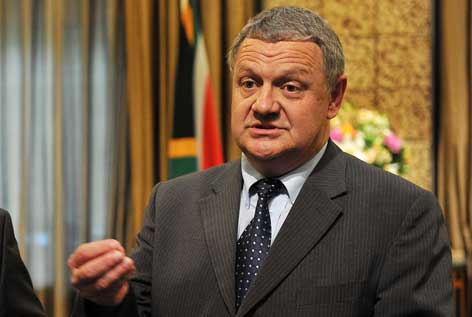
 Dr. Pieter Mulder, leader of the Freedom Front Plus, yesterday asked for an urgent parliamentary debate on affirmative action to be held in Parliament.


