What’s affirmative about affirmative action?

“Cadre employment must stop and an effective civil service must be built up by appointing  competent people. Officials and managers at all three levels of government should possess the correct financial and technical skills for the job.” So declared president Cyril Ramaphosa after a visit to Kimberley recently where the ANC celebrated its 108th birthday. He was “shocked” at the living conditions he found there, he said. “But we know the (country’s) looting and the wholesale state capture shebang took place right under his nose, with his eyes wide open”, said columnist Barney Mthombothi (Sunday Times 12.1.20). So why the president’s shock at the Kimberley situation? Doesn’t he read the newspapers?

He said that if the country’s peoples’ lives must be bettered, then the services delivered by the country’s three levels of government must improve.

How will he better this parlous situation? He declared that attention must now be given to the “thorough training of the state’s civil service corps”. (But they have shown themselves to be untrainable and, more seriously, to have no integrity. They have caused irreparable damage to South Africa’s local government systems and structures over the past 25 years.)  Mr. Ramaphosa is going to restore to “health” the country’s parastatals (such as South African Airways.) “We will get it right by appointing qualified and experienced managers and give them the space to fulfil their mandates,” said the president.

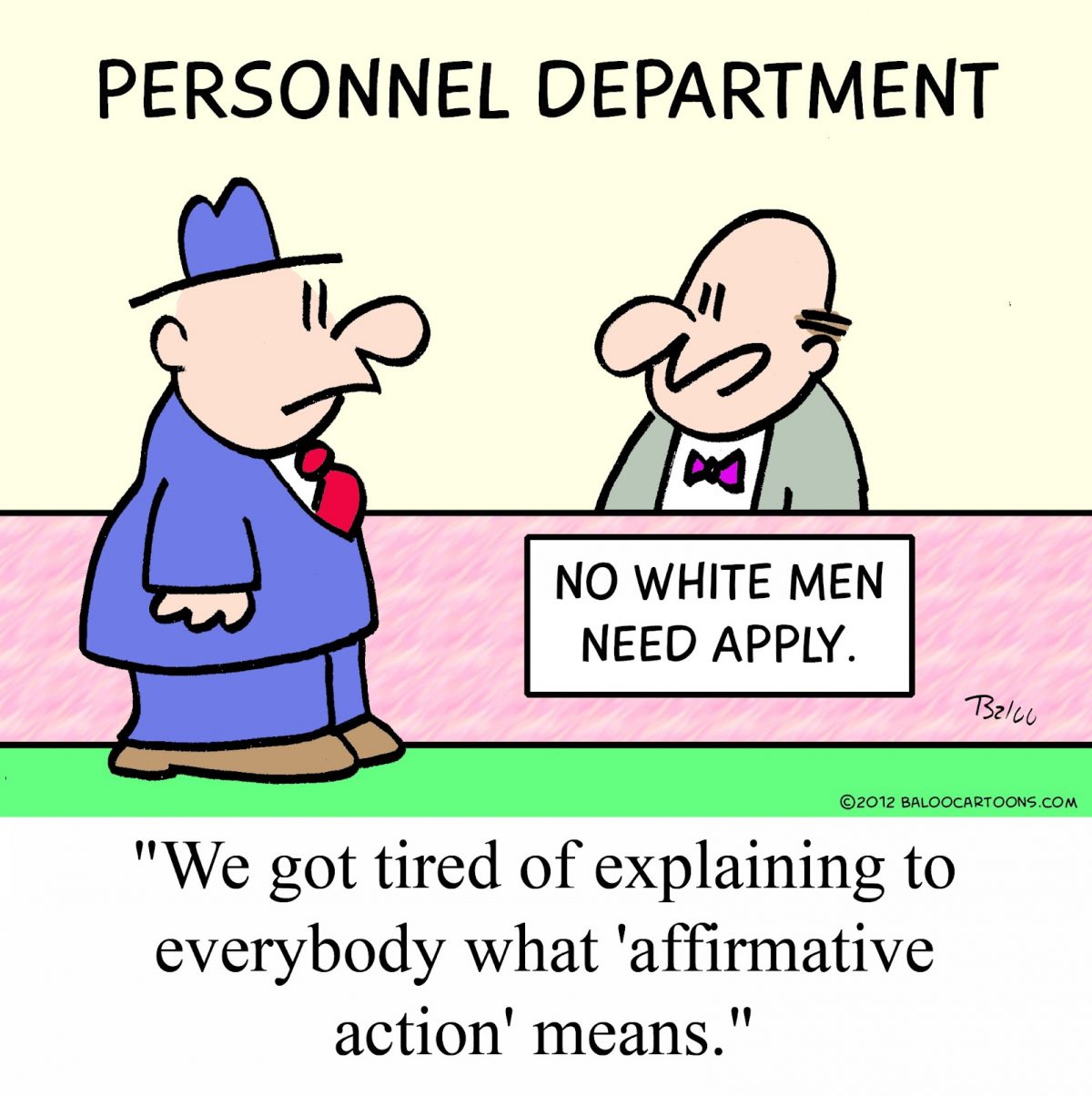
So why didn’t he do this a long time ago? Because he doesn’t intend to change anything, just move cadres around like deckchairs on the Titanic. Proof of this chicanery can be observed by checking out the media advertisements for government jobs, especially for municipalities.  All of these, without exception, state that the municipality (or any other government department), is “an Employment Equity Organisation that subscribes to the principles of affirmative action”. In other words, no whites must apply.

There we have it. Mr. Ramaphosa is a teller of tales which bear no resemblance to the truth. Declares Mr.Mthombothi: “Apart from his well-earned reputation as a coward, Ramaphosa is cultivating another unfortunate trait. He’s telling too many falsehoods. These fibs are not only corroding his credibility, they are a godsend to his ever-expanding bank of enemies”. (Mthombothi was referring to the rafts of lies told and promises made during the president’s tenure, including the whopper in New York in December 2018 about SA farm murders “not existing”.)

Deformative Action

The root cause of South Africa’s descent into third world status is indeed “affirmative action” (AA), a term first used in the United States in Executive Order No. 10925 signed by President John F. Kennedy on 6 March 1961, which included a provision that government contractors “take affirmative action to ensure that applicants are employed, and employees are treated during employment, without regard to their race, creed, colour, or national origin.” This was followed by further legislation in 1965 and in 1967, when gender was added to the anti-discrimination list.

According to Wikipedia, “this action prevented employers from discriminating against members of disadvantaged groups.”  In South Africa’s post-1994 election period, the term “previously disadvantaged” became part of the country’s politically correct lexicon, implying that, in quite explicit terms, whites had historically suppressed the other South African race groups. The corollary of this narrative was a relentless media chronicle (intentional or unintentional, the jury is still out on this!) to heighten white guilt and its spin-off, black entitlement. This has resulted in a policy of reverse discrimination so severe and unyielding that is destroying the South Africa we knew. It is in fact deformative action.

One key to the SA government’s warped version of affirmative action is the word “disadvantaged”. Many argue that this word misrepresents history, and with good reason. Empirically there is no contrary narrative to the fact that when whites arrived in the Cape in 1652 and subsequently moved throughout Southern Africa, there was no evidence of a local civilization other than a basic way of life that did not include the written word, or serious infrastructure or any other sign of natural evolution or development towards a way of life similar to that brought to South Africa by the whites from Europe. This fact has been attested to by writers, travellers and historians who visited Southern Africa over the centuries since 1652 where they chronicled what they saw. Political correctness had not reared its ugly head at that time, so what they saw and what they wrote cannot be challenged because there were no other versions, and their agendas were mostly historical.

Is it any wonder that the descendants of these people who occupied Southern Africa at the time of the arrival of the whites have virtually destroyed South Africa’s functioning infrastructure and the social fabric created and built up over 450 years? They never developed anything remotely resembling the accoutrements of a functioning modern civilization. When the ANC/SACP alliance appointed their political friends and colleagues to posts via the official policy of AA, where not even the vaguest knowledge and skills existed to enable many of these appointees to fulfil their mandates, it can be concluded that the collapse of South Africa was entirely predictable. There could have been no other outcome.

So why the term “disadvantaged”? Many would assert that black South Africans have been advantaged by their co-option into the Western civilization developed by others which gave them the written word, a Western-style education system and all the trappings of a way of life which, alas, is so desperately lacking in most of sub-Saharan Africa. It could be said that the real disadvantaged are the South Africans who pay the bulk of the taxes, who pay for electricity and water when millions use these services and pay nothing, and who see the country’s schools, transport services and other facilities go up in smoke at every protest about “non-delivery” of services for which they have never paid and will never pay! This destruction is wanton and the serious consequences thereof never seem to enter the heads of the perpetrators.

With the exception of only two years – 2011 and 2014 – there has been a steady net growth in the number of SA emigrants. It is estimated that by 2017 more than 820 000 wealthy educated people have left South Africa. The number of SA born emigrants to the Big Five countries (UK, US, Canada, Australia and New Zealand) almost doubled between 2000 and 2017, an average net increase of about 1 500 per month. These people are the cream of South African society, the taxpayers, the job creators, the entrepreneurs. They left because the ANC government has got it all wrong, and there seem to be no remedies in sight.

Nothing is done

The appointment of AA cadres is exacerbated by the inability and/or obstinacy of the SA government to do anything to ameliorate the problems associated with AA: vast and pervasive incompetence, indolence, corruption and a totally unjustified sense of entitlement. Neither the government nor their cadres can introspect. They cannot see what others see – that they are useless. Or maybe they don’t want to see. While the country falls apart around them, they will continue to talk the leg off an iron pot at meetings, summits, lekgotla’s and sundry get-togethers where they endlessly discuss the country’s “challenges” (read failures).  BUT NOTHING GETS DONE.  Businessmen, commentators and a myriad of worriers write endless articles “urging” the government to do something. These pleas fall on deaf ears. The ANC moves at its own pace: its real goal is the retention of power at any price. Such is the ransom we have paid on the altar of African “democracy”.

Relentless

The destruction continues relentlessly. There is no stay of execution. A cursory glance at any daily South African newspaper will confirm the continuity of the ANC government’s stupefying stupidity. One blatant example is president Ramaphosa’s announcements that his government will proceed with legislation enabling the expropriation of private property without compensation. In the next breath he talks about the investment “millions” that will flow into South Africa, as if one circumstance will not influence the other.

Now the ANC proposes that the courts will not be the arbiter of whether or not the state will pay for land it expropriates. This power is given to the relevant minister. This latest rashness reveals a remarkable lack of “cause and effect” thinking, but then this has always been a hallmark of a rudimentary mindset. The example of Zimbabwe’s collapse seems to have either escaped the president, or he believes that things will be different here! Either way, the president is hardly fit to lead South Africa.

Affirmative action in South Africa is a tragic failure. The inevitability of its outcome was pointedly ignored by those who had neither the integrity nor the foresight to know what the future would hold, despite the numerous examples of nepotism, patronage and affirmative action displayed by virtually every African government north of the Limpopo. In South Africa, leaders and influencers were seduced by the world’s approbation of this country’s “transition to democracy”. Warnings were either ignored or dismissed as the rantings of extremist groups.  History will be the judge of who was right. But being right doesn’t necessarily  mean you win!

Asians in USA are punished for having better test scores than blacks and Latinos

Sarah was at a college prep seminar when she was told she’d have to be better than everyone else.

Sarah was shown a prominent study that correlated race and SAT scores in college admissions, which found that Asian-Americans were at a stark statistical disadvantage, losing the equivalent of 50 points off their SATs by virtue of their race. Black and Latino applicants, in contrast, gained the equivalent of 230 and 150 points, respectively, the study claimed.

“I just thought it was really unfair,” Sarah, a 15 year-old student at a public high school outside San Francisco, told BuzzFeed News. “And I thought it was a little bit racist, a little bit prejudiced.” (Sarah asked that only her first name be used in order not to jeopardize her college applications.)

Above all, Sarah concluded that the unfair statistical disadvantage translated to more pressure and more work. Sarah, who immigrated to the U.S. from China with her parents when she was 5 years old, would have to spend the next three years trying even harder to distinguish herself in a highly competitive majority-Asian school. “I’m not even in my sophomore year, and it’s already hitting me,” she said.

Last month, a coalition of Asian-American groups filed a federal complaint alleging that Harvard University applied discriminatory quotas against Asians in its admissions process. In response, an even larger Asian-American coalition published an open letter rebuking the complaint and affirming its support for affirmative action policies that consider applicants’ race. The reaction to the Harvard complaint revealed fault lines in the Asian-American community around the often highly sensitive and personal issues of college admissions and race.

The debate has also underscored differences of opinion between recent immigrants and American-born people of Asian descent, particularly among Chinese-Americans. While many of the former see affirmative action as part of a long legacy of anti-Asian discrimination in the United States, many of the latter accept affirmative action as a necessary corrective to America’s history of racism, particularly against blacks.

“A lot of recent immigrants have the mentality that if you work hard enough, and prove yourself with high GPA and SAT scores, then that should be all you need” to get into a top college, said C.N. Le, a professor at the University of Massachusetts, Amherst. Whereas Chinese-Americans who have assimilated over generations to life in the United States, Le said, are more likely to appreciate “the structural factors that led to the formation of affirmative action” in the first place.

Such is the case with David Fong, who has a 15-year-old son in public high school in Redondo Beach, California. “I don’t agree with the people bringing the [complaint against Harvard], but I understand their thinking,” Fong told BuzzFeed News. “I just think their thinking is wrong.” Fong grew up in the tenements of New York City’s Chinatown, the son of working-class Chinese immigrants. His mother worked in a garment sweatshop, and his father was a waiter at a Chinese restaurant, until he and a group of fellow waiters pooled enough money to buy the place.

From that point on, Fong’s parents struggled to elevate the family to a solid middle-class existence. Fong was a latchkey kid who barely saw his constantly working mother and father. “The restaurant was open seven days a week,” he said. “The only times it closed were Christmas, Easter, and Thanksgiving was a half day.”

Fong’s parents placed a huge premium on his education. Fong listened, eventually getting undergraduate and law degrees from NYU. But he also came to deeply value diversity. Growing up, Fong went outside the Chinese community to make friends of different races and backgrounds, trying to combat the “informal social segregation” that he saw among his peers. “I think the next generation, when we’ve been here longer and gotten the chance to interact with other people and immerse ourselves in American society, realize that we need to be more open-minded,” Fong said.

Fong inculcated this perspective in his son, Jason Fong, a budding writer and committed wrestler who just finished his sophomore year at Redondo Union High School. Jason has seen the statistical evidence suggesting that he, as an Asian-American college applicant, may face higher hurdles than some of his peers. But if he were rejected from a school in favor of an underrepresented minority, he says, “I would accept that. It’s for the greater good of the country, because the diversity level in America is what makes it different from anywhere else in the world.”

Many recent Chinese immigrants think this mentality ignores the decades of very real discrimination that Chinese people have suffered in American history. American-born Chinese — or ABCs, as some immigrants call them — can lose sight of this discrimination, said Sean, the stepfather of Sarah, the high school student outside San Francisco. (Sean also asked to withhold his last name to protect Sarah’s identity.) He sees the effects of affirmative action on Asians as part of a lineage that includes the Chinese Exclusion Act and laws preventing Chinese people from working in government or marrying Americans.

“People who move here, I think, are more aware of the discrimination, because we’re sensitive,” Sean told BuzzFeed News. “We came from another country, and we always look around to see, am I doing well? What else do I need to do? So we force ourselves, and also our children, to work harder just to get recognition.”

When he looks ahead to Sarah’s future navigating high school and the college application process, Sean worries mostly about the pressure that the system places on his stepdaughter — pressure to do everything possible to obtain higher test scores to overcome the bias against her. That pressure, he said, can be harmful to the well-being of a generation of young Asians striving to succeed academically while also cultivating meaningful social lives. “When you’re 15 or 16, any pressure on you, when you feel it and assess it, it can be exaggerated fivefold,” Sean said. “The pressure, in my opinion, is unfair pressure.”

And it is a pressure that Sarah says she definitely feels. “Coming from a high school that has really high test scores and a really high population of Asians, everyone is fighting to be seen,” she said. She plays volleyball and pursues extracurricular activities in an effort, she said, to “beat the stereotype” that Asians are narrowly test-focused and excessively studious. “But it’s hard to maintain that when we also know that we’re at a disadvantage, and we have to study even harder to get even better SAT scores,” she said. “It’s hard to balance that.”

“Oftentimes I think it would be a lot easier if I wasn’t Asian,” Sarah added. “I think I could enjoy my high school experience more.”

South African business ‘schocked’ by new black ownership rules

Unless South African businesses hand over large chunks of equity to black shareholders, they will no longer be awarded so-called “BEE points” by government, which means that they could be forced out of business. According to the Johannesburg financial newspaper, Business Day, “the Department of Trade and Industry sprung a surprise on business, issuing an unexpected ‘clarification notice’ on Tuesday that broad-based empowerment and employee share ownership schemes will no longer count as much as individual share ownership on the black economic empowerment (BEE) scorecard.”

The notice astounded lawyers and verification agencies and will substantially alter the ratings of companies that have placed a portion of their ownership in the hands of employees or community organisations.

The notice also set out to clarify a range of issues relating to the new codes of good practice, which were due to come into effect on May 1, and explain their staggered implementation.

Of the 25 points on the new scorecard that can be earned for black ownership, broad-based and employee share ownership schemes can contribute only a maximum of three points. They cannot count towards the voting rights of black people or the economic interest they hold in the company, which are the other elements on the scorecard.

Under the previous score-card, broad-based and employee ownership schemes were used in the general calculation of black ownership, provided they were manifested in voting rights and reflected genuine economic interests, such as dividend payments and the ability to trade shares. The change was not canvassed with stakeholders or verification agencies.

Keith Levenstein, CEO of empowerment verification agency Econoserve said it would affect hundreds if not thousands of broad-based schemes.

“It is going to instantly drop these companies on the scorecard by as much as 20 points and imply they do not meet the element of ownership,” he said.

Empowerdex described the news as a “big shocker” and Mazar’s managing partner Tony Balshaw called it “devastating”.

“A significant number of nonlisted multinationals and large-and medium-sized enterprises have done empowerment deals based on employee or broad ownership schemes. The effect on them could be to drop at least three ratings levels of the eight,” said Mr Balshaw.

Chief director of the Department of Trade and Industry Takalani Tambani said the idea behind the change was to ensure that ownership by black individuals was given greater priority by the business community.

“The message is government views the ownership as important to transform the economy. For us to effectively do that, we want to see black people participating meaningfully in the core of the economy.

“Passive shareholding will not be able to transform this economy. Passive shareholders are not the real drivers of the business,” he said.

ANC politicians have previously used their positions to acquire stakes in businesses, sometimes for free. The use of the phrase “private shareholding” might imply that businesses are going to be pressurised to offer risk-free equity deals to the ruling nomenklatura, their family members and friends.


Texas Rep governor nominated two pro-affirmative action regents at UT

The two people nominated by Gov. Greg Abbott to join the Board of Regents of the University of Texas System support affirmative action.

On Thursday, Abbott nominated Sara Martinez Tucker of Laredo, head of an education nonprofit and a former U.S. undersecretary of education, as well as David Beck, a prominent Houston attorney and a founding member of the Texas Coalition for Excellence in Higher Education, a group formed to oppose education reform proposals put forward by the conservative Texas Public Policy Foundation and to defend the university’s president, Bill Powers, from criticism.

Martinez Tucker and Beck signed their names to a friend-of-the-court brief filed in a 2013 case before the U.S. Supreme Court regarding affirmative action known as Fisher v. UT. The brief argued in favor of affirmative action at UT, and the list of signers reads like an invite list to a Powers’ Christmas party.

As attorney general, Abbott represented UT in the early stages of the litigation but dropped out in 2012, apparently at Powers’ request. There was speculation at the time Abbott didn’t want to have to explain his defense of affirmative action during a run for governor.

Abbott also nominated Stephen Hicks, another friend of Powers, to serve another term on the board.

The nominees must still be confirmed by the state Senate, which is now run by Lt. Gov. Dan Patrick, who has called for investigations into UT’s admissions practices.

The pro-Powers nominations come as little surprise, as Abbott sat on an investigation into the UT Law School foundation for nearly two years. When Deputy Attorney General John Scott produced a highly critical report, the Attorney General’s office withheld it until the 11th hour — Dec. 31 of last year.

Affirmative actions policies at the University of Texas have been the subject of two major Supreme Court decisions. – watchdog.org

Zuma reiterates that Eskom’s problems are the fault of whites and ‘apartheid’

President Jacob Zuma used the ANC’s January 8 birthday rally to absolve his government from responsibility of the energy crises gripping the country, according to reports from the ANC shindig in Cape Town.

Zuma told over 50 000 of ANC supporters gathered at the Green Point Stadium on Saturday that “the ANC government should not feel guilty for the lack of power in the country”.

“The energy problem is not our problem today. It is a problem of apartheid which we are resolving,” he said.

Zuma reaffirmed comments he made in the past that apartheid was responsible for the rolling blackouts affecting the country.

“The reality is that we are dealing with the legacy of apartheid, which was skewed to deal with the minority and not the majority,” the president said.

Once upon a time, under National Party rule, South Africa had the cheapest power in the world, with excess production exported or sold at risible rates to aluminium smelters. Yet yesterday the country had to contend with a new round of “load shedding” as the state utility Eskom ran out of electricity again. The power utility said it was due to “high electricity demand and the unavailability” of some generating units. Stage one allows for up to 1 000MW of the national load to be shed, stage two for up to 2 000MW and stage three for up to 4 000MW.

Eskom has been fanatical about affirmative action and has laid off scores of white engineers, leaving the company without engineering and financial expertise but with high-salaried affirmative-action freeloaders.

“When commentators comment on energy they forget this (that apartheid was responsible for the lack of energy). They want to put the blame on the democratic government,” said Zuma.

The Mail & Guardian reported on Friday that Eskom would run out of money by the end of January.

However, Zuma refuses to shoulder any blame for the electricity mess in South Africa.

“The ANC government is accelerating the pace to bring the Medupi and Kusile power stations onto the grid and we are licensing independent power producers,” he said.

“We continue to evaluate options to maximise our energy mix including coal, gas, nuclear, solar and renewables,” he added.

A nuclear plan has also been announced by Zuma.

“The ANC is therefore putting energy as one of our apex priorities,” he said.

‘Monopoly capital’
Zuma’s speech focussed on the Freedom Charter, a Marxist document drawn up by Rusty Bernstein and others in 1955 and has since served as a central party manifesto to both the Communist Party and the ANC. He warned against monopoly capital:

“We must break the stranglehold of monopoly capital on our economic development. It is imperative that the Competitions Commission continues to address monopolistic, collusive and anti-competitive behaviour and become even bolder in their preventative and punitive measures.”

Zuma’s statements on the economy were warmly received by the Communist Party and its main trade union, Cosatu.

Cosatu President Sdumo Dlamini said he was “satisfied that the president raised the debate of racial transformation in the financial sector”.

“But it will remain a speech if there is no implementation,” he added.

Zuma wants banking to become more affordable too.

“Banking has become much more accessible to the majority of South Africans, but the excessive bank charges and fees mean that many people still cannot afford bank services,” he said.

The ANC is also preparing to implement a Zimbabwe-style “land reform” in South Africa, pushing white farmers off the land.

“We commit that the land will be returned to our people and the ANC calls on its government to act with the necessary speed to put the legislation in place, this year, to ensure that this happens.”

Black Management Forum very happy with ConCourt’s anti-white ruling

The Black Management Forum accuses businesses of ‘not respecting the rule of law’ by appointing white people to positions.

South Africa’s Black Management Forum has expressed its satisfaction with the Constitutional Court ruling that excluding whites from promotion is enshrined in the affirmative-action clauses of the country’s constitution. This came after an appeal by the Police Service against an earlier Appeal Court ruling that captain Renate Barnard should have been given promotion to superintendent, regardless of her race.

In response, the Black Management Forum has said in a statement that it “welcomes the Constitutional Court ruling in defence of Affirmative Action”.

The BMF “applauds the well thought and articulated ruling by the judges. This is essentially upholding the very law which is enshrined in our constitution. The BMF would like to remind all the institutions in our land that we will not find peace until workplaces reflect the national demographics of our country. Employment Equity Act is one of the transformation instruments which is meant to redress the imbalances of the past discriminatory era of apartheid which denied black people opportunities. We also note and condemn the general reluctance for transformation and unwillingness to appoint black people in senior and top management as reported by the Employment Equity Commission.”

The Black Management Forum accuses businesses of “not respecting the rule of law” by appointing white people to positions and it “will not rest until all the workplace in South Africa reflects our demographics”. As whites only constitute 9% of the population, that would mean that all institutions would have to impose racial quotas and fill positions with blacks, even where they are not qualified.


Little America at the tip of Africa

In this interview, two South African authors have a conversation about important issues affecting the country, the USA and society generally. They both grew up in and around Johannesburg and, thanks to the internet, discovered each other’s work a few years ago. Ilana Mercer lives in Washington State, in the north-western corner of America.

ILANA MERCER: There’s an elephant in the courtroom in which Oscar Pistorius is being tried for the murder of girlfriend Reeva Steenkamp. It is the unidirectional, black-on-black and black-on-white violent crime in South Africa. The fear of being butchered was likely behind the blade runner’s irrational, irresponsible actions. I had hoped that Pistorius would speak up. For all his privilege, Pistorius knows the rapacity and invincibility of the criminal class in his country. Like every other Afrikaner, he knew in his gut what infiltrating gangs would do to a legless Boer. The world is praising the proceedings in that court. However, “making sport of a caged animal that has confessed” is how a South African reader described this courtroom Colosseum. What do you think?

DAN ROODT: I largely agree with that. One of the columnists on our Praag.org site described the trial as a “canned hunt and a legal travesty.” Most people watching it probably do not know that only 8 percent of murder cases in South Africa result in a conviction, so killers have a 92 percent chance of literally getting away with murder! South Africa is both the murder and especially the rape capital of the world. Usually the statistics are massaged in such a way that only murder proper, called “first-degree murder” in the United States, is included in the absolute number of murders. But if one also counts other homicides with a lesser culpability, we are the world champions, even above India’s 43,000 homicides. But, of course, India has over 1 billion people, whereas we have just over 50 million. Even for first-degree murder, we have more of those per year (16,000) than the U.S. (14,000), which has six times our population.

Regarding the court procedures, Pistorius is spending a lot of money on his legal team, and the state is using an experienced Afrikaner prosecutor, Gerrie Nel. However, there has been large-scale affirmative action applied to the appointment of judges, so that many of them lack the knowledge of the law and the experience to do their job properly. In many cases, black offenders, especially, get off very lightly and in practice do not serve more than 10 years for first-degree murder.

The government is also applying pressure on lawyers to apply affirmative action in their own ranks as most of the top-level senior lawyers, or advocates, as we call them, are still white. They are preferred by the big-spending corporate clients in civil cases, especially. A lawyer friend of mine recently told me of one tedious corporate court case in Pretoria that has lasted 10 years and consumed $5 million in legal fees, also swallowing up her whole life. Ironically, even the president, Jacob Zuma – who has had more than 500 charges of corruption against him and was also accused of rape in December 2005 – used white Afrikaner lawyers to get him off, using their technical knowledge of the law and court procedures.

There is also rampant corruption in the criminal justice system, with policemen and petty court officials being bribed to make documents and evidence disappear, so the kind of televised court-room soap opera of the Pistorius trial is not at all representative of the vicissitudes of the average trial.

Unlike in the U.S., South Africa does not collect crime statistics broken down by race anymore, but we know that the vast majority of prison inmates serving time for violent crime are black. White offenders – which include white-collar crimes like fraud or insider trading – only constitute 1.8 percent of the prison population, while whites make up under 10 percent of the total population. A recent reliable survey showed that whites are disproportionately victims of house robberies, constituting about 50 percent of the victims, while the perpetrators are almost invariably black.

The image of South African blacks disseminated by the global media is of a population of kindhearted, forgiving people like Mandela, whereas the reality demonstrates something entirely different. There is something inexplicably sadistic about murders and assaults by black perpetrators on their white victims in South Africa, which often include lengthy and dehumanizing torture sessions, mutilation of bodies, sexual violence, and so on. Often the victims are children, including toddlers and babies. Every week we read about farm murders in the press where the victims are normally elderly white farmers, regularly ambushed on a Sunday morning when they return from church attendance.

Order lIana Mercer’s brilliant polemical work, “Into the Cannibal’s Pot: Lessons for America from Post-Apartheid South Africa”

MERCER: The South African Constitution, naturally, sanctions the prosecution of individuals based on the things they say. Conversely, Americans are supposed to enjoy a constitutional right to speak freely. The freedom gap is, however, narrowing. The establishment – politicians, journalists, jurists, educators and academics; “conservatives” as much as liberals – trip over one another in a collectivist, concerted effort to ruin an “offender.” The latest individual to be crucified for committing America’s original sin – harboring impure racial thoughts – is Donald Sterling. You’ve written that, while “few people in the U.S. have had any direct experience of racism, they nevertheless discern racism in other people’s body language, in their use of euphemisms or in being patronized by others.” Explain how this “metaphysical racism” now works as an “engine of history.”

ROODT: Unfortunately, ever since the 1960s, South Africa has been influenced by America in a very bad way. Instead of looking to the U.S. for lessons in self-reliance, the right to self-defense, or how to finance start-up tech companies, we have simply imported your liberal, pathological political correctness. That includes the sensitivity around language and terms with a racial connotation. I cannot begin to tell you how many words there are in South Africa to describe people of various races including, of course, pejorative terms. I seem to recall that my generation was very sensitive to using some of those words, and there was a famous case in 1978 when the old government’s censors banned a satirical novel entitled “Magersfontein o Magersfontein!” for containing a piece of dialogue in which the word “kaffir” was used in an ironic way. This is our equivalent to what you call the “N-word” in the U.S. In print these days, most people here also refer to the “K-word,” as there is just such a taboo against using it. However, if you go to any school playground or university campus in South Africa, young whites are using it as a way of rebelling against the system. How long this will last, I do not know, because the government and mainstream, politically correct society are clamping down on it and even giving people suspended prison sentences for a first offense after being found guilty of using the “K-word.”

So in South Africa you can torture an elderly white lady and maybe get away with it, but you will be prosecuted for speech crime for using racial epithets. I would not be surprised if all telephone conversations will be monitored, NSA-style, at some point in the future to ensnare those who use so-called racist language.

When it comes to “metaphysical racism,” that is at a far more subtle level. Someone who first alerted me to this was the documentary filmmaker Craig Bodeker from Denver, Colorado, with his piece “A Conversation About Race.” Many people in the film say that “racism is everywhere,” surrounding us like sin or some invisible element. Also, in “A Conversation About Race,” I learned that some American blacks think that a compliment from a white could be a sign of racism. So either an insult or a compliment could be construed as racism.

In South Africa, some of the liberal commentators such as Steven Friedman who writes in the Johannesburg Business Day claim that blacks were damaged by apartheid and therefore cannot be expected to perform at the same level as whites. In the U.S., this claim is made about slavery, that the insidious effects of slavery are still present, which would explain the academic achievement gap, but also differences in wealth and income. Colonialism also comes into it, as far as other African countries are concerned. The fact that Africa has remained underdeveloped for so long is almost always blamed on colonialism, notwithstanding that it was colonialism that had introduced Africa to the wheel and to writing, not to forget science and technology!

Whereas about a decade ago, the British magazine The Economist had described Africa as “the hopeless continent,” it now sees Africa as a fast-growing continent, not very different from countries like China, Hong Kong or South Korea. Even Goldman Sachs thinks that Africa will soon be a developed continent competing on an even keel with Europe, North America or Asia.

The flipside of the new optimism about Africa, including South Africa, is that every failure or missed growth target is somehow backwardly rationalized in terms of racism, colonialism and apartheid. In short, “metaphysical racism.” So even when it comes to technology, the economy and education, there is always a cloud of racism somewhere that the developed world has to address by offering aid money or some form of expiatory confession from Western leaders.

I always wonder: If Africa is now standing on its own two feet and growing so fast, why do so many countries still need development aid? Why do South African blacks still need affirmative action, including racial quotas in sports?

ILANA MERCER: The dominant-party state that is South Africa is steeped not in an African creed but in an American one. One of your most astute observations has been that post-apartheid South Africa is very much a creature of the Anglosphere. In the U.S., centrally planned and enforced multiculturalism is twinned with open borders for Third World peoples. How has South Africa fallen in line?

DAN ROODT: Many people see South Africa as an experiment in multiculturalism and open borders. Almost robotically, we’ve adopted most of the American liberal precepts in a very naïve, knee-jerk fashion. Some people are even urging that we abolish borders completely, to allow any of the billion Africans north of our country to come and settle in South Africa, much like your government is doing vis-à-vis Central American dependents. However, our experience of the massive illegal immigration we have had since 1994 is that it increases intolerance, especially among the poor and the unemployed. Locals regularly kill foreigners, and we have had so-called xenophobic riots.

In some towns close to the border, the foreign population is about 80 percent. Foreigners have access to public health-care facilities, so many are “obstetrical tourists” who come here to have babies – “anchor babies,” as you call them in the U.S. Generally speaking, state hospitals are getting worse and worse, also as a result of being overburdened with foreign Africans.

Recently, there was a court decision that foreign children that have been orphaned or separated from their parents, for example in the war-torn Democratic Republic of the Congo, also qualify for free public education in South Africa. After Lawyers for Human Rights had sued for the privilege, the government did not oppose their petition to the court.

Open borders will lead to even more ethnic strife, and we may even import some of Africa’s civil wars as the belligerents pursue their combat in South Africa. In your country, it’s gang warfare.

MERCER: Under the Afrikaners, South Africa was a European-style nation-state – Christian and biracial, in the main. Under Mandela’s African National Congress, it has adopted multiculturalism, which subsumes an “American radicalism that aims at abolishing the nation-state and replacing it with a kind of global corporatism and welfarism,” to quote your work. South Africa is now an “Afro-Saxon” nation. Explain, please.

ROODT: Yes, I think those remarks of mine are borne out by what is happening in Europe right now. There is some kind of revival of the Western spirit going on in places like France, the Netherlands, Denmark, Italy, Austria and Hungary. It is something of a truism that Afrikaner nationalism in the 20th century was based on European-style ethnic nationalism. If you look at it more objectively and free of the moral hysteria and distorted accounts, apartheid or separate development was an attempt to impart European-style ethnic nationalism to South Africa’s African tribes. To some extent, it worked, and it still has an effect to this day. For example, there has been a resurgence of Zulu nationalism in South Africa, and to some extent the ANC under Jacob Zuma has become a vehicle for Zulu aspirations and advancement. With the difference that it is no longer limited to the old homeland of Kwazulu. The whole of South Africa has now become “one big Bantustan,” as the liberal commentator R.W. Johnson has characterized it.

But in other respects, South Africa has become a colony of the USA, culturally speaking. Blacks identify with African-American culture. You hear American rap music wafting from their cars, and they have adopted the same kind of victim’s discourse that you find in the USA. There is actually a Kenyan professor who teaches in the USA., as far as I know, Ali Mazrui, who coined the term, “Afro-Saxon” for the English-speaking blacks in Africa, the USA, the Caribbean, in Britain, and so on. In fact, they outnumber the original English-speaking population of England! The black elite in South Africa identifies with this global Afro-Saxon culture, and they see themselves as being an important part of it, using South Africa’s wealth and developed infrastructure to advance the Afro-Saxon cause.

Talking about the welfare state, one of the worst fears of the old apartheid theorists was that ultimately the productive, developed part of the economy would have to subsidize the unproductive, impoverished, undeveloped part, dragging both down into an equally distributed poverty. This is more or less what is happening in South Africa now as we have a welfare state for 50 million people, supported by only 2 million real taxpayers. The funny thing is that multiculturalism and affirmative action actually disguise this process completely, so that you can no longer really tell who the producers are and who the consumers of wealth are.

In the same way, knowledge and expertise also end up being distributed in such a way that you no longer know who really has it: Is it the person who does the job, or his secretary or assistant or deputy or whoever? The other day I heard that an ex-taxi driver was appointed to a top job in our central bank, but he is barely able to write an email and knows nothing about banking. Yet he has some outside white mentor or adviser who actually helps him do his job and is also his business associate. So everybody tries to exploit this made-in-America spoils system.

Unfortunately, the USA seems to be in imperial mode, and so it wants to export its multicultural model everywhere, including to Europe where there are still real nation-states in which people speak the same language, have a common history and identity and have not been transformed by immigration. You only have to come to South Africa to see the American model in its most extreme form, where race and political correctness dominate everything.

When it comes to issues of race and ethnicity, we have also imported the sensitivity around language and ideas that pertain in the USA. Once I actually quoted a black columnist complaining about the low scores in math recorded in black schools in Soweto. The next thing I was denounced as a racist. Even if you just try to defend your language and culture, or the right of free association, that is also seen as racist. Too much criticism of government corruption or affirmative action is likewise deemed racist.

Welcome to Little America at the tip of Africa.

Telkom targets whites

Telkom headquarters in Pretoria, as seen from Church Square Photo: Wikipedia

Telkom plans to target white, male employees when making job cuts that may affect more than 2,600 managers at South Africa’s largest fixed-line phone company, according to labor unions.

The carrier will consider “employment equity” when deciding who to dismiss, according to a document two labor unions said they received from Pretoria-based Telkom this week.

Employment equity is a government policy seeking to boost black participation in the workforce regardless of demography or merit.

South African companies have to comply with legislation seeking to address racial inequalities that stem from apartheid rule, which ended in 1994.

White males account for almost 40 percent of the senior and middle management positions that Telkom wants to reduce, while less than 9 percent of South Africa’s population is white.

Solidarity, a union with close ties to the predominantly white Afrikaans community, said Telkom’s cuts may disproportionately target white workers.

Affirmative action refers to racial measures that encourage companies in South Africa to hire and promote more black staff and procure goods and services from black-owned companies, despite blacks being a majority in the country.

The measures obviously discriminate against the small white minority.

Companies aren’t required to apply such policies when cutting jobs. Telkom said yesterday it intends to reduce its “management layer” by about 25 percent.

The operator, about 40 percent owned by the South African government, “will consider a number of criteria, one of which is our obligation to comply with the Employment Equity Act.”

The other criteria include qualifications, potential, length of service, and gender, according to a document that the unions, Solidarity and the South African Communications Union, said they received.

At Telkom, white males account for 38 percent of senior management and 39 percent of middle management, according to its 2013 annual report.

Source: Bloomberg News

SAIRR: Rising expectations lead to more violent uprisings

opstandRising expectations and youth unemployment have been identified as some of the sources of violent protests which have increased dramatically in the country in recent months.

The South African Institute of Race Relations, SAIRR’s programme manager and researcher, Georgina Alexander, says: “We have more people on social welfare at the moment in the country than those who have employment.”

In his State of the Nation Address last week, President Jacob Zuma promised on Thursday that South Africa would enter a new radical phase of accelerated socioeconomic transformation after the May election.

“More importantly, after the elections, the country will enter a new radical phase in which we shall implement socioeconomic transformation policies and programmes that will meaningfully address poverty, unemployment and inequality.

“It is a phase of focusing on economic transformation in particular. We have achieved political freedom, now we must achieve economic freedom and ensure that the ownership, management and control of the economy is deracialised further.

More needed to be done to advance blacks, he said.

“The number of black people and women in senior management has increased from less than 10% in the 1990s to over 40% today, which is a good achievement for the country. But it is not enough. Each year, the Employment Equity report releases statistics that indicate that the economy is still controlled by white South Africans in terms of senior and top management positions.

“We must therefore intensify the implementation of affirmative action policies in order to deepen reconciliation and social cohesion in our country,” Mr Zuma said.

Alexander says, “There is a threat that these protests will increase and become more violent. […] The government can see that the delivery protests are becoming more violent. They need to address the deeper causes of these service delivery protests.”

The deeper reasons for the protest lie in levels of youth unemployment and dependency on state as well as increasing rising expectations that people have, but it’s all directly reliant on the state to do something about it.

“This is just a spark, the deeper reasons for the protest lie in levels of youth unemployment and dependency on state as well as increasing rising expectations that people have, but it’s all directly reliant on the state to do something about it like to increase people’s living standard for them.”

Police officials and the South African Human Rights Commission (SAHRC) recently met to discuss the violent protests.

The SAHRC’s Danny Titus says, “The commissioner indicated to us that she would like to have a meeting next March with the Human Rights Commission focusing specifically on human rights and policing, and the number of issues around that.”

He says, “We would like to establish this relationship where we can make each other understand each other’s picture.”

Meanwhile, National Police Commissioner Riah Phiyega says they are struggling to control violent protests because of a shortage of public order policing officers. There are only 4 000 such officers and yet there was double the number in 2006.

End of the road for affirmative action on US campuses?

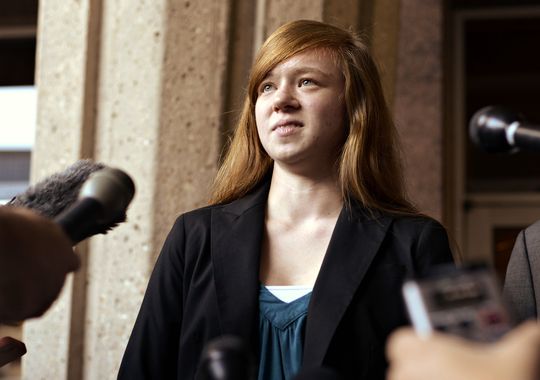
Abigail Fisher outside the Supreme Court

After more than 60 years, is the end of the road near for affirmative action in college admissions?

The idea of using race to help determine who gets a seat in public colleges has been under fire for decades. Eight states have essentially banned the practice, and a Michigan case pending before the U.S. Supreme Court could prompt others to do the same.

College officials nationwide got a wake-up call last June from the high court, which set a high bar for using race as part of a complex admissions program in Texas. Many observers say the combined weight of the two cases could finally push state universities to find another way to promote diversity.

“All the trends are pointing against the continued use of race in admissions,” says Richard Kahlenberg of the Washington, D.C.-based Century Foundation, a liberal think tank. Kahlenberg has for years advocated using family income,not race, as a way to ensure that public K-12 schools and colleges have a diverse student body.

A year after hearing Fisher, the justices last October heard arguments in a case from Michigan, where a 2006 state constitutional amendment banned racial preferences in public university admissions. Seven other states — California, Florida, Washington, Arizona, Nebraska, Oklahoma and New Hampshire — do the same, and about 29% of students live in states where affirmative action is banned, Kahlenberg estimates.

Michigan Attorney General Bill Schuette says the state’s position was summed up well by Chief Justice John Roberts, who said the best way to stop racial discrimination “is to stop discriminating on the basis of race.”

“Our constitution requires equal treatment in college admissions, which is an expression by 58% of Michigan voters in 2006 that says it is fundamentally wrong to treat people differently based on race or the color of their skin,” Schuette says. “It’s just wrong.”

A July 2013 study by Georgetown University scholars Anthony Carnevale and Jeff Strohl found that in 2009, white students were more “over-represented” among the USA’s 468 most selective colleges than they had been in 1995. From 1995 to 2009, the nationwide share of young people ages 18-24 who were white dropped 6 percentage points, from 68% to 62%. But whites’ share of freshman slots at the USA’s most elite colleges dropped just 2 points during that same period, from 77% to 75%.

Another study, by Orfield’s Civil Rights Project, found that 15 years after California’s ban on racial preferences went into effect, increased competition has dropped the share of black in-state high school graduates admitted to UCLA from 47.6% of applicants to 13.7%; the percentage of Latino students admitted dropped from 54.9% of applicants to 14.8%. The percentage of white students admitted also dropped, but not as sharply.

Kahlenberg says the string of affirmative action cases has pushed universities to find alternative ways to create diverse freshman classes. He notes that Texas’ 10% rule has resulted in higher levels of black and Latino representation. Other state systems have gotten similar results by eliminating preferences for children of alumni and bolstering financial aid, among other measures. These strategies have led to more racially and economically diverse classes “in a way the Supreme Court can’t touch,” he says. “I think that’s the future of affirmative action.”

Recent surveys have found that Americans don’t like using race in admissions, Kahlenberg says, “but on the other hand, Americans don’t want to see universities and American higher education re-segregated.”

A decision in the Michigan case, Schuette v. Coalition to Defend Affirmative Action, is expected this spring. If a majority of eight justices rule in Michigan’s favor (Elena Kagan, a former solicitor general, recused herself), it could prompt opponents of affirmative action in other states to push for similar bans.

But if the ban is overturned, states such as California again could weigh race in college admissions — and not a moment too soon, Orfield says. Admissions pressures there have become “very intense.” He notes that UCLA alone last year received nearly 100,000 applications. “It’s a big state, it’s growing … and we haven’t been growing the higher education system.” – USA Today

Contributing: Richard Wolf

SA Police to defend anti-white policy in Constitutional Court

Renate Barnard... too white for promotion
Renate Barnard… too white for promotion

The South African Police Service (SAPS) now wants to refer the Renate Barnard affirmative action case to the Constitutional Court. Yesterday, court papers were served on Solidarity which is representing Barnard. Solidarity will oppose the SAPS’s application for leave to appeal.

‘Solidarity is shocked by the SAPS’s decision to defend its unlawful race practices all the way to the Constitutional Court,’ Dirk Hermann, Solidarity’s Executive Officer said in a statement. According to Hermann, the Supreme Court of Appeal in Bloemfontein passed an excellent judgment that balances the rights of all. ‘We get the impression that the SAPS believes that affirmative action annuls the constitutional rights to equality and dignity of white employees like Barnard. Should that be the case, then affirmative action would have a higher authority than the Constitution itself. This would imply that South Africa is an affirmative action state and not a constitutional state. We are of the opinion that an appeal to the Constitutional Court is inappropriate. The SAPS should abide by the Supreme Court of Appeal’s judgment.’

Hermann says the greatest injustice brought about by this is the time it is taking to get justice for Barnard. ‘She has been fighting for justice for the past 8 years, and a constitutional court application will simply delay this process even more. She exudes passion to serve the South African public, and surely something is patently wrong if the colour of her skin is the only stumbling block preventing her to live out her calling.’

Hermann added that although Solidarity believes that, for Barnard’s sake, it is inappropriate to refer this matter to the Constitutional Court, it will be advantageous for South Africa to obtain legal certainty about these burning issues in the highest court.

In November, the Supreme Court of Appeal in Bloemfontein ruled in favour of Solidarity and Barnard. The SAPS was ordered to pay the costs associated with the litigation in the Labour, Labour Appeal Courts as well as in the Supreme Court of Appeal, as well as Barnard’s backdated remuneration.

Barnard’s affirmative action struggle began as far back as 2005. Twice, she had applied for the same position. In both instances she was found to be the best candidate and the interviewing panel recommended her appointment. The position was, however, left vacant. The position was advertised a third time, but was scrapped after she had again applied for it.

Letter from Zimbabwe: Generations yet to be born

Cathy Buckle

by Cathy Buckle

Christmas has arrived with a bombshell to Zimbabwe this year. A seven page photocopied form has flooded what’s left of privately owned, legally operating businesses. It’s called the ‘Notification of Extent of Indigenisation and Indigenisation Implementation Plan.’ All ‘foreign’ owned businesses have been instructed to outline their plans to hand over 51% of their companies to ‘indigenous’ Zimbabweans.

At first glance you assume that ‘foreign’ refers to non Zimbabweans but that assumption isn’t the case. According to the Form, an ‘indigenous’ Zimbabwean is defined as “any person who, before the 18th April 1980 was disadvantaged by unfair discrimination on the grounds of his or her race, and any descendant of such person and includes any company, association, syndicate or partnership of which indigenous Zimbabweans form the majority of the members or hold the controlling interest.”

This phrase, and those that follow, leave you with more questions than answers, no matter how many times you read them. It seems that by including the word ‘descendants’, the term ‘indigenous’ also refers to generations yet to be born, conceived or even dreamed of. Then there’s the question about just exactly who is indigenous. If you are a Zimbabwean born Indian, or mixed race or white Zimbabwean, can you be called indigenous? If you are a black Zimbabwean whose parents, grandparents or great grandparents were not born in Zimbabwe – are you indigenous? If your skin is not black but you have a Zimbabwean ID card, a residence permit or a work permit can you be called indigenous? If you were born after 1980, regardless of your skin colour , are you therefore not regarded as indigenous? Or have we all been condemned because of the colour of our skins, regardless of our beliefs, values and actions both before and after 1980?

The most worrying question of all is: Are non-black Zimbabweans, born and resident here, working, employing and paying taxes, to be punished for eternity for something that other non-black people did?

All companies have been told they must submit the Indigenisation Form by the 1st of January 2014. A list of over 50 categories of businesses are itemized on the Form and with each line your heart sinks. All the things that everyone has been doing to survive since farms were seized and the economy went into freefall, are on the indigenisation schedule.

The Indigenisation Form stipulates that every business must ‘cede a controlling interest of not less than 51%’ of its shareholdings to ‘indigenous’ Zimbabweans with effect from the 1st of March 2010 or within five years from the commencement of business. According to the Permanent Secretary for Indigenisation, non compliance with the Indigenisation law will lead to arrest. Lawyers say they are waiting for people to come forward and challenge the legislation but they aren’t offering pro bono services and for companies struggling to stay open, lawyer’s fees aren’t in the budget, nor is the ability to swallow the outrage that you must give away a 51% controlling interest of your company because of the colour of your skin.

While this ugly plan is unfolding in Zimbabwe, we tried to follow the events in South Africa but it wasn’t easy. ZBC gave almost no coverage to the death of Nelson Mandela or the week of international memorials and tributes. ZBC TV waited until the day after the Johannesburg memorial service and then screened just a few minutes of the service, not providing the audio of any of the speeches of world leaders. They didn’t give Zimbabweans the chance to hear US President Obama say words that we so wish were also true for Zimbabwe. President Obama said that because Nelson Mandela was not only a leader of a movement but also a skilled politician, South Africa now had a Constitution that was: “true to his vision of laws that protect minority as well as majority rights, and the precious freedoms of every South African.”

This is my last letter of 2013 and I wish all Zimbabweans, and people who follow our trials and turmoil, a happy, peaceful and safe Christmas. Thank you for reading this letter and supporting my books for so long, without you I wouldn’t have had to courage to keep going. Until next time, love Cathy.

Read Cathy Buckle’s blog where she posts regular letters from Zimbabwe.

Race matters: DA

DA parliamentary leader Lindiwe Mazibuko

Race remains a legitimate measure of disadvantage in South Africa, the DA said on Sunday.

“A non-racial society is a goal — it doesn’t exist today,” Democratic Alliance parliamentary leader Lindiwe Mazibuko told journalists, speaking at the end of her party’s federal council meeting in Cape Town.

The event, which ran over three days, was attended by about 150 delegates from around the country.

Mazibuko said the “big thing” to come out of the meeting was “the question of whether or not the DA accepts race as a legitimate proxy for disadvantage”.

“The reality is, we don’t live in a non-racial society… So we had to answer a very big policy question, which is going to underpin every redress policy we have — from social development to land reform, and many others in between.

“The question is: Do we believe that in 2013 race is still a legitimate proxy for disadvantage? And the answer was yes.”

Mazibuko stressed this was not a “permanent proxy” for disadvantage.

“It has a horizon,” she said, adding that this limit would depend on future measurements of how successful black advancement proved to be.

DA leader Helen Zille said the message from the conference could be summarised in three broad messages.

“The first is we support BBBEE [broad-based black economic empowerment] that creates jobs… The second is that black advancement benefits everyone. And the third is we support BBBEE when it is broadbased and productive.”

She said this did not imply the party supported the African National Congress approach to redress.

Zille listed what she called the fundamental principles underpinning the party’s so-called economic inclusion policy, and spelled out why the party rejected racial quotas.

“We reject racial quotas in favour of programmes that actively promote black advancement by extending opportunity.”

Responding to a question on whether there had been tensions between members of the DA’s so-called “black caucus” and its “old guard”, as reported in the media, Zille said this had never been an issue.

“There was never an issue… There never really was anything such as a ‘black caucus’… There wasn’t any division or racial polarisation on issues at all,” she said.

On whether there would be “recriminations” over the DA’s apparent confusion in Parliament over its position on employment equity and BEE legislation, Mazibuko said this would not happen. The matter had been dealt with by party structures.

“There will be no recriminations. I have re-allocated two portfolios and that is the extent of the change that will take place at a personal level,” she said.

Zille said the set of policies finalised by her party over the weekend would “drastically reduce poverty and inequality”.

Economic growth had to be inclusive.

“That is why we support corrective programmes that actively promote black advancement without hampering growth and jobs.”

Asked how she thought the party’s voters might respond to these policies in next year’s general election, Zille said black advancement was aimed at benefiting all.

“If there are South Africans who don’t like this, there are many other parties to choose from,” she said. – Sapa

‘Embrace new affirmative action bill’: Black Management Forum

affirmativeactionThe Black Management Forum urged the private sector on Friday to embrace the Employment Equity Amendment Bill.

“The BMF applauds the passing of the EE Amendment Bill in Parliament and encourages corporate South Africa to embrace the amendments,” the organisation said in a statement.

The bill, which aims to regulate demographic representivity in the workplace completed its passage through Parliament on Thursday when it got the nod in the National Council of Provinces.

It had earlier been approved in the National Assembly.

“The amendments are necessary to ensure that the effects of past discriminatory practices can be addressed in order to level the playing field and afford everyone the same advantages and opportunities.”