SAIRR: Rising expectations lead to more violent uprisings

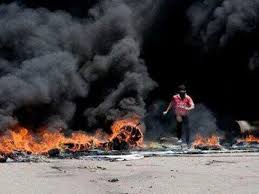
opstandRising expectations and youth unemployment have been identified as some of the sources of violent protests which have increased dramatically in the country in recent months.

The South African Institute of Race Relations, SAIRR’s programme manager and researcher, Georgina Alexander, says: “We have more people on social welfare at the moment in the country than those who have employment.”

In his State of the Nation Address last week, President Jacob Zuma promised on Thursday that South Africa would enter a new radical phase of accelerated socioeconomic transformation after the May election.

“More importantly, after the elections, the country will enter a new radical phase in which we shall implement socioeconomic transformation policies and programmes that will meaningfully address poverty, unemployment and inequality.

“It is a phase of focusing on economic transformation in particular. We have achieved political freedom, now we must achieve economic freedom and ensure that the ownership, management and control of the economy is deracialised further.

More needed to be done to advance blacks, he said.

“The number of black people and women in senior management has increased from less than 10% in the 1990s to over 40% today, which is a good achievement for the country. But it is not enough. Each year, the Employment Equity report releases statistics that indicate that the economy is still controlled by white South Africans in terms of senior and top management positions.

“We must therefore intensify the implementation of affirmative action policies in order to deepen reconciliation and social cohesion in our country,” Mr Zuma said.

Alexander says, “There is a threat that these protests will increase and become more violent. […] The government can see that the delivery protests are becoming more violent. They need to address the deeper causes of these service delivery protests.”

The deeper reasons for the protest lie in levels of youth unemployment and dependency on state as well as increasing rising expectations that people have, but it’s all directly reliant on the state to do something about it.

“This is just a spark, the deeper reasons for the protest lie in levels of youth unemployment and dependency on state as well as increasing rising expectations that people have, but it’s all directly reliant on the state to do something about it like to increase people’s living standard for them.”

Police officials and the South African Human Rights Commission (SAHRC) recently met to discuss the violent protests.

The SAHRC’s Danny Titus says, “The commissioner indicated to us that she would like to have a meeting next March with the Human Rights Commission focusing specifically on human rights and policing, and the number of issues around that.”

He says, “We would like to establish this relationship where we can make each other understand each other’s picture.”

Meanwhile, National Police Commissioner Riah Phiyega says they are struggling to control violent protests because of a shortage of public order policing officers. There are only 4 000 such officers and yet there was double the number in 2006.

SA wants to blacken cricket by throwing money at it

cricket
Too white

Nearly two decades after the fall of apartheid, a black South Africa is struggling to sell high-profile, white-dominated cricket and rugby teams as “non-racial”.

Sporting authorities have reintroduced racial quotas for domestic professional teams in a bid to encourage more black Africans to emerge through the ranks

The latest to adopt quotas is cricket with the country’s six franchises ordered to field at least one black African in each starting line-up.

Teams that field more than one black player will get a cash bonus.

The only black African coach among the domestic professional teams, Geoff Toyana of the Highveld Lions, backs the idea of quotas.

“It’s not a bad thing, it’s spot-on,” Toyana said.

“Hopefully, more players will be exposed and more will play. Hopefully, in the next two to three years we will see a black African batsman playing for South Africa … or guys like Mangaliso Mosehle [of Titans] might come in as a wicketkeeper.

“You cannot explain that a population of 80% black African people cannot produce one Test player – it doesn’t make sense,” said Toyana.

Cricket officials speak of a “huge drop out” of black African players between under-19 and franchise levels.

“Black African players need to get quality and meaningful opportunities and, therefore, the incentive-based transformation policy was introduced,” said Corrie van Zyl, general manager of Cricket South Africa (CSA).

But the restoration of a quota system, two decades into democracy, is seen by observers as a sign of failure by both sporting administrators and government to develop sport among previously disadvantaged racial groups.

The problem, according to Frans Cronje of the South African Institute of Race Relations is that “we are not investing in young people”.

“How do you think players are going to be produced when the best you produce is a dusty sports field? Unless you learn to bat with a soccer ball in some dust of the Eastern Cape, you are not going to do it,” said Cronje.

Only five black Africans have played for South Africa’s national cricket side since 1991 when the country was accepted into international competitions.

“It is not a statistic that we are proud of,” admitted Van Zyl. “It shows just how important it is for us to bring many more African players through the system.”

“Next year we celebrate 20 years of democracy in our land and it is simply not acceptable for 80-plus percent of the population not to feel represented in one of our national sides.”

Previously, racial quotas generated heated debate in South Africa, but now there appears to be a general consensus.

The majority of players accept that “transformation is imperative”, said Tony Irish, chief executive of the South African Cricketers’ Association.

A quota system was introduced in 1999 but scrapped in 2007. Blacks remain under-represented in cricket and rugby, but dominate in football, where the national team is faring terribly.

The latest round of quota systems were adopted at a 2011 meeting of all sporting bodies and government.

Rugby quotas will take effect next year and seven players in each 22-man Vodacom Cup (a second-tier competition below the Currie Cup) squad must be black, including at least two forwards.

But the move has brought into question the possibility of sidelining other racial groups – Coloureds and Indians. Van Zyl said the early attempt at quotas was “a huge success” for the development of Coloured and Asian cricketers. – AFP


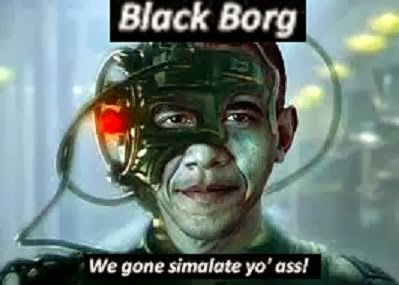
Beware the Black Borg!

Borg Art  Pic

by Albert Brenner

[followbutton username=’albertbrenner1′ count=’true’ lang=’en’ theme=’light’]

The greatest bogeyman ever conjured up in order to keep rebellious white South Africans in line, comes in the form of an amorphous, same-thinking, same-feeling, black entity. This all-dominant Jungian (archetypal) mass of collective agency was reinvigorated by the half-wit CEO of the South African Institute of Race Relations (SAIRR), Fransie Cronjé, in a Rapport (read Naspers Pravda) column last weekend.

According to Fransie, whites in Mandelatopia must stop rebelling against their de facto enslavement forthwith, lest blacks destroy them utterly in a “second revolution”. In short – in line with the finest Stockholm Syndrome diagnosis – Fransie is screaming; “Keep quiet, otherwise they will kill us!”.

Now the thing is just whether the little bald pseudo-intellectual shyster is actually dim-witted or just plain ignorant. For he neither knows or represents white South Africans, nor does he know or represent black South Africans. Yet he presumes to do both, in public!

The simple fact is that this amorphous collective black entity that he so dreads, simply does not exist. It is simply another bogeyman created by the MSM and Hollywood – an entity akin to the Borg in the science-fiction series Star Trek. The former fictional being – written in the singular because they all share the same consciousness, and conscience – is famous for their (dreaded) command; “This is the Borg. We`ll assimilate you now. Resistance is futile”!

All fiction, all guano… in the real world. Never in recorded history has there been absolute hegemony among Africans – and, especially not in South Africa. The various black groupings – mostly tribal, in nature – were at each others throat before Apartheid, during Apartheid, and even now… after Apartheid.

To even think that all blacks share the exact same thoughts, feelings, moral sentiments, et cetera, – just because they share the same skin colour – is not only incredibly naive, it is also downright patronising and racist. In short; there is no absolute hegemony among the other races; so why should blacks be different in this regard?!

It therefore beggars belief when even (self-appointed) black intellectuals, like the awfully trite Hegel-emulating “Bikoist”, Andile Mngxitama, throw tantrums when blacks – wherever they may find themselves in space and time – do not act as “one” (see picture below).
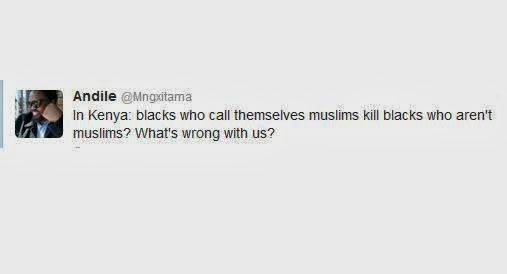
andilem

Be that as it may; the “Black Borg” myth is only topped by its inverse, the myth of the Noble Savage. The latter, a neo-Romantic Rousseauian-regurgitating MSM/Hollywood creation, sees all blacks as inherently cherubic beings who only want the best for humanity, the universe… and the environment, of course. All little Mandela`s in heart, soul and suffering… all “one” in their eternal victimhood at the hands of the White Devil.

It is, frankly, beyond belief that even blacks themselves ascribe to this sickening denigration of their very being. I mean honestly, how can they acquiesce to a perception that only allows them collective agency, and not individual agency? But then, hey; they have been baby-sat for so long by bleeding-heart White Guilt-driven liberals that they, blacks, have left it up to others, like little lentil Fransie, to speak on their behalf.

Whatever the moral weather on that one; it is a fact that blacks have never, and will never, act as “one”. And the threat by the SAIRR vegetable, Fransie, that disillusioned (`”bitter”) whites will cause the Black Borg to suddenly appear from the Delta-quadrant wormhole just because they, the whites, are justifiably recalcitrant, is equally preposterous. Nothing, in the context of Mandelatopia, illustrates this more succinctly than the transition period to black rule in the early 90s.

During this time, the blacks did not rise up as “one” to take revenge on their Tutu-myth Holocaust oppressors, the whites. On the contrary; once the blacks realised that FW (fuck-wit) De Klerk was just going to hand over the whole caboodle, they went straight for each other’s throats…to get at the loot first.

Near-civil war circumstances prevailed as the Zulus of Buthulezi’s IFP fought the (mostly Xhosa) ANC of Mandela. More than 16 000 blacks died during that period. Hardly any whites were harmed, except for the cowardly APLA attacks on the St George’s Pub and the Roseview Church.

In her brilliant bookThe People’s War, Anthea Jeffery painstakingly researched the true facts behind the so-called “liberation struggle”. Her findings illustrate, beyond any doubt, how blacks used fellow blacks as a mere means to an end. It is an indisputable fact that the vast majority of blacks in South Africa were coerced, by threat of physical violence, to partake in Joe Slovo’s callous revolution.

  • `”the ANC had little compunction about attacking black civilians, including its own supporters, for the formula for people’s war draws no distinction between combatants and others and regards all civilians (irrespective of their political affiliation) as expendable in conflict;
  • the ANC had a motive to unleash violence, for it wanted to create enough mayhem and unrest either to spark an insurrection or to weaken its opponents to the point where it could triumph in negotiations;
  • the ANC had the means to unleash violence, for the peace process allowed it to bring back into South Africa some 13 000 armed and trained combatants whom it then refused to disarm or disband; and
  • the ANC was the only organisation to draw benefit from the 15 000 political killings that took place in the early 1990s (after all major apartheid laws had been repealed), for it used these to;
  1. stigmatise De Klerk and the IFP,
  2. stampede negotiators into giving it what Joe Slovo called ‘a famous victory’ in negotiations, and
  3. put great pressure on the first all-race election, while making it unthinkable for anyone to demand a re-run of the deeply flawed April 1994 poll in which it was accorded (no accurate count being possible) some 63% of the vote.” (source)

The above-quoted just illustrates, once more, that Fransie is as dumb as mud… especially given the fact that Dr Jeffery is his chief researcher at the SAIRR!

Hell, one does not even need to read a single book to understand that blacks are not “one”. Just look at the dismal moral state of all post-colonial sub-Saharan countries. The chief “liberator” and his inner circle have always enriched themselves shamelessly, at the expense of their own people.

In Mandelatopia, Mandela, like his cronies Sexwale, Zuma, Ramaphosa, et cetera, are drowning in money, while the vast majority of their fellow blacks are suffering under extreme poverty. It suffices to say that they, the former, couldn’t`t give a continental damn. There is no “oneness”, no ubuntu, no Noble Savage and no Black Borg. Period!

That a “second revolution” will take place in Mandelatopia is a fact. But it will not be because whites are standing up for their rights. It will be because blacks will revolt against their own leaders because of the broken promises of the past 20 years of typically-African mis-governing. That whites will bear the brunt of the coming (inevitable) revolution is obvious, because they (still) have those things that the black leaders promised their black sheeple, but failed to deliver… as always.

It is thus abundantly clear that the motive behind Fransie`s reinvigoration of the Black Borg myth is everything but noble, in the sense of heroically”saving” the enslaved backsides of whites in Mandelatopia.

For you see, for Fransie – as one of the main Afrikaner H-G men in Mandelatopia – it is all about keeping his ill-earned privileges and prestige. Had the playing-field with his white peers been level, half-wits like Fransie, Piet Croucamp, JP Landman, Tim du Plessis, Pierre de Vos, etc. would never have reached the level they have attained now.

But then; Fransie`s DNA is coward-based. His survival instincts and skills were honed in his dad’s nutsack… where he used to cower in the most remote corner because he was the lesser of 60 million. Now he is still cowering, in front of 60 million blacks. But that is his saving grace, his claim to fame. For unlike the one million whites who were forced to emigrate in order to seek employment, Fransie is in league with the new Master of South Africa. He is a made-man!

So the next time Fransie screams at you, as a white South African, to shut the fcuk up and continue paying unquestioningly for the `”sins of your forefathers”, just think of the picture below.

frans

Costly ambitions of NDP not discussed

fastfactsThe National Development Plan (NDP) tries to do too much and its costly ambitions are not discussed, the South African Institute of Race Relations said on Monday.

“It reads as if various government departments have provided wish-lists without much attempt to pull them all together,” it said in the July edition of its monthly magazine Fast Facts.

“But one thing the NDP does not do is put a price tag on all the wish lists it incorporates and endorses.”

These included an extension of tertiary education, faster land reform, national health insurance, racial preferencing in procurement contracts, and guaranteed minimum living standards subsidies of various kinds.

There was no chapter in the 500 page document discussing how all of this would be paid for, the SAIRR said.

Here and there were reference to taxpayers having to fund things where there were no user charges, and that raising taxes might reduce profitability.

It was assumed that if the economy grew more than five percent a year, government revenue and the profit of private firms would more than double over the next 20 years, but whether this would be enough to fund all the plans in the NDP was not discussed.

“There are employment scenarios, but no scenarios about tax revenue, or the budget deficit, or public debt,” the SAIRR said.

“To endorse the NDP amounts to giving government a blank cheque for more taxation and more borrowing and probably for both.”

The institute said there were many internal contradictions within the document, but it was also undermined by external contradictions.

There was also no “command centre” to implement the plan.

“The nominally responsible [Minister in the Presidency for National Planning Commission] Trevor Manuel, has no executive authority.

“But Ministers who are actually running departments do as they please, since President Jacob Zuma fails to exercise any leadership over his government,” the SAIRR said.

It said departments which were key to the success or failure of the NDP were headed by ministers, some of them SA Communist Party members, who believed in more state control and were busy extending it.

These departments were trade and industry, mineral resources, energy, communications, economic development, agriculture, public enterprises, public works, higher education and labour.

“For them, in fact, the NDP is the perfect smokescreen.

“While the attention of the country is focused on the NDP… these ministers can steadily introduce dirigiste legislation in mining, energy, employment equity, black economic empowerment, labour, business licensing, land, and property rights.”

Dirigiste legislation is directed by a central authority and controlled by the state. – SAPA