What’s affirmative about affirmative action?

“Cadre employment must stop and an effective civil service must be built up by appointing  competent people. Officials and managers at all three levels of government should possess the correct financial and technical skills for the job.” So declared president Cyril Ramaphosa after a visit to Kimberley recently where the ANC celebrated its 108th birthday. He was “shocked” at the living conditions he found there, he said. “But we know the (country’s) looting and the wholesale state capture shebang took place right under his nose, with his eyes wide open”, said columnist Barney Mthombothi (Sunday Times 12.1.20). So why the president’s shock at the Kimberley situation? Doesn’t he read the newspapers?

He said that if the country’s peoples’ lives must be bettered, then the services delivered by the country’s three levels of government must improve.

How will he better this parlous situation? He declared that attention must now be given to the “thorough training of the state’s civil service corps”. (But they have shown themselves to be untrainable and, more seriously, to have no integrity. They have caused irreparable damage to South Africa’s local government systems and structures over the past 25 years.)  Mr. Ramaphosa is going to restore to “health” the country’s parastatals (such as South African Airways.) “We will get it right by appointing qualified and experienced managers and give them the space to fulfil their mandates,” said the president.

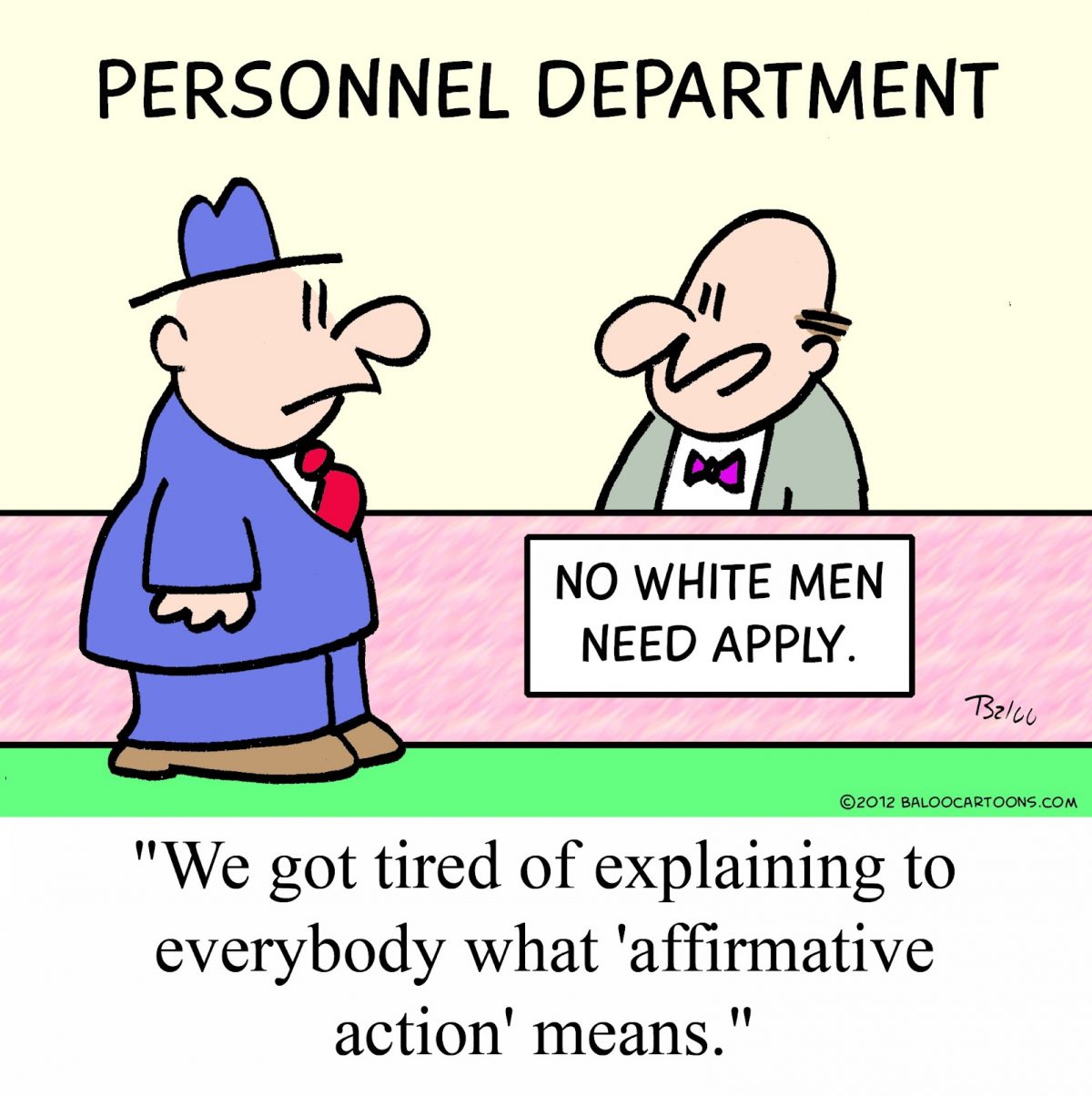
So why didn’t he do this a long time ago? Because he doesn’t intend to change anything, just move cadres around like deckchairs on the Titanic. Proof of this chicanery can be observed by checking out the media advertisements for government jobs, especially for municipalities.  All of these, without exception, state that the municipality (or any other government department), is “an Employment Equity Organisation that subscribes to the principles of affirmative action”. In other words, no whites must apply.

There we have it. Mr. Ramaphosa is a teller of tales which bear no resemblance to the truth. Declares Mr.Mthombothi: “Apart from his well-earned reputation as a coward, Ramaphosa is cultivating another unfortunate trait. He’s telling too many falsehoods. These fibs are not only corroding his credibility, they are a godsend to his ever-expanding bank of enemies”. (Mthombothi was referring to the rafts of lies told and promises made during the president’s tenure, including the whopper in New York in December 2018 about SA farm murders “not existing”.)

Deformative Action

The root cause of South Africa’s descent into third world status is indeed “affirmative action” (AA), a term first used in the United States in Executive Order No. 10925 signed by President John F. Kennedy on 6 March 1961, which included a provision that government contractors “take affirmative action to ensure that applicants are employed, and employees are treated during employment, without regard to their race, creed, colour, or national origin.” This was followed by further legislation in 1965 and in 1967, when gender was added to the anti-discrimination list.

According to Wikipedia, “this action prevented employers from discriminating against members of disadvantaged groups.”  In South Africa’s post-1994 election period, the term “previously disadvantaged” became part of the country’s politically correct lexicon, implying that, in quite explicit terms, whites had historically suppressed the other South African race groups. The corollary of this narrative was a relentless media chronicle (intentional or unintentional, the jury is still out on this!) to heighten white guilt and its spin-off, black entitlement. This has resulted in a policy of reverse discrimination so severe and unyielding that is destroying the South Africa we knew. It is in fact deformative action.

One key to the SA government’s warped version of affirmative action is the word “disadvantaged”. Many argue that this word misrepresents history, and with good reason. Empirically there is no contrary narrative to the fact that when whites arrived in the Cape in 1652 and subsequently moved throughout Southern Africa, there was no evidence of a local civilization other than a basic way of life that did not include the written word, or serious infrastructure or any other sign of natural evolution or development towards a way of life similar to that brought to South Africa by the whites from Europe. This fact has been attested to by writers, travellers and historians who visited Southern Africa over the centuries since 1652 where they chronicled what they saw. Political correctness had not reared its ugly head at that time, so what they saw and what they wrote cannot be challenged because there were no other versions, and their agendas were mostly historical.

Is it any wonder that the descendants of these people who occupied Southern Africa at the time of the arrival of the whites have virtually destroyed South Africa’s functioning infrastructure and the social fabric created and built up over 450 years? They never developed anything remotely resembling the accoutrements of a functioning modern civilization. When the ANC/SACP alliance appointed their political friends and colleagues to posts via the official policy of AA, where not even the vaguest knowledge and skills existed to enable many of these appointees to fulfil their mandates, it can be concluded that the collapse of South Africa was entirely predictable. There could have been no other outcome.

So why the term “disadvantaged”? Many would assert that black South Africans have been advantaged by their co-option into the Western civilization developed by others which gave them the written word, a Western-style education system and all the trappings of a way of life which, alas, is so desperately lacking in most of sub-Saharan Africa. It could be said that the real disadvantaged are the South Africans who pay the bulk of the taxes, who pay for electricity and water when millions use these services and pay nothing, and who see the country’s schools, transport services and other facilities go up in smoke at every protest about “non-delivery” of services for which they have never paid and will never pay! This destruction is wanton and the serious consequences thereof never seem to enter the heads of the perpetrators.

With the exception of only two years – 2011 and 2014 – there has been a steady net growth in the number of SA emigrants. It is estimated that by 2017 more than 820 000 wealthy educated people have left South Africa. The number of SA born emigrants to the Big Five countries (UK, US, Canada, Australia and New Zealand) almost doubled between 2000 and 2017, an average net increase of about 1 500 per month. These people are the cream of South African society, the taxpayers, the job creators, the entrepreneurs. They left because the ANC government has got it all wrong, and there seem to be no remedies in sight.

Nothing is done

The appointment of AA cadres is exacerbated by the inability and/or obstinacy of the SA government to do anything to ameliorate the problems associated with AA: vast and pervasive incompetence, indolence, corruption and a totally unjustified sense of entitlement. Neither the government nor their cadres can introspect. They cannot see what others see – that they are useless. Or maybe they don’t want to see. While the country falls apart around them, they will continue to talk the leg off an iron pot at meetings, summits, lekgotla’s and sundry get-togethers where they endlessly discuss the country’s “challenges” (read failures).  BUT NOTHING GETS DONE.  Businessmen, commentators and a myriad of worriers write endless articles “urging” the government to do something. These pleas fall on deaf ears. The ANC moves at its own pace: its real goal is the retention of power at any price. Such is the ransom we have paid on the altar of African “democracy”.

Relentless

The destruction continues relentlessly. There is no stay of execution. A cursory glance at any daily South African newspaper will confirm the continuity of the ANC government’s stupefying stupidity. One blatant example is president Ramaphosa’s announcements that his government will proceed with legislation enabling the expropriation of private property without compensation. In the next breath he talks about the investment “millions” that will flow into South Africa, as if one circumstance will not influence the other.

Now the ANC proposes that the courts will not be the arbiter of whether or not the state will pay for land it expropriates. This power is given to the relevant minister. This latest rashness reveals a remarkable lack of “cause and effect” thinking, but then this has always been a hallmark of a rudimentary mindset. The example of Zimbabwe’s collapse seems to have either escaped the president, or he believes that things will be different here! Either way, the president is hardly fit to lead South Africa.

Affirmative action in South Africa is a tragic failure. The inevitability of its outcome was pointedly ignored by those who had neither the integrity nor the foresight to know what the future would hold, despite the numerous examples of nepotism, patronage and affirmative action displayed by virtually every African government north of the Limpopo. In South Africa, leaders and influencers were seduced by the world’s approbation of this country’s “transition to democracy”. Warnings were either ignored or dismissed as the rantings of extremist groups.  History will be the judge of who was right. But being right doesn’t necessarily  mean you win!
Opinion: South Africa is sleepwalking into disaster

The worm has turned and virtually every South African political commentator whose legacy was to encourage a one man one vote ANC takeover in South Africa is now tearing into the government and its alliance partners. The country is on its economic knees and those in charge seem blithely unaware of the destruction they have wrought and are still wreaking, or else they couldn’t care less. What is surprising is that people are surprised. Why would ANC cadres not do what they are doing, given who they are and whence they came? A leopard never changes its spots.

In his startling and brutally critical book “How long will South Africa survive? The Looming Crisis”, former ANC supporter and self-described ex Marxist R.W. Johnson explains how effortlessly the ANC government has slipped into the lifestyle of so many other African ruling cliques, but with more to plunder and destroy. He has put to bed any notions that the ANC may still have something up its sleeve and the country will come right after all. The book should be required reading for all thinking South Africans.

TAU SA has watched the slide with the somber knowledge that it was inevitable. Warning after warning has been issued, to little avail. Agriculture was one of the first victims of government’s ludicrous socialistic policies (there are currently 16 pieces of legislation on the table designed to hobble SA’s commercial agriculture) but the country at large appeared disaffected because it wasn’t happening to other segments of society. It was only a matter of time before the other shoe dropped: affirmative action hit all levels of the country’s civil service; Black Economic Empowerment (BEE) has affected virtually all manufacturing and commercial enterprises; attempts to nationalize the mining industry (some of which endeavors became a reality) sent investors running for the hills; and the prohibition on foreign property ownership caused uncertainty across the board and businesses started moving their head offices overseas, while others sent out cash in an upsurge of foreign purchases. This economic shambles has sent even the most optimistic believers into a tailspin.

GWEDE MANTASHE

A particular object of resentment in business and agricultural circles is ANC Secretary General Gwede Mantashe. He is not an elected public representative yet his pronouncements and actions are directed at all and sundry, as if he were president. In a letter to Mantashe (to which there was no reply), TAUSA president Louis Meintjies asked Mantashe what gave him the right to organize a recent conference on Afrikaans and other matters which resulted in a shambles and where not even an agenda had been drawn up? Despite the country’s disarray in virtually every sector, Mantashe chose to emphasize the Freedom Charter over the constitution as the country’s first reference for governing. Meintjies put it to Mantashe that it is the SA Communist Party that is controlling the government, and emphasized that because of TAU SA’s close contact with Georgia in the Caucasus, “that country is presently licking its economic wounds after what it suffered under Soviet Communist rule”. Clearly these comments are like water off a duck’s back as far as Mantashe and others in the ruling clique are concerned.

Mantashe talks with forked tongue. Wrote Meintjies: “On the one hand you mentioned at the conference that you need farmers as agriculture is a key industry. Shortly thereafter you threaten us with land grabs and illegal land occupation. Are you creating a climate for further violence and unrest in the country and is it your hidden agenda that farmers must be driven from their farms? You are busy creating the right climate for this”.

Shortly afterwards, a KwaZulu/Natal farmer and his family were forced to flee for their lives when 400 neighboring squatters invaded his farm and killed his cattle. The farm was conservatively valued at R12 million and the destroyed cattle at R3 million. The farmer declared that if his farm was suitably ploughed and if he were left alone to plant pineapples, the property’s value would increase to R50 million. (Twenty five years ago, Zimbabwe’s land nationalization plan was unveiled where 5 million hectares of land was grabbed by the government and compensated for a fraction of its real value. Now Zimbabwe imports maize while the populace scratches in the dust for food.)

PANIC

Panic is creeping into the writings of commentators and newspaper editors about the country’s economic malaise and the ANC/SACP alliance’s bull-headedness and inability to acknowledge the dire consequences of their policies. A Business Day editorial (29.7.15) declares that the ANC is “sleepwalking into disaster” and points out the damage caused to the mining industry and the economy at large by the government. Strong words unheard of during Mandela’s rule are now being bandied about with impunity: “mulishness” is used to describe the ANC’s mindset over their introduction of travel restrictions now hurting the hospitality industry. They have a “Stalinist worldview” says another editor, while former Business Day editor Peter Bruce uses words like “drivel”, “pseudo Marxist claptrap” and “deranged” to describe various policies of the ruling clique. It’s a bit late for this type of vituperation from people of influence, many of whom lauded the coming to power of the ANC and who initially turned a blind eye to their corruption, incompetence and other sins in order to give the impression that “democracy” was flourishing in South Africa. At the same time, many lambasted those who warned of the perils of an ANC government as dinosaurs, rightwing fanatics and even Nazis!

Huge layoffs and retrenchments are planned by mining companies fed up to the back teeth with destructive government policies, strikes and union demands. Yet government cadres continue to threaten the mining industry. One of the world’s biggest mining groups Glencore has just had its licence suspended, with minister of Mineral Resources Ngoako Ramatlhodi deploring Glencore for creating “inhumane” job losses!

All along those in government have never viewed capitalism as a creator of jobs but rather as a supplier of jobs. Mining, manufacturing, agriculture –all of them are the ANC’s playthings, to be manipulated to fit their socialist agenda. These people have no idea of what drives an economy, and despite the abysmal failure of socialism and communism, they believe that somehow these failures can be turned into successes by declaring this to be so! Rhetoric beats logic every time.

Why this ANC behavior has suddenly shocked people whose forefathers have lived for centuries in Africa is a mystery. A perfect storm is brewing. R.W. Johnson predicts a possible implosion of SA’s economy where the government may have to go cap in hand to the International Monetary Fund (IMF) or the World Bank. But with these two organizations there’s no free lunch. Their funds are not as loose as the SA taxpayers’ money, to be spent willy nilly with no accountability. Foreign loans mean conditions, two of which will surely be a demand to cut the salaries of the bloated SA civil service, and the other will be instructions to prune welfare payments now distributed to more than 15 million recipients. Currently public sector pay is rising 7% translating into an 11,5% increase for the average worker when benefits are included. This three year wage deal will cost an extra R66 bn. Will the economy survive long enough for this increase to be met, or will the IMF pull the plug on it? What then for the ANC?

These recipient groups may turn on the ANC and the organization could disintegrate into infighting between factions trying to retain their places at the trough. Unemployment could soar to Zimbabwean levels , and millions could roam the streets looking for food. It’s not an unrealistic scenario. (In South Africa, the number of workers in agriculture fell 31% to 670 000 in 2014 from 969 000 in 2001. The current unofficial unemployment level is estimated to be 40%.)

SIXPENS

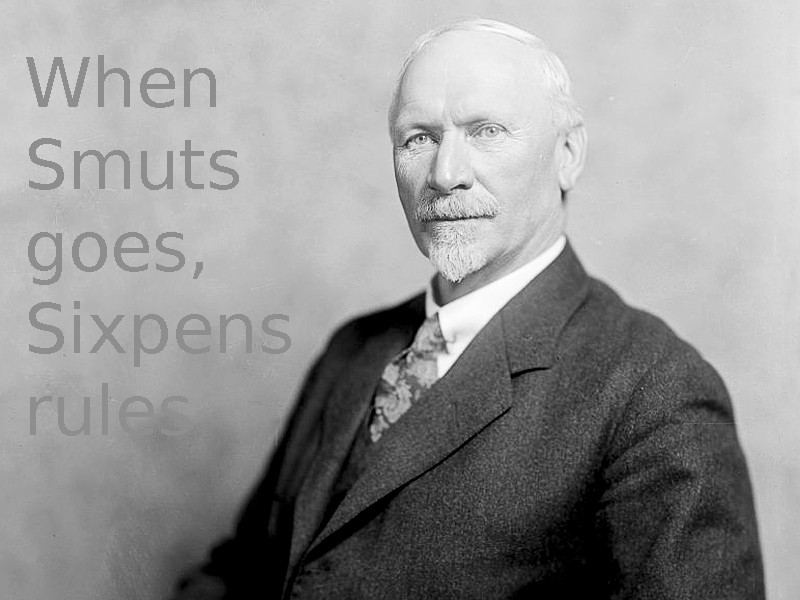
Says R W Johnson in his book: “In his celebrated dystopian novel written in 1947 ‘When Smuts goes: A history of South Africa from 1952 to 2010’, Arthur Keppel-Jones foresaw South Africa meeting its ruin at the hands of a primitive Zulu leader, Sixpens. There are many points of comparison between Zuma and Sixpens. Indeed, in many respects, Zuma has fulfilled the predictive vision of right-wing whites who resisted majority rule on the grounds that it would bring authoritarianism, corruption and incompetence sufficient to ruin the country. The surprise is how quickly the ANC in power regressed to this sort of rule and, even more, how it rallied behind Zuma, defending him against any criticism.”

In light of the country’s parlous situation and the fact that the government neither listens to advice nor acts rationally, the TAU SA president urged farmers to stick to their principles and to unify. A line must now be drawn in the sand. Farmers must declare that they did not steal land from anyone; they will not accept government propaganda without question; they will refuse to be drawn into participating in failed and failing government projects; and they will continue to produce food for South Africa while paying no attention to government’s socialist rhetoric. In a newspaper interview, Mr. Meintjies says that he doesn’t believe the government wants to get rid of commercial farmers. ”They want to control them. They want to control agriculture. If they can do that, they can control the food production, and if they control food, they control the masses”. The TAU SA president has been called a dinosaur by some critics but the dinosaurs knew what was coming.

Edmund Burke (1729 – 1797) said that ”the people never give up their liberties but under some delusion”. Why so many people of influence took so easily to ANC rule may never be explained. But Burke also said that “a state without the means of some change is without the means of its conservation”. Change may be on the way, and not a moment too soon. We must hold on until the ANC destroys itself. Perhaps then, after such trauma, the country can regenerate and realize once again its full potential.

Communists play cat and mouse with South African farmers

Hundreds of South Africa’s commercial farmers have now gone home after TAU SA’s yearly congress in Pretoria. In the north of the country they wait for the summer rain: their soil is prepared, the seeds are planted and the days grow hotter. Eyes look skyward for the first signs: they wait for the whip of the pre-storm wind, for that scent of moisture, for the quick darkening of the sky. Fifty three million South Africans depend on the country’s commercial farmers for their daily bread.

In his keynote Congress speech, TAU SA president Louis Meintjes covered many points – government propaganda on how “the whites” stole black land; farmworkers’ “rights” (but nothing about the rights of those who created the farms); how the country is run from Luthuli House, making the claim that SA is a democracy something of a farce. Then there’s the ubiquitous Freedom Charter, trotted out at every turn by the ANC, an outdated manifesto, written by white communists (notably Rusty Berstein), whose so-called principles are today only supported by countries like North Korea.

Then there’s the government’s 50/50 plan – the “sharing” of private farms with the workers which has elicited guffaws around the world and caused many potential investors to run for the hills. TAU SA says this latest caprice is a bridge too far. It is patently unacceptable, for many reasons but not least that it will cause hardship and hunger.

Then followed the president’s key question: where will it stop? Each demand’s acquiescence is followed by another demand. Despite reams being written about the empirical impracticality of the ANC’s farm policies, it is clear the government takes no notice. Willy nilly it surges ahead with plans and notions and white papers and green papers, each more ludicrous than the last. Communism’s DNA is well entrenched at Luthuli House, despite its spectacular failures in the twentieth century.

It should be therefore no surprise that the government proffered this policy during pre-1994 negotiations for the transfer of power in South Africa. It is a pity that many who negotiated with the ANC did not take cognizance of communism’s awful legacy.

Book

In his book How Communists Negotiate by American Admiral C. Turner Joy (MacMillan & Co, NY 1955), this Commander in Chief (UN Command) of Naval Forces in the Far East and American representative at the South Korean Armistice Conference at the end of the Korean War set out how the North Korean communists meticulously planned to get as much as they could without giving away anything to the other side. Virtually all of the processes he outlined regarding the negotiation process there were repeated by the ANC pre-1994.

His chapters include “Setting the stage”: Turner says the communists carefully consider the physical circumstances of the negotiating venue. (Remember the luxury game farms and the joint fishing trips of the Codesa protagonists. Then there were the well-dressed ANC big wigs in West Africa sporting English tweeds, briar pipes and a good British accent).

Chapter Two of Turner’s book – “The Delegation” – outlines how the very best intellectual minds and people of good appearance headed the communist teams at Korea. In pre-1994 SA, no rabble nor any toyi toyi-ing mobs were anywhere near the discussion venues. Chapter Three discusses the “Loaded Agenda” – “the Korean communists sought an agenda composed of conclusions favorable to their basic objectives, with some allowances for compromises if it suited them”, wrote Turner.

(It is rumoured that the Mozambican president Samora Machel told Nelson Mandela not to frighten SA’s whites because he would need them during the transition period so that the country wouldn’t disintegrate, as did Mozambique after independence. This practical approach to preserve the functional status quo during the early period after 1994 was sold as forgiveness and reconciliation on the ANC’s part, while in reality it was a calculated policy to preserve stability.)

Chapter Four – “Incidents” – refers to the communist policy of creating violent clashes and disturbances during the negotiation process in order to unnerve the other side who long for peace and want to hurry up the peace process to avoid further violence. (Nelson Mandela refused to renounce violence as a condition for his release. In fact after his release in 1990, violence increased exponentially until power was transferred in 1994.)

The Veto

The chapter on “The Veto” illustrates a Machiavellian method used to increase the chances of compromise from the other side. The stubborn recalcitrance of the North Korean side was designed to irritate the Americans into accepting some points in order to move ahead as they were tired of the delaying tactics.

Turner’s assessment of how the communists decide what is the truth and what is not is contained in the fascinating chapter “Truth and Consequence”. He says “the distortion of truth as practiced by the communists is a science”. (Remember Bishop Tutu’s assertion that there were “four kinds of truth” in his Truth and Reconciliation Commission summing up! Then we have the current “truth” about land theft, and a new “truth” about South Africa’s history, designed to engender a feeling of guilt among whites. This is entirely misplaced: without white settlement of Southern Africa, there would have been no present-day South Africa.

Whites found people who had no written language, who created no infrastructure and whose lives were beleaguered by battles with other tribes. They had no land titles and lived in primitive dwellings surrounded by sparse agriculture. Why the guilt among whites?)

Inches and Miles

The chapter most apt in relation to the TAU SA president’s speech is entitled “Inches and Miles”. Here Turner puts the case of “give an inch and they’ll take a mile“ so succinctly. He says:

“Communists regard any concession made by their opponents as a sign of weakness. Many Westerners entertain the notion that to accept some part of a communist negotiating proposal will encourage the communists to respond in kind.

“On the contrary such action is likely to induce an even more adamant attitude on their part. If Western negotiators agree to a communist proposal without insisting on an equal concession on another point, the communists conclude that their opponents are in a weak position and then they demand more.”

Thus the “fundamental techniques” to which Turner refers as part and parcel of communists’ negotiating processes are being used in South Africa 60 years after this Korean episode.

Anybody who cared to read a South African Communist Party directive on Reform and Revolution which was circulating in the mid-eighties would have seen that the doctrine was as sacred then as it was from the early days of communism. In para 13.2.3, it says “at the same time we must not mechanically dig in our heels against any future possibility to negotiate or compromise with other forces. We must remember that virtually all revolutionary struggles in the post-war period (Algeria, Vietnam, Angola, Mozambique) reached their final climax at the negotiating table.”

The TAU SA president asks: Do we know what we are supporting? Where will it stop? My personal opinion is that it is irresponsible to support any policy unless you know where it will end and what will be the final goals. He asks the ANC government: what is your end goal and when will you stop?

Herein lies the rub. Give and give and more will be asked of you until there is nothing more to give. Feed the crocodile and it will turn around and devour you. The ANC government cannot be allowed to usurp the commercial farming sector. It is to no one’s advantage. Indeed, it is a catastrophe waiting in the wings.