After more than 60 years, is the end of the road near for affirmative action in college admissions?
The idea of using race to help determine who gets a seat in public colleges has been under fire for decades. Eight states have essentially banned the practice, and a Michigan case pending before the U.S. Supreme Court could prompt others to do the same.
College officials nationwide got a wake-up call last June from the high court, which set a high bar for using race as part of a complex admissions program in Texas. Many observers say the combined weight of the two cases could finally push state universities to find another way to promote diversity.
“All the trends are pointing against the continued use of race in admissions,” says Richard Kahlenberg of the Washington, D.C.-based Century Foundation, a liberal think tank. Kahlenberg has for years advocated using family income,not race, as a way to ensure that public K-12 schools and colleges have a diverse student body.
A year after hearing Fisher, the justices last October heard arguments in a case from Michigan, where a 2006 state constitutional amendment banned racial preferences in public university admissions. Seven other states — California, Florida, Washington, Arizona, Nebraska, Oklahoma and New Hampshire — do the same, and about 29% of students live in states where affirmative action is banned, Kahlenberg estimates.
Michigan Attorney General Bill Schuette says the state’s position was summed up well by Chief Justice John Roberts, who said the best way to stop racial discrimination “is to stop discriminating on the basis of race.”
“Our constitution requires equal treatment in college admissions, which is an expression by 58% of Michigan voters in 2006 that says it is fundamentally wrong to treat people differently based on race or the color of their skin,” Schuette says. “It’s just wrong.”
A July 2013 study by Georgetown University scholars Anthony Carnevale and Jeff Strohl found that in 2009, white students were more “over-represented” among the USA’s 468 most selective colleges than they had been in 1995. From 1995 to 2009, the nationwide share of young people ages 18-24 who were white dropped 6 percentage points, from 68% to 62%. But whites’ share of freshman slots at the USA’s most elite colleges dropped just 2 points during that same period, from 77% to 75%.
Another study, by Orfield’s Civil Rights Project, found that 15 years after California’s ban on racial preferences went into effect, increased competition has dropped the share of black in-state high school graduates admitted to UCLA from 47.6% of applicants to 13.7%; the percentage of Latino students admitted dropped from 54.9% of applicants to 14.8%. The percentage of white students admitted also dropped, but not as sharply.
Kahlenberg says the string of affirmative action cases has pushed universities to find alternative ways to create diverse freshman classes. He notes that Texas’ 10% rule has resulted in higher levels of black and Latino representation. Other state systems have gotten similar results by eliminating preferences for children of alumni and bolstering financial aid, among other measures. These strategies have led to more racially and economically diverse classes “in a way the Supreme Court can’t touch,” he says. “I think that’s the future of affirmative action.”
Recent surveys have found that Americans don’t like using race in admissions, Kahlenberg says, “but on the other hand, Americans don’t want to see universities and American higher education re-segregated.”
A decision in the Michigan case, Schuette v. Coalition to Defend Affirmative Action, is expected this spring. If a majority of eight justices rule in Michigan’s favor (Elena Kagan, a former solicitor general, recused herself), it could prompt opponents of affirmative action in other states to push for similar bans.
But if the ban is overturned, states such as California again could weigh race in college admissions — and not a moment too soon, Orfield says. Admissions pressures there have become “very intense.” He notes that UCLA alone last year received nearly 100,000 applications. “It’s a big state, it’s growing … and we haven’t been growing the higher education system.” – USA Today
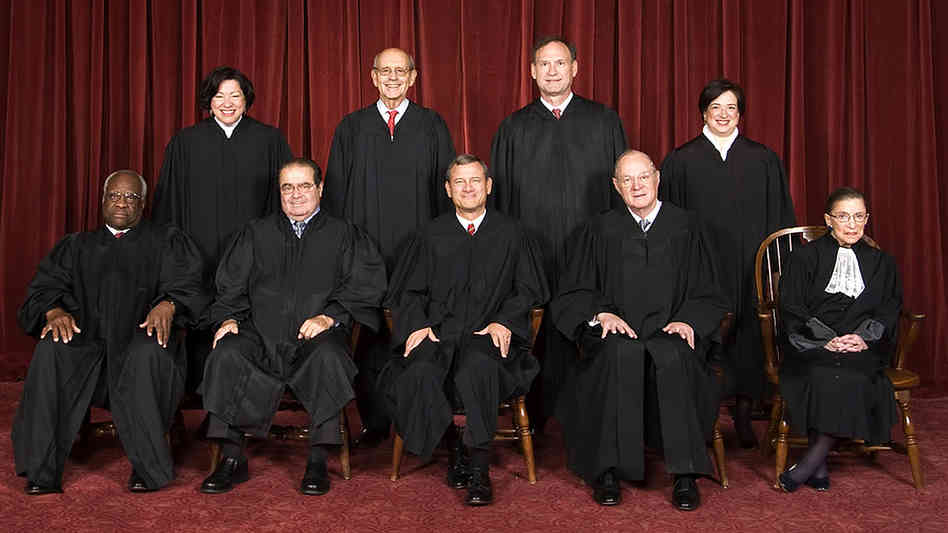
WASHINGTON — The U.S. Supreme Court today issued its long-awaited ruling on affirmative action — but didn’t offer a definitive opinion on whether colleges may consider the use of race in admissions.
Ruling 7-1, the court found that the U.S. Court of Appeals for the Fifth Circuit erred in not applying “strict scrutiny” to the policies of the University of Texas at Austin. The case is Fisher v. University of Texas at Austin, in which Abigail Fisher, a white woman rejected for admission by the university, said that her rights were violated by UT-Austin’s consideration of race and ethnicity in admissions decisions. Fisher’s lawyers argued that the University of Texas need not consider race because it has found another way to assure diversity in the student body.
The decision said that “good faith” by the university would not be enough to justify the consideration of race. But the decision — by Justice Anthony Kennedy — does not offer an opinion on whether the University of Texas can produce sufficient evidence. Rather, it faults the appeals court for not reviewing that question using the high bar of “strict scrutiny” for the consideration of race.
The Supreme Court did not — as some thought it might — reverse past decisions that allowed colleges to consider race. In fact, the conclusion of the decision states that colleges must meet the requirements previously given by the court to justify the use of race. Quoting from the landmark 1978 Bakke decision, today’s ruling says: “In order for judicial review to be meaningful, a university must make a showing that its plan is narrowly tailored to achieve the only interest that this Court has approved in this context: the benefits of a student body diversity that ‘encompasses a . . . broa[d] array of qualifications and characteristics of which racial or ethnic origin is but a single though important element.'”
It is likely that today’s ruling could mean that — after another round at the Fifth Circuit — the case could return to the Supreme Court.
Moments after the decision was handed down, Michael Olivas, an expert on higher education law (and a defender of affirmative action) e-mailed: “Affirmative action lives on by a thread, and demography will start to assert itself.” Olivas is director of the Institute for Higher Education Law and Governance at the University of Houston and author of Suing Alma Mater: Higher Education and the Courts (Johns Hopkins University Press).
The Record So Far
This website, maintained by the University of Texas at Austin, includes briefs and prior rulings in the case ofFisher v. University of Texas at Austin, in which Abigail Fisher, a white woman rejected for admission by the university, said that her rights were violated by UT-Austin’s consideration of race and ethnicity in admissions decisions.
Fisher’s argument was that past Supreme Court decisions have allowed colleges and universities to consider race and ethnicity only if diversity could not be achieved in race-neutral ways, so the University of Texas had no legal need to consider race. The university in turn said that the percent plan provided it with only a limited level of diversity and that it had the right to take additional measures to assure a greater level of diversity. Most major college associations backed the University of Texas, as did many civil rights organizations. Asian-American groups split on the case. – Inside Higher Ed. Read the full article here.
Eight months after attorneys for Abigail Fisher argued in front of the Supreme Court that the University of Texas’ affirmative action admissions policy discriminates against white students, the justices still have not handed down their decision in the potentially paradigm-shifting case.
The unusual delay has many court-watchers stumped, though as with everything Supreme Court-related, all explanations for the wait are, at best, educated guesswork.
Lyle Denniston, who has covered the Supreme Court for more than 50 years and now works for the legal website SCOTUSblog, said he couldn’t remember another case that had been argued in the fall yet still undecided by mid-June.
“I have absolutely no idea what is holding it up,” Denniston said.
One reason why the delay is so surprising: During oral arguments in October, it seemed fairly clear that the four conservative justices would band together with swing vote Justice Anthony Kennedy in striking down the use of race as a factor in undergraduate admissions. Kennedy has voted against affirmative action policies in the past and showed no willingness during questioning to reconsider his past position.
Additionally, the four liberal-leaning justices are short Elena Kagan, who had to recuse herself in this case due to her work on it while a part of the Obama administration. That seemed to clear the way for an easy 5-3 decision in favor of Fisher.
“It’s really surprising that it’s taken this long for the court to issue an opinion,” said Adam Winkler, a constitutional law professor at UCLA School of Law. “It’s almost unheard of for the court to take the entire term to decide what really is a straightforward case.”
Winkler said he believes the court will rule broadly against the University of Texas in a way that will outlaw affirmative action programs nationwide. He thinks that instead of ruling narrowly against this particular school, the court will overturn its own 2003 Grutter v. Bollinger decision that said affirmative action is allowable as long as it’s not a quota system as a way to ensure schools have a diverse student body. In that decision, the court ruled that eventually, in 25 years, the use of race would again becoming legally suspect, but that until then it’s needed to correct societal discrimination.
Winkler guesses the decision is taking so long because the liberal justices are writing lengthy dissents to the conservative judges’ sweeping decision.
“The dissenting justices are very upset about something,” Winkler predicted. “A narrow ruling only striking down Texas’ policy without significantly reshaping the law of affirmative action should be an easy opinion to write and shouldn’t inspire unusually long dissents.”
Long-time court reporter Linda Greenhouse, however, wrote in The New York Times that it’s possible Kennedy’s decision is considered “frustratingly narrow” by his conservative colleagues, since the court has already agreed to hear another affirmative action case in the fall. That suggests they may want another crack at the issue next year.
Another theory floating around legal circles is that the court may be waiting to release the Fisher case at the same time as it hands down Shelby County v. Holder, another landmark case this term (heard in February) that has the potential to significantly diminish the reach of the Voting Rights Act. Alabama sued the federal government, arguing that Southern and other states covered under the act are unfairly monitored by the federal government for discrimination in voting.
One theory is that the court will release the decisions together to make a broader statement about race in society today and how far government institutions may consider race as a way to correct past institutionalized discrimination. The justices could strike down the use of race in admissions as unconstitutional while upholding the Voting Rights Act, as a way to split the issue down the middle and avoid charges of overreach.
But other court watchers said it’s routine for the court to save its most controversial opinions for the last minute, and that it’s impossible to know why the supremes are dawdling.
“This means nothing,” Geoffrey Stone, the former dean of the University of Chicago Law School, said. “The court generally holds its most important decision for the end of the term. We can’t read anything at all into the fact that it hasn’t handed down Fisher yet.”
“I think the more likely explanation is simply that dealing with tough issues requires a lot of thought and care,” said Gail Heriot, a law professor at the University of San Diego. – Yahoo News
The case for racial preferences in awarding places at US universities is no longer about minorities held back by centuries of discrimination, says Simon Barber.
Rather, it is all about letting educators decide what will be best to prepare the youth for racial diversity. That, at any rate, is how proponents of affirmative action are framing the discussion as the matter is about to be heard by the US Supreme Court.
Solicitor-general Donald Verrilli, the Obama administration’s chief litigator, told the court last week: “The core of our interest is in ensuring that the nation’s universities produce graduates who are going to be effective citizens and effective leaders in an increasingly diverse society and effective competitors in diverse global markets.”
Just over half the Fortune 100 chimed in with an amicus brief. “The only means of obtaining a properly qualified group of employees,” they argued, “is through diversity in institutions of higher education which are allowed to recruit and instruct the best qualified minority candidates and create an environment in which all students can meaningfully expand their horizons.”
The case pits Abigail Fisher against the University of Texas. Ms Fisher, who is white, says her rights under the constitution’s 14th Amendment were violated when she failed to get in. The university says that while it does indeed take race into account in selecting candidates, it does so as part of a “holistic” review fully consistent with the court’s precedents, in particular Justice Sandra Day O’Connor’s opinion in the landmark 2003 case, Grutter v Bollinger. Writing for a slim 5-4 majority Justice O’Connor held that the University of Michigan Law School’s admissions strategy passed muster: it was adopted in “good faith”, did not rely on demographically-based quotas and was “narrowly tailored to a compelling interest in attaining a diverse student body (with a) critical mass” of minority students.
Opponents of affirmative action would like to believe that, with Justice O’Connor’s replacement by the far more conservative Justice Samuel Alito, there is now a critical mass on the court for banning race-based preferences altogether. They hope Ms Fisher will persuade a majority if not to reverse Grutter v Bollinger, then at least, in the words of Justice Sonia Sotomayor (who will not be part of that majority), “gut it”.
There is a school of progressive thought which would not mind seeing Ms Fisher prevail. In a new study for The Century Foundation, Richard Kahlenberg looks at how universities have been handling diversity in the seven states, including California, where racial preferences have already been banned by referenda, state legislatures or gubernatorial executive order. The news is good.
Responses include partnerships with disadvantaged schools, new race-neutral preferences for students from all difficult environments, no more automatic slots for offspring of alumni, and guaranteed places, regardless of test scores, for a fixed percentage of top students from all in-state public schools. Many of these are terrible, de facto segregated and disproportionately starved of resources.
“For people who care about social equality, all these new measures are intrinsically desirable,” Mr Kahlenberg writes. But they do not come naturally to university administrators because they are harder and more expensive to implement.
“While higher education’s vigorous defence of affirmative action on one level represents a sincere desire for greater racial equality, it has another less virtuous side to it, as racial preferences avoid the hard work of addressing deeply rooted inequalities and instead provide what (one critic) has called ‘racial justice on the cheap’ … recruiting fairly privileged students of colour is far less expensive than including low-income and working class kids of all races.”
Research by Derek Bok, a former Harvard president, found that 86% of African Americans at universities with selective admissions standards were either middle or upper class. At Ivy League schools, 41% of black students were not even African American, but immigrants from relatively advantaged backgrounds.
While it is invidious to invoke the voices of revered figures who can no longer speak for themselves in support of one’s favoured positions, it is interesting to conjecture what Dr Martin Luther King might have said of class, as opposed to race-based affirmative action. He did say, in calling for a Bill of Rights for the Disadvantaged in 1967, “it is a simple matter of justice that America, in dealing creatively with the task of raising the Negro from backwardness should also be rescuing a large strata of the forgotten white poor”. Simon Barber, bdaylive.com
The US Supreme Court is hearing arguments Wednesday on a case that could affect how universities across the United States consider race in their admissions.
The case, one of the most high-profile of the court’s agenda this year, pits Abigail Fisher, a white woman, against the University of Texas at Austin, which denied her admission.
Fisher accuses the university of discriminating against her because of her skin color, violating her constitutional rights.
“I was taught from the time I was a little girl that any kind of discrimination was wrong,” she proclaimed in an interview posted on YouTube.
Fisher was not among the top 10 percent of Texas high school graduates — who are all guaranteed spots at the state university and who make up the majority of students there.
But she argues she was denied admission in favor of other applicants with lower test scores and grades, who were accepted on the basis of racial preference for under-represented minorities.
The plaintiff claimed in her court filing she “suffered an injury that falls squarely within the language and spirit of the Constitution’s guarantee of equal protection.”
She believes that the university’s admission program “favors two groups, African-Americans and Hispanics, in one of the most ethnically diverse states in the United States.”
Fisher, who ultimately earned her financial analysis degree in neighboring Louisiana, is appealing her case to the nation’s highest court after failing in the lower courts.
The Supreme Court last took up this controversial issue in 2003, reaffirming a 1978 decision that affirmative action’s race-based quotas did not violate the constitution.
The policy, aimed at correcting historic imbalances in education by favoring US minorities in public university admissions and other circumstances, has come under increasing scrutiny in the wake of a growing minority population.
Now — more than 60 years after the high court forced the University of Texas to enroll the first African-American ever in its law school — the school is urging the court to reconfirm that “racial diversity is a legitimate goal” in higher education, according to law professor David Cole.
The university is backed by more than 70 motions from universities, human rights groups and businesses — as well as by the US government — all attesting the court’s decision will have a far-reaching impact.
“There’s a lot at stake and plenty of reasons to be concerned,” stressed Alan Morrison of The George Washington University Law School. He called the affirmative action decision “crucial,” saying it would be felt at all US universities, both public and private.
But it is not clear the court will rule as it did nearly a decade ago.
Since the last ruling on affirmative action, the makeup of the high court has changed, turning it into “the most conservative in a lifetime,” noted Georgetown Law professor Louis Seidman.
What’s more, Elena Kagan, generally considered one of the court’s more liberal judges, has recused herself, after having come down in favor of affirmative action while serving in her previous post as Solicitor General under Obama.
The Supreme Court will give its decision in 2013, after the presidential election. President Obama’s challenger, Republican Mitt Romney, has said he is opposed to the quotas in public institutions.-AFP
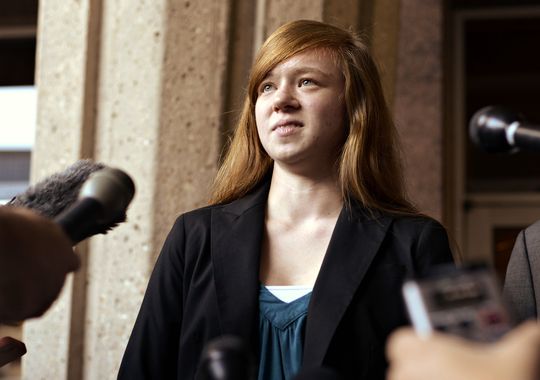
Abigail Fisher is a slight young woman with strawberry blond hair, a smile that needs little prompting, a determined manner and a good academic record. She played soccer in high school, and she is an accomplished cellist.
But the university she had her heart set on, the one her father and sister had attended, rejected her. “I was devastated,” she said, in her first news interview since she was turned down by the University of Texas at Austin four years ago.
Ms. Fisher, 22, who is white and recently graduated from Louisiana State University, says that her race was held against her, and the Supreme Court is to hear her case on Wednesday, bringing new attention to the combustible issue of the constitutionality of racial preferences in admissions decisions by public universities.
“I’m hoping,” she said, “that they’ll completely take race out of the issue in terms of admissions and that everyone will be able to get into any school that they want no matter what race they are but solely based on their merit and if they work hard for it.”
The university said Ms. Fisher would not have been admitted even if race had played no role in the process, and it questioned whether she has suffered the sort of injury that gives her standing to sue. But the university’s larger defense is that it must be free to assemble a varied student body as part of its academic and societal mission. The Supreme Court endorsed that view by a 5-to-4 vote in 2003 in Grutter v. Bollinger.
University officials said that the school’s affirmative action program was needed to build a student body diverse enough to include minority students with a broad range of backgrounds and for the campus to have a “critical mass” of minority students in most classrooms. Interaction among students in class and around campus, said Kedra Ishop, the university’s director of admissions, helps students overcome biases and make contributions to a diverse society. “The role of U.T. Austin,” Dr. Ishop said, “is to provide leadership to the state.”
The majority opinion in the Grutter case, written by Justice Sandra Day O’Connor, rejected the use of racial quotas in admissions decisions but said that race could be used as one factor among many, as part of a “holistic review.” Justice O’Connor retired in 2006, and her replacement by Justice Samuel A. Alito Jr. may open the way for a ruling cutting back on such race-conscious admissions policies, or eliminating them.
The Constitution does not permit the government to sort people by race, no matter how worthy its goal. “While racial diversity on college campuses is beneficial, it cannot be attained by racial discrimination,” said Edward Blum, an adviser to Ms. Fisher and a driving force behind the Fisher case.
Three-quarters of applicants from Texas are admitted under a program that guarantees admission to the top students in every high school in the state. The remaining Texas students and those from elsewhere are considered under standards that take account of academic achievement and other factors, including race and ethnicity.
In the fall of last year, freshmen who enrolled under the program were 26 percent Hispanic and 6 percent black. Texas is 38 percent Hispanic and 12 percent black.
The university said the Top Ten program was a blunt instrument and that classes in many subjects have few or no minority students. It adds that the diversity generated by the Top Ten program is “mostly a product of the fact that Texas high schools remain highly segregated in regions of the state,” which “limits the diversity that can be achieved within racial groups.”
Among the kind of student excluded by the Top Ten program, the university said is “the African-American or Hispanic child of successful professionals in Dallas who has strong SAT scores and has demonstrated leadership ability in extracurricular activities but falls in the second decile of his or her high school class (or attends an elite private school that does not rank).”
Ms. Fisher’s lawyers called that “a newly minted interest in elitism dressed up as ‘intra-racial’ diversity.” They added that the university is making the unseemly pitch for “its preferred kind of minorities” at the expense of white students like Ms. Fisher with similar qualifications.
Talking in the hallway after the seminar, Joao Eloy, who was admitted outside the Top Ten program, said he had mixed feelings about the university’s approach. “My only concern is if diversity becomes a priority above merit,” he said, adding that he was wary of any system that “punishes Asians and poor whites, to name a few.”
Nosa Aimuyo, whose parents are Nigerian immigrants and who was also admitted outside the Top Ten program, said race-conscious admissions were needed to address “disparities in opportunity between high schools, which disproportionately affect minorities.”
In an interview in his office in Austin, William C. Powers Jr, the university’s president, said the attributes that the university seeks have many dimensions. “We want diversity in terms of economic background, first generation, geography, inner city, suburban middle class,” he said.
Asked what he would say to Ms. Fisher, whose own background is middle class, about her disappointment at being rejected, Mr. Powers paused for a moment.
“We look at everyone’s holistic characteristics,” he said.
Last month, Ms. Fisher spent a morning chatting with a reporter at a private club in Washington and then took an impromptu tour of the Supreme Court, where the grandeur of the surroundings seemed to bring home to her the gravity of the question she had presented to the justices.
She is working in Austin, where she had wanted to be in the first place, as a financial analyst. She said her college years at Louisiana State had been fine and that she had enjoyed the camaraderie of the bowling team.
But she added that she had lost a benefit that her state’s government had decided to distribute on a basis other than merit.
“The only thing I missed out on was my post-graduation years,” she said. “Just being in a network of U.T. graduates would have been a really nice thing to be in. And I probably would have gotten a better job offer had I gone to U.T.” She said she was trying to come to terms with her role in a case that could reshape American higher education. Asked if she found it interesting or exciting or scary, she said, “All of the above.”
But she did not hesitate to say how she would run an admission system. “I don’t think,” she said, “that we even need to have a race box on the application.”
AUSTIN, Texas — Walking across the South Mall, or scanning the football stadium’s 100,000 seats on game day, University of Texas admissions Director Kedra Ishop sees how much has changed since the 1990s, when she was a black student at what was an inordinately white school.
This giant flagship campus — once so slow to integrate — is now awash in color, among the most diverse in the country. The student body, like Texas, is majority-minority.
At the dining hall, minority students no longer cluster together. Actually, it’s more a high-end food court now, and many tables are racial mosaics — white, black, Latino, Asian.
So is this the “critical mass” of minority students that the U.S. Supreme Court narrowly endorsed in 2003 as an educational goal important enough to allow colleges to factor the race of applicants into admissions decisions?
That question will be front and center Wednesday when a more conservative Supreme Court revisits affirmative action for the first time since that landmark case nine years ago involving the University of Michigan.
Abigail Fisher, who was denied admission to the University of Texas because of race preference
This time, it’s Texas defending the use of race in admissions, fighting a discrimination lawsuit from Abigail Fisher, a rejected white applicant. As it happens, the court’s decision will affect relatively few students at Texas, which admits most students through a system that doesn’t factor in race.
But a broad ruling rolling back affirmative action could be an earthquake at other campuses across the country that make more use of race, potentially changing the educational trajectories of millions of students.
For all the wrenching debates about opportunity and fairness the affirmative action debate evokes, the outcome will likely come down to how the current justices fill out the answer to questions they began to answer in 2003: What is critical mass, and how far can a university go to achieve it?
Generally, it’s the point where there’s enough diversity on campus to provide a rich educational environment. But beyond that, it’s a concept critics call maddeningly vague and supporters necessarily so. Is it enough for the student body to be diverse overall, or must all groups be well represented? What if there’s diversity in the student body, but not in most individual classrooms?
Texas will swallow its pride and argue that for all its progress, it’s still short of critical mass. Under state law, most UT students are admitted automatically based on their high school GPA, with race playing no role. But for the smaller remainder of its class where it enjoys more leeway, Texas argues it should be able to use race as a factor.
The reason: Some groups, especially blacks, remain underrepresented compared to Texas’ population. And minority students clump together academically, leaving most classes with no more than a single black or Latino voice.
But the university won’t give a target number, something the court would likely call an unconstitutional quota.
“There’s never been a discussion of ‘this is the target, this is what it looks like, this is where we’re trying to go,'” Ishop said. “We know what it doesn’t look like. And we know without the ability to examine students in their completeness that we can get back there very quickly.”
Such arguments sound mushy to UT’s opponents, who call the school’s goals for critical mass a quota in disguise. They say the university has gone too far using race in admissions, abusing the discretion the court granted colleges to define critical mass for themselves.
“It is a squishy concept that’s being manipulated,” said Terence Pell, president of the Center for Individual Rights, which argued against affirmative action in the Michigan case and has filed a brief against Texas in the current one. “It’s just sort of diversity for its own sake,” he added, “with no end and no limit.”
History’s role
History isn’t central to the legal issues in the affirmative action debate, but it’s an issue at UT-Austin. The football team didn’t integrate until 1970, and even as minority enrollment expanded, UT little resembled increasingly diverse Texas, leaving minority students feeling isolated.
“It was very seldom three or more were gathered,” said Machree Gibson, who arrived on campus in 1978, earned two degrees and later became the first black female president of the Texas Exes, the university’s powerful alumni group. “We used to joke, ‘Three in a room, we’re a gang.'”
Today, even a short drive through campus leaves Gibson amazed how things have changed.
But UT still doesn’t look like Texas. Of its 52,000 students, 5 percent are black (compared to 12 percent of the state population). Latinos make up 18 percent at UT (38 percent statewide) and Asians 15 percent (4 percent statewide).
Greek life and off-campus housing for upperclassmen remain mostly segregated — the West Campus neighborhood is mostly white, Riverside more black and Latino, and the Far West neighborhood Asian, limiting interactions. Academically, many departments have few non-white faces. Senior Kristin Thompson says she’s one of just two black female civil engineers in her class, despite aggressive recruiting. She’s found her community outside class, but her academic experience has been lonely.
“At UT we talk about what starts here changes the world, but I think we’re doing a disservice to students by not preparing them for a world that doesn’t have these demographics,” she said.
In the Michigan case nine years ago, psychologists, educators and, most influentially, the military flooded the court with briefs arguing a diverse learning environment helped prepare students —- whites and minorities —- for jobs and citizenship. Many also argued it takes a critical mass of minorities
How many? There was no magic number. But enough for minorities not to feel isolated in the classroom, and non-minorities to realize minorities’ views weren’t one-size-fits-all.
Those arguments persuaded Justice Sandra Day O’Connor, the court’s key swing vote. In her majority opinion in the 5-4 case, she gave Michigan and other universities leeway to define critical mass in terms of their own educational goals, and to use race as a plus-factor in admissions to get there (O’Connor has since been replaced by Justice Samuel Alito, a strong affirmative action skeptic).
In Texas, a 1996 federal appeals court ruling had prohibited UT from using race in admissions, and black enrollment had plummeted. A year later, the Texas Legislature passed a “Top 10 percent” law, guaranteeing UT admission to any student at the top of his or her Texas high school.
The law was race-neutral, but it boosted the number of minorities — by some measures, close to current figures. To UT’s opponents, that proves UT can reach ample diversity — even “critical mass” — without resorting to racial preferences.
But UT says the diversity produced by the 10 percent law was stilted. Ninety percent of smaller classes had one or zero blacks, and 43 percent no more than one Latino. A student survey found minorities felt isolated, and a majority of all students felt there weren’t enough minorities for “the full benefits of diversity to occur.”
The university wanted leeway to recruit more minorities with different interests, to ensure fields such as geosciences, architecture and Thompson’s civil engineering had a critical mass, not just the campus overall.
So for the relatively small portion of its class — currently about one-quarter — not admitted automatically by their high school performance, UT designed a system to mimic what the court had allowed in the Michigan case. In that second system UT emphasizes race is a small factor, among many “special circumstances” that may be considered. It’s also not automatic, and could benefit any applicant, even a white one in some cases.
Both sides acknowledge the effect of race in UT’s system is modest (Fisher contends race is decisive for just 33 additional minority enrollees per year). To UT, that shows race is used along the limited lines the court has allowed. To Fisher, it shows that UT doesn’t need to use race at all.
On campus, critical mass evokes a range of responses. Jesse Hernandez, a senior who attended a virtually all-Latino high school in the Rio Grande Valley, says its benefits include generating a vibrant multicultural social life. Latino cultural groups, and fraternities and sororities, help minorities find a community at a huge school, but also benefit the broader student body by sharing their culture on campus.
Thompson, the civil engineering student, says she’ll recognize critical mass “when there are less racial incidents on campus, when students feel like they can go anywhere on campus and feel welcome, can go anywhere and speak their mind and not feel like they’re going to be chastised for it, ridiculed for it, looked at crazy,” she said. She loves UT, but says it’s not there yet.
“To me that’s the end goal: a welcoming campus, not a quantity of students.”
Senior Jordan Grenadier’s experience has been different.
“I don’t ever feel like I walk on campus or walk into a classroom and only see one particular type of people,” said Grenadier, who leads the campus chapter of the group Young Conservatives of Texas. On West Mall, where student groups set up tables, “it’s so diverse whenever you walk down there, it’s almost hard to imagine the university saying ‘that’s not good enough.'”
The question isn’t “whether or not (diversity) is important,” she said. “It’s, ‘Is it justified? Can someone who is qualified to attend the university not get accepted because someone who is maybe not as qualified gets in because of racial preferences?'”
UT-Austin’s president, Bill Powers, who agrees critical mass is the “central question” in the case, says UT isn’t just saying “we’ll know it when we see it.” He says “analytics,” such as classroom diversity surveys, will show UT if it’s successfully preparing students to live and work in a diverse world.
“Right now, African-Americans and Hispanics are underrepresented,” Powers said in an interview in his library-like office on campus. “We’ll reach a critical mass when you can (see it) both in the campus atmosphere and the milieu in individual classes. Not 100 percent, but where a sufficient number of individual classes bring this cross-cultural environment.”
“It really is going to hinge on what lens the court looks at the campus through,” said Gerald Torres, who says diversity is key to meaningful conversations about environmental justice in his law school courses. “Is it the lens of the classroom or is it the lens of the campus? If it’s the lens of the campus, then (the court) is likely to say the percentage increase of students of color under the 10 percent plan is sufficient. If they look at the classroom, I think they’ll say it’s not.”
Attorneys for Fisher, who sued Texas after she was denied admission to UT-Austin in 2008, contend that by even referencing the state’s demographics in its critical mass goals, UT is acknowledging a quota. They also argue the Supreme Court never intended to make diversity in every classroom the benchmark for critical mass.
“As long as you have a critical mass in the school as a whole, you’re going to bump into people in the dorms, in the all-night bull sessions,” Pell said. “That’s what’s going to give you the benefits of diversity. Now Texas says that’s not good enough, you have to have diversity in every corner of the university, in every classroom, every major.” – Associated Press
WASHINGTON — Last month the Obama administration threw its support behind the University of Texas’ use of race as a standard in its admissions policies, asking the Supreme Court not to interfere with the consideration of racial preferences in college admissions.
Abigail Fisher, who was denied admission to the Univerity of Texas in 2008 on the basis that she was white, has filed suit before the US Supreme Court in a bid to overturn affirmative action at the university level. In her submission before the court, she argues that the university has imposed a racial quota system that excluded her for the sake of admitting students of lesser ability. As a result, her civil and constitutional rights were violated.
Arguments in the case will start on October 10, not long before the US presidential election and are bound to attract national attention in America, as well as all other countries where affirmative action and racial quotas are being applied, such as South Africa.
According to a recent article in Forbes magazine, dozens of groups have weighed in as the Supreme Court prepares to hear oral arguments over the constitutionality of affirmative action.
Everyone from professors (one group calls itself the “Empirical Scholars,” another, the “Texas Association of Scholars”) to think tanks (the Cato Institute) to advocacy organizations (the NAACP) to universities (Brown University) to student groups (the National Black Law Students Association) to various state and local governments (California) and public officials (Senate Majority Leader Harry Reid) have submitted amicus briefs trying to influence the Court in what is likely to become one of the most controversial decisions of its upcoming term.
The present case seeks to overturn a previous ruling in Grutter v. Bollinger in 2003, which again opened the door wide for anti-white racial preference policies in America. In that case, Big Business also supported the argument for affirmative action. In a filing to the Court at the time, 65 corporations with more than a trillion dollars in annual revenues – including Intel, Merck, Boeing, and Coca-Cola – had underligned the importance of affirmative action in their “continued success in the global marketplace.”
The Court took notice of their concerns. The 5-4 majority upholding the University of Michigan Law School’s admissions policy emphasized these efforts to establish a diverse workforce to meet the challenges of a global economy in Grutter v. Bollinger, the key ruling stemming from the pair of lawsuits.
“What is more,” former Justice Sandra Day O’Connor wrote in Grutter at the time, “high-ranking officers and civilian leaders of the United States military” also looked for a “racially diverse officer corps.” O’Connor’s opinion elaborated on the military’s use of affirmative action to ensure “an officer corps that is both highly qualified and racially diverse.” As several retired military leaders with decades of experience had urged the Court, she applied this line of reasoning from the military setting to the nation’s public universities.
Abigail Fisher, who was denied admission to the University of Texas because of race preference
For Fisher v. University of Texas, the US Justice Department, in a court brief co-signed by several other government agencies, told the high court that a diverse college population was in the university’s — and the government’s — best interests. “The armed services and numerous federal agencies have concluded that well-qualified and diverse graduates are crucial to the fulfillment of their missions,” Solicitor General Donald B. Verrilli said.
The court brief was cosigned by lawyers from the departments of Defense, Education, Commerce, Labor and Health and Human Services.
The Supreme Court’s ruling on the University of Texas’ admission program will be its first ruling on affirmative action in higher education since 2003.
However, the same groups in the military and corporate America that supported race preference in 2003 have largely repeated their arguments in a new round of amicus briefs filed in response to Fisher.
“Fulfillment of the national security interest in officer corps diversity must not be imperiled by a sweeping ruling against race-conscious admissions,” argued the brief filed on behalf of General Anthony C. Zinni, Admiral Dennis C. Blair, General Wesley K. Clark, and dozens of other high-ranking former officials from all branches of the US armed forces.
Likewise, dozens of the nation’s largest companies – including Pfizer, Starbucks, and Wal-Mart to name a few – also echoed the arguments put forth nine years earlier by a similar list of corporations.
Texas admits most of its students because they rank among the top 10 percent in their high school classes. Fisher’s grades did not put her in that category. For other students, Texas officials say that race is considered among many factors, including academic record, personal essays, leadership potential, extracurricular activities, and honors and awards. The school says race is not used to set quotas, which the high court has previously rejected.
“Race is not considered on its own, and it is never determinative of an applicant’s admission by itself,” Verrilli said. “Rather, race is one of a number of contextual factors that provide a more complete understanding of the applicant’s record and experiences. That is a far cry from impermissible racial balancing.”
The Texas policy has been upheld by federal appeals courts, which said it was allowed under the high court’s decision in Grutter vs. Bollinger in 2003 that upheld racial considerations in university admissions at the University of Michigan Law School. But Fisher appealed to the current Supreme Court, which is considered to be more conservative than the one that ruled in 2003 and more likely to jettison that decision or at least limit when colleges may take account of race in admissions.
Before adopting race as part of its admission policy, Texas’ student body was 21 percent African-American and Hispanic. By 2007, the year before Fisher filed her lawsuit, African-Americans and Hispanics accounted for more than a quarter of the entering freshman class.
“Race is considered not on its own, but as a piece of information that provides valuable context in understanding an applicant’s achievements and his likely contributions to the university,” Verrilli said. “That individualized consideration is designed to work in conjunction with the Top 10 plan to enable the university to construct a class that is diverse in all ways valued by the institution.”
The case is Fisher v. University of Texas at Austin, 11-345.
– AP, Forbes and various other sources
This website uses cookies to improve your experience. We'll assume you're ok with this, but you can opt-out if you wish. Cookie settingsACCEPT
Privacy & Cookies Policy
Privacy Overview
This website uses cookies to improve your experience while you navigate through the website. Out of these cookies, the cookies that are categorized as necessary are stored on your browser as they are essential for the working of basic functionalities of the website. We also use third-party cookies that help us analyze and understand how you use this website. These cookies will be stored in your browser only with your consent. You also have the option to opt-out of these cookies. But opting out of some of these cookies may have an effect on your browsing experience.
Necessary cookies are absolutely essential for the website to function properly. This category only includes cookies that ensures basic functionalities and security features of the website. These cookies do not store any personal information.
Any cookies that may not be particularly necessary for the website to function and is used specifically to collect user personal data via analytics, ads, other embedded contents are termed as non-necessary cookies. It is mandatory to procure user consent prior to running these cookies on your website.