German companies believe the US now poses almost as big a risk as China when it comes to industrial espionage and data theft, a survey has revealed.
The startling finding of a survey of 400 companies conducted in mid-July underscores the shift in German public and business opinion caused by revelations about US surveillance activities.
Some 26 per cent of German managers, IT and security professionals described the US as a high-risk place for industrial espionage and data theft, according to the survey commissioned by EY, the consultancy.
This was second only to the 28 per cent of respondents who view China as a particularly high-risk country for industrial espionage. Russia was ranked third, with 12 per cent saying it posed a significant risk.
When they were asked the same question two years ago only 6 per cent of German companies described the US as a high-risk centre for industrial espionage and data theft.
“Until now [German companies] mostly identified China and Russia as the location of [potential] attackers. Now companies realise that western intelligence agencies also employ very comprehensive surveillance measures,” Bodo Meseke, executive director of fraud investigation and dispute services at EY, said.
US surveillance has become a core issue in Germany’s election campaign following disclosures about Prism, the US data mining programme, and reports in Der Spiegel, the German magazine, that the US has spied on EU offices and is obtaining around 500m pieces of metadata a month from Germany.
Opposition parties have pressed ministers to obtain answers from the US on the extent of any spying on German soil, and the Federation of German Industry has described media reports about US surveillance as “concerning”.
Following meetings in Washington last month, Hans-Peter Friedrich, Germany’s interior minister, assured German industry that the US National Security Agency had not engaged in industrial espionage in Germany.
The US says its cyber activities are focused on combating terrorism and do not target companies, in contrast to China, which Washington accuses of cyber snooping to obtain corporate secrets.
These assurances do not appear to have convinced a significant portion of Germany’s business community.
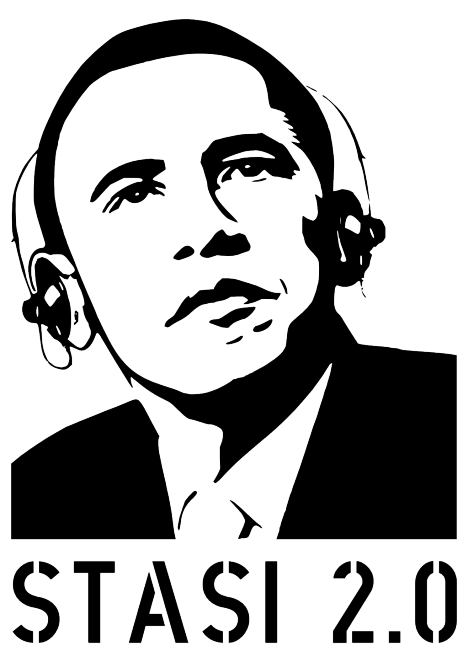
Germany’s dependence on high-tech exports means the protection of patents and intellectual property are of perennial concern. Modern Germany’s tolerance of mass surveillance is also far lower than in other countries because of their experience of Nazism and East Germany’s Stasi secret police.
German companies continue to view business competitors in foreign countries as a bigger espionage threat than state intelligence agencies, according to the EY survey.
There are signs that disclosures made by Edward Snowden, the former NSA official turned whistleblower, are affecting the cloud computing industry, which involves storage of data and software on huge external servers rather than local hard drives.
A separate survey carried out last month by the Cloud Security Alliance, a trade body, found that 10 per cent of non-US members had cancelled plans to use a US-based cloud provider. Some 56 per cent said they would be less likely to use a US cloud company in future. – FT
NSA leaker Edward Snowden plans to settle in Russia and is ready to begin a court battle if the country’s migration service denies his asylum plea, Anatoly Kucherena, a Russian lawyer who assists the whistleblower, told RT.
“It’s hard for me to say what his actions would be in terms of a positive decision [on the asylum plea],” Kucherena said. “We must understand that security is the number one issue in his case. I think the process of adaptation will take some time. It’s an understandable process as he doesn’t know the Russian language, our customs, and our laws.”
“He’s planning to arrange his life here. He plans to get a job. And, I think, that all his further decisions will be made considering the situation he found himself in,” he added.
Kucherena expressed hope that the whistleblower’s plea will be granted, because the reasons which prompted Snowden ask for political asylum in Russia “deserve attention.”
“He fears for his health and his life. He’s afraid that if he’ll be handed to the US, torture can be used against him down to death penalty,” he said.
In case of a negative ruling on the plea, Kucherena said that Snowden has “an opportunity to go to court and appeal against the decision of the Federal Migration Service.”
“He intends to do so,” the attorney stressed. “During our meeting, our dialogues, and our consultations, he made detailed inquiries on those procedures. And I informed him of what possibilities he has according to Russian law.”
Snowden still remains holed up in the international transit zone of the Moscow’s Sheremetyevo airport. His asylum plea, which was filed on July 16, has not been yet formalized by migration officials.
“According to the existing practice, it may take five, seven, or eight days. I’m calling them on a daily basis. They tell me that they’re about to finish the formalization,” Kucherena said.
The NSA leaker will then be handed a paper confirming that his asylum application is being reviewed. Once this document is received, Snowden will be allowed to leave the airport where he has spent an entire month.
“There are no travel restrictions. Therefore, receiving the paper will give him an opportunity to leave the transit zone of the Sheremetyevo airport and choose a place of residence – rent a hotel or a flat. [He can] live in any place within the Russian federation,” Kucherena explained.
According to the lawyer, consideration of the plea will then take up to three months. If his request is approved, Snowden will receive a certificate which will “guarantee him the same rights and freedoms possessed by the citizens of the Russian Federation.”
“The temporary asylum is given on a one-year term. After it expires, the term can be prolonged for another year and this can be repeated an indefinite number of times afterwards,” he said.
Snowden arrived in Moscow from Hong Kong on June 23 after revealing secret NSA government surveillance programs to the public.
The 30-year-old whistleblower is wanted in the US on charges of espionage and theft of government property.
Several Latin American states have offered him asylum, but the whistleblower believes it is unsafe for him to leave Russia following the July 2 incident in which the Bolivian president’s plane was grounded on suspicion that Snowden was aboard the craft. – RT
Ah, German hypocrisy! During the cold war, you marched waving “Ami, Go Home” placards, but still let us protect you against the Soviets. Now you moan self-righteously about the National Security Agency and GCHQ reading your emails and listening to your mobile phone. You don’t acknowledge that – unlike the US or the UK – you have had no domestic terror attack in the past 10 years. That’s because we gave you information to prevent them; guess where we got it? Anyway, your Federal Intelligence Service snoops as much as it can. Except it can’t do that much. Whereas we – oh yes, we scan! Could it be that you’re jealous?
That about sums up the American and British response to the uproar about alleged US and UK spying activities in Germany revealed by the whistleblower Edward Snowden.
Sorry, friends: things are not that simple. This topic touches on historical sensitivities here. Our grandparents’ generation feared the early-morning knock of the Gestapo. During the cold war, West and East Germans alike were aware that their divided country was crawling with spooks of all denominations. We recognised that mutually assured espionage helped prop up the bipolar balance of power. (It also made for some superb spy thrillers.) Still, no one misses the sombre paranoia, reinforced in and after the 1970s by the ramping up of West Germany’s domestic intelligence services in response to homegrown terrorism.
Germans who were born east of the Berlin Wall were careful to give the organs of the Staatssicherheit a wide berth. But it was only after the fall of the Wall in 1989, when the citizens who had brought down their government stormed the secret police’s headquarters and realised the full horror of the web woven by the Stasi: neighbours spying on neighbours; husbands spying on wives. Joachim Gauck, our current president, was the first head of the Stasi Archives, the government agency that, 20 years on, continues to painstakingly piece together a full record of East Germany’s surveillance of its citizens.
Yes, we Germans have better cause than many of our allies to abhor the secret state. It’s why we don’t like closed-circuit television cameras. It’s also why our constitutional court enshrined a fundamental right of data privacy, and declared it illegal for Germany to implement an EU directive on preventive data storage.
That said, we understand that our liberal societies have enemies – and we need some surveillance to protect ourselves and preserve our way of life. We remember that some of the September 11 attackers were based in Hamburg. Like you, we’ve done a lot since then to improve our domestic intelligence capabilities. We haven’t heard many complaints about our ability to co-operate, whether in Europe or in Afghanistan. And, fair enough, this story has become fodder for an opposition desperate to unseat a seemingly unbeatable chancellor.
Rattled at first, Angela Merkel snapped: “Friends don’t treat each other like this.” Now, with her standing in the polls unharmed, Ms Merkel is calling for an EU-wide data privacy initiative.
The truth of Mr Snowden’s allegations has yet to be proved; they remain disturbing. Germany a target on the level of Iraq and Afghanistan? 500m intercepts a month? Embassies and EU representations bugged? You could try harder to dispel our misgivings. For all we know, no abuse of power was involved. But it is surely clear the intelligence services wield an excess of power. And, as we know, “power corrupts; and absolute power corrupts absolutely”.
It is not always easy to understand where our British friends draw the line between freedom and security. But it was Barack Obama who vowed on May 23 to end the war on terror, quoting James Madison: “No nation can preserve its freedom in the midst of perpetual warfare.”
Tell us about it. The phrase “perpetual warfare” reminds Germans that the most influential theorist of war without end – and of an untrammelled executive – was Carl Schmitt, Hitler’s lawyer-in-chief. It’s time for all of us to turn back the tide of executive power.
The writer is a senior transatlantic fellow with the German Marshall Fund. Her article appeared in the Financial Times
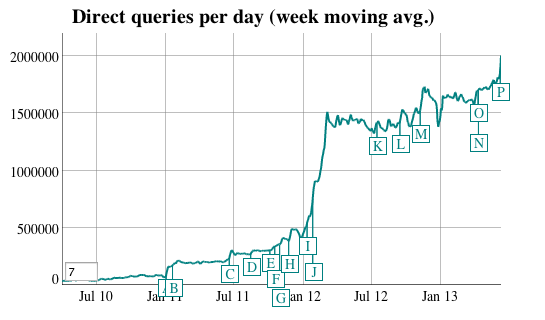
For DuckDuckGo founder Gabriel Weinberg, the numbers are proof yet again that people are eager to find and use viable alternatives to popular web services, which are prime targets for government snooping. “We offer that in web search, and there are others that offer it in other verticals. As people find out about these alternatives, they make that choice,” Weinberg said via email today.
DuckDuckGo was launched in 2008 and has since become the foremost search engine for those concerned about not just snooping by the government but Google as well. When visitors search via DuckDuckGo, the search engine doesn’t track them; it just gives them the search results they request. (Like Google, DuckDuckGo does serve contextual ads, which is how it makes its money.)
While interest in the search engine has climbed over the past year, fears over PRISM surveillance have made DuckDuckGo look significantly more important and necessary seemingly overnight.
“I believe the surveillance story is paramount right now, and people are talking about it. DuckDuckGo users are telling their friends and family about the private alternatives,” Weinberg said.
On a similar note, this week designer Peng Zhong launched PRISM Break, a comprehensive site that lists private alternatives to popular web services. – Venturebeat.com
For weeks now, officials at intelligence services around the world have been in suspense as one leak after another from whistleblower Edward Snowden has been published. Be it America’s National Security Agency, Britain’s GCHQ or systems like Prism or Tempora, he has been leaking scandalous information about international spying agencies. In an interview published by SPIEGEL in its latest issue, Snowden provides additional details, describing the closeness between the US and German intelligence services as well as Britain’s acquisitiveness when it comes to collecting data.
In Germany, reports of the United States’ vast espionage activities have surprised and upset many, including politicians. But Snowden isn’t buying the innocence of leading German politicians and government figures, who say that they were entirely unaware of the spying programs. On the contrary, the NSA people are “in bed together with the Germans,” the whistleblower told American cryptography expert Jacob Appelbaum and documentary filmmaker Laura Poitras in an interview conducted with the help of encrypted emails shortly before Snowden became a globally recognized name.
Snowden describes the intelligence services partnerships in detail. The NSA even has a special department for such cooperation, the Foreign Affairs Directorate, he says. He also exposes a noteworthy detail about how government decision-makers are protected by these programs. The partnerships are organized in a way so that authorities in other countries can “insulate their political leaders from the backlash” in the event it becomes public “how grievously they’re violating global privacy,” the former NSA employee says.
SPIEGEL reporting also indicates that cooperation between the NSA and Germany’s foreign intelligence service, the BND, is more intensive than previously known. The NSA, for example, provides “analysis tools” for the BND to monitor signals from foreign data streams that travel through Germany. Among the BND’s focuses are the Middle East route through which data packets from crisis regions travel.
BND head Gerhard Schindler confirmed the partnership during a recent meeting with members of the German parliament’s control committee for intelligence issues.
But it’s not just the BND’s activities that are the focus of the interview with Snowden.
The 30-year-old also provides new details about Britain’s Government Communications Headquarters (GCHQ). He says that Britain’s Tempora system is the signal intelligence community’s first “full-take Internet buffer,” meaning that it saves all of the data passing through the country.
The scope of this “full take” system is vast. According to Snowden and Britain’s Guardian newspaper, Tempora stores communications data for up to 30 days and saves all content for up to three days in a so-called Internet buffer. “It snarfs everything in a rolling buffer to allow retroactive investigation without missing a single bit,” Snowden says.
Asked if it is possible to get around this total surveillance of all Internet communication, he says: “As a general rule, so long as you have any choice at all, you should never route through or peer with the UK under any circumstances.”
In other words, Snowden says, one can only prevent GCHQ from accessing their data if they do not send any information through British Internet lines or servers. However, German Internet experts believe this would be almost impossible in practice.
The attempt to conduct total data retention is noteworthy because most of the leaks so far in the spying scandal have pertained to so-called metadata. In the interview, Snowden reiterates just how important metadata — which can include telephone numbers, IP addresses and connection times, for example — really are. “In most cases, content isn’t as valuable as metadata,” Snowden says.
Those in possession of metadata can determine who has communicated with whom. And using the metadata, they can determine which data sets and communications content they would like to take a closer look at. “The metadata tells you what out of their data stream you actually want,” Snowden says.
It is becoming increasingly clear to recognize the way in which surveillance programs from the NSA and GCHQ — including Prism, Tempora and Boundless Informant — cooperate. The metadata provides analysts with tips on which communications and content might be interesting. Then, Snowden says, with the touch of a button they can then retrieve or permanently collect the full content of communications that have already been stored for a specific person or group, or they can collect future communications. But a person can also be “selected for targeting based on, for example, your Facebook or webmail content.” – Der Spiegel
Former US spy agency contractor Edward Snowden broke his silence on Monday for the first time since fleeing to Moscow over a week ago, blasting the Obama administration and saying he remains free to make new disclosures about US spying activity.
Snowden, who faces espionage charges in the United States and is believed to be staying in a transit area at Moscow’s airport, surfaced with a letter to the Ecuadorean government and in a statement released through the anti-secrecy group WikiLeaks, which has taken up his cause.
In the WikiLeaks statement he accused the Obama administration of deception in a campaign to prevent him from finding political asylum and of “leaving me a stateless person” by revoking his US passport.
Snowden, 30, had not been heard from in the eight days since he flew to Moscow from Hong Kong, where he had first taken refuge after fleeing Hawaii.
Snowden has sought asylum in Ecuador and in an undated letter sent to Ecuadorean President Rafael Correa seen by Reuters, said the United States was illegally persecuting him for revealing its electronic surveillance programme, Prism, but made it clear he did not intend to be muzzled.
“I remain free and able to publish information that serves the public interest,” Snowden, who had been a contract employee for the US National Security Agency, said in the letter.
“No matter how many more days my life contains, I remain dedicated to the fight for justice in this unequal world. If any of those days ahead realise a contribution to the common good, the world will have the principles of Ecuador to thank.”
Snowden said the US government was persecuting him.
“While the public has cried out support of my shining a light on this secret system of injustice, the government of the United States of America responded with an extrajudicial man-hunt costing me my family, my freedom to travel, and my right to live peacefully without fear of illegal aggression,” Snowden wrote.
In his WikiLeaks statement, Snowden lashed out at US President Barack Obama and Vice-President Joe Biden for pressing Ecuador to turn him away.
“This kind of deception from a world leader is not justice, and neither is the extralegal penalty of exile,” he said.
“Without any judicial order, the administration now seeks to stop me exercising a basic right,” Snowden said. “A right that belongs to everybody. The right to seek asylum… Their purpose is to frighten, not me, but those who would come after me.”
US Justice Department spokeswoman Nanda Chitre rejected Snowden’s claim that he was marooned “since he is still a United States citizen and his country is willing to take him back”.
“As the State Department has already said, the US government is prepared to issue individuals wanted on felony charges a one-entry travel document to return home,” she said.
Snowden has given Russian diplomats a list of 15 countries, including Russia, where he wanted to apply for asylum, the Los Angeles Times reported, citing an unidentified Russian Foreign Ministry official. A Russian immigration source told Reuters that Snowden had applied for asylum in Russia.
Foreign Ministry and Kremlin officials declined immediate comment.
Russian President Vladimir Putin said Snowden could stay in Russia on one condition.
“He must stop his work aimed at harming our American partners, as strange as that sounds coming from my lips,” he told reporters after a gas exporters’ conference in Moscow.
Putin said he suspected that Snowden would continue leaking information because “he feels himself to be a human rights activist”.
“So he must choose a country of destination and go there,” he said, speaking before the asylum request to Russia was reported. “Unfortunately, I don’t know when this will happen.”
Putin said Russia was not working with Snowden and had no intention of handing Snowden over to the United States.
“Russia has never given up anyone to anybody and does not plan to. And nobody ever gave anyone up to us,” Putin said.
Correa said on Sunday that Snowden’s fate was in Russia’s hands because Ecuador could not consider the plea until he reached Ecuador or one of its embassies.
Shortly after Snowden fled the United States to Hong Kong in May, and long before he arrived in Russia, Putin suggested the surveillance methods he revealed were justified in fighting terrorism, if carried out lawfully.
Although Russia has sometimes exchanged captured spies with the United States, Putin suggested on Monday that this was not on the cards for Snowden. “As for Mr Snowden, he is not our agent and he is not working with us,” Putin said.
Obama, at a news conference in Tanzania, repeated that the United States was working through law enforcement channels to prod Russia to extradite Snowden.
Obama said there had been “high-level discussions with the Russians about trying to find a solution to the problem”. – Reuters
Germany is preparing to bring charges against US and British intelligence amid fresh allegations that the services spied far more extensively than thought on German phone and internet traffic and bugged European Union offices in America.
A report alleging a major and continuous US National Security Agency spying operation in Germany was published by Der Spiegel magazine yesterday, prompting outrage from Berlin MPs still reeling from reports about extensive British surveillance in their country.
The German Justice Minister, Sabine Leutheusser-Schnarrenburger, demanded an immediate explanation and said the behaviour of the intelligence services was “reminiscent of the actions against enemies during the Cold War”. “It defies belief that our friends in the US see the Europeans as their enemies,” she said.
The leak, which Der Spiegel said came from fugitive ex-CIA analyst Edward Snowden, claimed that the NSA tapped into half a billion German phone calls, emails and SMS messages each month. Reports last week revealed extensive tapping of German phone and internet traffic by British intelligence under its so-called Tempora programme. The information was said to be shared with the NSA.
A spokesman for the Federal Prosecutor said the office was preparing to bring charges against “persons unknown” in relation to the reports.
There was also widespread and mounting anger at official European Union level yesterday following disclosures that the NSA had spied on EU computer networks at its offices in New York and Washington and that it had also bugged the premises. Martin Schulz, head of the European Parliament, demanded “full clarification” from the US and said that if the disclosures proved true they would have a severe impact on US-EU ties.
It also emerged that the UK Government had invited German MPs and justice officials to attend a video conference at British Embassy in Berlin today during which the issue of spying would be addressed.
Der Spiegel said the NSA’s German phone and internet surveillance operation was the biggest in the EU. On 7 January 2013 it tapped into some 60 million German phone calls in a single day.
The magazine said that Canada, Australia, Britain and New Zealand were exempt from NSA surveillance but Germany was regarded as a country open for “spy attacks”. – Belfast Telegraph
The Guardian released another shocking NSA scoop on Saturday, revealing collusion and mass harvesting of personal communications among the United States and at least six European Union countries — only to delete it from their website hours after publication.
The article, titled “Revealed: secret European deals to hand over private data to America,” was written by Jamie Doward, who reported information from Wayne Madsen, a former Navy Lt. and NSA employee for 12 years.
Doward wrote:
Madsen said the countries had “formal second and third party status” under signal intelligence (sigint) agreements that compels them to hand over data, including mobile phone and internet information to the NSA if requested.
Under international intelligence agreements, confirmed by declassified documents, nations are categorised by the US according to their trust level. The US is first party while the UK, Canada, Australia and New Zealand enjoy second party relationships. Germany and France have third party relationships.
He went on to say that seven European countries and the U.S. have access to a fiberoptic cable network, intercepting phone calls, emails, and user logs from websites. The article describes Madsen as having “been attacked for holding controversial views on espionage issues.”
That’s a light way of putting it.
Some of Madsen’s controversial views include the belief that President Obama is secretly a homosexual and that the Boston bombing suspects were government agents. He’s also reported on a “former CIA agent” alleging the 2000 USS Cole bombing was perpetrated not by al Qaeda terrorists, but by a missile fired from an Israeli submarine.
John Schindler, a professor at the Naval War College and intelligence expert, called Madsen ”batsh– crazy, to use the technical term.”
The pulled article now bears the message, “this article has been taken down pending an investigation” but appears to still be on tomorrow’s front page of the print edition. It was originally published in The Observer, a Sunday newspaper owned by The Guardian and hosted on their website. – Business Insider
A top German official accused the United States on Sunday of using “Cold War” methods against its allies, after a German magazine cited secret intelligence documents to claim that U.S. spies bugged European Union offices.
Justice Minister Sabine Leutheusser-Schnarrenberger was responding to a report by German news weekly Der Spiegel, which claimed that the U.S. National Security Agency eavesdropped on EU offices in Washington, New York and Brussels. The magazine cited classified U.S. documents taken by former NSA contractor Edward Snowden that it said it had partly seen.
“If the media reports are accurate, then this recalls the methods used by enemies during the Cold War,” Leutheusser-Schnarrenberger said in a statement to The Associated Press.
“It is beyond comprehension that our friends in the United States see Europeans as enemies,” she said, calling for an “immediate and comprehensive” response from the U.S. government to the claims.
Other European officials demanded an explanation from the U.S.
“I am deeply worried and shocked about the allegations,” European Parliament President Martin Schulz said in a statement, according to CNN. “If the allegations prove to be true, it would be an extremely serious matter which will have a severe impact on EU-US relations. On behalf of the European Parliament, I demand full clarification and require further information speedily from the U.S. authorities with regard to these allegations.”
The revelations come at a particularly sensitive time for U.S.-E.U. relations, as long-awaited talks about a new trade pact are scheduled to begin next week. It is unclear how the latest report on NSA spying are going to affect them, but the trade pact has been a centerpiece of the Obama administrations diplomatic efforts in Europe for some time.
According to Der Spiegel, the NSA planted bugs in the EU’s diplomatic offices in Washington and infiltrated the building’s computer network. Similar measures were taken at the EU’s mission to the United Nations in New York, the magazine said.
Der Spiegel didn’t publish the alleged NSA documents it cited or say how it obtained access to them. But one of the report’s authors is Laura Poitras, an award-winning documentary filmmaker who interviewed Snowden while he was holed up in Hong Kong.
The magazine also didn’t specify how it learned of the NSA’s alleged eavesdropping efforts at a key EU office in Brussels. There, the NSA used secure facilities at NATO headquarters nearby to dial into telephone maintenance systems that would have allowed it to intercept senior EU officials’ calls and Internet traffic, Der Spiegel report said.
Germany was allegedly the focus of the European spying, according to The Guardian, categorising Washington’s key European ally alongside China, Iraq or Saudi Arabia in the intensity of the electronic snooping.
During a trip through Europe two weeks ago, President Obama assured an audience in Germany that America is not indiscriminately “rifling” through the emails of ordinary European citizens, describing the National Security Agency’s surveillance programs as a “circumscribed” system that has averted threats in America, Germany, and elsewhere.
Leutheusser-Schnarrenberger urged EU Commission President Jose Manuel Barroso to take personal responsibility for investigating the allegations.
The United States has defended its efforts to intercept electronic communications overseas by arguing that this has helped prevent terror attacks at home and abroad. – CBS
The British-American surveillance program Tempora marks a historic turning point. Unnoticed by the public, intelligence agencies have pursued total surveillance. Governments have deliberately concealed from the public the extent to which we are being watched.
The term, “information superhighway” has always been insufficient to describe the Internet. In reality, the Web is a global communication space containing the private information of a large part of the population of every developed country. If someone were able to train an all-seeing eye onto the Internet, the blackmail potential would be almost limitless.
It is precisely this all-seeing eye that the British intelligence agency Government Communications Headquarters (GCHQ) and the American National Security Agency (NSA) have developed under the name Tempora. An appropriate real-world metaphor for the program might be something like this: In every room of every house and every apartment, cameras and microphones are installed, every letter is opened and copied, every telephone tapped. Everything that happens is recorded and can be accessed as needed.
It sounds preposterous, but it is frighteningly close to the reality that was unveiled by the Guardian on Friday. Together, the GCHQ and NSA monitor Internet traffic by tapping directly into the data stream sent through fiber-optic cables. They are able to copy and cache this data, to be sifted through later as needed.
Those behind this disgraceful program have not even bothered to deny what they are up to. The British spy agency has said it will not be commenting on the program — but said that whatever they do is in the service of the fight against terrorism and subject to strict legal controls. The NSA has been making this same argument since the Prism program was unveiled earlier this month. What we’re doing, they say, is for a good cause. It’s all regulated, and we’re only looking at the information collected when we deem it necessary.
But that’s all just pretence.
Would the public agree to the total video surveillance of their private living space because it could possibly also help in the pursuit of terrorists? Would we be satisfied with the fact that we would only be observed if some unnamed intelligence analyst considered it necessary? Of course not. A government proposing such a program would be forced out of office — and rightly so.
Where is the Outrage?
It therefore seems odd that the reactions in the Anglo-Saxon world have been so restrained. Sure, the Guardian, as well as the Washington Post, have reported in detail about the programs. Yet in the political sphere, it was mainly a few German politicians voicing their outrage.
And for good reason. The fact that the Americans and the British — it is yet to be revealed who else participated — have granted themselves this enormous power, without ever informing their own people, is a scandal of historic proportions. To the initiated, all the recent public debate about data retention, Internet privacy and the practices of Facebook and Google must have been downright amusing. The state, as it turns out, knew everything all along.
That was precisely the goal, according to the head of the NSA, Lieutenant General Keith Alexander. “Why can’t we collect all the signals all the time?” he asked in an internal document acquired by the Guardian. “Sounds like a good summer project for Menwith,” he continued, referring to a GCHQ/NSA facility at Menwith Hill in northern England.
Voters Must Defend Themselves
A different quote shows that intelligence personnel lied to the public following the first revelations of the existence of the program. European Justice Commissioner Viviane Reding said that, in meetings with US officials, she had been assured that data from Europeans had not been collected “in bulk.” The surveillance of Europeans, they insisted to Reding, had been targeted and only undertaken in exceptional cases. That now appears to be untrue — it’s just that the mass acquisition of data in Europe is taken care of by GCHQ, rather than by the NSA.
The public revelation of these activities in the Guardian, thanks to the risky actions of former NSA worker Edward Snowden, marks a turning point. The next weeks and months will show whether democratic societies across the world are strong enough to take a stand against the unlimited, totalitarian ambitions of Western secret services — or not.
The governments of the countries in question apparently did not have the necessary backbone. They knew full well that the kind of surveillance being undertaken lacked all democratic legitimacy. But they pursued the programs anyway, behind the backs of their electorates.
It is now up to voters to defend themselves. It is up to us, whose data has landed as by-catch in the nets of Tempora. We must force our own representatives to defend our freedoms. – Der Spiegel
A controversial “data retention” scheme that would have required Australians’ internet and telephone activities to be stored for up to two years for law enforcement purposes has been shelved by the federal government after an inquiry that did not recommend the scheme go ahead.
The committee looking into the proposal – the most controversial among more than 40 others – as part of an inquiry into national security delivered its report on Monday.
After the report’s release, Attorney-General Mark Dreyfus said the government would not pursue data retention legislation “at this time”.
The government would now await further advice from the relevant agencies and a comprehensive consultation before proceeding further, he said. – Sydney Morning Herald
Trying to tamp down concerns about government over-reach, President Barack Obama on Wednesday defended U.S. Internet and phone surveillance programs as narrowly targeted efforts that have saved lives and thwarted at least 50 terror threats.
“This is not a situation in which we are rifling through ordinary emails” of huge numbers of citizens in the United States or elsewhere, the president declared during a news conference with German Chancellor Angela Merkel. He called it as a “circumscribed, narrow” surveillance program.
“Lives have been saved,” Obama said, adding that the program has been closely supervised by the courts to ensure that any encroachment of privacy is strictly limited.
Merkel, for her part, said it was important to continue debate about how to strike “an equitable balance” between providing security and protecting personal freedoms.
“There has to be proportionality,” she said. She added that their discussion on the matter Wednesday was “an important first step” over striking a balance.
Merkel appeared to be looking to avoid a public rift with Washington over the surveillance program, particularly since Germans benefit from U.S. intelligence. Much of the German criticism of the program has come from her junior coalition partners, facing the prospect of losses in the September election and looking for an issue.
The two leaders spoke to the media after meeting privately on a range of issues confronting U.S. and European leaders, including the fragile effort to bring peace in Afghanistan, where peace talks with the Taliban are in the offing to find ways to end the nearly 12-year war. Earlier Wednesday, Afghan President Hamid Karzai suspended talks with the United States on a new security deal to protest the way his government was being left out of the initial peace negotiations with the Taliban.
Obama said the U.S. had anticipated “there were going to be some areas of friction, to put it mildly, in getting this thing off the ground. That’s not surprising. They’ve been fighting there for a long time” and mistrust is rampant.
Karzai said Wednesday that peace talks cannot begin amid “fighting and bloodshed.” But Obama said it was important to pursue a parallel track toward reconciliation even as the fighting continues, and it would up to the Afghan people whether that effort ultimately bears fruit.
On another world trouble spot, the 2-year-old Syrian civil war, the president declined to provide details on the type of military support the U.S. will provide to opposition forces. But he said the administration had been consistent in working toward the over-riding goal of a Syria that is “peaceful, non-sectarian, democratic, legitimate, tolerant.”
“I cannot and will not comment on specifics around our programs related to the Syrian opposition,” he said.
The president said while world leaders at the just-completed Group of 8 summit in Northern Ireland could not agree on whether Syrian President Bashar Assad must go, he believes Assad cannot regain legitimacy.
And the president offered reassurances on another issue of particular concern in Germany. In response to a question from a German reporter, Obama said the United States doesn’t use Germany as a launching point for unmanned drones to strike terrorist targets. He said he knows there have been some reports in Germany speculating that was the case, but it’s not so.
Later Wednesday, Obama planned to draw attention to his plan for a one-third reduction in U.S. and Russian arsenals, rekindling a goal that was a centerpiece of his early first-term national security agenda.
His 26-hour whirlwind visit to the German capital caps three days of international summitry for the president and marks his return to a place where he once summoned a throng of 200,000 to share his ambitious vision for American leadership.
Obama will make the case for his nuclear plan during a speech at Berlin’s iconic Brandenburg Gate. His address comes nearly 50 years after John F. Kennedy’s famous Cold War speech in this once-divided city, and five years after Obama spoke in the city during his 2008 run for president.
The president has previously called for reductions to the stockpiles and is not expected to outline a timeline for this renewed push. But by addressing the issue in a major foreign policy speech, Obama is signaling a desire to rekindle an issue that was a centerpiece of his early first-term national security agenda.
Five years later, Obama comes to deliver a highly anticipated speech to a country that’s a bit more sober about his aspirations and the extent of his successes, yet still eager to receive his attention at a time that many here feel that Europe, and Germany in particular, are no longer U.S. priorities. A Pew Research Center poll of Germans found that while their views of the U.S. have slipped since Obama’s first year in office, he has managed to retain his popularity, with 88 percent of those surveyed approving of his foreign policies.
Obama also has an arc of history to fulfill.
Fifty years ago next week, President Kennedy addressed a crowd of 450,000 in that then-divided city to repudiate communism and famously declare “Ich bin ein Berliner,” German for “I am a Berliner.” Since then, presidents from Ronald Reagan to Bill Clinton have used Berlin speeches to articulate broad themes about freedom and international alliances.
Obama, fresh from a two-day summit of the Group of Eight industrial economies, placed his hand over his heart outside the sunny presidential palace as a German military band played “The Star-Spangled Banner,” the American national anthem. He and German President Joachim Gauck inspected a lineup of German military troops before entering the palace, stopping to greet children who waved American and German flags.
The visit was attracting widespread attention in Germany. People waved and snapped photos as Obama sped by after his arrival and a thick cluster awaited the motorcade as it passed the Brandenburg Gate. An evening news show in Berlin devoted itself to the president’s visit, highlighting “Das Biest,” or “The Beast,” as the president’s armored limousine is called.
There have been a few small protests, including one directed against the National Security Agency’s surveillance of foreign communications, where about 50 people waved placards taunting, “Yes, we scan.”
Merkel has said she was surprised at the scope of the spying that was revealed and said the U.S. must clarify what information is monitored. But she also said U.S. intelligence was key to foiling a large-scale terror plot and acknowledged her country is “dependent” on cooperating with American spy services.
For Merkel, the visit presents an opportunity to bolster her domestic standing ahead of a general election in September.
The U.S. and the Germans have clashed on economic issues, with Obama pressing for Europe to prime the economy with government stimulus measures, while Merkel has insisted on pressing debt-ridden countries to stabilize their fiscal situations first.
But the two sides have found common ground on a trans-Atlantic trade pact between the European Union and the U.S. At the just-completed G-8 summit, the leaders agreed to hold the first talks next month in the U.S. – AP
As the dust settles on the revelation that the U.S. government has been mining data from most of Silicon Valley’s largest companies in a program called “PRISM,” one question stands out: How did the NSA get access?
Apple, Google, Yahoo! and Microsoft, the largest companies involved in PRISM, the existence of which was revealed last night in a simultaneous Washington Post and Guardian scoop, have categorically denied knowledge of or participation in the program in a series of statements, while acknowledging that they do provide targeted access to the government when required to do so by law, generally according to court orders.
“We have never heard of PRISM,” says Apple’s spokesman. “If the government has a broader voluntary national security program to gather customer data we don’t participate in it,” says Microsoft’s. “We do not provide the government with direct access to our servers, systems, or network,” says Yahoo!’s. “Google does not have a ‘back door’ for the government to access private user data,” says Google’s.
Even unofficially, the tech companies seemed baffled by the allegations. The Guardian spoke with tech executives off the record, all of whom were “confused” by the documents published in the paper. None had ever heard of PRISM.
So what gives? Does the government have backdoor access so secret that not even their targets are aware? Are the tech companies lying? Or are they forbidden—as Verizon allegedly is with its NSA arrangement—from acknowledging its existence to an absurd extent? – gawker.com
China on Monday joined calls for Washington to provide explanations following disclosures of National Security Agency (NSA) programmes, which collect millions of telephone records and track foreign internet activity on US networks.
Foreign Ministry spokesperson Hua Chunying told reporters that Washington needs to heed international concerns expressed since the programmes were made public earlier this month by former NSA contractor Edward Snowden.
Officials and lawmakers in Germany and other countries are already pressing Washington for information about the collection of information that might affect their citizens’ privacy.
“We think that the United States should regard seriously the concerns and demands of the global community and people from all countries and furnish the global community with a necessary explanation,” Hua said at a regularly scheduled briefing.
Snowden flew to the Chinese autonomous region of Hong Kong on May 20 and is believed to still be there, though in hiding at an unknown location. China hasn’t said whether it would cooperate with any US demands for his extradition, and Hong Kong’s Western-style legal system that is distinct from that on the Chinese mainland allows opportunities for him to appeal.
US officials have defended the surveillance programmes as essential to disrupting terrorist plots.
Former vice-president Dick Cheney said on Sunday that he was “very, very worried” that Snowden would pass on sensitive information to China in return for immunity or sanctuary.
Asked whether Snowden was a Chinese spy or co-operating with Beijing, Hua answered, “This is complete nonsense.”
Max Keiser called Cheney out for being duplicitous as he was instrumental in selling American military equipment to China.
Addressing the backlash against him in the US, Snowden said much of it was predictable. He said: “It’s important to bear in mind I’m being called a traitor by men like former vice president Dick Cheney. This is a man who gave us the warrantless wiretapping scheme as a kind of atrocity warm-up on the way to deceitfully engineering a conflict that has killed over 4,400 and maimed nearly 32,000 Americans, as well as leaving over 100,000 Iraqis dead. Being called a traitor by Dick Cheney is the highest honor you can give an American.”– Sapa-AP
This website uses cookies to improve your experience. We'll assume you're ok with this, but you can opt-out if you wish. Cookie settingsACCEPT
Privacy & Cookies Policy
Privacy Overview
This website uses cookies to improve your experience while you navigate through the website. Out of these cookies, the cookies that are categorized as necessary are stored on your browser as they are essential for the working of basic functionalities of the website. We also use third-party cookies that help us analyze and understand how you use this website. These cookies will be stored in your browser only with your consent. You also have the option to opt-out of these cookies. But opting out of some of these cookies may have an effect on your browsing experience.
Necessary cookies are absolutely essential for the website to function properly. This category only includes cookies that ensures basic functionalities and security features of the website. These cookies do not store any personal information.
Any cookies that may not be particularly necessary for the website to function and is used specifically to collect user personal data via analytics, ads, other embedded contents are termed as non-necessary cookies. It is mandatory to procure user consent prior to running these cookies on your website.


 German companies believe the US now poses almost as big a risk as China when it comes to industrial espionage and data theft, a survey has revealed.