Journalism under threat

Alan Rusbridger
Alan Rusbridger

By Alan Rusbridger
Guardian Editor

On Sunday morning David Miranda, the partner of Guardian columnist Glenn Greenwald, was detained as he was passing through Heathrow airport on his way back to Rio de Janeiro, where the couple live. Greenwald is the reporter who has broken most of the stories about state surveillance based on the leaks from the former NSA contractor Edward Snowden. Greenwald’s work has undoubtedly been troublesome and embarrassing for western governments. But, as the debate in America and Europe has shown, there is considerable public interest in what his stories have revealed about the right balance between security, civil liberties, freedom of speech and privacy. He has raised acutely disturbing questions about the oversight of intelligence; about the use of closed courts; about the cosy and secret relationship between government and vast corporations; and about the extent to which millions of citizens now routinely have their communications intercepted, collected, analysed and stored.

In this work he is regularly helped by David Miranda. Miranda is not a journalist, but he still plays a valuable role in helping his partner do his journalistic work. Greenwald has his plate full reading and analysing the Snowden material, writing, and handling media and social media requests from around the world. He can certainly use this back-up. That work is immensely complicated by the certainty that it would be highly unadvisable for Greenwald (or any other journalist) to regard any electronic means of communication as safe. The Guardian’s work on the Snowden story has involved many individuals taking a huge number of flights in order to have face-to-face meetings. Not good for the environment, but increasingly the only way to operate. Soon we will be back to pen and paper.

Miranda was held for nine hours under schedule 7 of the UK’s terror laws, which give enormous discretion to stop, search and question people who have no connection with “terror”, as ordinarily understood. Suspects have no right to legal representation and may have their property confiscated for up to seven days. Under this measure – uniquely crafted for ports and airport transit areas – there are none of the checks and balances that apply once someone is in Britain proper. There is no need to arrest or charge anyone and there is no protection for journalists or their material. A transit lounge in Heathrow is a dangerous place to be.

Miranda’s professional status – much hand-wringing about whether or not he’s a proper “journalist – is largely irrelevant in these circumstances. Increasingly, the question about who deserves protection should be less “is this a journalist?” than “is the publication of this material in the public interest?”

The detention of Miranda has rightly caused international dismay because it feeds into a perception that the US and UK governments – while claiming to welcome the debate around state surveillance started by Snowden – are also intent on stemming the tide of leaks and on pursuing the whistleblower with a vengeance. That perception is right. Here follows a little background on the considerable obstacles being placed in the way of informing the public about what the intelligence agencies, governments and corporations are up to.

A little over two months ago I was contacted by a very senior government official claiming to represent the views of the prime minister. There followed two meetings in which he demanded the return or destruction of all the material we were working on. The tone was steely, if cordial, but there was an implicit threat that others within government and Whitehall favoured a far more draconian approach.

The mood toughened just over a month ago, when I received a phone call from the centre of government telling me: “You’ve had your fun. Now we want the stuff back.” There followed further meetings with shadowy Whitehall figures. The demand was the same: hand the Snowden material back or destroy it. I explained that we could not research and report on this subject if we complied with this request. The man from Whitehall looked mystified. “You’ve had your debate. There’s no need to write any more.”

During one of these meetings I asked directly whether the government would move to close down the Guardian’s reporting through a legal route – by going to court to force the surrender of the material on which we were working. The official confirmed that, in the absence of handover or destruction, this was indeed the government’s intention. Prior restraint, near impossible in the US, was now explicitly and imminently on the table in the UK. But my experience over WikiLeaks – the thumb drive and the first amendment – had already prepared me for this moment. I explained to the man from Whitehall about the nature of international collaborations and the way in which, these days, media organisations could take advantage of the most permissive legal environments. Bluntly, we did not have to do our reporting from London. Already most of the NSA stories were being reported and edited out of New York. And had it occurred to him that Greenwald lived in Brazil?

The man was unmoved. And so one of the more bizarre moments in the Guardian’s long history occurred – with two GCHQ security experts overseeing the destruction of hard drives in the Guardian’s basement just to make sure there was nothing in the mangled bits of metal which could possibly be of any interest to passing Chinese agents. “We can call off the black helicopters,” joked one as we swept up the remains of a MacBook Pro.

Whitehall was satisfied, but it felt like a peculiarly pointless piece of symbolism that understood nothing about the digital age. We will continue to do patient, painstaking reporting on the Snowden documents, we just won’t do it in London. The seizure of Miranda’s laptop, phones, hard drives and camera will similarly have no effect on Greenwald’s work.

The state that is building such a formidable apparatus of surveillance will do its best to prevent journalists from reporting on it. Most journalists can see that. But I wonder how many have truly understood the absolute threat to journalism implicit in the idea of total surveillance, when or if it comes – and, increasingly, it looks like “when”.

We are not there yet, but it may not be long before it will be impossible for journalists to have confidential sources. Most reporting – indeed, most human life in 2013 – leaves too much of a digital fingerprint. Those colleagues who denigrate Snowden or say reporters should trust the state to know best (many of them in the UK, oddly, on the right) may one day have a cruel awakening. One day it will be their reporting, their cause, under attack. But at least reporters now know to stay away from Heathrow transit lounges.

Britain faces furore over Snowden-linked detention

Glenn Greenwald
Glenn Greenwald

British authorities faced increasing pressure Monday to explain why they used anti-terror laws to detain the partner of a journalist who worked with US intelligence leaker Edward Snowden.

David Miranda — the Brazilian partner of Glenn Greenwald, an American journalist with Britain’s Guardian newspaper — was held for almost nine hours on Sunday as he passed through London’s Heathrow Airport on his way to Rio de Janeiro from Berlin.

A furious Greenwald said British authorities had “zero suspicion” that Miranda was involved in terrorism and instead spent hours questioning him about the Guardian’s reporting on the activities of the US National Security Agency, which has enraged Washington.

“This was obviously designed to send a message of intimidation to those of us working journalistically on reporting on the NSA and its British counterpart, the GCHQ (Government Communications Headquarters),” Greenwald wrote in the Guardian.

“They completely abused their own terrorism law for reasons having nothing whatsoever to do with terrorism.”

Miranda, 28, often assists Greenwald with his work, the Guardian said.

He is not an employee of the newspaper but it paid for his flights. He stayed in Berlin with Laura Poitras, a US filmmaker who has been working with the Guardian.

Miranda said he had been questioned by six agents at Heathrow who confiscated his electronic equipment.

“The minute I stepped out of the plane they took me away to a small room with four chairs and a machine for taking fingerprints,” he told the Guardian.

“They asked questions about my entire life, about everything. They took my computer, video game, mobile phone, my memory card.”

A spokesman for Prime Minister David Cameron said the British government takes “all necessary steps to protect the public from individuals who pose a threat to national security”.

“But it is for the police to decide when it is necessary and proportionate to use these powers,” the spokesman said.

London’s Metropolitan Police on Monday insisted their actions were “reviewed throughout to ensure the examination was both necessary and proportionate” and that its use of anti-terror powers was “legally and procedurally sound”.

The force also dismissed reports that Miranda was denied legal representation and said that a solicitor was present.

But authorities were under increasing pressure to explain why Miranda was held, with Brazil expressing “grave concern” that one of its citizens had apparently been “held incommunicado”.

Britain’s opposition Labour party called for an urgent investigation into whether anti-terror laws had been misused.

“Any suggestion that terror powers are being misused must be investigated and clarified urgently,” said Yvette Cooper, Labour’s home affairs spokeswoman.

Brazil’s foreign ministry said its embassy in London had contacted British officials prior to Miranda’s release and that Brazil would also be seeking an explanation.

“This measure is without justification since it involves an individual against whom there are no charges that can justify the use of that legislation,” the ministry said in a statement.

— ‘Revenge tactics’ —

Greenwald, a well-known journalist in the United States, analysed and published information on documents released by former US security contractor Snowden revealing huge electronic surveillance operations by the NSA.

The United States denied it asked Britain to detain Miranda.

“There was a heads-up that was provided by the British government, so this is something we had an indication was likely to occur,” White House deputy spokesman Josh Earnest told reporters.

“But it’s not something that we requested, and it’s something that was done specifically by the British law enforcement officials.”

Snowden was granted asylum in Russia after spending five weeks in limbo at a Moscow airport attempting to avoid extradition to the United States, where he is wanted on espionage charges.

Arriving to meet Miranda at Rio’s airport, meanwhile, Greenwald said he was now even more determined to continue reporting on the intelligence leaks — with a new focus on Britain.

“Now I will be more radical in my reporting,” he warned. “This was a clear attempt at intimidation.”

Rights group Amnesty International said Miranda was “clearly a victim of unwarranted revenge tactics”, while Reporters Without Borders said it was “outraged” by his detention. – AFP

The Guardian deletes ‘scoop’ from website

madsenguardianThe Guardian released another shocking NSA scoop on Saturday, revealing collusion and mass harvesting of personal communications among the United States and at least six European Union countries — only to delete it from their website hours after publication.

The article, titled “Revealed: secret European deals to hand over private data to America,” was written by Jamie Doward, who reported information from Wayne Madsen, a former Navy Lt. and NSA employee for 12 years.

Doward wrote:

Madsen said the countries had “formal second and third party status” under signal intelligence (sigint) agreements that compels them to hand over data, including mobile phone and internet information to the NSA if requested.

Under international intelligence agreements, confirmed by declassified documents, nations are categorised by the US according to their trust level. The US is first party while the UK, Canada, Australia and New Zealand enjoy second party relationships. Germany and France have third party relationships.

He went on to say that seven European countries and the U.S. have access to a fiberoptic cable network, intercepting phone calls, emails, and user logs from websites. The article describes Madsen as having “been attacked for holding controversial views on espionage issues.”

That’s a light way of putting it.

Some of Madsen’s controversial views include the belief that President Obama is secretly a homosexual and that the Boston bombing suspects were government agents. He’s also reported on a “former CIA agent” alleging the 2000 USS Cole bombing was perpetrated not by al Qaeda terrorists, but by a missile fired from an Israeli submarine.

John Schindler, a professor at the Naval War College and intelligence expert, called Madsen ”batsh– crazy, to use the technical term.”

The pulled article now bears the message, “this article has been taken down pending an investigation” but appears to still be on tomorrow’s front page of the print edition. It was originally published in The Observer, a Sunday newspaper owned by The Guardian and hosted on their website. – Business Insider

Dan Roodt: Britain’s hatred of Afrikaners

Following on the Marikana massacre where 36 black miners were killed yesterday, shot by the ANC’s police service, the usual nauseating comments about apartheid and Afrikaner racism are being made by the BBC and other British media. As if we have any control over the behaviour of mine workers at, in this instance, a British-owned corporation Lonmin. Not to mention the ANC regime’s corrupt and often incompetent police force.

A few years ago, the BBC broke into a hysterical fit when an Afrikaner rugby player, Geo Cronjé, moved to share a hotel room with a friend rather than with another player who happened to be “of colour”. The bearded Cronjé was immediately accused of being an odious “racist”. That prompted me to tweet today: “Wonder whether British Lonmin management will share a hotel room with a black miner? BBC please investigate.”

However, on Facebook I was immediately accused of  “dividing South African whites”. I do believe that South Africa’s increasingly oppressed and marginalised white population, who even get blamed when the mostly black police fire upon some very violent and aggressive miners, should find some common ground. But not at the expense of the truth that Britain has always posed a real threat to us. Once again her media are exploiting a tragic incident to cast us in a bad light.

Historically, all the poison against South Africa and Afrikaners was spread by the BBC, The Observer, The Guardian, as well as of course the local English newspapers who, according to Communst Party leader Bram Fischer, “were doing a splendid job”. The caricature of us as khaki-clad Nazis who were barely literate was broadcast all over the world.

Then the English are always going on about anti-Semitism and Nazi propaganda, but their propaganda has actually played a big role in reducing us to a threatened minority in our own country. If blacks today feel justified in torturing and killing us, it is due to the venom and hate pouring out of London, as well as the pens and minds of London’s local sycophants. No wonder Napoleon spoke of “perfidious Albion”.

The problem is, our people have been so damaged by anglicisation that they see the world through Anglo-Saxon eyes and prefer emigraton to other Commonwealth countries where they try to asimilate, ashamed of themselves, hiding from John Bull’s hate. Many Afrikaners disdain the French, the Germans, the Russians, the “dumb Dutch” (Holland actually has the highest average IQ of any white country) and even the Americans as if they were part of the infernal Empire themselves.

In Afrikaans literature, especially in the Cape, there is a nauseating obession with British literature, as if no books had ever been written in other great European languages. There are some exceptions, such as Jan Rabie who married a Scotswoman in Paris, but refused to speak English to her. To her death she spoke Afrikaans with a kind of Scottish drawl.

The blacks around us are Englishmen gone wrong. Only an Englishman can be so megalomaniac as to think he could completely anglicise an African and make him into something which he is not. The English churces in South Africa, especially the Anglican Church, have been in the forefront of inciting South African blacks against the indigenous whites, bearing a large share of the responsibility for the black-on-white  atrocities currently taking place in South Africa.

Our only hope is that Germany might colonise the European Union to such an extent that Britain becomes finally marginalised. There is a rumour that the US wants to “move the City” to New York and so take away 25% of British GDP. We can only hope.

In a recent edition of Die Afrikaner newspaper there was an article on how the infiltrated SA Foreign Ministry prevented immigrants from the Netherlands from coming to SA in the 1960’s but threw open our doors to Britons, fleeing Harold Wilson’s socialist Britain. The author argues that those British immigrants, many of whom still have dual passports, tilted South African politics in favour of the British view of capitulation to the ANC. Although conservative, their children were often radicalised by the local English universities with their neo-Marxist leanings and so became converts to South Africa’s left-wing, anti-Western revolution.

They also voted overwhelmingly “yes” for black rule in the fateful 1992 referendum.

But the tide is turning against the island of hate, in France, in Germany, Russia, South America and even parts of the USA. Once our story gets out into the world, we will again enjoy the sympathy of the whole world, with people volunteering to come and join us in our struggle for liberation here.

While I was indulging in these thoughts of casting off the British yoke – the ANC is largely a creation of the British Left and the Anglican Church – my wife reminded me of how the English had messed up our indigenous Cape Dutch archicture when they first started buying up such properties in the nineteenth century.

The English have always been ranting against us for having owned slaves during the early Cape period. Of course, they forget that Britain was heavily involved in the transatlantic slave trade. A recent book by Marthinus van Bart shows that they even traded slaves in Cape Town.

Not all Afrikaners at the Cape owned slaves in the seventeenth and eighteenth centuries, however. But the Dutch East India Company’s representatives in the Cape normally did.

My wife comes from a family that owned one of the magnificent Cape Dutch houses, Rhone, which is today a tourist attraction. It had no slave bell, indicating that there were probably no slaves.

However, the English were keen to pass themselves off as “landed gentry” and therefore preferred the official residences of former Company officials, having slave bells, such as Vergelegen.

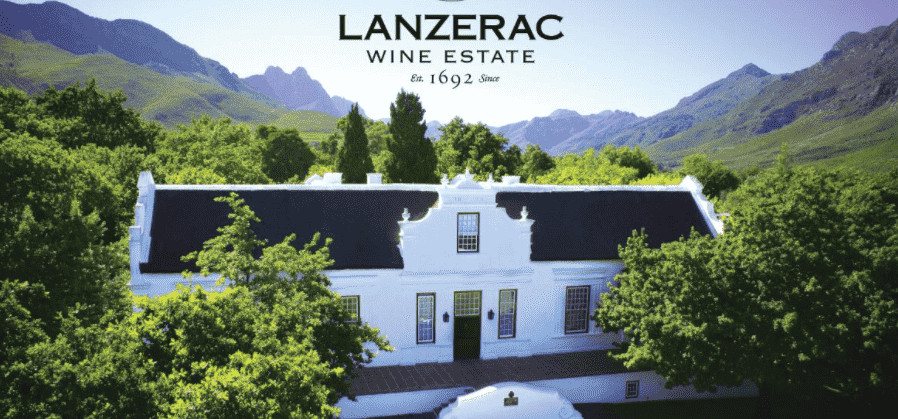
Lacking our sober, Germanic taste, they erected horrible kitsch copies of Cape Dutch houses such as Groote Schuur or destroyed the original architecture as at Lanzerac to add servants quarters. Otherwise, they removed those stately gables.

Today the ANC regime is continuing the proud tradition of name changes, first brought by the British. They invented “classy” French-sounding names like Lanzerac, replacing the poetic Schoongezicht, meaning “fair countenance”.

The Arts and Crafts movement in Britain further added to the aesthetic degeneration of the Cape in the nineteenth century. Since the ANC came to power and with Afrikaner influence on the wane, we have had a similar explosion of ugly, Tuscan-style buildings on the Transvaal Highveld as another British fashion got imported to South Africa.

A black man in an ugly, quasi-Italian house, speaking English and watching soccer on TV; that is about the contempory definition of British civilisation, as can be seen in South Africa.