Apple Inc shares slumped nearly 7 percent in after-hours trading as its fourth-quarter revenue forecast fell short of estimates and it missed some targets for iPhone sales.
The shares dropped to $121 after the company released its results on Tuesday, from $130.75 at the close.
The forecast overshadowed Apple’s strong sales in China, which more than doubled to $13.23 billion from a year earlier.
Apple Chief Financial Officer Luca Maestri said in an interview the results in China were “spectacular” during the quarter and noted plans to open 40 stores there over the next 12 months.
Without disclosing specific figures, Maestri said sales of the Apple Watch beat the company’s expectations. He noted that in the nine weeks since its launch in late April, the device has sold better than either iPhones or iPads over a similar period after their launch.
Colin Gillis, an analyst for BGC Partners, said the results highlighted the vulnerability of Apple’s dependence on the iPhone and the Chinese market’s growing importance to the company.
“Where are you going to find growth in the world?” he said. “You’ve done an amazing job sucking all the smartphone profits into your balance sheet, but smartphone sales are slowing. What’s going to happen when the industry matures, just like PCs did?”
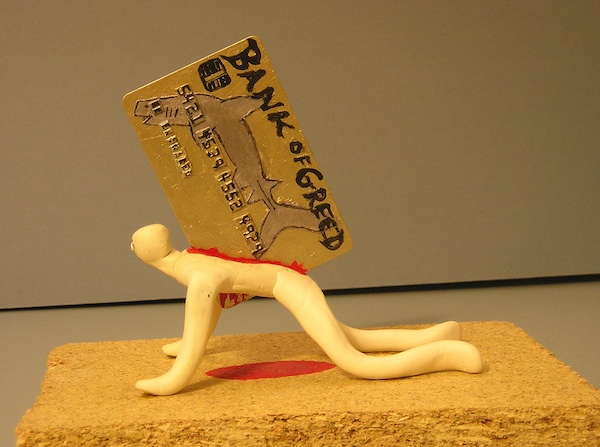
When caught in a current, it is always prudent to swim with the current, but to the side – to exit. The great Banking Crisis has, once again, shown that simply swimming with, or against, the current is all for naught. The current of human greed is inexhaustible. Social responsibility is last on the list in the affairs of the unholy alliance between politics and finance. Profit is privatized whilst loss is socialized all with the unashamedly overt support of the democratically elected governments of the West (Iceland being the notable exception).
To be fair; said governments had to intervene to save the System from self-imploding. Quantitative easing saved the day, for today. But what about tomorrow? Giving a drunk more booze sure sooths the longing, but it cannot, be any and all means, cure the addiction.
Marxism tried to “cure” said addiction by fervently advocating for the abolition of private property (read private capital hoarding) thereby hoping to “cold-turkey” the all-too-human need to possess/own. This “cure” obviously failed… due to the imperatives of evolutionary pressures, the dictates of Natural Law and the moral precepts in/of Christianity.
As naively Progressivist as the above endeavour was and still is, in certain countries – the underlying motive to undermine said unholy alliance between politics and finance cannot be shunned outright. Fact is: the common wo/man always has to bear the burden when things go awry among these, hitherto, “powers-that-be”.
But what if modern technology has the potential to, at least, buffer the excesses of the System… to the benefit of the common man who, at the end of the day, actually sustains it? This author believes it is indeed possible to “exit” the System without (it) leading to the self-implosion (thereof).
All that is needed, is the “democratisation” of usury/banking. This is a real possibility, given the incredible advances of, especially, the IT Revolution. This revolution has, inter alia, opened up the incredible (liberating) potential of “non-mediation” – from age-old fixed structures, e.g. monopoly-capitalism.
The first example of “non-mediation” in the IT Age was Napster. This (free) file-sharing platform allowed users the liberty to download and compile their choice of music in a single data storage unit “burnt” CDs, back then. This “non-mediated” liberty to choose (your own music) led directly to the invention of the Apple iPod. And this, as we know, propelled Apple into the dizzying heights of profit unheard of before – a (current) quarterly turnover that equals the total yearly industrial output of Russia.
This process of “non-mediation” has rolled on relentlessly. It simply cannot be stopped. A new Age has dawned. A true revolution. Just last week, taxi drivers in France took to the barricades to protest against the cell-phone app called Über. This simple app directly threatens their livelihood insofar as it turns (every) common man, with a car (and time), into a taxi driver. In short; the monopoly on public transport taxi drivers had, has been broken via the process of “non-mediation”.
So why not apply the same principle to banking? Bankers have, for too long already, monopolised usury. Simply put; why not “Überize” banking especially given the extremely low interest rates offered by banks in the West nowadays?
Just imagine (theoretically) giving every common man the possibility to be a banker. Would that not be a sterling approach to “distribute” (the) wealth equally among those who actually create/d said wealth? Labour topping investment, this time round à la Piketty. Said private citizens could then, when vetted accordingly, truly be the banker. There would, obviously, be many “loan-sharking” pitfalls. But then; if properly regulated, it would certainly allow the common man to participate more directly in the financial system more than ever before!
It obvious that the common man does not have the funds/savings to act as the guarantor/financier of the 30-year mortgage plan of his/her neighbour But if (the) like-minded team up for the common purpose of taking social responsibility for the private financial decisions of the individual, this could be overcome without too much ado. It is simply a question of trust… among the like-minded.
It is indeed impossible to swim against the tide of human greed. But it is also not impossible to swim to the side, to the benefit of your neighbour who, at the end of the day, means you. Or do you want to be the sorry sucker who always picks up the tab every time the banker and his/her politician buddy profit whilst socialising loss… eternally at your expense?
On the back of the new Apple Watch, there are two sets of lights and sensors. One sends out and receives visible light, while the other works in the infrared part of the spectrum. Together, they form the technical core of the watch’s coolest feature–a heart rate monitor.
This kind of design–using optical sensors to measure pulse–is not unprecedented, but Apple, of course, claims to have improved the system over competitors like the Basis Peak, Samsung Gear Fit, or Mio’s line of activity monitors. Which would be a good thing, because these systems have struggled with their accuracy.
And because of the technology that most smart watch makers, including Apple, have chosen, the problems may be exacerbated if you have darker skin.
The technology is based on a laboratory technique called photoplethysmography, which uses a “pulse oximeter” to measure the components of the blood. A light pulse is sent through the skin and picked up by a sensor. Based on how the light scatters, the sensor can measure how oxygenated the blood is, which allows one to calculate heart-rate based on how often fresh, arterial blood is pumping through.
In the medical context, this oxygen level tends to be measured by a little finger cuff. So the light is on one side of the finger and the sensor is on the other. Even in this more controlled setting, there have been conflicting scientific reports about whether skin color impacts the accuracy of readings.
But no one wants to wear a finger cuff around while they work out, so fitness band companies have had to make do with the wrist. Even a flashlight can shine easily through one’s fingers, which makes the sensing task easier. A wrist-mounted sensor has to rely on the light that’s reflected back from the blood, not shining through it. That’s harder.
The skin on the back of the wrist tends to be darker, too, especially for people with more melanin. “The light has to penetrate through several layers…and so the higher the person is on the Fitzpatrick scale (a measure of skin tone), the more difficult it is for light to bounce back,” explained Basis COO Bharat Vasan to CNET.
Basis, and presumably Apple, try to compensate for skin tone by shining brighter light when someone’s complexion is darker.
Using optical technology to measure heart rate might also mean that people with darker skin will experience a greater drain on their watch battery, because of the more intense light required to power the sensor. The light required to do accurate measurements was enough to push Apple-competitor Jawbone away from an optical system to an electrical one: “Because bioimpedance requires significantly less power compared to optical sensors for same level of accuracy, we can deliver a smaller form factor and longer battery life,” they claim.
A new proposal drafted by the Unicode Consortium would introduce more “racial diversity”, apartheid actually, into the popular emoji characters used in messages on smartphones.
The proposal, edited by Google’s Mark Davis and Apple’s Peter Edberg, would bring skin tones, based on the Fitzpatrick scale for dermatology, to emoji characters in five hues ranging from a pale creme to a dark brown.
To use the new emoji, users would select the emoji person or character and then add a tone. On compatible phones, a single emoji image or glyph would be show up.
On phones that do not support the new font, users will likely see a standard emoji glyph and then a color swatch next to it indicating the skin tone.
The skin tone modifiers would work on all people-related characters, including those that depict couples. A possibility for emoji with couples would be to enter in the skin tone value for each person separately.
Right now, the proposal is still a draft and there is no timeline for implementation so we don’t know when it will reach your phones.
Amazon announced its first smartphone today, a bold move into a segment currently dominated by Apple and Samsung. At an event in Seattle, CEO Jeff Bezos unveiled the Fire Phone, a smartphone with a 4.7-in. 3-D display, a 2.2-GHz quadcore processor, a 13-megapixel rear-facing camera and 2 GB of RAM.
The device, which has a heavy focus on multimedia, will offer unlimited photo storage and a dedicated button to launch the camera app. It will be sold exclusively on AT&T’s network at a price of $199 for a 32-GB version with a two-year contract or $299 for a 64-GB version. Amazon is also throwing in a free year of Amazon Prime, its customer-loyalty program (existing Prime members will get a bonus year tacked onto their current subscription).
The device is currently available for preorder on Amazon’s website and will begin shipping on July 25.
The new phone is designed to be tightly integrated with Amazon’s myriad services. The company’s Instant Video service will be preinstalled on the device, as will Amazon’s newly launched music-streaming service. The phone will also come with a new program called Firefly, which allows people to scan objects, songs and TV shows (sort of like an all-purpose Shazam app) so that Amazon can identify them and offer a way to purchase them from its store. In total Firefly can recognize 100 million items, Bezos said. “Fire Phone puts everything you love about Amazon in the palm of your hand,” he said in a press release.
The phone’s 3-D capabilities are its most unique feature. Through a technology dubbed Dynamic Perspective, the Fire Phone uses four cameras placed on its front face to track a person’s head movements at all times. This allows the phone to offer a real-time 3-D-like display that presents more depth to images than a typical smartphone screen. During the event, Bezos demonstrated the phone’s map app, which showed looming skyscrapers leaping off the screen, as well as an app that allowed the user to sort through dresses as if they were in an actual 3-D space. The phone’s motion sensors allow users to scroll within certain apps by tilting the device rather than touching the screen.
Like the Kindle, the Fire Phone will run on a modified version of Android and support some apps native to Google’s operating system. Popular apps such as Instagram, Facebook, Netflix, ESPN and HBO Go should be available for the device when it launches. Amazon has also released development tools to allow companies to make apps that make use of Dynamic Perspective and Firefly.
The device demonstrates Amazon’s growing interest in creating hardware. In addition to its popular line of Kindle e-readers and tablets, the company released its first set-top box, the Amazon Fire TV, earlier this year. The company has always been reticent to disclose just how successful its hardware ventures are — Bezos said today that there are “tens of millions” of Kindle owners, and there’s no real data on Fire TV sales — but smartphone sales dwarf those other segments. More than a billion smartphones were shipped globally in 2013, with Samsung and Apple controlling nearly half the market between them.
Amazon will face an uphill battle taking on those two giants, but the company has a history of eschewing profits to smother competitors in other markets. They may be embarking on a similar strategy today — the 32-GB version of the Fire Phone, for instance, will sell for $100 less than a similar model of the iPhone 5S. – Time.com
A jury has added $290 million more to the damages Samsung Electronics owes Apple for copying vital iPhone and iPad features, bringing the total amount the South Korean technology titan is on the hook for to $930 million.
The verdict Thursday covers 13 older Samsung devices that a previous jury found were among 26 Samsung products that infringed Apple patents.
The previous jury awarded Apple $1.05 billion. But U.S. District Judge Lucy Koh ordered the new trial and tossed out $450 million of the damages after concluding that jury miscalculated the amount Samsung owed.
Apple had asked for $380 million, arguing Samsung’s copying cost it a significant amount of sales. Samsung countered that it owed only $52 million because the features at issue weren’t the reasons most consumers chose to buy Samsung’s devices instead of Apple’s.
Samsung said it would appeal both verdicts.
“For Apple, this case has always been about more than patents and money,” Apple spokeswoman Kristin Huguet said. “While it’s impossible to put a price tag on those values, we are grateful to the jury for showing Samsung that copying has a cost.”
A third trial is scheduled for March to consider Apple’s claims that Samsung’s newest devices such as the popular Galaxy S III on the market also copied Apple’s technology.
Apple and Samsung are the world’s two biggest smartphone makers. The bitter rivals have been waging a global battle for supremacy of the $300 billion worldwide market. The size of the award didn’t faze Wall Street or harm or help either company’s financial fortunes in any significant way.
Samsung reported it had $47 billion in cash at the end of September and racked up $247.5 billion in revenue last year. Apple has $147 billion of cash on hand and took in $170.9 billion in revenue last year.
“We understood that the money wasn’t really an issue,” said juror Barry Goldman-Hall. “This was about the integrity of the patent process.”
Goldman-Hall, 60, of San Jose was one of two men and six women on the jury, which was tasked only with determining damages.
Apple has argued in courts, government tribunals and regulatory agencies around the world that Samsung’s Android-based phones copy vital iPhone features. Samsung is fighting back with its own complaints that some key Apple patents are invalid and Apple has copied Samsung’s technology.
Samsung lawyer William Price argued Apple is misconstruing the breadth of its patents to include such things as basic rectangle shape of most smartphones.
“Apple doesn’t own beautiful and sexy,” Price told the San Jose jury.
Apple attorney William Lee told the jury that Samsung used Apple’s technology to lift it from an also-ran in the smartphone market three years ago to the world’s biggest seller of them today.
“Apple can never get back to where it should have been in 2010,” Lee told the jury Tuesday at the conclusion of the weeklong trial.
The fight in San Jose is particularly contentious. The courtroom is a 15-minute drive from Apple’s headquarters, and several prospective jurors were dismissed because of their ties to the company.
The three jurors who discussed the verdict outside court said Apple’s proximity made no difference in their deliberations.
“Although Apple is down the street, it’s a global company just like Samsung,” jury forewoman Colleen Allen said. “I have a Samsung television and refrigerator and an Apple computer. I like both companies.”
Allen, 36, of Aromas, is an emergency room nurse who served nearly eight years in the Navy, including a posting in Afghanistan.
“If we didn’t award Apple much, we’re saying it’s OK to infringe patents,” Allen said.
The South Korea-based Samsung has twice sought to stop the trial, accusing Apple on Tuesday of unfairly trying to inflame patriotic passions by urging jurors to help protect American companies from overseas competitors. The judge denied Samsung’s request for a mistrial, but did reread an instruction ordering jurors to put aside their dislikes and biases in deciding the case.
On Wednesday, Samsung again demanded a halt to the trial after the U.S. Patent and Trademark Office told Apple it was planning to invalidate a patent protecting the “pinch-to-zoom” feature at issue in the jury’s deliberation. The judge ordered more briefing while declining to stop the trial. – AP
While Sudan, Libya, and Saudi Arabia can been seen in the right spots on a map, Israel is fully covered by Jordan with the territories of both states evenly colored in red in a book by the world’s biggest publisher of children’s titles.
In another similar Israel-missing case, Apple and its much-anticipated operating system, iOS 7, presented the new world clock options on the iOS 7. It listed Jerusalem without a country.
A senior vice president for corporate communications at Scholastic, Kyle Good, is looking into this.
“The Geronimo Stilton series is published in Italy and Scholastic translates the books for the US audience,” Good said in an emailed comment. “I’m awaiting a response from the editorial team regarding the timing of reprints and whether this will be corrected. I will get back to you as soon as I have their response.”
Scholastic, founded in Pennsylvania in 1920, is the world’s largest publishing companies known for publishing educational materials for children, parents, schools and teachers. It distributes children’s books through its book clubs, teaching resources and popular book fairs held inside many North American schools as well as online.
The company has exclusive publishing rights for the Harry Potter series in the United States.
It is not the first time Israel has not been found on the world’s map.
According to a recent study, 96 percent of Palestinian school textbooks did not mention Israel by name in their maps. At the same time, 87 percent of Israeli school textbooks did not have lines between Israel and the Palestinian Territories, or did not name it at all.
Google’s Android mobile platform now controls 79.3 percent of the global market, according to the latest survey.
This equates to a ten percent increase over the second quarter of 2012, BusinessWire reported, citing figures from the International Data Corporation (IDC). Android shipments also saw a big jump, going from 108 million shipments in Q2 2012 to 187 million in Q2 2013.
Apple’s share of the global market dropped more than three percent during the same period, IDC figures showed, from 16.6 percent in Q2 2012 to 13.3 percent in Q2 2013.
Despite the dropping marketshare, Apple managed to ship 31 million units in Q2 2013, compared to 26 million in Q2 last year.
Third-placed platform Windows Phone has seen a very modest marketshare increase, reaching 3.7 percent from 3.1 percent a year ago. Microsoft’s platform saw a big jump in shipments however, going from 4.9 million to 8.7 million units.
Tablet prices are plunging amid a flood of new devices and cutthroat competition for market share.
Amazon has slashed prices of its Kindle HD tablets to as low as $169 in the US and 139 pounds in Britain, while Barnes & Noble has cut the price of its Nook to as low as $129, and has announced plans to outsource production of its tablets.
“Since Hewlett-Packard launched its tablet, there has been a lot of pressure on prices,” said Rob Enderle, analyst with Enderle Group.
HP sells its Android-powered seven-inch Slate for as low as $139, helping make the paperback-size tablet computer an affordable commodity.
A Gartner survey suggests tablet sales globally will rise 67.9 percent to 202 million units this year, but analysts say the market is cooling after a couple of years of sizzling growth.
Gartner said the red-hot growth in tablets and smartphones will taper off as these devices gain longer life cycles. The report said many consumers are opting for “basic” tablets to cut costs.
“It looks like the market may be tiring of tablets and as makers get desperate, you may see more pressure on prices,” Enderle said.
Some retailers are selling tablets for less than $100, but Enderle said the flood of poor-quality devices may eventually backfire and turn off consumers.
Jitesh Ubrani, analyst at the research firm IDC, said many of the low-cost tablets come from small, sometimes unbranded “whitebox” vendors.
“The decline of the PC market makes it increasingly important for PC vendors to compete in the tablet space,” Ubrani said
“As more top-tier brands introduce low-cost products, we expect to see a reduction in the number of whitebox vendors.”
Even so, the analyst said, average prices for tablets is likely to drop further, and that tablet shipments are expected to overtake all PC shipments in 2015.”
The market leader, Apple, has so far kept above the fray, keeping prices steady on its iPad line of tablets, although it introduced the lower-cost iPad mini last year at $329, less than the $500 for its full-size iPad.
“Apple does not look at the competitive marketplace to determine its strategy,” said Jeff Orr, analyst with ABI Research. “They look at their buyers. Because of that I would expect their price points to remain consistent for the foreseeable future.”
Enderle said Apple is seeking to remain a “premium vendor” but faces a difficult choice — lowering prices, which can hurt its profits and worsen its share price declines, or giving up market share.
“Under Steve Jobs, when a product started to commoditize, they would come out with something new,” Enderle said. “Apple needs another premium product. It is overdue for whatever the next big thing is.”
Microsoft has also aimed at the high end of the market with its Surface, which debuted with a starting $500 price tag, but it has cut the price as low as $199 for education buyers.
Orr said some of the manufacturers may be forced out of the market if tablets are not part of their “core” business.
“Every brand believes it has an audience which will be interested in their device to connect to their ecosystem,” he said. “The reality is not every player can survive.”
Amazon sells its Kindles near the cost of production, in an effort to direct the buyers to Amazon content and apps. The others, including Apple, Google and Microsoft, also want to keep their customers tethered to an ecosystem for advertising and sales.
But Orr points out “there is none of that brand loyalty that some of these vendors had expected.” For example, an iPad user can still use Google, and Kindle users can buy from non-Amazon sellers.
Enderle noted that Google, which makes a $199 Nexus 7 tablet, “has a subsidized model in which advertising makes up the difference” of any lost profits from the device itself.
But he noted that Barnes & Noble faces an unusual predicament because it is primarily a brick-and-mortar bookseller, and needs to bring customers into its physical stores.
“Every Nook tablet sold causes them to lose a customer who might also go into the store,” he said. “They may need to go fully online and compete with Amazon.”
IDC’s Ubrani said it may be difficult for players like Barnes & Noble to compete with Amazon by subsidizing the tablets.
“Not every tablet vendor can afford to utilize this business model,” he said. “Yes, each can offer movies, music, apps, etc. to help subsidize the tablet, but none have the same scale and product selection that Amazon does.”
Enderle said that even though it seems to be a good time to buy a tablet, he advises people to wait.
“We are just short of a refresh” for many tablet makers, said Enderle. He expects new versions of the iPad, Surface and several Android models. Amazon is also reportedly working on new tablets.
“We will see a raft of new products in August and September,” he said. “Unless you find a really good buy. I would wait.” – AFP
As the dust settles on the revelation that the U.S. government has been mining data from most of Silicon Valley’s largest companies in a program called “PRISM,” one question stands out: How did the NSA get access?
Apple, Google, Yahoo! and Microsoft, the largest companies involved in PRISM, the existence of which was revealed last night in a simultaneous Washington Post and Guardian scoop, have categorically denied knowledge of or participation in the program in a series of statements, while acknowledging that they do provide targeted access to the government when required to do so by law, generally according to court orders.
“We have never heard of PRISM,” says Apple’s spokesman. “If the government has a broader voluntary national security program to gather customer data we don’t participate in it,” says Microsoft’s. “We do not provide the government with direct access to our servers, systems, or network,” says Yahoo!’s. “Google does not have a ‘back door’ for the government to access private user data,” says Google’s.
Even unofficially, the tech companies seemed baffled by the allegations. The Guardian spoke with tech executives off the record, all of whom were “confused” by the documents published in the paper. None had ever heard of PRISM.
So what gives? Does the government have backdoor access so secret that not even their targets are aware? Are the tech companies lying? Or are they forbidden—as Verizon allegedly is with its NSA arrangement—from acknowledging its existence to an absurd extent? – gawker.com
Apple attorneys in the US antitrust case on e-books went on the offensive Thursday, attacking the credibility of government witnesses and seeking to debunk key elements of the government’s case.
Apple attorneys grilled a trio of witnesses from Apple rival Amazon and undertook a bruising cross-examination of a Google executive.
Apple attorney Howard Heiss peppered Amazon executives during a series of contentious exchanges with skeptical questions on Amazon statements about its business profile and pointed out inconsistencies between Amazon testimony and documentary evidence.
Amazon is very “metrics-focused,” Heiss said to Amazon’s vice president for Kindle Russell Grandinetti during a cross examination.
Grandinetti had previously testified that he did not know Amazon’s market share of the e-books market.
“We were a very large seller of e-books,” Grandinetti said, while denying he could estimate Amazon’s market share.
Heiss then presented a news article quoting another Amazon executive estimating the company’s market share at 70-80 percent.
Amazon is a key witness in the government’s case, which maintains that Apple conspired with publishers to orchestrate a transformation of the e-book market in early 2010 that cost consumers hundreds of millions of dollars.
In entering the market, Apple signed a series of “agency” model contracts with publishers, in which publishers set the price and guaranteed Apple a 30 percent commission.
Prior to Apple’s entry, the e-book industry was dominated by Amazon and run on a “wholesale” model where retailers set the prices. Amazon charged $9.99 for bestsellers prior to Apple’s entry into the market.
Part of the government’s case is that Apple and publishers forced Amazon to switch to the agency model, resulting in higher prices.
Apple attorneys sought to show that Amazon faced an increasingly difficult market in late 2009 and early 2010 in which publishers were already planning hardball tactics — even before Apple’s entry.
Amazon’s pricing model was unpopular not only with publishers, but also with agents and authors who worried about the erosion of intellectual property.
Grandinetti confirmed that by the end of 2009 four of the “Big Six” publishers announced plans to “window” bestselling books, meaning they would delay release of the Amazon e-book for a period of months until after the release of the physical book.
As five of the major publishers signed agency models with Apple, they contacted Amazon to renegotiate terms.
The first negotiation was with MacMillan Chief Executive John Sargent, who presented Amazon with the choice of shifting to an agency model or accepting a wholesale model with windowing for seven months.
“We expressed quite strongly how unpalatable the choice was,” Grandinetti said of his encounter with Sargent. “The meeting was very tense.”
Amazon initially tried to punish MacMillan by removing the “buy” button from MacMillan titles.
But Amazon ultimately capitulated after three days and quickly negotiated the agency model with MacMillan.
Soon after that, Amazon negotiated similar contracts with the other four publishers.
Apple attorneys sought to show that Amazon’s shift to the agency model was its own decision and not orchestrated by Apple.
But Amazon officials testified that the publishers were forcing the change at Apple’s behest.
Laura Porco, who was director of Amazon’s Kindle Books at the time, told the court in a written declaration that the publishers informed Amazon that they were switching to agency “because that’s what Apple made them do.”
Porco told the court Thursday she was “alarmed” when the publishers demanded agency from Amazon.
“I felt like we were being pushed into something that was really terrible for consumers,” Porco said.
Following Porco’s testimony, Apple attorney Orin Snyder aggressively questioned Thomas Turvey, an executive in Google’s book selling division.
Turvey said in a written deposition that publishers told him that they could not accept wholesale terms with Google because of their terms with Apple.
During the testimony, Turvey was unable however to name a single publishing executive who said this. -AFP
Sixteen years ago, Clayton Christensen laid out his theory of ‘disruption’ in the book The Innovator’s Dilemma. From steel mills to floppy disk drives, he saw innovation led by small players trying, failing, trying again and eventually creating products that superseded the market leaders. The book became a bible of Silicon Valley. Last month, in an interview with Wired, he proposed that, having changed the way we shop and communicate, the internet is moving into a new phase – disrupting essential industries like education and healthcare.
Christensen’s right, but he’s missing a far deeper change. It is the disruption of some of our most fundamental notions: value, ownership, and attachment to place. In the past fortnight, we’ve seen the price of Bitcoin (a new online-only ‘cryptocurrency’) skyrocket while gold – traditionally a safe investment in times of crisis – hit a 30-year low. In the workplace, more and more people are shunning office-based roles in place of bespoke careers, requiring only a Wi-fi connection. And an increasing number of our assets – music, films, documents – are not just intangible but notionally are not even in our possession, existing instead “in the cloud”.
The music industry is a prime victim of internet disruption. People now expect to pay close to nothing for content, and the old structures must adapt or implode. In response, many artists charge little for their music and make their money through expensive tour tickets; Prince gave away his 2007 album Planet Earth free in the Mail on Sunday and netted $18.8 million from 21 nights at the O2. This separation of ‘experiential’ from ownership is characteristic of the younger generation, known as ‘digital natives’. Marketers and forward-looking brands like Red Bull have been quick to capitalise on this, with an emphasis on sponsorship of gigs and extreme sports events.
A shifting sense of value could have contributed to the noughties seeing the first drop in home ownership and rise in rental of the last century. Property is the preserve of the pre-digital generation and the few that do find their way on to the ladder have their sense of ownership diluted by government-subsidised schemes and mortgages backed by parental equity. Meanwhile the internet has allowed us a more participatory relationship with property through couch surfing, air b’n’b and easy-to-access subletting.
And why tie yourself to one location, when your work doesn’t necessitate it? A series of articles in The Atlantic last year, looking at the US, compared the rise of the freelancer to the industrial revolution. The internet allows us to develop a range of skills and gives us a marketplace in which to monetize them. “We’re no longer simply lawyers, or photographers, or writers.” It read. “Instead, we’re part-time lawyers-cum-amateur photographers who write on the side.”
Every time you walk into a coffee shop full of caffeinated hipsters tapping away on Macs, you could well be looking at the future. Last year, Google opened Campus, a co-working space in Old Street, providing all the resources needed (ie. roof, internet connection, vending machines) to work online. With money pumping into ‘tech hubs’ across the UK, we’re sure to see more of the same. Where the States lead, we tend to follow; but when Google goes, we’re there.
Economics has always been a nebulous thing: a belief system rather than a science or even an art, based on notions of interest, loans, capital and deeper still on belief and trust. Much of this can be traced back to the advent of Protestantism and the removal of the sin of usury under Henry VIII, allowing money lending. Perhaps, decades from now, when the dust of this disruption has settled, we will look back and agree with Silicon Valley that The Innovator’s Dilemma was a book deserving of the highest possible reverence.
The New York Police Department is deploying a surge of detectives to patrol an increasingly mean new beat: Facebook and other social networks.
Police Commissioner Raymond Kelly said Tuesday that he’s doubling the number of detectives assigned to combating local teen gangs and that increased surveillance of social networks will be a major part of the strategy.
The gangs under scrutiny are not the big, established outfits like the Bloods and Crips, which are well known around the United States, but neighborhood groups fighting over loyalties often to just one part of a housing project or other limited turf.
“Under a program we’ve named Operation Crew Cut, the Department intends to double the size of its Gang Division from approximately 150 detectives to 300 phased in over a period of time,” Kelly said in prepared remarks to a police conference in San Diego, California.
The propensity of the social media addicted youths to use Facebook and other networks to “brag about their murderous exploits” means detectives will be watching their screens, as much as the streets.
“In addition to tracking the admissions of criminal conduct and plans of future crimes by crew members on Facebook, You Tube and elsewhere, the division will be responsible for maintaining a dictionary of sorts with a continually updated lexicon employed by crews as a kind of code,” Kelly said.
Officers will infiltrate gangs under online aliases registered with their superiors. They will also be allowed to use untraceable Internet cards on their laptops.
Kelly, who runs one of the world’s most technologically advanced police departments, with a rapidly growing surveillance capability, said measures were being taken to ensure that monitoring the networks does not go too far.
“Recently, we issued new guidelines for officers using social media as part of criminal investigations. We did this to instill the proper balance between the investigative potential of social network sites and privacy expectations,” he said.
The initiative reflects a shift in crime away from murder, which is down 18 percent so far this year, Kelly said.
However, overall crime is up four percent, largely due to a wave of teen-on-teen thefts, especially involving iPods and other Apple products.
“Like the impact on the economy itself, the allure of Apple devices has affected New York City’s crime rate,” Kelly said. “In 2002, we recorded a total of 86 thefts of Apple products in all of New York City. Last year that number was 13,233.” – AFP
(Reuters) – HTC Corp on Wednesday unveiled two smartphones running Microsoft Corp’s Windows Phone 8 software and said the devices would be available in November with several operators around the world.
The two brightly colored devices — the Windows Phone 8X and the Windows Phone 8S — will pitch HTC directly against Microsoft’s main partner Nokia, which also unveiled two phones based on the Windows software earlier this month.
However, while Nokia did not name any customers for its devices, HTC said theirs would go on sale at three of the top four U.S. mobile operators – Verizon Wireless, AT&T Inc and T-Mobile USA. It also said that several operators in Europe and Asia agreed to sell the devices.
HTC is under a lot of pressure to generate strong sales from its next round of smartphones as it has been losing ground to Samsung Electronics and Apple Inc.
Until now, HTC has been betting on its One series of phones but so far this year sales of those phones have failed to keep pace with the Apple’s iPhone and Samsung’s Galaxy range.
Until the second half of 2011, when it suffered a sharp decline in its fortunes, former contract smartphone maker HTC had build a strong brand around the world with phones based on Android software.
This website uses cookies to improve your experience. We'll assume you're ok with this, but you can opt-out if you wish. Cookie settingsACCEPT
Privacy & Cookies Policy
Privacy Overview
This website uses cookies to improve your experience while you navigate through the website. Out of these cookies, the cookies that are categorized as necessary are stored on your browser as they are essential for the working of basic functionalities of the website. We also use third-party cookies that help us analyze and understand how you use this website. These cookies will be stored in your browser only with your consent. You also have the option to opt-out of these cookies. But opting out of some of these cookies may have an effect on your browsing experience.
Necessary cookies are absolutely essential for the website to function properly. This category only includes cookies that ensures basic functionalities and security features of the website. These cookies do not store any personal information.
Any cookies that may not be particularly necessary for the website to function and is used specifically to collect user personal data via analytics, ads, other embedded contents are termed as non-necessary cookies. It is mandatory to procure user consent prior to running these cookies on your website.