Jury awards Apple $290 million in suit with Samsung

apple-wallpaper-logoA jury has added $290 million more to the damages Samsung Electronics owes Apple for copying vital iPhone and iPad features, bringing the total amount the South Korean technology titan is on the hook for to $930 million.

The verdict Thursday covers 13 older Samsung devices that a previous jury found were among 26 Samsung products that infringed Apple patents.

The previous jury awarded Apple $1.05 billion. But U.S. District Judge Lucy Koh ordered the new trial and tossed out $450 million of the damages after concluding that jury miscalculated the amount Samsung owed.

Apple had asked for $380 million, arguing Samsung’s copying cost it a significant amount of sales. Samsung countered that it owed only $52 million because the features at issue weren’t the reasons most consumers chose to buy Samsung’s devices instead of Apple’s.

Samsung said it would appeal both verdicts.

“For Apple, this case has always been about more than patents and money,” Apple spokeswoman Kristin Huguet said. “While it’s impossible to put a price tag on those values, we are grateful to the jury for showing Samsung that copying has a cost.”

A third trial is scheduled for March to consider Apple’s claims that Samsung’s newest devices such as the popular Galaxy S III on the market also copied Apple’s technology.

Apple and Samsung are the world’s two biggest smartphone makers. The bitter rivals have been waging a global battle for supremacy of the $300 billion worldwide market. The size of the award didn’t faze Wall Street or harm or help either company’s financial fortunes in any significant way.

Samsung reported it had $47 billion in cash at the end of September and racked up $247.5 billion in revenue last year. Apple has $147 billion of cash on hand and took in $170.9 billion in revenue last year.

“We understood that the money wasn’t really an issue,” said juror Barry Goldman-Hall. “This was about the integrity of the patent process.”

Goldman-Hall, 60, of San Jose was one of two men and six women on the jury, which was tasked only with determining damages.

Apple has argued in courts, government tribunals and regulatory agencies around the world that Samsung’s Android-based phones copy vital iPhone features. Samsung is fighting back with its own complaints that some key Apple patents are invalid and Apple has copied Samsung’s technology.

Samsung lawyer William Price argued Apple is misconstruing the breadth of its patents to include such things as basic rectangle shape of most smartphones.

“Apple doesn’t own beautiful and sexy,” Price told the San Jose jury.

Apple attorney William Lee told the jury that Samsung used Apple’s technology to lift it from an also-ran in the smartphone market three years ago to the world’s biggest seller of them today.

“Apple can never get back to where it should have been in 2010,” Lee told the jury Tuesday at the conclusion of the weeklong trial.

The fight in San Jose is particularly contentious. The courtroom is a 15-minute drive from Apple’s headquarters, and several prospective jurors were dismissed because of their ties to the company.

The three jurors who discussed the verdict outside court said Apple’s proximity made no difference in their deliberations.

“Although Apple is down the street, it’s a global company just like Samsung,” jury forewoman Colleen Allen said. “I have a Samsung television and refrigerator and an Apple computer. I like both companies.”

Allen, 36, of Aromas, is an emergency room nurse who served nearly eight years in the Navy, including a posting in Afghanistan.

“If we didn’t award Apple much, we’re saying it’s OK to infringe patents,” Allen said.

The South Korea-based Samsung has twice sought to stop the trial, accusing Apple on Tuesday of unfairly trying to inflame patriotic passions by urging jurors to help protect American companies from overseas competitors. The judge denied Samsung’s request for a mistrial, but did reread an instruction ordering jurors to put aside their dislikes and biases in deciding the case.

On Wednesday, Samsung again demanded a halt to the trial after the U.S. Patent and Trademark Office told Apple it was planning to invalidate a patent protecting the “pinch-to-zoom” feature at issue in the jury’s deliberation. The judge ordered more briefing while declining to stop the trial. – AP
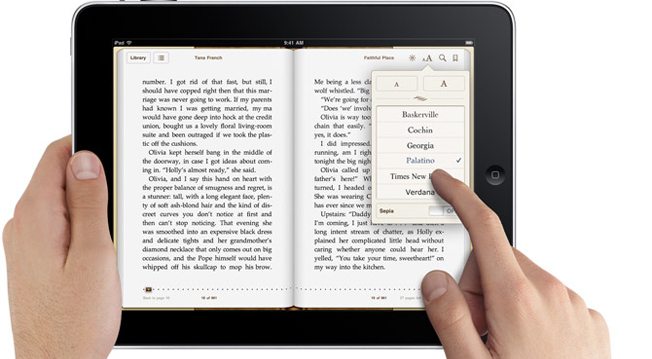
Apple clashes with Amazon in e-book case

Apple attorneys in the US antitrust case on e-books went on the offensive Thursday, attacking the credibility of government witnesses and seeking to debunk key elements of the government’s case.

Apple attorneys grilled a trio of witnesses from Apple rival Amazon and undertook a bruising cross-examination of a Google executive.

Apple attorney Howard Heiss peppered Amazon executives during a series of contentious exchanges with skeptical questions on Amazon statements about its business profile and pointed out inconsistencies between Amazon testimony and documentary evidence.

Amazon is very “metrics-focused,” Heiss said to Amazon’s vice president for Kindle Russell Grandinetti during a cross examination.

Grandinetti had previously testified that he did not know Amazon’s market share of the e-books market.

“We were a very large seller of e-books,” Grandinetti said, while denying he could estimate Amazon’s market share.

Heiss then presented a news article quoting another Amazon executive estimating the company’s market share at 70-80 percent.

Amazon is a key witness in the government’s case, which maintains that Apple conspired with publishers to orchestrate a transformation of the e-book market in early 2010 that cost consumers hundreds of millions of dollars.

In entering the market, Apple signed a series of “agency” model contracts with publishers, in which publishers set the price and guaranteed Apple a 30 percent commission.

Prior to Apple’s entry, the e-book industry was dominated by Amazon and run on a “wholesale” model where retailers set the prices. Amazon charged $9.99 for bestsellers prior to Apple’s entry into the market.

Part of the government’s case is that Apple and publishers forced Amazon to switch to the agency model, resulting in higher prices.

Apple attorneys sought to show that Amazon faced an increasingly difficult market in late 2009 and early 2010 in which publishers were already planning hardball tactics — even before Apple’s entry.

Amazon’s pricing model was unpopular not only with publishers, but also with agents and authors who worried about the erosion of intellectual property.

Grandinetti confirmed that by the end of 2009 four of the “Big Six” publishers announced plans to “window” bestselling books, meaning they would delay release of the Amazon e-book for a period of months until after the release of the physical book.

As five of the major publishers signed agency models with Apple, they contacted Amazon to renegotiate terms.

The first negotiation was with MacMillan Chief Executive John Sargent, who presented Amazon with the choice of shifting to an agency model or accepting a wholesale model with windowing for seven months.

“We expressed quite strongly how unpalatable the choice was,” Grandinetti said of his encounter with Sargent. “The meeting was very tense.”

Amazon initially tried to punish MacMillan by removing the “buy” button from MacMillan titles.

But Amazon ultimately capitulated after three days and quickly negotiated the agency model with MacMillan.

Soon after that, Amazon negotiated similar contracts with the other four publishers.

Apple attorneys sought to show that Amazon’s shift to the agency model was its own decision and not orchestrated by Apple.

But Amazon officials testified that the publishers were forcing the change at Apple’s behest.

Laura Porco, who was director of Amazon’s Kindle Books at the time, told the court in a written declaration that the publishers informed Amazon that they were switching to agency “because that’s what Apple made them do.”

Porco told the court Thursday she was “alarmed” when the publishers demanded agency from Amazon.

“I felt like we were being pushed into something that was really terrible for consumers,” Porco said.

Following Porco’s testimony, Apple attorney Orin Snyder aggressively questioned Thomas Turvey, an executive in Google’s book selling division.

Turvey said in a written deposition that publishers told him that they could not accept wholesale terms with Google because of their terms with Apple.

During the testimony, Turvey was unable however to name a single publishing executive who said this. -AFP