English-speaker wants an Afrikaner volkstaat too

Dear Dan Roodt,

I am a Canadian who married a Boere Meisie. I have three Afrikaans-speaking children. I read your Volkstaat article from 2010: “Volkstaat is inevitable (sorry to the naysayers)”.

The gap that the White South Africans live in where they can still live a decent life and get employment and enjoy their culture and walk safely down the road is narrowing every year. I was working at a company that employed nearly 1000 staff and I was in HR department when we received a notification of the new increased BEE quotas. The new quota meant we would have to lay off a couple of hundred white workers. A great way to go out of business – get rid of your loyal and experienced staff members (and yes – we went out of business a year later). I did a stint at Eskom and that was BEE+++++. You felt like an alien working there if you are White. They were not allowed to give me a full-time job due to the colour of my skin even though my managers endorsed me highly! So where do all these laid-off whites go?

Then the government tries to step by step erode the Afrikaans culture. I will never forget Thabo Mbeki’s speech a few years ago where he said the Afrikaner White is no different to an English White. As if a culture of 350 years had no significance. Increasingly there is more pressure for Afrikaans schools to move to English.

Place names change, statues removed, disarming decent citizens, increasingly racist politicians and openly racist Black citizens, massive crime, etc. I am a foreigner who had nothing to do with Apartheid and yet when I shop, or eat at my canteen I see Black workers being friendly to Black customers and then they serve a White and then become unfriendly. At my work canteen I often get given a small serving and see all the Blacks in the same line getting large servings. I get treated poorly by most Black service industry workers. My municipality charged me R120,000 for one month’s electricity and I was told by the meter reader that my municipality will never fix a White man’s account.

When the gap gets too narrow then the Whites will have to form a Volkstaat. The sad thing is that this may end up happening amid total chaos and civil war. Five million persecuted people can do a lot of damage. I remember the World War II footage where they noted how the Europeans pulled together in times of extreme hardship. We don’t just die or jump into the ocean as seems to be the expectation.

It was interesting to see the amount of support that Steve Hofmeyr received recently. Couple of hundred thousand supporters. Its not 5 million supporters yet for White figureheads. But the 200 thousand will grow as things get worse. Obviously it’s easy to pretend there isn’t a problem while you have your decent house, drive down your safe highway to your reasonable job. Its easy to criticise people like Steve and yourself while people still live in the gap. In the last 2 years, I have had two attempted car jackings, my brother-in-law and his wife and toddler were tied up and were lucky not to be shot by military-weapon=toting criminals (got interrupted when about to shoot), my wife was robbed at an ATM, our Church Pastor’s son was stabbed, etc.

Slow erosion of culture is a clever tactic. Let the old school ex-army/police die of old age. Change things slowly so the change creeps up on people. But I am seeing new Black political and union forces getting impatient. Afrikaner culture just won’t die quick enough for them. It must really upset them to see the growth of the Afrikaans music culture and the persistence of the White-dominated Springbok rugby team and the support structures amongst families and friends that prevent Whites from sinking into poverty when BEE’ed out of the employment market and the large number of Whites returning from overseas now that the global economy is in trouble, etc. Malema’s call for taking all White-owned farms just won’t go away. They seem to be more and more in a rush to grab their share regardless of the cost to the economy.

I can’t wait to see the change in the Whites’ attitude when one of these big changes hits them hard and fast. When the gap gets too narrow too quick.

I agree with you that a Volkstaat should be centered on an Afrikaner culture. I would gladly shift to your language. I have travelled the world and have a love for the Afrikaner culture since for me it stood out as being vibrant and strong and non-Americanised.

See you at the border of the Volkstaat.

Regards,

Tim Edmundson

‘We were England’s first colony’ – Welshman

Twm Morys was boiling carrots for his children when he momentarily stopped to recite a 15th-century battle chant in Welsh. Beating out the guttural consonants with a stave on his kitchen floor until they rang in every last corner of his farmhouse, Mr. Morys, a well-known poet, said it was time to put “fire in the belly” of his people.

He is not the only one. In the ancient mountains towering above this coastal town in northern Wales, where eight in 10 people speak the native Celtic tongue, and many carry names their fellow Britons would not dare pronounce, Welsh nationalists have their eyes firmly set on independence — Scottish independence.

Less than a month before Scotland holds a referendum on whether to leave Britain, Wales is watching with a mix of envy, excitement and trepidation.

Leanne Wood, leader of Wales’s nationalist party Plaid Cymru, in Penygraig, Wales. “The tectonic plates of the United Kingdom are shifting,” she said.

“If Scotland votes yes, the genie is out of the bottle,” said Leanne Wood, leader of Wales’s nationalist party Plaid Cymru. Only one in 10 Welsh voters supports independence, compared with about four in 10 in Scotland, but Ms. Wood thinks that could change. “The tectonic plates of the United Kingdom are shifting,” she said.

Tremors from the Scottish debate can already be felt across Britain. Whatever happens on Sept. 18, growing demands for more regional autonomy will reshape the country. In Northern Ireland, nationalists spy an opportunity to revive dreams of a united Ireland. Cornwall recently won minority status for its Celtic inhabitants. Even the long-neglected north of England has turned up the volume, questioning an ever greater concentration of wealth in London and the southeast.

But in Wales, perhaps more than anywhere else, nationalists have made the Scottish independence bid their own in the hope that it will stir passions at home — if not for full independence, at least for more self-government.

Ms. Wood, who was once expelled from a legislative debate for referring to Queen Elizabeth II as “Mrs. Windsor,” has been to Scotland twice in support of the Yes campaign and plans to go again. The Welsh Hollywood actor Rhys Ifans has joined the #goforitScotland campaign. And Adam Price, an entrepreneur and prominent pro-independence thinker, has been campaigning in Scotland from a caravan, Welsh-style. “Caravaning for independence,” he calls it.

Others, like Mr. Morys, will gather in the Welsh capital, Cardiff, the week before the referendum for a series of performances to “whip up some Welsh enthusiasm,” stave in hand.

Wales and Scotland have much in common — not least an unfailing loyalty to any sporting side that plays against England, their once mighty and still dominant neighbor.

Ever since Margaret Thatcher, the conservative prime minister, shut their heavy industries, Scottish and Welsh voters have cast their ballot to the left of the English. There is, said Peter Florence, director of Wales’s Hay literary festival, a shared sense of not being represented in Westminster.

But Wales is smaller and poorer than Scotland. It has no oil to make up for the subsidies from London currently sustaining its public services. “We’re a hundred years too late,” Mr. Florence lamented, referring to the Welsh coal riches that once fired Britain’s industrial revolution. If he were Scottish, he would vote for independence, he said. “But we simply cannot afford it.”

Gerald Holtham, one of Wales’s most prominent economists, has done the math: Total government spending for Wales is 30 billion pounds a year, or about $50 billion, and tax receipts come to 17 billion pounds. “We’re talking about a gap a quarter the size of the economy,” he said.

Nationalists retort that Wales can escape poverty only if it takes charge of its own destiny. “No nation has ever ruled another well,” said Mr. Price, a former lawmaker who set up a technology company in Wales. “We are poor because we are not independent, rather than the other way round.”

But even he conceded that the time for Welsh independence has not come. First, he said, “We have to learn to be a nation again.”

Unlike Scotland, whose Parliament voted to join England three centuries ago, Wales was conquered in 1282. The Scots kept their own legal system, schools, universities, church and, with it all, a strong civic identity distinct from England’s. Welsh institutions were swallowed whole; the Welsh dragon, which flutters proudly and ubiquitously on the high street in Caernarfon, is nowhere to be seen in the Union Jack.

“We were England’s first colony,” said Eirian James, owner of Palas Print, a local bookstore with mainly Welsh-language fare. Every time she visits relatives in southern Wales, she has to take a train through England. To this day, most transport links run from west to east, toward England, rather than along Wales’s north-south axis.

The Welsh tourism board proudly promotes the fact that there are more castles per square mile in Wales than anywhere else. For locals, those castles are another reminder of early occupation.

Caernarfon Castle, up the street from Palas Print, was built by Edward I of England who killed Llewellyn, the last native prince of Wales, and declared his own firstborn son the Prince of Wales. That tradition still grates with some Welsh people. When Prince Charles was invested in Caernarfon Castle in 1969, militants tried to blow up his train. The local poet Gerallt Lloyd Owen recorded both events in popular poems. He died this summer, and donations made in his memory are going to Scotland’s Yes campaign.

Poetry may not be the political weapon of choice elsewhere, but in Wales, home to the Eisteddfod, a sort of cultural Olympiad whose history can be traced to 1176, national grievances often find their way into verse.

As Jerry Hunter, a professor at Bangor University, said, “Where else have you got thousands of people crowding into a pavilion watching the results of a poetry contest?”

When the Welsh-speaking village Capel Celyn was flooded in 1965 to create a water reservoir for Liverpool, England, despite unanimous opposition from Welsh lawmakers, it spawned songs and graffiti art and gave Plaid Cymru its first significant boost.

Stemming the decline in the Welsh language — just under one in five Welsh people speaks Cymraeg — is the greatest triumph of Welsh nationalism, but it is also a handicap: It has divided a country of three million between those, mainly in the rural north and west, who speak it, and those in the more urban south and east who don’t, reducing Plaid Cymru in the eyes of many to a mere language-lobbying group.

Many still grumble about a Welsh-speaking cabal — the Taffia, after the Welsh River Taff — holding the best jobs, the most influence and a greater claim to Welshness. But hostility toward the language has been fading, and the Welsh appetite for more self-government has grown — with a little help from Scotland.

In a 1979 referendum, eight in 10 Welsh voters opposed any kind of autonomy from London.

But in 1997, after Scotland voted to have its own Parliament, the tiniest majority of Welsh voters followed suit and approved the creation of a more modest Welsh assembly. By 2011, two in three of those voters wanted to extend the assembly’s lawmaking powers.

“That’s a bigger swing in public opinion over 30 years than in Scotland,” said Richard Wyn Jones of Cardiff University.

Some bank on a Scottish yes vote to accelerate that process. Others say a narrow no vote would be a better result for the Welsh: Once mocked in Whitehall circles as Scotland’s “smaller, uglier sister,” Wales may have more leverage with a Scottish ally inside the union.

But Mr. Jones says Wales will end up more autonomous irrespective of what happens in Scotland.

“Independence may look unlikely right now,” he said. “But who in 1979 would have dared imagine a devolved Wales looking on as Scotland prepares an independence referendum?” – New York Times

Spanish Concourt rules Catalonia referendum unconstitutional

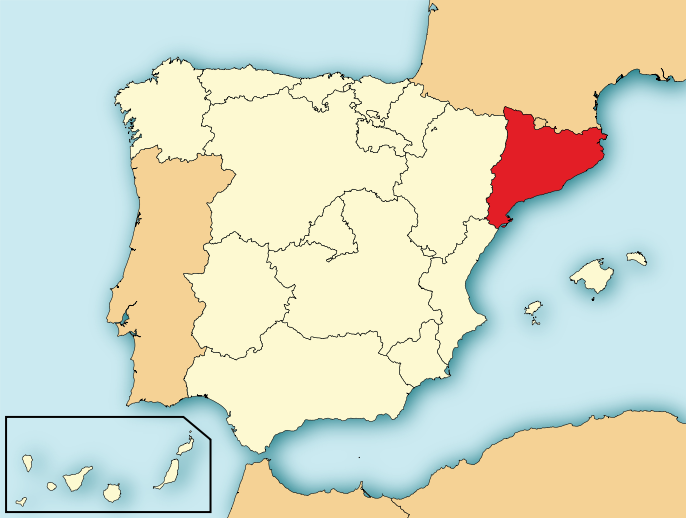
cataloniaSpain’s Constitutional Court has ruled that a referendum in Catalonia on independence from the rest of the country would violate the law, saying that regions within Spain “cannot unilaterally call a referendum on self-determination.”

According to a summary of the ruling, any “right to decide” their future by Catalans has to be in accordance with Spain’s 1978 constitution, which stipulates Spanish unity.

The Constitutional Court ruled “unconstitutional and null” a declaration by the regional parliament in Barcelona which claimed that Catalonia has the right of self-determination.

Kingdom of Spain Constitutional Court of Justice Building (AFP Photo / Dominique Faget)Kingdom of Spain Constitutional Court of Justice Building (AFP Photo / Dominique Faget)

The fate of the region rests on the power struggle between Catalan President Artur Mas who had promised a referendum on independence from Spain on November 9 and the Spanish Prime Minister Mariano Rajoy who insists that such a vote would be illegal.

“No one can unilaterally deprive the entire Spanish people of the right to decide on their future,” Rajoy told the national parliament last month insisting that the referendum “can’t take place.”

Rajoy remains certain that Catalonia cannot be compared to Scotland’s aspiration of succession from the UK, because the Spanish written constitution, unlike British, rules out such a move.

But in Catalonia, March’s public opinion poll showed that 59.6 percent of the population want independence from the rest of Spain and want their region to become a “new state of Europe.”

Catalonia, an autonomous community with a population of 7.5 million is responsible for around one-fifth of the country’s GDP and one-quarter of its taxes. Public sentiment believes that the region will be much better off financially if they secede from Madrid.

The situation is aggravated by the economic crisis, which is forcing the Spanish government to adopt painful austerity policies.

In January the Catalan Parliament voted to send a petition to the national legislature seeking the power to hold the vote. That initiative is still in the process. If successful the referendum in Catalonia will be a month after a similar vote in Scotland, which is slated for September 2014.

Source: RT

Obama comes out against self-determination

pcrBy Paul Craig Roberts.

The White House Fool has repeatedly declared erroneously and foolishly that it is “against international law” for Crimea to exercise self-determination. Self-determination, as used by Washington, is a propaganda term that serves Washington’s empire but is not permissible for real people to exercise.

On March 6 Obama telephoned Putin to tell the Russian President again that only Washington has the right to interfere in Ukraine and to insist against all logic that only the “government” in Kiev installed by the Washington-organized coup is “legitimate” and “democratic.”

In other words, the elected government in Crimea pushed by the people in Crimea to give them a vote on their future is “undemocratic” and “illegitimate,” but a non-elected government in Kiev imposed by Washington is the voice of self-determination and legitimacy.

Washington is so arrogant that it never occurs to the hubris-infected fools what the world thinks of Washington’s blatant hypocrisy.

Since the Clinton regime, Washington has done nothing but violate international law–Serbia, Kosovo, Afghanistan, Iraq, Libya, Syria, Iran, Pakistan, Yemen, Somalia, Honduras, Venezuela, Ecuador, Bolivia.

Does Russia have an Africa Command? No, but Washington does.

Is Russia surrounding the US with military bases? No, but Washington has used the NATO organization, whose purpose disappeared 23 years ago, to organize western, eastern, and southern Europe into an empire army with forward bases on Russia’s borders. Washington is determined to extend the boundaries of a North Atlantic Treaty Organization to Georgia in central Asia and to Ukraine on the Black Sea. Both Georgia and Ukraine are former constituent parts of both Russia and the Soviet Union.

Washington is doing the same thing to China and Iran. Washington is working to establish new air and naval bases in Philippines, South Korea, Vietnam, Thailand, Australia, with which to block the flow of oil and other resources into China. Iran is surrounded by some 40 US military bases and has US fleets standing off its coastline.

In Washington’s propaganda, this rank militarism is presented as “defending democracy.”

The Russian government continues to act as though Washington’s thrusts at Russia’s independence and strategic interests can be defused with good sense and good will. But Washington has neither.

Since the Clinton regime, Washington has been in the hands of a collection of ideologues who are convinced that the US is “the exceptional indispensable country” with the right to world hegemony. Everything that Washington has done in the 21st century is in pursuit of this goal.

Washington intends to break up the Russian Federation itself. Washington funnels huge sums of money into NGOs inside Russia that serve as Washington Fifth Columns and work hand-in-hand with Washington to discredit Russian free elections, to demonize Putin and the Russian government, to spread anti-Russian propaganda and agitation. It is amazing how many Russians actually believe the Western propaganda.

Washington is also working to isolate China with the Trans-Pacific-Partnership, but at this time is primarily focused on destabilizing and isolating Russia. Washington is desperate to break up the BRICS, the emerging organization of Brazil, Russia, India, China, and South Africa. With the largest countries and half of the world’s population, the BRICS organization is emerging as a political and economic power, especially with the organization’s plan to cease using the US dollar as reserve currency. Ringing Russia with US missile bases on Russia’s borders impairs Russian sovereignty and independence and, thus, weakens the BRICS as a countervailing power to Washington.

Many have been deceived by Washington’s propaganda. The world is slowly waking up, but is it in time?

The US media and much of Europe’s speak with one voice parroting Washington’s propaganda, demonizing Washington’s targets, and preparing insouciant Western populations for more war. The Western media, like Western governments, is devoid of integrity. Liars and whores rule.

Paul Craig Roberts is an economist and a nationally syndicated columnist for Creators Syndicate. He served as an Assistant Secretary of the Treasury in the Reagan Administration earning fame as the “Father of Reaganomics”. He is a former editor and columnist for the Wall Street Journal, among others. He has recently published How the Economy Was Lost: The War of the Worlds and is coauthor with Lawrence Stratton of The New Color Line and The Tyranny of Good Intentions.

Mandela: myths vs. facts

landman_christoby Christo Landman

The ceremonies and media propaganda around the death of Nelson Mandela, cost millions of rands.  Those rands were to a large extent paid by taxpayers of whom the large majority are white.  By means of social grants, they also have to financially support 17 million people, the vast majority of whom are black.

The propaganda wave surrounding the life and death of the then President Mandela is a blend of myth and fact. Khehla Shubane of the Centre for Policy Studies verbalized the Mandela mythology on CNN, which hasnow  become the official Mandela mythology.

But Shimon Peres, a former Prime Minister of Israel, once said of the Israeli and Palestinian disputes: “Personally, I have very little patience for history. I believe that to imagine is more important than to remember.”  Myths are figments of the imagination, but to remember is the recollection of facts.

Imagination is the fertile ground in which myths flourish. Imagine what Mandela was thinking as he looked through the bars of his prison window overlooking Table Mountain.  The myth developed that he had had a Damascene experience and converted from a man who planned violence as the only way to achieve his political objectives, to a man who rejects all forms of violence and instead embraces reconciliation, forgiveness, tolerance and accommodating interpersonal and group differences.

Imagination became perception, which grew into mythical proportions to be finally presented as historical fact.  It is true that he was a skillful politician and a worthy opponent, who never allowed side issues to influence the core issues on the table. It was a fact that during his five-year tenure as the country’s first black president, he achieved more for peace and harmony in a deeply divided South Africa than Mbeki and Zuma, who succeeded him during the fifteen years thereafter. The success of his policy of accommodating differences between cultural groups during his reign supported the growing myth of the saintly Madiba.

But the historical facts that emerged since his retirement do not support the notion of Mandela’s fundamental sense of righteousness and moral values. During the fifteen years since his retirement he never ever pronounced his displeasure at the way the ANC had converted from a liberation movement to a plundering national mafia.  Did he condone what his successors were doing?  Did he condone their immoral return to outdated tribal customs in the face of the need for a unified South Africa, where one race group is not superior to another? Or did he merely lack the courage to defend his moral convictions such as Archbishop Tutu so often does?

That failure on his part drew a line through the Mandela myth and has exposed him as a shrewd political strategist and not the moralist he is made out to be. The world conveniently has conveniently forgotten about the last fifteen years of Mandela’s life on earth before catapulting him as a saint into future mythology.

It is therefore fitting to review the actual historical facts of South Africa in order to gain a perspective to evaluate the pre- and post-Mandela era.

It seems that mythmaking is a fact of life in the history of countries and peoples.  South Africa is no exception.

  • Among Afrikaners the myth is accepted as fact that the Dutch came to RSA with the godly purpose to Christianize blacks. In fact, they came to the Cape of Good Hope to open a trade mission between Europe and India.
  • On the other hand, blacks believe sincerely that they were indigenous to RSA and that their land was stolen by whites. The fact is that the black tribes originated in the central parts of Africa and moved to the south in three great streams. In Southern Africa different language groups occupied different geographical areas. This is still so! The constitution of SA 1996 lists the following black language communities:  Sepedi, Sesotho, Setswana, siSwazi, Tshivenga, Xitsonga, isiNdebele, isiXhoas and isiZulu. In the 1993/4 financial year the government spent R650 mill on 4 554 tribal leaders, which included 18 kings and queens.

The further fact is that the Dutch occupied land at the Cape which was deemed to be “no-man’s-land”. Here and there nomadic Khoi and San tribes were found but what was absent was a government over an identifiable territory with fixed borders and with its own administration.

Another severe problem is that the original history of the black peoples of Southern Africa is not a written one, but a verbal one — so that mythmaking is obviously at the order of the day. The history of the whites is a written one, of which the facts are verifiable. Some of these facts include the following:

  • Dutch temporary occupation was a business transaction and when the Free Burger farmers emerged and moved to the interior, the occupation of the Cape in international law obtained a permanent character.
  •  The numbers of the Dutch were strengthened by the French Huguenots and by some Germans and later, after the first and second British occupation of the Cape, by some English and Scots.
  • White civilization over a period of 2 700 years grew through the following phases: organized agriculture, education, mining, technological innovations, industrialization and an electronic revolution. Differently said: through a pre-modern society to modernism and rationalism to post-modernism!
  • On the other hand, when the first contacts of the whites with blacks other than the Khoi and San “first peoples” took place in 1675, their agricultural tradition was not organized at all and land ownership was the collective property of the tribal king … as is still the case in many of the tribal communities today.
  •  As a matter of fact, the land ownership at Qunu, where Nelson Mandela is buried, is owned by the Tembu King who is the trustee of land ownership. This is the case in many a Southern African country, such as Zimbabwe, Mozambique, Swaziland and others. In RSA there are strong forces at work to abolish private ownership of land.

Ideologically speaking, the divide between white and black is just as strong. British colonialism made a huge impact on Afrikaners and the black peoples. In the case of the Afrikaners British colonialism tried to impose the British way of life on them. Those Afrikaners and black elite groups who adopted the English life-style were in a limited way integrated. Hence, the British influence in RSA actually laid the foundation for a class system; which system is now, after the demise of a policy of ethnic diversity, dominant.

The Afrikaners, on the other hand, advocated the Republican system of government.  British liberalism based on the advancement of individual rights, as manifested in Chapter 2 of the Constitution of SA 1996, had a great impact on Afrikaner political thinking. As a matter of fact, a dominant group of Afrikaners now vote for the Democratic Alliance, which Alliance adopts liberal democracy as the only viable alternative to ANC collectivism and the workings of social democracy.

Black political thinking in the leadership of the so-called liberation movements was heavily influenced and supported by the philosophy of Marxism and Soviet Communism whose ideological thinking was closer to the collectivism of the traditional social organization of the various black ethnic groups.

The political development of SA since 1652 developed in various phases:

  • Since 1652 the Dutch forefathers of the Afrikaners established themselves in the Cape as a permanent settlement.
  • This was followed by two occupations by the United Kingdom, which led to the advancement of the Voortrekkers to the interior.
  • It was during their move to the interior that the Vootrekkers encountered the AmaXhosa.
  • The British introduced segregation of the races to supplement the segregation of a social class system.
  • The Voortrekkers established themselves in two main Republics: of the Transvaal and the Orange Free State.
  • The gold rush to the Witwatersrand in the Transvaal Republic inspired British colonialism to occupy the Transvaal Republic as well as of the Orange Free State.
  •  The British were defeated in the First War of Liberation.
  • During the second War of Liberation, British colonialism became famous for its concentration camp policy whereby 27 000 Afrikaner women and children (one third of all children in the Boer Republics) died of starvation and diseases.

In 1910 the Union of SA came into being which resulted in the amalgamation of four provinces and a large number of traditional tribal authorities. However, Lesotho, Swaziland and Botswana, although politically part of British SA and geographically part of Southern Africa, were given the option to remain outside the Union, which they did. In so doing they created three ethnic sovereign states.  The other language communities found themselves in subordinate positions as part of the Union. In 1913 their territorial bases were acknowledged by law.

The underdeveloped status of the tribal authorities and the gold rush led to an unprecedented influx of blacks to the four (European-style) provinces. To such an extent that the European-style governments in the provinces introduced extraordinary measures to protect Western standards in policies which became known as “petty apartheid”.

In 1948, when the Afrikaners took over the power of government, they tried to unscramble the egg, made by British colonialism and imperialism.  “Petty apartheid” then became only the object of a broader policy of territorially based nation states. In 1960 SA became a Republic outside the British Commonwealth.  The so-called TBVC states (Transkei, Botswana, Venda and Ciskei) opted for independence, but lacked recognition by the international community. The role of the Marxist-inspired liberation movements, such as the African National Congress, as a tool of communist expansionism in the cold war, cannot be emphasized enough.

Eventually apartheid and Zionism were declared racist ideologies by the UN. The propaganda onslaught against the policy of separate but equal development became notorious. In the meantime SA was plagued by terrorist acts, such as the Rivonia case, in which outcome Nelson Mandela and others were given life sentences. The fact remains that the then government of SA was never defeated by acts of violence. In his later years the Mandela groups could have been released much earlier, if only they were prepared to renounce violence.

In the end both the ruling National Party of SA and the liberation groups had to negotiate a peaceful settlement. The settlement comprised the following:

  • 34 constitutional principles for state formation, of which principle 12 read that collective self-determination be acknowledged.
  • An interim Constitution of 1993.
  • A final Constitution of 1996.

The 1993 Constitution provided for the Afrikaners a Volkstaat Council to investigate forms or models of self-determination. It also included a non-diminution clause for the protection of the Afrikaans language.

The 1996 Constitution included the following clauses to enhance the right of self-determination of (language) communities:

  • Internal autonomy for organs of civil society [s.31(1)(b)].
  • Constitutional councils for the protection and promotion of the collective rights of (language, religious, cultural and other) communities (s.185)
  • Territorial self-determination for blacks on their collectively owned tribal lands (s.211 and 212)
  • Territorial self-determination for communities other than communities based on customary law (s.235)
  • A (constitutional) Commission for the Promotion and the Protection of the Rights of Language, Religious, Cultural and other Communities (s.185)

In other words, to a large extent, the ANC is party to a constitution which recognizes many of the principles now post facto discredited as apartheid measures. However, the constitution says one thing, but in practice the ANC-government governs SA as if a negotiated settlement never occurred.

Economically speaking, the development of the so-called homelands is still stunted, due to the non-cooperation of the tribes with the economic system of border industries and industries in the tribal lands on an agency basis.  It is also a best-kept secret that white South Africans simply had no rights within the tribal lands, but a lot of propaganda is being made regarding “petty apartheid” measures in the then four provinces.

In conclusion: because of the resistance of the liberation movements to adopting the policies of separate but equal development, the tribal lands are still underdeveloped and their people pre-modern in their outlook. What we see in SA after the failure of so-called apartheid is new colonialism of a special kind: namely the imposition of African collectivism on inter alia the white population with their European heritage. It is an invasion of masses of Africans, and the creation of innumerable so-called informal settlements in conditions of poverty around the cities. It is estimated that about 8 million illegal immigrants from other African countries invaded the liberated South African society. At the same time what we observe is a class of super-rich Blacks with their limos and then 17 million Blacks on social welfare. The real catastrophe facing SA is when the declining economy of the country becomes incapable of paying social grants; a condition which will start a fire that will burn down SA as well as all the myths on which the present de facto government is based.

The Mandela myth would then have failed to liberate the country, as it ignored the hard realities of a developing state with the need for an economy based on sound principles of modernity, competitiveness and hard work.

Dr. Christo Landman is a former South African diplomat and currently active in Afrikaner cultural organisations. His columns in Afrikaans may be read here.

The US and Britain’s proxy war in Syria threatens planetary civilisation

roodt_fbfotoby Dan Roodt

[followbutton username=’danroodt’ count=’true’ lang=’en’ theme=’light’]

Like Dan Roodt’s Facebook page

The news that the UK, US and allies will provide ‘urgent military support to Syrian rebels’ has signalled the prolongation and possible escalation of the Syrian civil war. Not surprisingly, it was followed by news that Russia (is) to supply advanced weapons to Syria.

The so-called “Friends of Syria” group comprises Britain, France, the US, Germany, Italy, Jordan, Qatar, Saudi Arabia, Turkey, Egypt and the United Arab Emirates. We can safely say that America and Britain are the driving forces behind the initiative and that the other countries have merely been roped in to lend some international legitimacy to what is turning into a proxy war between the US-UK and Russia.

The Syrian conflict represents a threat to world peace. In fact, it could lead to the end of civilisation as we know it!

That may sound like an outrageous statement, but let me explain.

The civil war in Syria is not only a proxy war between the Atlantic powers (or Atlanticists) and Russia, but once Syria falls, the next target will be Iran and after that Russia itself.

Putin understands this. He is also correct when he accuses the American and British governments of disregarding the sovereignty of other states and nations. Especially Democratic and Labour governments have in recent decades embraced the doctrine of “regime change” whereby the two Anglo-Saxon powers see fit to start wars and uprisings in other countries to serve their own interests. However, a lot of the time they are not even serving their own interests but are acting to promote the new Soviet ideology of multiculturalism. Racial equality, or “equality of outcomes” is to the Atlanticists what class equality was to the former totalitarian states of Eastern Europe.

Elsewhere on this website, Felicity Arbuthnot quotes Sbigniew Brzesinski as saying that the United States is courting “large-scale disaster” in Syria:

“Having covertly provided arms and equipment to insurgents from numerous different countries for over two years, they have now moved to the overt stage, a move over which even arch hawks such as former National Security Advisor Zbigniew Brzezinski, and former Republican Senator Richard Luger, six term leader of the Senate Foreign Relations Committee urged caution.

“Luger said such action would boost extremists, with Brzezinski dismissing Obama’s talk of ‘red lines’ as thoughtless and risking “a large-scale disaster for the United States.”

Carl Schmitt
Carl Schmitt

The geostrategic scenario predicted by Russian writer and commentator Aleksandr Dugin, is being realised. I posted his essay The Great War of Continents on my personal blog some time ago. Dugin was influenced by the great German legal philosopher, Carl Schmitt, who was skeptical of democracy. In fact, we can see how democracy plays hardly any role in the decisions taken by the Atlanticists as the populations of both the US and the UK are vehemently opposed to further wars. A recent poll conducted by the Pew Research Center shows that Americans (are) overwhelmingly against arming Syrian rebels. Schmitt also wrote a book on Land and sea in which he theorised about the conflict between the Atlantic “sea powers” and the Eurasian “land powers”.

However, I think the Syrian conflict, together with the so-called “Arab Spring”, colour revolutions, as well as the South African revolution of 1994 portend a major movement with the ultimate objective of abolishing the nation state as we know it. Almost all of these revolutions were fomented from the outside by Atlanticists who discerned weaknesses in the ethnic, religious and multinational compositions of the states being attacked. The use of media and the arming or financing of “rebels” and terrorists were features of all these revolutions or “regime changes”.

Apart from the thalassocratic elements identified by Schmitt and Dugin – the USA and the UK being maritime powers – there is another, archaic driver behind Atlanticist overreach and that is the resurrection of a kind of Zombie British Empire (ZBE). America, being a republic, has always been ill at ease with its role as the New Rome. Americans are not well-versed in foreign languages, customs and geography. The average intern or staffer in Washington would not be able to find Syria on a map, let alone appreciate the ethnic, religious and political complexities of that society.

But in its economic and geostrategic decline, Britain has become the tail wagging the dog. It is clearly seeking to influence and direct the United States in re-establishing its nineteenth-century dominance as a global imperium. Earlier this year, an Historic strategy meeting between the USA and the UK was announced. More recently, it was revealed by Edward Snowden that the British are worse than US in spying. Just yesterday, it appeared that the UK (was) tapping the EU’s data flows and the “German Justice Minister… called the British spy agency’s massive eavesdropping of international fiber-optic cables ‘a catastrophe’.”

There is a long-standing hostility towards the nation state in Britain, which has become deeply rooted in academia, the media, the ubiquitous left-wing NGOs and especially in the Labour Party. European nationalism or the historical desire of European peoples to exercise their right to self-determination is routinely equated with Hitlerism. But even in the United States where Woodrow Wilson is remembered as a champion of self-determination and the nation state, there is another school of thought expressed by Wilson’s secretary of state, Robert Lansing, in the aftermath of World War I:

“The more I think about the President’s declaration as to ‘self-determination’, the more convinced I am of the dangers of putting such ideas into the minds of certain races. It is bound to be the basis of impossible demands on the Peace Congress, and create trouble in many lands. What effect will it have on the Irish, the Indians, the Egyptians, and the nationalists among the Boers? Will it not breed discontent, disorder and rebellion?”

The successful suppression of Afrikaner self-determination or “Boer nationalism” over more than a century, as well as the so-called “peaceful regime change” in South Africa in 1994, has emboldened neo-imperialists in the UK and the US to engineer many more regime changes, starting in Iraq, but also the Maghreb and Egypt, with the focus now on Syria.

This is what opponents of the Obama administration in the United States are starting to call the “New World Order”. The adherents of the NWO envisage such a radical change in global government, coupled with Big Brother spying techniques and sci-fi mind control, that we are indeed seeing the end, not only of Wilsonian self-determination, but even of the European order that arose at the end of the Thirty Years War in 1648. The so-called “Peace of Westphalia” in 1648 established national sovereignty and religious freedom as the two inviolable principles of European statecraft.

Under its current government, there is religious freedom in Syria, unlike in other Muslim states. On the other hand, we have seen Christian churches being attacked by the so-called rebels. The question has already been asked on this website: Who will the US really arm in Syria? Quoting from that RT report, we can only conclude that it must be radical Islamists opposed to the current modern-Arab regime of Bashar al-Assad:

“The US decision to arm the Syrian rebels fighting government troops has sparked feuds among various rebel factions dominated by radical Islamist fighters. As internal schisms among the rebels deepen, fighters from the Al-Qaeda-linked Al-Nusra Front have reportedly assassinated a large number of officers of the Free Syrian Army.”

The love-hate relationship that the USA is entertaining with Al-Qaeda may be conceptually difficult to grasp. But not if one takes a step back to look at the big picture, both present and past. On the one hand and especially after 9/11, Al-Qaeda was Enemy No. 1, the target for Bush’s “war on terror”. On the other hand, Al-Qaeda, the Muslim Brotherhood and similar fundamentalist groups are being funded, supported and armed by the United States to take over Arab countries and establish a form of theocracy, including shariah. Are the US and the UK being run by idiots who simply do not understand what they are doing?

The answer is no. The ostensible paradox of modern, so-called Western states with same-sex marriage laws, equality of the sexes, religious and political pluralism, aiding and abetting mediaeval, theocratic groups is no paradox at all.

Some years ago I realised with a shock that globalist capitalism would succeed where communism had failed, in establishing a denationalised, internationalist empire. Two Marxists, one American and one Italian – a former member of the Red Brigades – wrote a book looking forward to this global imperium  being created by the United States, appropriately entitled Empire. We all know that Lenin was apparently funded by a New York banker called Jacob Schiff.

Like globalism, fundamentalist Islam is also a doctrine that does not recognise secular government within a nation state, of the form established in Europe and America after 1648. Arabic Islamic culture is already transnational, as opposed to the Nasserist nationalist regimes of a Saddam Hussein or a Bashar al-Assad that must be destroyed at all costs. What the proponents of the New World Order, or the Atlanticists, are telling us is that Muslims and Arabs have no need of nation states. Neither do Europeans, Asians or Africans, for that matter. Within the globalist, new-world-order logic, only transnational entities such as the UN, the EU or the African Union matter. The nation state must be razed to the ground.

It follows that a failed state is always preferable to a functional one. Iraq was attacked and in its wake there is now a failed state, more or less bordering on chaos. Africa is littered with failed states, including Zimbabwe, the creation of British foreign policy. Many of these states cannot even supply potable water to their citizens, yet they are praised to high heaven as examples of “postcolonial democracy”. The New York Times recently declared Zimbabwe’s disastrous “land reform” a “success”, during which the property of private white land owners was confiscated. South Africa too, is on its way to becoming a failed state with rampant, crime, corruption and marauding bandits attacking houses and farms, often torturing white farmers to death.  But South Africa is the darling of the Anglo-American world, as a transnational state with more or less open borders – that which is envisaged for the whole planet as peoples, races and cultures mingle and we all sit at McDonald’s having a Coke. However, some of us will be wearing the burka and others will be sacrificing a goat outside to appease the forefathers.

Apart from the ideological imperative to destroy national identities and nation states wherever they are to be found, the globalist powers also have an economic imperative. As we all know, the United States has to a large extent transferred its manufacturing to China and the Far East. Both American and Britain have financial and service economies that depend on capital flows and trade. Up to a quarter of British GDP is generated in the City of London, by bankers, brokers, traders, consultants, accountants and other economic parasites that produce absolutely nothing. They are so-called “intermediaries”.

The British bank HSBC, one of the world’s largest, has been described as a criminal enterprise, for its role in money laundering.

The two bellicose countries are also bankrupt, amassing mountains of government and private debt. Successive bailouts of the banking industry have left them with amounts of debt that normal handheld calculators cannot even process unless one leaves out substantial numbers of zeroes. It is an old adage that war is the only way out of a prolonged economic downturn and financial melt-down. After the failure of quantative easing to kickstart the US economy, war is all that America has left.

The war economy is, by definition, a subsidised economy. The American taxpayer is funding the military-industrial complex, which can almost charge what it likes, having a captive market for its goods. Free weapons for Syrian rebels may therefore be seen as the latest round of quantitative easing and “stimulus”.

America will not attack China because, as some commentator put it the other day on a blog, that country represents “our T-bill sugar daddy”. China is the biggest buyer and holder of US debt, so for the moment no Chinese rebels will be armed.

Not so Russia, which competes with the USA in fhe only field where it has real industrial capacity left: armaments. With its military parades, patriotism and sense of tradition, Russia is the exact antithesis of globalist transnationalism. It also celebrates its own language, music and literature. In the USA and Britain, what passes these days for “literature” is mostly guilt-ridden, anti-white tracts attacking any sense of identity, tradition, genius or cultural standards. Nietzsche called it “nihilism”. Risking opprobium, one may even resuscitate a German term from the 1930s, Entartete Kunst or “degenerate art”. Let’s stick to “nihilism”.

The Nasserist, nationalist Arab regimes have fallen like the proverbial dominoes, pushed by American money and CIA tricks. Syria is proving a harder nut to crack. After Syria, Iran will be next, that citadel of Shiite power. Not only is Iran a country with a large population, but it also has a unique sense of self, with its religion and traditions.

However, the ultimate target is Russia. Whatever one may think of Russia and its role in the twentieth century, it is obvious that it has become a “guarantor of sovereignty” of sorts. Many Afrikaners muse today that we would have been better off if Vorster had surrendered to the Soviet Union in the 1970s than De Klerk’s capitulation to the Nordic and British-backed “rebels” of the ANC in 1994. Soviet nationalities policy was an enlightened way of allowing regional and national identities to flourish. Even as communists, Russians had respect for culture, including the culture of others.

Looking at pictures of Syrian churches being vandalised and sacked by the US-backed rebels, it saddens one to think that such acts are being condoned by some of the fresh-faced, all-American and probably Christian boys and girls that one still encounters in Washington offices, although they will probably soon be replaced by multicultural imports.

The modern civilisation whose fruits we are enjoying today came about during the European Renaissance and after the Peace of Wesphalia during 1648. French Socialist President François Mitterand was wrong when he stated: Le nationalisme, c’est la guerre. (“Nationalism means war.”) More often than not, nation states have created institutions, schools, universities, academies, opera houses, and theatres; such states have allowed peoples to determine their own destiny. As Woodrow Wilson put it to Congress a month after his famous Fourteen Points Speech, sometimes referred to as his “Four Point Speech” on 11 February 1918:

“National aspirations must be respected; people may now be dominated and governed only by their own consent. ‘Self-determination’ is not a mere phrase; it is an imperative principle of action…”

In Syria and elsewhere, Obama and Cameron, like Bush and Blair before them, are pitting themselves against this principle and that of sovereignty. If the Atlanticists succeed, a global disaster might ensue which could take us back to a high-tech version of the Middle Ages. We will be subjected to and even forcibly converted to various faiths, of which fundamentalist Islam is one and multicultural leftism is another. Heretics will again be persecuted, stoned to death or simply executed by various uniformed militiamen, either belonging to rebel movements or government forces.

Perhaps some of the global corporations and oil companies, employing their own private armies for protection, will do quite well in such a postnational world. But the rest of us will be terrorised by gangs, mobs and armed “rebels”, as is happening in many parts of Africa already.

Of course, South Africa is the guinea pig country, the first open-border, transnational state with hardly any sovereignty where any government official may be bought. Organised crime and multinational corporations share the spoils. Private property is open to interpretation and any Marxist historian’s vague theories about exploitation could jeopardise your title deed.

Is this the kind of world we want?

If Germany and France want to follow the arming of rebels and the destabilisation of whole countries, we should start boycotting their cars and buy Korean or Japanese. Russia should also do its best to wake Europe up to the dangers of the New World Order unfolding before our very eyes. Patriotic Americans and Britons who oppose the inteventionist role of their countries in wrecking the states and societies of other peoples, should also make their voices heard. Many are already doing so, via radio staions and the internet, but if we are to stop the powerful insiders taking control of the globe, much more action and information are needed.

[followbutton username=’danroodt’ count=’true’ lang=’en’ theme=’light’]

Like Dan Roodt’s Facebook page