Ilana Mercer: Barcelona terror: How politicians play God with your life

No sooner do terrorists attack, than those who monopolize the conversation revert to abstractions: “terrorism returned,” “terror struck,” when, of course, not terrorism, but terrorists struck Barcelona, Spain, on August 17. Terrorists did the same days later, in Newcastle, England and in Turku, Finland.

The men who murdered 14 in Spain, maiming and injuring over 100, 15 of them critically, are flesh-and-blood. Young, Muslim, Moroccan men with murder on their minds. It is the duty of governments to bar such men from civilized society, or keep such barbarians at bay.

So, drop the Orwellian bafflegab when describing what elites have wrought through their policies. The Maghrebi Muhammadans—aged, 17, 18, 22 and 24—had been given free range and limitless access to their victims, in the name of those victims’ freedoms. The only lucky sorts living safely are the elites who grant the barbarians license to kill.

Thus were Theresa May, the Spanish royals and other leaders—well-protected courtesy of their taxpayers—able to flout the reality faced by the ordinary fellow and utter fatuities like, “These assassins, these criminals won’t terrorize us.” The truth is that these darling buds of May and Merkel do and will continue to terrorize ordinary men and women, but will spare invulnerable elites for reasons obvious.

Of Spain’s many millions, “only” 14 lives were lost in one day, in Barcelona. Similar numbers obtain in London, Manchester, Melbourne, Paris, Nice, Normandy, Stockholm, Saint Petersburg, Berlin, Hamburg, Columbus (Ohio): Only a few people were picked off in each attack, this year.

In the grand scheme of things, the numbers are relatively small. Or, so we’re lectured by the contemptible aggregators who decide who will reside among us.

On TV, June 1, 2017, Alex Nowrasteh, immigration expert at the libertarian Cato Institute, argued that “foreign-born terrorism is a hazard,” but a “manageable” one, “given the huge economic benefits of immigration and the small costs of terrorism.”

Spoken like a collectivist, central planner and utilitarian rolled into one.

This is the Benthamite “utilitarian calculus” at its cruelest. It requires, first, for someone to play God. Whether she sits in Downing Street, D.C., Brussels, or Barcelona; the Godhead has determined that Muslims in our midst are a must in bringing “the greatest good to the greatest number of citizens.” Along the way, a few people will die. For the greater good. In the words of “Stalin’s apologist” Walter Duranty, ”You can’t make an omelet without breaking eggs.”

However, a natural-rights libertarian values the life of the innocent individual. Only by protecting each individual’s rights—life, liberty and property—can the government legitimately enhance the wealth of the collective. Only through fulfilling its night watchman role can government legitimately safeguard the wealth of the nation. For each individual, secure in his person and property, is then free to pursue economic prosperity, which redounds to the rest.

See, statistics are silly unless given context. If you have one foot in fire, the other in ice, can we legitimately say that, on average, you’re warm? Hardly.

Probabilities, in this case the chance that any one of us will die-by-Muslim, are statistically insignificant—unless this happens to you or to yours, to me or mine.

It is this crude calculus that politicians and policy wonks like the Catoite mentioned peddle.

Were it possible to arrange for wonks, pols and their beloved to pay for the policies they promulgate—were these ugly aggregators told, “Yes, we like your idea of flooding western societies with Muslims at the price of a few lives—provided that those lives lost belong to you and yours. The John McCains and Jeff Flakes of the world would quickly retract their policy follies.
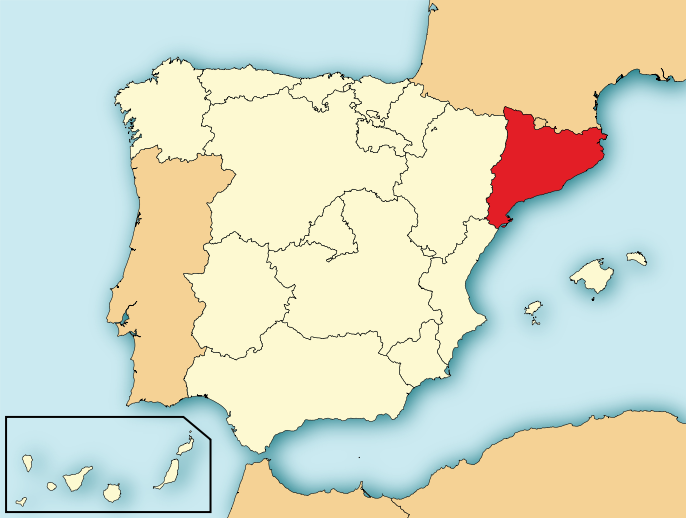
Spain dispatches Civil Guard ahead of Catalan vote

The Spanish government has not specified what legal consequences Catalan leaders, poll workers or voters might face Sunday, when they go to vote. But Madrid has reportedly readied thousands of Civil Guard officers to travel to Catalonia this weekend.

Spain’s northeastern region of Catalonia vowed Tuesday to defy both the central government and the country’s highest court and proceed with a much-disputed weekend vote on whether to secede from Spain.

Hours earlier, Spain’s Constitutional Court ordered Catalonia to freeze its plans for an independence vote, scheduled for Sunday. It was the second time the court issued an order siding with Madrid, which considers any Catalan independence vote illegal.

But Catalan leaders said they would not back down.

“Everything is all set for Nov. 9,” Francesc Homs, a spokesman for the Catalan regional government, said at a news conference. “We are maintaining our participatory process. We couldn’t say this any clearer — and we’re doing so regardless of the consequences.

The presence of military convoys on the roads in Catalonia has been steady throughout the day.

Military convoys on the roads to Lleida and Zaragoza and also Panadella and Low Llobreta and Diagonal were noted, with several military helicopters flying sorties over certain Catalan regions.


Spanish Concourt rules Catalonia referendum unconstitutional

cataloniaSpain’s Constitutional Court has ruled that a referendum in Catalonia on independence from the rest of the country would violate the law, saying that regions within Spain “cannot unilaterally call a referendum on self-determination.”

According to a summary of the ruling, any “right to decide” their future by Catalans has to be in accordance with Spain’s 1978 constitution, which stipulates Spanish unity.

The Constitutional Court ruled “unconstitutional and null” a declaration by the regional parliament in Barcelona which claimed that Catalonia has the right of self-determination.

Kingdom of Spain Constitutional Court of Justice Building (AFP Photo / Dominique Faget)Kingdom of Spain Constitutional Court of Justice Building (AFP Photo / Dominique Faget)

The fate of the region rests on the power struggle between Catalan President Artur Mas who had promised a referendum on independence from Spain on November 9 and the Spanish Prime Minister Mariano Rajoy who insists that such a vote would be illegal.

“No one can unilaterally deprive the entire Spanish people of the right to decide on their future,” Rajoy told the national parliament last month insisting that the referendum “can’t take place.”

Rajoy remains certain that Catalonia cannot be compared to Scotland’s aspiration of succession from the UK, because the Spanish written constitution, unlike British, rules out such a move.

But in Catalonia, March’s public opinion poll showed that 59.6 percent of the population want independence from the rest of Spain and want their region to become a “new state of Europe.”

Catalonia, an autonomous community with a population of 7.5 million is responsible for around one-fifth of the country’s GDP and one-quarter of its taxes. Public sentiment believes that the region will be much better off financially if they secede from Madrid.

The situation is aggravated by the economic crisis, which is forcing the Spanish government to adopt painful austerity policies.

In January the Catalan Parliament voted to send a petition to the national legislature seeking the power to hold the vote. That initiative is still in the process. If successful the referendum in Catalonia will be a month after a similar vote in Scotland, which is slated for September 2014.

Source: RT

Le Clos powers to 100m butterfly gold at Fina World Championships

lecloswins“After winning the 200m, people were saying that the time was not fast. So I just wanted to prove to everyone that I could win the 100 and do a fast time,” Le Clos said.

Le Clos, who had earlier in the competition won the 200m butterfly, was only fifth at the turn, but won in a time of 51.06, beating Hungarian Laszlo Cszeh by 0.39 seconds.

Poland’s Konrad Czerniak won the bronze In winning his second and South Africa’s fifth medal in the Palau Sant Jrodi in Barcelona, the 21-year-old broke his own South African record, which stood at 51.44.

Le Clos, who famously beat American superstar Michael Phelps in the 200m butterfly Olympic final last year and also won silver in the 100m, admitted that he had been nervous before the race.

“I was so worried last night, I did not get a lot of sleep in and I was really nervous this morning,” he said.

“But when I woke up half past three in the afternoon, I felt much more relaxed. The closer I got to the race, the more relaxed and confident I became and I thought that I really had a good chance of winning it.”

Le Clos said he was very happy that big names like Ryan Lochte were competing in the race. “The bigger the names, the bigger the hype is and it is good for the sport,” he said.

“Once the race starts, it makes no difference who is racing against me, I just want to win.”

He said winning the 100m felt different than winning the 200m. “This one is very special,” said Le Clos.

“Ryan Lochte came in and he really wanted to win. That gave the race extra flavour, I think it was one of the biggest races of the night.

“The crowd just would not keep quiet and I went: ‘Chad, don’t jump into the pool,’ and then I was getting nervous and I thought that it was time to get going.”

He said that when he came out, he still felt strong. “I am not even tired now, I feel like going again.” – Sapa

Vast crowds in Catalonia demand independence from Spain

Showing support for Catalonian autonomy from Spain

(Reuters) – Hundreds of thousands of Catalans took to the streets of Barcelona on Tuesday in an unprecedented show of mass support for autonomy from Madrid, blaming Spain’s economic crisis for dragging their wealthy region down.

Surging unemployment and financial disarray have stoked a fever of separatism in Catalonia, a comparatively prosperous part of Spain whose leaders say their wealth is being sucked dry by the central government.

Crowds waved red and yellow striped Catalan flags – one of the oldest still in use in Europe – and sang the Catalan anthem on a national day marking the conquest of Catalonia by Spain’s King Philip V in 1714 after a 13 month siege of Barcelona.

The central government said the crowd was 600,000 strong. Catalan police gave figures as high as 1.5 million.

Marchers said the sheer size of the crowd – swollen with people from around the region who descended on its capital in bright sunshine – would at last make Madrid hear their message.

“This is a blow for the government. People like me came from everywhere. I don’t think they were expecting something as big,” said 53-years-old Teresa Cabanes, who came from Santa Coloma de Gramanet, in the outskirts of Barcelona, to march.

“We feel that the central government is fooling with us. We Catalans are giving away a lot of money to Spain.”

They held up banners and signs saying “No to the Fourth Reich”, “No to Europe”, “Independence Now!” and “Catalonia: the New European State”.

The huge volume of people overwhelmed the mobile phone network, which shut down for hours under the strain. Marchers who had attended Catalan national day rallies for decades, including others that attracted hundreds of thousands, said this was the biggest they could recall.

The march ended after nightfall without any incident and no people were arrested, police said.

The show of anger and ethnic pride will play into the hands of regional authorities who are trying to force the central government to yield control over taxes raised in Catalonia.

Catalans speak a language similar to, but distinct from, the Castillian Spanish spoken in the rest of Spain. The region accounts for 15 percent of Spain’s population but 20 percent of its economy.

With Spain’s economy in freefall from the euro zone debt crisis, Catalans complain of paying billions of euros more in taxes than they receive back from Madrid, even as their regional government has been forced to fire workers and cut services.

The region’s president, Artur Mas, has suggested he could seek independence if he is not given more control over tax raised from Catalonia.

“If we cannot reach a financial agreement, the road to freedom for Catalonia is open,” he repeated on Tuesday. Mas did not attend the march but said he backed it in spirit.

URGENT BATTLE

The annual Diada holiday is typically commemorated with a fiesta in the Catalan capital with song, dance and a floral offering to Rafael Casanova, a hero of the siege.

But the outpouring on Tuesday was a sign that the economic crisis has transformed issues of cultural identity into a mainstream political movement bent on autonomy. A poll by the regional government in July showed for the first time that more than half of Catalonia’s population favors independence.

For Mas and his nationalist Convergence and Union party (CiU), that translates into demands for control over tax.

When Spain returned to democracy in the mid-1970s, regions such as Catalonia and the Basque Country saw a vibrant resurgence of their culture and languages that had been crushed during the dictatorship of Francisco Franco.

Catalonia has long sought more autonomy, though without a violent separatist movement like the Basque Country’s ETA.

Economists calculate Catalans pay at least 12 billion euros more in taxes per year to Madrid than they receive back for services like schools and hospitals. Many Catalans say the figure – difficult to calculate because of a complex system of transfers – is even higher, up to 16 billion.

“A lot of people who were not into independence are more and more into it now,” said Elvira Farre, a retired secretary from Barcelona. “They are being driven into it by their feelings but also by their wallets.”

Government worker Jauma Turra said: “It’s like a marriage you can’t put up with any more.”

The Madrid government took a dim view of what leaders there saw as Mas’s stirring up Catalans ahead of the march.

“Catalonia has serious deficit and employment problems and this is not the moment for messing around or disputes or controversy,” Prime Minister Mariano Rajoy of the conservative People’s Party said on Monday.

SUSPICION

Many Catalans are suspicious of what they see as the centralizing aims of the People’s Party.

Although Catalonia’s unemployment is somewhat lower than Spain’s as a whole – 22 percent instead of more than 24 percent – the region has suffered badly due to the Spanish debt crisis.

There are 700,000 jobless in Catalonia. The government cannot borrow from financial markets to pay bills because, like other Spanish regions, it saw its debt downgraded to junk.

Catalonia was among the first of Spain’s 17 autonomous regions to start making budget cuts to its public services in 2010 and cuts have grown deeper, with civil servant pay cuts causing a public backlash in recent months.

Despite his austerity drive, Mas has managed to deflect fury over his region’s economic problems onto the central government, saying if the tax system were set up differently Catalonia would not be in its quagmire.

He has proposed a “fiscal pact” that would give Catalonia its own tax authority. He is scheduled to meet Rajoy on Sept 20 to discuss it, but Rajoy is expected to reject it.

“It’s part of a political game that has been going on for years. The only difference is that the crisis has changed the stakes,” said Antonio Barroso, political analyst with Eurasia Group consulting firm.

Catalans were particularly galled when the central government raised the value-added tax across Spain from Sept 1, but said it would not pass the extra revenue to the regions.

Catalonia has already had to tap billions of euros in emergency central government funds this year to catch up on months of back payments to service providers.

Mas says he now needs another 5.7 billion euros to pay maturing debt, but the possibility that the central government would demand more say in local finances in exchange for the aid is adding to anger in the province.

If he meets the expected resistance from Rajoy on the fiscal pact, Mas is expected to call early elections to try to win an absolute majority in the regional parliament, where he currently governs through alliances with other parties. He could use such wider backing to press Madrid for more autonomy.