Ukraine agrees on ceasefire

An agreement has been brokered in Minsk to stop hostilities in Ukraine from Sunday. The deal was reached after marathon talks between the leaders of France, Germany, Russia and Ukraine, and signed by the Ukrainian rebels.

“I believe we agreed on a big deal. We agreed to a ceasefire starting at 00:00 on February 15,” Russian President Vladimir Putin told the media after the talks were finished.

“The main thing achieved is that from Saturday into Sunday there should be declared – without any conditions at all – a general ceasefire,” Ukrainian President Petro Poroshenko told journalists in a separate statement.

A compromise decision was taken over the disengagement line, which was the biggest stumbling block in the negotiation. According to the document, Kiev’s troops would pull back heavy weapons from the current frontline. The rebels would pull back from the line as it existed in September, when the previous ceasefire agreement was signed.

The security zone separating the warring parties must be at least 50km wide for artillery over 100mm caliber, 70km for regular multiple rocket launchers and 100km for heavier weapons with a longer range, such as Tochka-U ballistic missiles, the document states.

The weapons pullout must start on Sunday and be completed in no longer than 14 days. The OSCE is charged with implementing the ceasefire on the ground and will use its drone fleet and monitors to verify that both parties are sticking to the deal.

Israel declares ceasefire over and kills 50 Palestinians

Israel declared a Gaza ceasefire over on Friday and killed more than 50 Palestinians in renewed shelling, saying militants had breached the truce shortly after it began and apparently captured an Israeli soldier.

The 72-hour break announced by U.S. Secretary of State John Kerry and U.N. Secretary-General Ban Ki-moon was the most ambitious attempt so far to end more than three weeks of fighting, and followed mounting international alarm over a rising Palestinian civilian death toll.

The ceasefire, which began at 8 a.m. (0500 GMT), had prompted Palestinian families to trek back to battle-devastated neighbourhoods where rows of homes have been reduced to rubble. It was to be followed by Israeli-Palestinian negotiations in Cairo on a longer-term solution.

The Israeli military said that 90 minutes into the truce, militants attacked soldiers searching for tunnels in the southern Gaza Strip.

Asked if the ceasefire was over, Lerner replied: “Yes. We are continuing our activities on the ground.” He said Israeli forces were mounting an “extensive effort” to locate the soldier.

The Gaza Health Ministry said more than 50 people were killed and 220 wounded by Israeli shelling after the incident near the southern town of Rafah.

Israeli Prime Minister Benjamin Netanyahu called a special meeting of his security cabinet for later on Friday. A statement from his office said the Israeli leader spoke by telephone with Kerry and told him “the Palestinians had blatantly breached the humanitarian ceasefire and attacked our soldiers”.

Source: Reuters

Security Council calls for immediate ceasefire in Gaza

The UN Security Council on Monday appealed for an immediate humanitarian ceasefire in Gaza at a late-night emergency meeting called as fighting between Israel and Hamas entered its third week.

The 15-member Council released a statement calling for the truce to allow aid deliveries during the Muslim Eid festival marking the end of Ramadan, and as the death toll rose to more than 1,030 Palestinians.

The Council expressed “strong support” for an “immediate and unconditional humanitarian ceasefire,” allowing for urgent deliveries of aid, and urged all sides to “accept and fully implement” the truce.

The statement was put forward by Jordan with the backing of Arab countries.

In its statement, the Council voiced “grave concern regarding the deterioration in the situation as a result of the crisis related to Gaza and the loss of civilian lives and casualties.”

The Council said “civilian and humanitarian facilities, including those of the UN, must be respected and protected” following outrage over the Israeli attack on a UN-run school in Gaza this week that left 15 dead.

Israeli Ambassador Ron Prosor suggested the stance taken by the Council was biased.

“Miraculously it doesn’t mention Hamas. It doesn’t mention the firing of rockets. Those things are lacking in this statement, he said.

“You don’t have to have the IQ of a rocket scientist to understand that if rockets are falling on you, you are allowed to defend yourself.”

Source: AFP

Countdown to urgent elections after Mali ceasefire

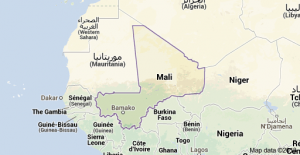
mali_map2The clock is ticking for Mali as it scrambles to organise key elections in less than 40 days following a ceasefire deal between the government and separatist Tuareg rebels.

The agreement, reached on Tuesday after 10 days of tense negotiations, will enable Malian troops to enter the Tuareg-held city of Kidal in the northeast to secure polls scheduled to take place on July 28.

Malians have welcomed the truce but there are fears the deal will be difficult to implement and could unravel after the vote.

Malian military sources say the accord envisages the army entering the regional capital “without delay”, accompanied by French soldiers and troops from the African-led International Support Mission to Mali (AFISMA).

French President Francois Hollande told a meeting of his cabinet the agreement was “a major breakthrough”, his spokesman said.

The US also welcomed the deal.

“The agreement clears the way for the return of Malian administrative and security authorities to Kidal to permit the holding of presidential elections there on July 28,” State Department spokeswoman Jen Psaki said.

And the UN Security Council urged other armed groups who had cut ties with “terrorist organisations” in Mali to join the ceasefire.

But analysts raised a number of problems with securing a long-term ceasefire, such as difficulties monitoring any disarmament; and differentiating Tuareg militants from the diverse range of insurgents infesting Mali’s north.

“Ultimately, this is an interim agreement to allow the organisation of the presidential elections in Kidal, ” Malian analyst Mamadou Samake told AFP.

“It has not solved all the problems, it just put off some of the problems.”

The Malian government signed the accord with the National Movement for the Liberation of Azawad (MNLA) and a smaller Tuareg group in Ouagadougou, capital of neighbouring Burkina Faso.

The two sides agreed to halt hostilities and organise peace talks after the election, but the Tuaregs were not pressed to lay down their weapons.

“It was that or nothing, but we were heading for disaster if we hadn’t been able to get an agreement on presidential elections in the Kidal region,” said an aide to President Dioncounda Traore.

The Tuareg occupation of Kidal has been a major obstacle to holding the election, seen as crucial to Mali’s recovery from the conflict of the past 15 months.

Malian officers staged a coup in March 2012 but the weak army was overpowered by the MNLA, which seized key northern cities before being sidelined by its Al-Qaeda-linked allies.

The MNLA sided with a French-led military intervention, which reclaimed most of the lost territory from the Islamists. But the rebels have been reluctant to allow government troops into their Kidal bastion for the vote.

For analyst Samake, settling the major issues relating to Mali’s Tuareg separatist movement will have to wait.

“After the presidential elections, the legislative elections loom on the horizon. Former Tuareg rebels will certainly want to stand,” he said.

“But for now, they cannot because of an arrest warrant against them… That could create problems.”

Those warrants will likely be dropped, but the accord does state that international investigators will look into crimes against humanity and war crimes committed during the conflict.

Confronted with these problems, an official from the Ministry of Territorial Administration would only say: “Let’s take each day as it comes.”

The logistics of the disarmament is another obstacle to be cleared for all parties working for lasting peace in the Kidal region.

But the larger problem, say military sources, is that Islamist insurgents continue to hide out in northern Mali. They could launch attacks which might be wrongly attributed to former Tuareg rebels.

“We are the military — we don’t do politics,” a battalion commander from a neighbouring country’s army told AFP in the northern city of Gao.

“But just so there is no ambiguity, there will have to be some kind of mechanism in Kidal to prevent any infiltration of terrorists, otherwise it could complicate things.” – AFP