Mali riverboat capsizes

At least 18 people died when a pirogue carrying passengers on the River Niger in central Mali capsized on Wednesday, said a spokesperson for the country’s department of homeland security and emergency preparedness.

There were four missing and 70 survivors from the accident that took place around 05:00 in the rural community of Deboye in Mopti region’s Bangou locality, spokesperson Sounkolo Togola told Reuters.

A security source said overcrowding was a likely cause.

Boats on Africa’s lakes and rivers are often stacked with people and trade goods, and poor maintenance and overcrowding are a frequent cause of accidents.

Source: Reuters

Armed group was at site of French air disaster

Algerian Foreign Minister Ramtane Lamamra said on Friday that an armed group was present near the site where Air Algerie flight AH5017 crushed in northern Mali on Thursday.

Lamamra said the first information about the crash site was received from an armed group.

French Interior Minister Bernard Cazeneuve, meanwhile, said the most likely cause of Thursday’s crash was bad weather conditions.

“We think that this plane crashed for reasons pertaining to meteorological conditions,” he said on RTL radio.

French transportation minister Frederic Cuvillier said the possibility of a strike from the ground had been ruled out “from the start,” rejecting speculation that rebels in Mali’s restive north could have shot the plane down.

In televised address, President Francois Hollande said no one survived the crash, adding that the plane’s black box flight recorder had been found.

“Sadly, there were no survivors” of flight AH5017 that had 116 people on board, including 51 French nationals, Hollande said.

Ten people from the same family with roots in France’s east died in the Air Algerie crash, local officials and relatives said Friday as the full extent of the tragedy came to light.

The members of the Reynaud family were on board the plane that crashed Thursday in Mali, the local authorities of the towns some of them lived in and their families confirmed.

Source: alarabiya.net

Algerian air disaster leaves no survivors

Nobody survived the crash of an Air Algerie flight over Mali, French President Francois Hollande said on Thursday, adding that the plane’s black box flight recorder had been found, AFP reports.

“Sadly, there were no survivors” of Flight AH5017 that had 116 people on board, including 51 French nationals, when it went down over northern Mali, Hollande said in televised comments.

The French military has recovered the flight recorder and was taking it to the city of Gao, he added.

Interior Minister Bernard Cazeneuve, meanwhile, said the most likely cause of Thursday’s crash was bad weather conditions, although authorities were not excluding other hypotheses.

“We think that this plane crashed for reasons pertaining to meteorological conditions,” he said on RTL radio.

The jet’s Spanish crew had signalled they were altering course due to difficult weather conditions, and company sources and officials said there had been reports of heavy storms at the time.

Cuvillier said the possibility of a strike from the ground had been ruled out “from the start”, rejecting speculation that rebels in Mali’s restive north could have shot the plane down.

Dutch military intelligence operatives deploy in Africa

dutch-intelligence-maliThe Dutch military is planning to deploy a team of dozens of military intelligence operatives in Africa in the coming weeks, part of a U.N. peacekeeping mission charged with stabilizing the terror-afflicted northern part of Mali and preventing the resurgence of Islamist militants that only year ago held sway over much of the country, according to the Dutch military.

The Dutch contribution — which will also include a team of special-forces troops and four Apache attack helicopters — marks a rare return by a European power to a U.N. peacekeeping mission in Africa, where debacles from Somalia to Rwanda triggered a retreat in the late 1990s. But what is perhaps even more striking is that the U.N.’s top brass are privately acknowledging that the U.N.’s blue helmets will be engaging in the business of spying.

Since the birth of U.N. peacekeeping in Egypt’s Sinai intelligence has been a dirty word in U.N. quarters, feeding suspicion among poor countries that Western spooks were secretly using the United Nations as a cover to spy on them, and giving fright to right wing Americans who fretted that U.N. storm troopers in black helicopters might swoop down to occupy the American prairie. In 1960, then U.N. Secretary General Dag Hammarskjold declined to establish a U.N. intelligence agency on the grounds that the U.N. “must have clean hands.” In a sign of the enduring anxiety over big power espionage, Brazil and Germany this week pressed through a U.N. General Assembly resolution aimed at constraining massive data collection and digital eavesdropping, a move aimed at constraining the National Security Agency and other foreign intelligence outfits.

But in the U.N.’s far flung peacekeeping missions intelligence is no longer a dirty word. Herve Ladsous, the U.N.’s French chief of the U.N. peacekeeping department, will visit the Democratic Republic of Congo early next month to launch the flight of two U.N. surveillance drones — the U.N. prefers to call them Unmanned Aerial Vehicles — to keep track of potential threats from armed militias. If all goes well, these flying cameras could be introduced into peacekeeping missions in Mali, and possibly Ivory Coast and South Sudan.

The Dutch unit in Mali will operate electronic eavesdropping – or signals intelligence – operations targeting Islamic militants. But it will also engage in gathering human intelligence – low tech spying involving the cultivation of paid informants. “I would say this is precedent setting,” Walter Dorn, a Canadian professor of Defense Studies at the Royal Military College of Canada (RMCC), who has written extensively on U.N. intelligence gathering, told Foreign Policy. “The United Nations has been hesitant to use the word intelligence and engage in intelligence activities. But the necessity of being informed in situations where you have the fog of war, or the fog of peacekeeping, means that you have to have an accurate and timely information gathering and analysis units.”

The actual threat to U.N. peacekeepers is by no means greater today than it has been in the past. So far this year, 82 U.N. blue helmets died serving in U.N. missions, fewer than half of the 173 fatalities suffered in 2010, and only a fraction of the 252 who died in 1993, when the U.N. was running high risk missions in Bosnia and Somalia. But the U.N.’s key powers, Britain, China, France, Russia and the United States, agree on the need to confront the rising threat to U.N. personnel by Islamic extremists.

The Islamist militant group, Al Shabab, has been targeting U.N. personnel in Mogadishu, Somalia, mounting a bold terror attack against the U.N.’s humanitarian compound in June that left eight people employed by the U.N. dead.( In that case, a U.N. intelligence unit actually received a tip that the attack would occur, but it was still unable to stop it.)

For instance, in Mali, where the U.N. is facing a challenge by Islamist insurgents, suicide bombers last month attacked a U.N. peacekeeping unit in the town of Tessalit, Mali, killing two Chadian blue helmets and a civilian.

The Malian crisis began in the beginning of 2012 when a coalition of Tuareg separatists and foreign Islamist extremists linked to Al Qaeda, reinforced by arms from the fallen former Libyan leader Moammar Ghadafi’s arsenals, seized control of key cities in northern Mali. Malian army officers, citing the governments’ failure to adequately equip its troops in the battle against the insurgents, staged a military coup that sent the country into a state of chaos.

Fearing an Islamist offensive against the capital of Bamako, the French government launched a military offensive in January that routed the militants out of northern Mali. The French then helped organize a coalition of African countries that helped Mali drive the insurgents into retreat in the north. In July, the African troops were integrated into a new U.N. peacekeeping mission – the U.N. Multidimensional Integrated Stablization Mission in Mali(MINUSMA). The mission – which is headed by a Dutch politician, Bert Koenders- is serving along-side a separate French force of some 3,000 troops.

Earlier this month, the Dutch Defense Minister Jeanine Hennis-Plasschaert announced that some 380 Dutch military personnel would serve in the U.N. mission, aiding an increasingly well-armed mission – which includes a combat-ready Chinese guard force – to restore security and stability in northern Mali. They will be headquartered in Bamako and Gao, where their primary job will be gathering, processing and analyzing intelligence. “In addition to special forces, we will deploy our sensor capability, unmanned systems and 4 Apache attack helicopters,” she said. “We will be the eyes and ears of the U.N., enabling them to operate more effectively.

Jean Marie Guehenno, a French national who headed the U.N. peacekeeping department from 2000 to 2008, said that the move to formally integrate intelligence gathering activities into U.N. peacekeeping missions reflects a growing recognition of the dangers facing blue helmets, particularly from an array of terrorist organizations and non-state armed militias.

“Traditionally, [U.N.] member states have been a bit reluctant to permit intelligence gathering activities because of concerns over the potential violation of a country’s sovereignty,” Guehenno said, noting that revelations of NSA spying has in some way reinforced those concerns. “Spying makes people nervous.”

“On the other hand, there is a mounting sense that the safety and protection of troops benefits a lot from effective intelligence,” he said. “It’s harder for the members’ states to say it’s horrible to collect intelligence if you have human lives lost. So, I think the U.N. is in a stronger position to say you put us in a dangerous environment we need to cope with it and the only way to cope is to have some kind of intelligence. I’m convinced there were a few situations where peacekeepers died and their lives might have been saved with better situational awareness intelligence.”

Despite the political constraints, U.N. commanders, including those serving in Hammarskjold’s day, have long recognized the importance of tactical intelligence gathering in complex missions, erecting make-shift intelligence units to spy on potential enemies. In early 1961 in the Congo, the U.N. set up its first serious intelligence unit — known as Military Information Branch – the word intelligence was “banned from the U.N. lexicon,” to oversee aerial surveillance, radio intercepts, and of informants, Dorn wrote in a history of the Congo operation. The practice was largely suspended in the ensuing Cold War decades, only to resurface after the Cold War ended, giving way to a major surge in U.N. peacekeeping operations.

Since the turn of the century, U.N. personnel in places like Sierra Leone and Somalia largely relied on foreign government spooks to supply them with tactical intelligence on enemy intentions. But more recently the U.N. has begun to formalize intelligence collection in missions in Haiti and the Democratic Republic of the Congo, where units with names like the Joint Mission Analysis Centers and Joint Operations Centers – collect information the old fashion way: through the cultivation of spies. In Port au Prince, U.N. blue helmets paid Haitian informants to expose the hideaways of famously unpopular gang leaders’ in the deepest slums. Even their lovers could be relied upon to reveal the location of where they were sleeping for arrest. Informants were sometimes dressed in U.N. uniforms but with their faces covered to avoid detection.

“The U.N. was able to tap into the wide-ranging disaffection with the gangs in order to procure plenty of actionable information,” Dorn wrote in a study of the U.N. mission in Haiti.”Intelligence-led operations helped the United Nations to take the initiative, to control the “battle-space’ and minimize the risks to both its own personnel and innocent bystanders. The mission was successful in overcoming gang rule of entire districts, but not without initial opposition from within the emission, from Haitian officials and, of course, from the gangs themselves.”

Patrick Cammaert, a retired Dutch general who served as the U.N. Secretary General’s chief military advisor from 2002 to 2005, said it was a “un uphill battle” to convince the U.N. political leadership, and member states, to collect intelligence. In 2003, Cammaert urged the U.N. peacekeeping department to contract a private company to conduct aerial surveillance for a newly established mission in Liberia. Two years later, when he was reassigned as the U.N.’s eastern division commander in eastern Congo, Cammaert finally succeeded in securing funding, around $5 million, in the mission’s budget to conduct aerial surveillance missions to track the movement of militias and human rights violators, including Bosco Ntganda and Laurent Nkunda. It never happened. “All the documents were cleared, but the proposal was firmly killed in DPKO[The U.N. Department of Peacekeeping Operations] because people didn’t like it,”he said.

The constraints forced him to improvise, cultivating a team of informants. “You had to be creative; I sometimes had to pay informants from my own daily subsistence allowance because we didn’t have funds for that,” he said. “I managed to get a number of people trust worthy people — don’t ask I how I found them – but I’d put them on a Moped and tell them to drive somewhere and come back and tell me what you saw.”

Cammaert said the recent change in attitude reflected a growing recognition that U.N. peacekeepers “are dealing with a threat that is asymmetric, much more sophisticated, and much more dangerous, not only to local population but to peacekeepers was well.” As a result, he said, “the word intelligence is not such a dirty word anymore.” – Foreign Policy

Countdown to urgent elections after Mali ceasefire

mali_map2The clock is ticking for Mali as it scrambles to organise key elections in less than 40 days following a ceasefire deal between the government and separatist Tuareg rebels.

The agreement, reached on Tuesday after 10 days of tense negotiations, will enable Malian troops to enter the Tuareg-held city of Kidal in the northeast to secure polls scheduled to take place on July 28.

Malians have welcomed the truce but there are fears the deal will be difficult to implement and could unravel after the vote.

Malian military sources say the accord envisages the army entering the regional capital “without delay”, accompanied by French soldiers and troops from the African-led International Support Mission to Mali (AFISMA).

French President Francois Hollande told a meeting of his cabinet the agreement was “a major breakthrough”, his spokesman said.

The US also welcomed the deal.

“The agreement clears the way for the return of Malian administrative and security authorities to Kidal to permit the holding of presidential elections there on July 28,” State Department spokeswoman Jen Psaki said.

And the UN Security Council urged other armed groups who had cut ties with “terrorist organisations” in Mali to join the ceasefire.

But analysts raised a number of problems with securing a long-term ceasefire, such as difficulties monitoring any disarmament; and differentiating Tuareg militants from the diverse range of insurgents infesting Mali’s north.

“Ultimately, this is an interim agreement to allow the organisation of the presidential elections in Kidal, ” Malian analyst Mamadou Samake told AFP.

“It has not solved all the problems, it just put off some of the problems.”

The Malian government signed the accord with the National Movement for the Liberation of Azawad (MNLA) and a smaller Tuareg group in Ouagadougou, capital of neighbouring Burkina Faso.

The two sides agreed to halt hostilities and organise peace talks after the election, but the Tuaregs were not pressed to lay down their weapons.

“It was that or nothing, but we were heading for disaster if we hadn’t been able to get an agreement on presidential elections in the Kidal region,” said an aide to President Dioncounda Traore.

The Tuareg occupation of Kidal has been a major obstacle to holding the election, seen as crucial to Mali’s recovery from the conflict of the past 15 months.

Malian officers staged a coup in March 2012 but the weak army was overpowered by the MNLA, which seized key northern cities before being sidelined by its Al-Qaeda-linked allies.

The MNLA sided with a French-led military intervention, which reclaimed most of the lost territory from the Islamists. But the rebels have been reluctant to allow government troops into their Kidal bastion for the vote.

For analyst Samake, settling the major issues relating to Mali’s Tuareg separatist movement will have to wait.

“After the presidential elections, the legislative elections loom on the horizon. Former Tuareg rebels will certainly want to stand,” he said.

“But for now, they cannot because of an arrest warrant against them… That could create problems.”

Those warrants will likely be dropped, but the accord does state that international investigators will look into crimes against humanity and war crimes committed during the conflict.

Confronted with these problems, an official from the Ministry of Territorial Administration would only say: “Let’s take each day as it comes.”

The logistics of the disarmament is another obstacle to be cleared for all parties working for lasting peace in the Kidal region.

But the larger problem, say military sources, is that Islamist insurgents continue to hide out in northern Mali. They could launch attacks which might be wrongly attributed to former Tuareg rebels.

“We are the military — we don’t do politics,” a battalion commander from a neighbouring country’s army told AFP in the northern city of Gao.

“But just so there is no ambiguity, there will have to be some kind of mechanism in Kidal to prevent any infiltration of terrorists, otherwise it could complicate things.” – AFP

Africa doesn’t need mediocre white coaches

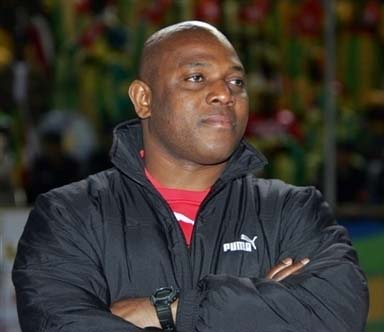
Stephen Keshi

Nigeria soccer coach Stephen Keshi has spoken out against the appointment of “mediocre” European coaches by African teams, ahead of his side’s tie with Mali

“I am never against white coaches in Africa,” said Keshi. “I am happy to work with a quality, experienced white coach, who is better than me, so that I can learn from him.

“But what I don’t accept is when you bring in a mediocre ‘carpentry’ coach from Europe, and tell me that he’s better than me. I won’t accept that. Meanwhile we have quality African former players, who can do the same thing, but you don’t give them the opportunity because they’re just black dudes. I don’t like that,” said Keshi, who has previously coached Mali and Togo.

Keshi qualified Togo for the 2006 World Cup, but was replaced before the finals by German Otto Pfister, who lost all three games.

Should Nigeria and James Kwesi Appiah’s Ghana prevail in Wednesday’s semifinals, the final will be the first to be contested by two African coaches since 1998, when Jomo Sono’s Bafana lost to Mahmoud El-Gohary’s Egypt. It’s been even longer since two sub-Saharan coaches squared off for the continental trophy.

Keshi will have great insight into Frenchman Patrice Carteron’s Malian side, having coached most of the players. “We need to realise that Mali is a footballing nation. They have great talent – I was there. Whatever they are doing, they should be doing it, because of the calibre of the players. Wednesday’s game will be as tough as the game against Côte d’Ivoire.”

‘Emotional fuel’
He said the civil war raging in Mali would provide emotional fuel for the Eagles.”It’s a shame what is going on in Mali, it’s a great country with wonderful people. It’s a place I love. But what is going on in the country is not something we should be proud of. The players are thinking about that, that’s where their force is coming from.”

The former Super Eagles captain also claimed he was indifferent to public criticism in Nigeria. “It doesn’t really matter what people think about what Stephen Keshi is doing. You can’t force someone to love you.”

Keshi, who has been his job since 2011, said this promising Nigerian side needed time to mature. “The progress is coming gradually. It’s a team in the making. But to build a very good team, you need three years. We just have to be patient to see the team grow. Some of us don’t have patience.”

But he also said he was open to offers beyond these finals. “If God grants me the tournament, the next day I could join another country. I’m a professional. It’s the same with Jose Mourinho, if he gets a call from a rich team, he goes. I’m here for now, but we’ll see if there’s anyone out there who wants me.”

Are Westerners behind terror in Africa?

Canada is investigating an allegation by the Algerian Prime Minister that one of its citizens co-ordinated the terror raid at the Saharan gas plant in which dozens of hostages were killed.

Westerners, including a man with blond hair and blue eyes, are believed to have been among the Islamist militants who launched last week’s attack on the Tigantourine complex near Algeria’s border with Libya.

A French jihadist, previously unknown to authorities, and two Canadians are suspected to have been involved in the hostage-taking, and reports also claim that a man with a Western accent was among the extremists who lured terrified gas workers from their rooms during the hostage crisis.

Prime Minister Abdelmalek Sellal told reporters that a man, judged “by his English accent” to have been Canadian, was among the 32 Islamists whose raid on the Algerian refinery prompted a global crisis. One of the Canadians, identified only as “Shaddad”, is alleged to have played a leading role in the attack which left 58 hostages – including 37 Westerners – dead after a four-day battle with Algerian forces. Five further Western workers are still unaccounted for. “A Canadian was among the militants,” Mr Sellal said. “He was co-ordinating the attack.”

The militant group also included men from Tunisia, Egypt, Mauritania and Niger, Mr Sellal said. At least 29 Islamists from eight nationalities were killed in the operation to end the siege, with the remaining three captured alive. The make up of the attacking group – an al-Qa’ida splinter brigade who call themselves “Those Who Signed in Blood” – will be carefully examined as security experts try to assess the scale of the terror threat across North and West Africa.

Concern at the international composition of the Algerian kidnap brigade will be compounded by reports from residents in Diabaly, Mali, that Islamists who overran the town last week contained English-speakers and militants of European appearance. Speaking to The Independent yesterday after French and Malian forces had retaken the town, student Amadu Dumbia said: “I definitely heard them and there’s no chance that I made a mistake with another language. They spoke like they were from England, but had darker skins.”

Mokhtar Belmokhtar, the leader of the group who is suspected of masterminding the gas plant attack from outside Algeria, yesterday warned that there would be more attacks on those participating in the military campaign in neighbouring Mali. In a statement to a radio station in Mauritania, which received regular communications from the militants during the In Amenas plant siege, the Algerian-born militant said: “We warn all the states who took part in the Crusader campaign against the Azwad region [northern Mali] that if they do not retreat from their decision there will be more operations.”

He also insisted that the brigade which undertook the attack was not local, saying “only five Algerians” took part in the attack and “none of them were locals from the city”.

Prime Minister David Cameron today told the Commons that the West faced a “generational struggle” in combating the “poisonous ideology” of Islamic extremists in the Sahel. Mr Cameron said that Britain would join the manhunt for Belmokhtar and promised extra support for the French campaign in Mali. Echoing the language used by Tony Blair in the aftermath of the September 11 attacks on the World Trade Centre, he said: “This is the work our generation faces and we must demonstrate the same resolve and sense of purpose as previous generations have with the challenges that they faced in this House and in this country.”

A spokeswoman for Canada’s Foreign Affairs Ministry yesterday said that they were still seeking clarity on a possible Canadian connection to the raid. “We are in close contact with Algerian authorities, but nothing [has been] confirmed yet,” Chrystiane Roy told Canada’s Globe and Mail newspaper.

The Algerian authorities have declined to confirm whether the alleged Canadian co-ordinator was among the 29 militants who died.

One of the hostage takers was a North American who took part in the killing of numerous Japanese workers, the AFP agency reported. An Algerian employee of a Japanese engineering firm working at the site, identified as Riad said the Islamist attackers shot three Japanese who were in a bus, then went straight to the rooms occupied by the Japanese.

“One terrorist shouted ‘Open the door’ with a North American accent, then fired,” he told AFP. “Two other Japanese died and we found four other Japanese bodies inside the base.”

One of the kidnappers was tall, blond with blue or green eyes and spoke English, an Algerian military source told the Norwegian daily Aftenposten. Norway’s Statoil energy company was one of the two foreign firms operating at the gas complex. – The Independent

French war in Mali with hostage crisis in Algeria

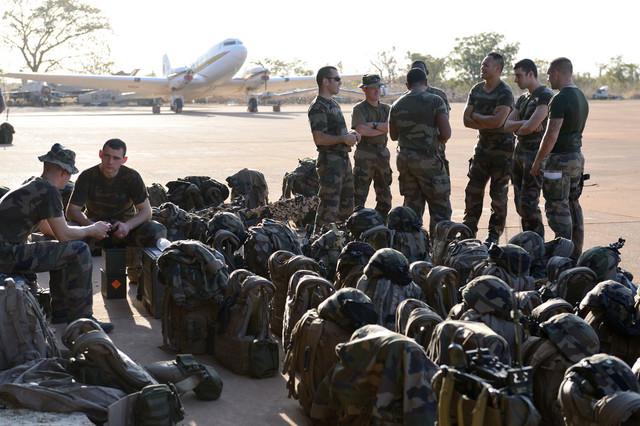
French troops arriving in Mali

French troops fought Islamist rebels in Mali while in neighbouring Algeria Al-Qaeda-linked fighters killed two people, took more than 40 foreign hostages and called for an end to France’s “crusade”.

Chad meanwhile announced it would be sending 2,000 soldiers to fight in Mali.

After days of air strikes on Islamist positions in northern Mali, controlled by the rebels since April, French and Malian ground forces battled the insurgents in the central towns of Diabaly and Konna.

But the assault on a gas field over the border in Algeria dramatically raised the stakes.

Islamists said they were holding 41 foreign hostages, including seven Americans, after their attack on the In Amenas gas field in the east of the country.

A group calling itself “Signatories for Blood” claimed the action in a post to the Mauritanian website Alakhbar.

The attack was in reprisal for “the crusade being waged by French forces in Mali” and for Algerian’s cooperation, it said, calling for an end to the operation.

Algerian Interior Minister Dahou Ould Kablia said that one Briton and an Algerian had been killed in the attack, while another six people — a Briton, a Norwegian a Scot and three Algerians — had been wounded.

Other reports said the hostages included Japanese, Malaysian, Norwegian and Filipino nationals. Dublin confirmed the kidnapping of an Irish national while the US State Department said several of its nationals were being held.

The attackers had also demanded the release of 100 Islamists held in Algeria in exchange for their hostages, a worker at the gas field site told AFP.

The attack came less than a week after France launched its air strikes on Islamists in northern Mali on January 11 and just days after Algeria opened its airspace to French fighter jets engaged in the mission.

Jointly operated by British oil giant BP, Norway’s Statoil and state-run Algerian energy firm Sonatrach, the gas field is located 1,300 kilometres (810 miles) southeast of Algiers, close to the Libyan border.

On the ground in central Mali, French troops engaged Islamist fighters in Diabaly, a town seized two days earlier by fighters led by Algerian Abou Zeid, one of the leaders of AQIM.

“The special forces are currently in Diabaly, in close-quarter combat with the Islamists. The Malian army is also in place,” a Malian security source said on condition of anonymity.

There were also clashes near Konna, the central town Islamists seized last week, prompting the French intervention, security sources said.

The French military said it had secured a strategic bridge on the Niger river near the town of Markala, south of Diabaly, blocking a key route to Bamako.

French Defence Minister Jean-Yves Le Drian said the western zone around Diabaly was home to “the toughest, most fanatical and best-organised groups. It’s under way there but it’s difficult”.

— ICC launches Mali war crimes probe —

The International Criminal Court said it had launched a warcrimes probe Wednesday, as rights groups and military sources denounced the Islamists’ use of child soldiers and use of civilians as human shields.

“Different armed groups have caused havoc and human suffering through a range of alleged acts of extreme violence,” chief prosecutor Fatou Bensouda said in a statement.

“I have determined that some of these deeds of brutality and destruction may constitute war crimes.”

Chad announced Wednesday it would send 2,000 soldiers to Mali, a significant boost to the African forces gathering there.

“We intend to send an infantry regiment and two support battalions, which comes to around 2,000 men,” Moussa Faki Mahamat told Radio France Internationale. They would work closely with the Malian army and the multinational West African force taking shape, he added.

Nigeria will command the UN-approved 3,300-strong multinational African intervention force and has promised 900 troops. Niger, Burkina Faso, Togo, Senegal, Guinea and Ghana have also promised troops.

Some 2,000 men will arrive within the next 10 days, according to a report from a meeting of regional army chiefs seen by AFP.

Ivory Coast President and ECOWAS regional bloc chairman Alassane Ouattara called for all European countries to lend support to the operation after a meeting with Chancellor Angela Merkel in Germany.

Germany has already pledged two transport planes and Italy logistical support.

France says it will ultimately send 2,500 troops, pitted against what are thought to be around 1,300 Islamic fighters.

Mali has been effectively split in two since April 2012, when Islamists took advantage of a military coup in Bamako and an offensive launched by Tuareg separatists in the north to seize half the country.

The UN and aid agencies report some 370,000 Malians have been displaced by the fighting. – AFP

SA to deploy reservists in Mali, DRC

Civilians who have undergone military training could soon be called up for active service and be deployed on potentially deadly peace-keeping operations.

The South African army – already overstretched by peacekeeping deployments across the continent – is fast preparing for the deployment of hundreds of additional troops, including civilian reservists, to peacekeeping missions. There are some 15000 army reservists.

Prior to yesterday’s announcement, President Jacob Zuma said he would strongly consider deploying soldiers to Mali on an African Union peacekeeping mission. If Zuma gives the go-ahead, the deployment could happen early next year.

Army chief Lieutenant-General Amos Masondo yesterday confirmed the urgent requests by Mali and the Democratic Republic of the Congo.

“We are waiting to hear what needs to be done,” he said.

Masondo said the appointment of Nkosazana Dlamini-Zuma as AU Commission chair would lead to increased demands for South African forces to be deployed elsewhere Africa.

“Unfortunately, we are limited by our numbers. If the request is approved, the forces will have to include lots of reservists.

“We simply do not have enough permanent force members. We are already overstretched in Africa, with hundreds of our troops deployed internally on our borders.”

Masondo said vast amounts of money were currently being spent on training, and that the upgrading of equipment was a priority.

Mali’s government is currently embroiled in violent confrontations with al-Qaeda linked groups trying to overthrow the state.

The government of the Democratic Republic of the Congo, along with the UN, is currently involved in bloody battles against rebel forces who are armed with heavy artillery and tanks.

The proposed deployments are being considered while 3000 South African soldiers take part in an exercise at the combat training centre in the Northern Cape.

A senior officer – deployed to the Democratic Republic of the Congo in 2010 – said the missions would require more than just a few hundred troops.

“These rebels are not playing around. They have serious numbers and serious fire-power. They are battle-hardened and have been at war for years. If we don’t do this right we will be bringing body bags home,” he said. – timeslive.co.za

The world’s richest man was a black African

When we think of the world’s all-time richest people, names like Bill Gates, Warren Buffet and John D Rockefeller immediately come to mind.

But few would have thought, or even heard of, Mansa Musa I of Mali – the obscure 14th century African king who was today named the richest person in all history.

With an inflation adjusted fortune of $400 billion, Mansa Musa I would have been considerably richer than the world’s current richest man, Carlos Slim, who ranks in 22nd place with a relatively paltry $68 billion.

The list, compiled by the Celebrity Net Worth website, ranks the world’s 24 richest people of all time. The list advertises itself as the top 25, but only 24 names appear in the list.

Although the list spans 1000 years, some aspects of wealth appear consistent throughout history; there are no women on the list, only three members are alive today, and 14 of the top 25 are American.

The list uses the annual 2199.6 per cent rate of inflation to adjust historic fortunes – a formula that means $100 million in 1913 would be equal to £2.299.63 billion today.

Mansa Musa I ruled West Africa’s Malian Empire in the early 1300s, making his fortune by exploiting his country’s salt and gold production. Many mosques he built as a young man still stand today.

After Mansa Musa I death in 1331, however, his heirs were unable to hang on to the fortune, and it was substantially depleted by civil wars and invading armies.

Second on the list are the Rothschild family, whose descendants are still among the richest people on the planet. Starting out in banking in the late 18th Century, Mayer Amschel Rothschild’s finance house accumulated a total wealth of $350 billion. The money has since been divided between hundreds of descendants, many of whom are business leaders today.

Meanwhile John D. Rockefeller, third on the list, is the richest American to have ever lived, worth $340billion in today’s USD at the time of his death in 1937.

In comparison, the poorest man on the list is 82-year-old Warren Buffett, who at his peak net worth, before he started giving his fortune to charity, was $64billion.

Here’s the full list of the ‘24 richest people of all time’:

1. Mansa Musa I, (Ruler of Malian Empire, 1280-1331) $400 billion

2. Rothschild Family (banking dynasty, 1740- ) $350 billion

3. John D Rockefeller (industrialist, 1839-1937) $340 billion

4. Andrew Carnegie (industrialist, 1835-1919) $310 billion

5. Tsar Nicholas II of Russia (last Emperor of Russia, 1868-1918) $300 billion

6. Osman Ali Khan, Asaf Jah VII (last ruler of Hyderabad, 1886-1967) $236 billion

7. William the Conqueror (King of England, 1028-1087) $229.5 billion

8. Muammar Gaddafi (former Libyan leader, 1942-2011) $200 billion

9. Henry Ford (Ford Motor Company founder, 1863-1947) $199 billion

10. Cornelius Vanderbilt (industrialist, 1794-1877) $185 billion

11. Alan Rufus (Fighting companion of William the Conqueror, 1040-1093) $178.65

12. Bill Gates (Founder of Microsoft, 1955- ) $136 billion

13. William de Warenne, 1st Earl of Surrey (Norman nobleman, ??-1088) $146.13 billion

14. John Jacob Astor (businessman, 1864-1912) $121 billion

15. Richard Fitzalan, 10th Earl of Arundel (English nobleman, 1306-1376) £118.6 billion

16. John of Gaunt (son of Edward III, 1330-1399) £110 billion

17. Stephen Girard (shipping and banking mogul, 1750-1831) $105 billion

18. Alexander Turney Stewart (entrepreneur, 1803-1876) $90 billion

19. Henry, 1st Duke of Lancaster (English noble, 1310-1361) $85.1 billion

20. Friedrich Weyerhaeuser (timber mogul, 1834-1914) $80 billion

21. Jay Gould (railroad tycoon, 1836-1892) $71 billion

20. Carlos Slim (business magnate, 1940- ) $68 billion

21. Stephen Van Rensselaer (land owner, 1764- 1839) $68 billion

22. Marshall Field (Marshall Field & Company founder, 1834-1906) $66 billion

23. Sam Walton (Walmart founder, 1918-1992) $65billion

24. Warren Buffett (investor, 1930- ) $64billion

The Independent