Greece asks for 3-year facility from EU, agrees to ‘quick reforms’

Greece has officially asked for a three-year loan facility from the European Stability Mechanism (ESM) and agreed to quick reforms, promising to present a new plan on July 9 at the latest.

“The loan will be used to meet Greece’s debt obligations and to ensure stability of the financial system,” reads the letter sent by the new Greek finance minister.

Greece proposed to immediately implement a set of measures starting from the beginning of the next week, such as tax reform related measures and pension related measures. It also promised action to further strengthen and modernize the country’s economy.

“The Greek government will on Thursday 9 July at the latest set out in detail its proposals for a comprehensive and specific reform agenda for assessment by the three institutions to be presented to the Eurogroup,” the document added.

The requested 3-year bailout package from the IMF is estimated to be over €51 billion, however there is no exact amount.

On June 30 Greece asked for a 2-year bailout program hours before the deadline to repay €1.6 billion to the IMF expired. That request also included a debt restructuring plan, which the Eurogroup rejected that day.

Greece rejects austerity

Nearly 150 protesters rallied in the streets of Athens Monday just hours after the Greeks voted resoundingly to reject more austerity measures in exchange for another bailout from the country’s international lenders.

The triumph of the No camp in the Greek referendum means Athens will possibly default on its debt and run out of money because the European Central Bank will not lend the country any more cash. It will leave the EU, re-adopt its old currency, the drachma, according to a Barclays analysis.

Police said between 100 and 150 anarchist protesters had started throwing firebombs at riot police and setting trash cans on fire in the central Athens neighborhood of Exarcheia.

This is far from the place where celebrations are taking place by supporters of the “no” vote in Sunday’s referendum.

There was no indication that the violence was connected to the political campaigns involved in the vote.

The results of Sunday’s referendum — 61 percent voted “no,” compared with 39 percent for “yes” — left the country’s future in the European Union and its euro currency in tatters.

A total of 6.16 million Greeks voted in Sunday’s referendum, or 62.5 percent of eligible voters. The poll needed a minimum 40 percent turnout to be valid.

According to analysts, if Greece adopted national currency, it would automatically abandon the euro area.

The ECB is scheduled to meet tomorrow morning to decide on emergency liquidity assistance (ELA) policy. An outright suspension would effectively put the banking system into immediate resolution and would be a step closer to Eurozone exit.

All outstanding Greek bank ELA liquidity (and hence deposits) would become immediately due and payable to the Bank of Greece.

The maintenance of ELA at the existing level is the most likely outcome, at least until the European political reaction has materialized. This will in any case materially increase the pressure on the economy in coming days.

Grexit? Eurogroup says ‘Greece has closed the door’ with its referendum idea

AFP reports that Eurogroup head Jeroen Dijsselbloem on Saturday said Greece’s decision to hold a referendum over the future of its bailout programme was a “sad” decision that shut the door to further talks.

“The Greek government has apparently rejected our last proposals… that is a sad decision for Greece because it has closed the door for further talks where the door was still open in my mind,” the Dutch finance minister said as he arrived for talks with his eurozone counterparts.

IMF coached Greek journalists on spin

The Greek authorities want to investigate alleged misconduct by a number of journalists who attended seminars organized by the IMF and were allegedly instructed to promote the organization’s advice to Greece.

The accusations were voiced by Greece’s former representative to the International Monetary Fund Panagiotis Roumeliotis, who testified Tuesday in front of a special parliamentary committee on the country’s debt. Newspaper Proto Thema published excerpts from the testimony on its website.

Roumeliotis was cited as saying that he accidentally bumped into Greek journalists during a visit to Washington DC, who told him that they were attending a seminar organized by the IMF. The fund held a number of similar events in the US and in Greece with the goal of explaining its operations and apparently was spinning its work positively, he said.

The former Greek official endorsed criticism by committee member Leonidas Vatikiotis, who said that the seminars were held in an opaque manner and that the journalists afterward became “mouthpieces of the IMF, preachers of austerity, opponents of strikes and public workers.”

The committee said the Greek parliament should demand to know from the IMF who exactly attended the seminars and what they were told there. It also said the Greek journalists’ union ESIEA should be asked to comment on a possible breach of professional ethics.

Russia asks Greece to join BRICS bank

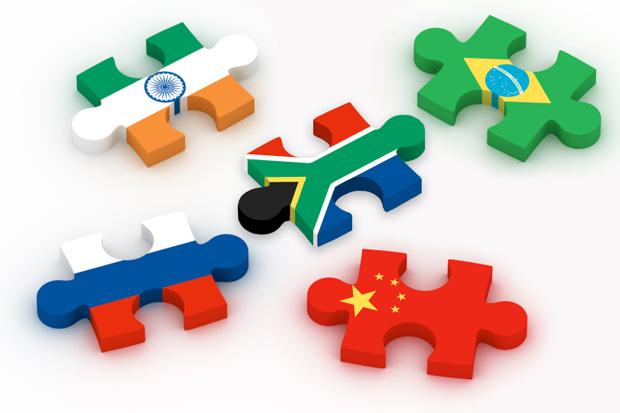
Russian Deputy Finance Minister Sergei Storchak spoke with Greek PM Alexis Tsipras today, proposed that Greece become 6th member of New Development Bank set up by Brazil, Russia, India, China, South Africa, a Greek govt official says in e-mail to reporters.

Meanwhile the $100 billion BRICS development bank will be based in Shanghai, according to its founding agreement, and will be headed by an Indian for the first five years, followed by a Brazilian and then a Russian.

Kundapur Vaman Kamath, a 67-year-old, is the non-executive chairman of India’s second largest bank by asset size, ICICI Bank, and India’s third largest IT firm, Infosys.

Now, Kamath will have another position to tend to: The first head of the BRICS bank.

The bank’s $100 billion capital—with an initial subscribed capital of $50 billion that will be equally shared by all BRICS members—will be used for infrastructure financing and sustainable development project funding within the BRICS nations. Other low- and middle-income countries will be able to access loans.

In February this year, India’s cabinet, headed by prime minister Narendra Modi, approved the establishment of the bank, after founding members sorted out several contentious issues. “The New Development Bank will mobilise resources for infrastructure and sustainable development projects in BRICS and other emerging economies and developing countries, to supplement existing efforts of multilateral and regional financial institutions for global growth and development,” the Indian government said in a statement.

The bank, according to the Russian finance ministry, is expected to be fully functional by the end of 2015.

EU paymaster Germany suggested on Monday that Greece might need a referendum to approve painful economic reforms on which its creditors are insisting, but Athens said it had no such plan for now and others warned a vote could delay vital aid.

Greece calmed immediate fears of a default by making a crucial 750 million euro payment to the International Monetary Fund a day early. But Finance Minister Yanis Varoufakis said the liquidity situation was “terribly urgent” and a deal to release further funds was needed in the next couple of weeks.

Euro zone finance ministers welcomed some progress in slow-moving talks on a cash-for-reform deal between Athens and the IMF, the European Commission and the European Central Bank but said more work was needed to each a deal.

“We acknowledged that more time and effort are needed to bridge the gaps on the remaining open issues,” they said in a short statement after spending barely an hour on a progress review on the negotiations behind held among senior officials.

Source: Bloomberg/Reuters