Many Commonwealth countries want to dump the Queen

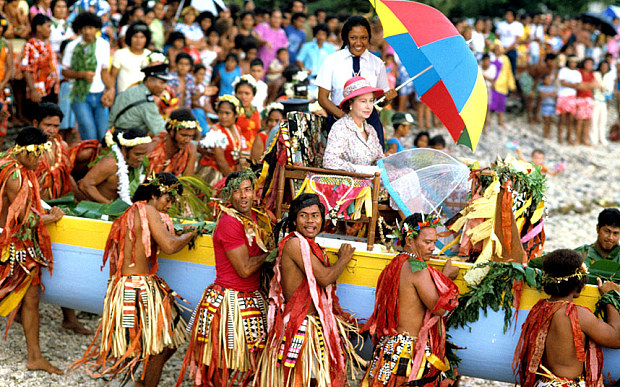
Barbados has announced it wants to replace the Queen with a ceremonial president in 2016. Other Commonwealth countries are considering a similar constitutional change

Barbados is getting rid of the Queen. For some reason, the prime minister, Freundel Stuart, feels that the country’s head of state should not be a foreign white woman who has the job because of a history of conquest, who is also head of state for 15 other countries, including most of their near neighbours, and who last visited Barbados in 1989.

Stuart promises to present a bill to remove her in time for next year’s 50th anniversary of Barbadian independence. If he does so, it is expected to pass.

To some extent it is easy to see why Britain keeps the Queen. She is British, after all. But what about Elizabeth II’s other queendoms? Might they be tempted to follow Barbados? Most Commonwealth countries have not kept the British monarch as head of state, and even those that have kept warm feelings may cool when Charles takes over.

The list of candidates is: Antigua and Barbuda, Australia, the Bahamas, Belize, Canada, Grenada, Jamaica, New Zealand, Papua New Guinea, St Christopher and Nevis, St Lucia, St Vincent and the Grenadines, the Solomon Islands and Tuvalu.

Among these, Jamaica could well be first to go republican, and should have beaten Barbados to it. The prime minster, Portia Simpson-Miller, vowed to do so before Jamaica’s own 50th anniversary of independence in 2012. The fact that she still hasn’t may be a sign that this kind of constitutional change is often more popular than practical.

In Canada, a poll in 2014 showed that, if there were to be a change in the constitution, the majority would prefer “a Canadian-born person chosen by Canadians” as head of state, although no such change looks imminent. Australia nearly embraced republicanism in a referendum in 1999, but 54.9% of those who voted chose otherwise.

But despite talk of crumbling and chilly palaces and of Queen Elizabeth also slipping down several “rich lists”, Britain’s monarchy will be wealthier than ever when she becomes its longest serving royal on the throne — 63 years — on Sept. 9.

A Reuters analysis of royal assets shows that the British monarchy has had a bumper few decades by benefiting from a rise in house and land prices.

According to a Reuters estimate based on the monarchy’s interests in its key investment vehicle, royal estates and its trove of treasures, the British monarchy has nominal assets worth about 22.8 billion pounds ($34.8 billion).

That would not get the British monarchy a spot in the top 10 global rich list headed by Bill Gates. But it would place the family in the top 20 globally, broadly comparable to the fortunes Forbes has estimated are controlled by Michael Bloomberg or Facebook founder Mark Zuckerberg.

The Royal Collection, the monarchy’s centuries-old store of treasures, is valued at 10 billion pounds by Brand Finance, a consultancy which said it put the monarchy’s overall tangible assets at 20 billion pounds.

Both Reuters and Brand Finance’s estimates exclude the unknown value of splendid royal residences such as Buckingham Palace, Windsor and Balmoral.

Source: Guardian/Reuters
SA has highest number of dollar millionaires

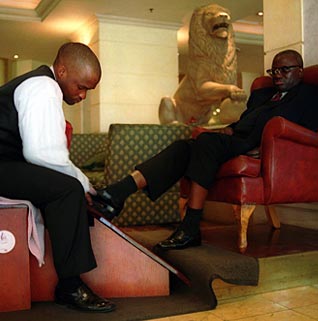
South Africa has the highest number of dollar millionaires on the African continent and this number is set to rise in coming years, according to Old Mutual’s New World Wealth Africa Report for 2015 released on Wednesday.

The report predicted an increase of 55 500 in the number of dollar millionaires in the country by 2017, despite a weakening local currency. The group had grown by nine percent since 2007.

This projection, said Luke Martins, a financial planner at Old Mutual Private Wealth Management was realistic, but dependent on the country’s future economic situation.

While individual attitudes toward building wealth, such as investing and having a clear vision plays a role in the success of high net worth (HNW) individuals, the performance of the local economy was equally important, he said.

Martins said there was great potential for South Africans to create wealth, despite educational and socio-economic challenges, which may slow down the growth of HNW individuals.

“The continued growth in numbers of high net worth individuals in South Africa can be attributed to a combination of factors, including the country’s continued position as a business and investment gateway into Africa and its appeal as a global investment destination, and its robust physical and financial infrastructure.”

A financial planner for Old Mutual Private Wealth Management, Lesego Monareng, said South Africa’s Black Economic Empowerment (BEE) policies had done much to create wealthy South Africans.

“In South Africa, the political will to drive economic empowerment of previously disadvantaged persons has been a major contributor to wealth creation for many. It has both built the middle market as a feeder into individual wealth achievement and allowed many individuals to position themselves to take advantage of the resulting opportunities,” Monareng said.

Source: ANA

Britain warns it will expose Putin’s financial secrets

Britain may broadcast the financial secrets of Russia’s ruling elite as part of the information war against the Putin regime, the Foreign Secretary has indicated.

Philip Hammond said he was interested by the idea of publicising the wealth of the Russian president’s inner circle in order to embarrass them in front of their people, as part of the response to the ongoing incursion into eastern Ukraine.

The Foreign Secretary warned that Putin is rapidly modernising his armed forces, and warned Russia’s bid to destabilise eastern Europe poses “the greatest single threat” to British national security.

Mr Hammond said that Britain must now “accept” that efforts to offer Russia its “rightful place” in the post-Cold War order had been “rebuffed”.

It marks a change in tone from the British government: David Cameron has repeated said that the door is open to Russia to normalise relations.

He warned that Russia’s rapid rearmament is a “significant cause for concern,” and confirmed that British intelligence agencies are now recruiting Russian speakers.

The wealth of Putin’s court is opaque, but undoubtedly runs into tens of billions of dollars held in offshore accounts and property in London and New York.

Official statements of Putin’s wealth – a £96,000 a year salary, a flat and three cars – are frequently met with derision.

Asked if there was a case for the “interesting” financial arrangements of members of Putin’s inner circle to be published by the British government, Mr Hammond replied: “There might be.”

“When we talk about having further steps that we can take, increasing the pressure on Russia, one the headings that we regularly review is strategic communication.

“It is an interesting thought and I will make sure the Strat Comms people are thinking precisely about that.”

Mr Cameron has suggested the BBC budget should be increased to help its Russian and Ukrainian language services counter Russian television propaganda.

Source: The Telegraph

Half of global wealth held by the 1%

Billionaires and politicians gathering in Switzerland this week will come under pressure to tackle rising inequality after a study by Oxfam found that – on current trends – by next year, 1% of the world’s population will own more wealth than the other 99%.

The charity’s research, published on Monday, shows that the share of the world’s wealth owned by the best-off 1% has increased from 44% in 2009 to 48% in 2014, while the least well-off 80% currently own just 5.5%.

Oxfam added that on current trends the richest 1% would own more than 50% of the world’s wealth by 2016.

Winnie Byanyima, executive director of Oxfam International and one of the six co-chairs at this year’s WEF, said the increased concentration of wealth seen since the deep recession of 2008-09 was dangerous and needed to be reversed.

“The message is that rising inequality is dangerous. It’s bad for growth and it’s bad for governance. We see a concentration of wealth capturing power and leaving ordinary people voiceless and their interests uncared for.”

Oxfam made headlines at Davos last year with a study showing that the 85 richest people on the planet have the same wealth as the poorest 50% (3.5 billion people). The charity said this year that the comparison was now even more stark, with just 80 people owning the same amount of wealth as more than 3.5 billion people, down from 388 in 2010.

Separate research by the Equality Trust, which campaigns to reduce inequality in the UK, found that the richest 100 families in Britain in 2008 had seen their combined wealth increase by at least £15bn, a period during which average income increased by £1,233. Britain’s current richest 100 had the same wealth as 30% of UK households, it added.

Pope Francis and the IMF managing director Christine Lagarde have been among those warning that rising inequality will damage the world economy if left unchecked, while the theme of Thomas Piketty’s best-selling book Capital was the drift back towards late 19th century levels of wealth concentration.

Barack Obama’s penultimate State of the Union address on Tuesday is also expected to be dominated by the issue of income inequality.

He will propose a redistributive tax plan to extract more than $300bn (£200bn) in extra taxes from the 1% of rich earners in order to fund benefits specifically targeted at working families.

However, the odds of the White House having any success persuading Congress to adopt the plan, given the Republicans’ new grip on both chambers, are extremely long.

Oxfam said the wealth of the richest 80 doubled in cash terms between 2009 and 2014, and that there was an increasing tendency for wealth to be inherited and to be used as a lobbying tool by the rich to further their own interests. It noted that more than a third of the 1,645 billionaires listed by Forbes inherited some or all of their riches, while 20% have interests in the financial and insurance sectors, a group which saw their cash wealth increase by 11% in the 12 months to March 2014.

These sectors spent $550m lobbying policymakers in Washington and Brussels during 2013. During the 2012 US election cycle alone, the financial sector provided $571m in campaign contributions.

Source: The Guardian

South Africans top the global list for entrepreneurial capacity

Possibly as a result of extra pressure from anti-white discrimination due to affirmative action and Black Economic Empowerment, South African self-made entrepreneurs top the global list.

The creation myth of American wealth is almost always rooted in the entrepreneur.

It’s the two kids who start a computer company in their garage or dorm room. Or the former standup comic who creates form-shaping undergarments, or the South African immigrant who creates a new electric car and private space program.

But despite the high-profile examples, America may actually be falling behind the rest of the world when it comes to creating entrepreneurial wealth. A new study from Barclays, “Origins and Legacy: the Changing Order of Wealth Creation,” finds developing countries now lead the U.S. when comes to wealth creation by entrepreneurs.

(Read More: Entrepreneur Asia: A CNBC Special Report)

Worldwide, 40 percent of millionaires (which is defined as those with investable assets of $1.5 million or more) cited a “business sale or profit” from their business as their source of wealth. Only a quarter of the millionaires cited inheritance as their wealth source.

In the U.S., only 21 percent of millionaires cited business sale or profit as their source of wealth. A much larger percentage cited saved earnings or personal investments as their sources of wealth.

Where the entrepreneurs are: South Africa comes out on top, percentage-wise

In the Asia-Pacific region, 57 percent cited business sale or profit as a source of wealth—far more than in the U.S. South Africa (68 percent) and Latin America (58 percent) were also higher.

So is America losing its entrepreneurial mojo? There is some evidence that entrepreneurial activity is flagging. The latest data from the Kauffman Foundation found that there were 514,000 new business owners a month in 2012, down from 543,000 in 2011. The 2012 numbers marked the lowest in five years.

(Read More: Key to Wealth: Work, Risk or Luck?)

A report from the Hudson Institute found that brand-new companies added 2.34 million jobs in 2010 compared with an average of about 3 million a year dating back to 1977.

But the Barclays report said another difference between the U.S. and other countries could also be one of basic wealth cycles. Wealth in developing countries is newer, and therefore there is more wealth from freshly minted companies than from savings or investments.

“These [developing] markets have a much shorter history of widespread wealth creation and many of the high-net-worth individuals in these markets are first generation wealthy,” the report said.

Entrepreneurs were also more likely to increase their fortunes during the recession compared with those with inherited wealth or those who made their money from investments and savings.

They are also more prone to taking risks, given that risk-taking is key to entrepreneurial wealth. As a result, their fortunes are more volatile than the wealth made from savings and earnings.

(Read More: We’re Rich Again! So Why Don’t We Feel It?)

“Entrepreneurs need to embrace volatility and recognize that fortunes can be lost as quickly as they were made,” the report said. – CNBC

Wealthy South Africans are company employees

Though South Africa has provinces full of poor people, and cities teeming with middle-class consumers, we can at least fill a World Cup soccer venue with our wealthy compatriots.

If you take all the households that earn more than R100000 a month, you would just about fill Soccer City, according to the TopEnd 2013 Survey, released by Ramsay Media Research Solutions.

And of the country’s 80000 most- affluent individuals, more than a third have a household income upwards of R200000 a month, according to the survey.

The top 10% have a monthly household income of R500000 or more.

The data shows that there are almost seven white millionaires for every black one, according to Alan Todd, a partner at RMRS. But that, he said, is changing, with black millionaires gaining ground.

“The fact that 70% of millionaires feel they are much better off now than they were five years ago speaks volumes for the onward and upward march of South Africa’s most affluent consumers.”

The Bureau of Market Research last week released its household wealth index, which showed that the economic recession of 2008 was still ringing in the average household’s ears.

“Households have lost five years of wealth, which might force some of them to postpone their retirement and/or start saving more,” read the report.

The bureau said, with the high inequality in South Africa, “chances are good that some households possess high net wealth values, while the majority possess net wealth values significantly lower”.

The Top End Survey reveals that as many as 73% of the country’s wealthy are company employees, while 20% are self-employed.

Four out of 10 have some sort of sideline income to add to the spoils of their corporate jobs, with 59% earning a monthly income from their investments. – timeslive.co.za