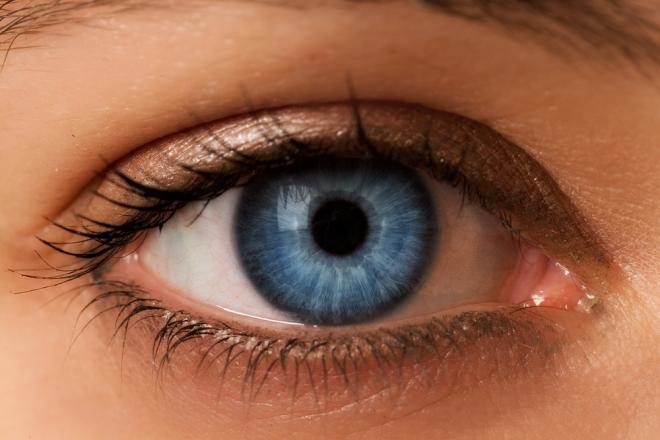
Blue-eyed people more prone to alcoholism, genetic researcher finds

People with blue eyes might have a greater chance of becoming alcoholics, according to a unique new study by genetic researchers at the University of Vermont.

The work, led by Arvis Sulovari, a doctoral student in cellular, molecular and biological sciences, and Assistant Professor of Microbiology and Molecular Genetics Dawei Li, Ph.D., is the first to make a direct connection between a person’s eye color and alcohol dependence. The results of the research, published in the July issue of the American Journal of Medical Genetics: Neuropsychiatric Genetics (Part B), suggest the hope of finding the roots of not only alcoholism, but also many other psychiatric illnesses.

“This suggests an intriguing possibility – that eye color can be useful in the clinic for alcohol dependence diagnosis,” Sulovari says.

The authors found that primarily European Americans with light-colored eyes – including green, grey and brown in the center – had a higher incidence of alcohol dependency than those with dark brown eyes, with the strongest tendency among blue-eyed individuals. The study outlines the genetic components that determine eye color and shows that they line up along the same chromosome as the genes related to excessive alcohol use.

But, Li says, “we still don’t know the reason” and more research is needed.

Li came to the University of Vermont in 2012 and has studied psychiatric genetics for a decade. During that time, he has worked with physicians and scientists throughout the Northeast who have collaborated to build a clinical and genetic database of more than 10,000 individuals, mostly African Americans and European Americans, diagnosed with at least one psychiatric illness. Many have multiple diagnoses of diseases, including depression, schizophrenia and bipolar disorder, as well as addiction and alcohol or drug dependence.

“These are complex disorders,” he says. “There are many genes, and there are many environmental triggers.”

From that extensive database, Li’s and Sulovari’s study filtered out the alcohol-dependent patients with European ancestry, a total of 1,263 samples. After Sulovari noticed the eye-color connection, they retested their analysis three times, arranging and rearranging the groups to compare age, gender and different ethnic or geographic backgrounds, such as southern and northern parts of the continent.

Next, Li wants to delve deeper into the relationship between cultural background and genetic makeup, continuing his quest to find the mechanisms of mental illness. His greatest challenge: All the genes identified in the past 20 years “can only explain a small percentage of the genetics part that has been suggested,” he says. “A large number is still missing, is still unknown.”

Li just submitted a grant application to pursue those missing genes and is working on another proposal for funding to continue that pursuit using the large database of patient samples. His work with Sulovari has provided a strong stepping-stone, he says.

“What has fascinated me the most about this work has been investigating the interface between statistics, informatics and biology,” says Sulovari. “It’s an incredible opportunity to study genomics in the context of complex human diseases.” – newswise.com

Mysterious primitive population interbred with modern humans

ancestors_0New genome sequences from two extinct human relatives suggest that these ‘archaic’ groups bred with humans and with each other more extensively than was previously known.

The ancient genomes, one from a Neanderthal and one from a different archaic human group, the Denisovans, were presented on 18 November at a meeting at the Royal Society in London. They suggest that interbreeding went on between the members of several ancient human-like groups living in Europe and Asia more than 30,000 years ago, including an as-yet unknown human ancestor from Asia.

“What it begins to suggest is that we’re looking at a ‘Lord of the Rings’-type world — that there were many hominid populations,” says Mark Thomas, an evolutionary geneticist at University College London who was at the meeting but was not involved in the work.

The first Neanderthal1 and the Denisovan2 genome sequences revolutionized the study of ancient human history, not least because they showed that these groups interbred with anatomically modern humans, contributing to the genetic diversity of many people alive today.

All humans whose ancestry originates outside of Africa owe about 2% of their genome to Neanderthals; and certain populations living in Oceania, such as Papua New Guineans and Australian Aboriginals, got about 4% of their DNA from interbreeding between their ancestors and Denisovans, who are named after the cave in Siberia’s Altai Mountains where they were discovered. The cave contains remains deposited there between 30,000 and 50,000 years ago.

Those conclusions however were based on low-quality genome sequences, riddled with errors and full of gaps, David Reich, an evolutionary geneticist at Harvard Medical School in Boston, Massachusetts said at the meeting. His team, in collaboration with Svante Pääbo at the Max Planck Institute for Evolutionary Anthropology in Leipzig, Germany, have now produced much more complete versions of the Denisovan and Neanderthal genomes — matching the quality of contemporary human genomes. The high-quality Denisovan genome data and new Neanderthal genome both come from bones recovered from Denisova Cave.

The new Denisovan genome indicates that this enigmatic population got around: Reich said at the meeting that they interbred with Neanderthals and with the ancestors of human populations that now live in China and other parts of East Asia, in addition to Oceanic populations, as his team previously reported. Most surprisingly, Reich said, the new genomes indicate that Denisovans interbred with another extinct population of archaic humans that lived in Asia more than 30,000 years ago, which is neither human nor Neanderthal.

The meeting was abuzz with conjecture about the identity of this potentially new population of humans. “We don’t have the faintest idea,” says Chris Stringer, a paleoanthropologist at the London Natural History Museum, who was not involved in the work. He speculates that the population could be related to Homo heidelbergensis, a species that left Africa around half a million years ago and later gave rise to Neanderthals in Europe. “Perhaps it lived on in Asia as well,” Stringer says. – Nature

Genome study of Khoe-San reveals genetic diversity of modern humans

Two Khoe-San in their natural environment

Genetically, culturally and ethically the Khoe-San have something special to add to this world. The importance of this study is to put the Khoe and San heritage in the right place in history and this research will provide a genetic backdrop for future studies – Mattias Jakobsson

The largest genomic study ever conducted among Khoe and San groups reveals that these groups from southern Africa are descendants of the earliest diversification event in the history of all humans – some 100 000 years ago, well before the ‘out-of-Africa’ migration of modern humans.

Some 220 individuals from different regions in southern Africa participated in the research that led to the analysis of around 2.3 million DNA variants per individual – the biggest ever.

The research was conducted by a group of international scientists, including Professor Himla Soodyall from the Human Genomic Diversity and Disease Research Unit in the Faculty of Health at the University of the Witwatersrand in Johannesburg.

Entitled Genomic variation in seven Khoe-San groups reveals adaptation and complex African history, the study has been selected for early online publishing in the renowned scientific journal, Science, on Thursday, 20 September 2012 at 20:00 SATS (14:00 U.S. EST).

“The deepest divergence of all living people occurred some 100 000 years ago, well before modern humans migrated out of Africa and about twice as old as the divergences of central African Pygmies and East African hunter-gatherers and from other African groups,” says lead author Dr Carina Schlebusch, a Wits University PhD-graduate now conducting post-doctoral research at Uppsala University in Sweden.

Soodyall, from the National Health Laboratory Services in South Africa, has a long standing relationship with Khoe and San communities and said that the findings are a “phenomenal tribute to the indigenous Khoe and San people of southern Africa, and through this magnificent collaboration, we have given the peoples of Africa an opportunity to reclaim their place in the history of the world”.

Besides the publication of the study, the authors will also be visiting the San groups of the Kalahari in the Askam area in South Africa on the 24th of September 2012 for the country’s Heritage Day celebrations. “We are excited that together with some of our colleagues from Uppsala University, we will be able to join in the celebrations with the San groups in the Kalahari who participated in our research and to acknowledge their contribution in making our research possible”.

The researchers are now making the genome-wide data freely available: “Genetic information is getting more and more important for medical purposes. In addition to illuminating their history, we hope that this study is a step towards Khoe and San groups also being a part of that revolution,” says Schlebusch.

Another author, Professor Mike de Jongh from the University of South Africa adds, “It is important for us to communicate with the participants prior to the genetic studies, to inform individuals about the nature of our research, and to not only to share the results with them, but also to explain to them the significance of the data for recapturing their heritage.”

[ad 1]

About the research

According to Assistant-Professor Mattias Jakobsson from Uppsala University, these deep divergences among African populations have important implications and consequences when the history of all humankind is deciphered.

The deep structure and patterns of genetic variation suggest a complex population history of the peoples of Africa. “The human population has been structured for a long time,” says Jakobsson, “and it is possible that modern humans emerged from a non-homogeneous group.”

The study also found surprising stratification among Khoe-San groups. For example, the researchers estimate that the San populations from northern Namibia and Angola separated from the Khoe and San populations living in South Africa as early as 25,000 – 40,000 years ago.

“There is astonishing ethnic diversity among the Khoe-San group, and we were able to see many aspects of the colorful history that gave rise to this diversity in their DNA”, said Schlebusch.

The study further indicates how pastoralism first spread to southern Africa in combination with the Khoe culture. From archaeological and ethnographic studies it has been suggested that pastoralism was introduced to the Khoe in southern Africa before the arrival of Bantu-speaking farmers, but it has been unclear if this event had any genetic impact.

The Nama, a pastoralist Khoe group from Namibia showed great similarity to ‘southern’ San groups. “However, we found a small but very distinct genetic component that is shared with East Africans in this group, which may be the result of shared ancestry associated with pastoral communities from East Africa,” says Schlebusch.

With the genetic data the researchers could see that the Khoe pastoralists originate from a Southern San group that adopted pastoralism with genetic contributions from an East African group – a group that would have been the first to bring pastoralist practices to southern Africa.

The study also revealed evidence of local adaptation in different Khoe and San groups. For example, the researchers found that there was evidence for selection in genes involved in muscle function, immune response, and UV-light protection in local Khoe and San groups. These could be traits linked with adaptations to the challenging environments in which the ancestors of present-day San and Khoe were exposed to that have been retained in the gene pool of local groups.

The researchers also looked for signals across the genome of ancient adaptations that happened before the historical separation of the Khoe-San lineage from other humans. “Although all humans today carry similar variants in these genes, the early divergence between Khoe-San and other human groups allowed us to zoom-in on genes that have been fast-evolving in the ancestors of all of us living on the planet today,” said Pontus Skoglund from Uppsala University.

Among the strongest candidates were genes involved in skeletal development that may have been crucial in determining the characteristics of anatomically modern humans.