Seeing the Afrikaans language as a decolonised language, speakers at the Breaking Down Borders Africa Youth Summit conference shared how central language is in decolonising education.
Dr Edith Phaswana, a senior lecturer at the University of South Africa (Unisa), said a model of decolonisation can be learnt from how Afrikaans developed.
“It’s because this language evolved in the twentieth century. Before 1914 there was no Afrikaans, but today we speak of Afrikaans as scientific language that is taught at university level, that has produced its own literature as well,” said Phaswana.
“Our languages – isiXhosa, seSotho and all of them – are older than Afrikaans, are more matured than Afrikaans and if Afrikaans can reach this level … it means there’s a possibility that we can form our own creole from the many Nguni and Sotho languages that we have in this country in order to form a formal scientific language at university level,” she added.
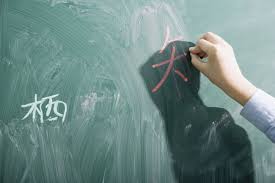
South African state schools will introduce Mandarin lessons next year in a bid to bolster cultural relations with China, its largest trading partner, a government official said on Wednesday.
Basic Education spokesman Elijah Mhlanga told AFP that South Africa hopes to teach Mandarin to “as many people as far as practically possible”.
Mhlanga said that the programme – part of a 10-year plan signed by President Jacob Zuma in December last year – was already under way.
“There are teachers who travel to China for training while China has and will bring trainers into the country to support us,” said Mhlanga, adding that China was footing the bill for the training.
But the decision to introduce the language has outraged the South African Democratic Teachers’ Union (Sadtu), which said it was “tantamount to a new form of colonisation”.
“Sadtu rejects this imposition with the contempt it deserves,” said the union’s general secretary Mugwena Maluleke.
“We will prioritise African languages in order to build social cohesion.”
The roll-out of Mandarin will see China training hundreds of South African teachers and building three Confucius Institutes, research centres similar to Germany’s Goethe-Institut designed to promote Chinese culture.
In 2009, China became South Africa’s largest trading partner.
But the trade balance has been skewed in favour of China, with Africa’s most developed economy exporting raw materials and importing manufactured goods, causing concern that the trade between the two countries is not a mutually beneficial relationship.
The DA will file affidavits alleging “bad language” after an MP was physically threatened by Deputy Minister of Trade and Industry Deputy Minister Mzwandile Masina.
During the presidency budget vote on Tuesday Steenhuisen said Masina had mouthed: “I will f*&k you up”.
“He looked straight at me and said I will f*&k you up. Members were chirpy… I saw it, other members saw it. We were chirping; [in parliament] there is heckling. There was profanity and then there was a physical threat,” Steenhuisen told The Citizen on the side-lines during a brief break in proceedings.
Chairperson Thandi Modise said she would investigate the matter.
“I think it’s going to be test now for other members who are singled out for using profanity in house,” said Steenhuisen.
ANC caucus spokesman Moloto Mothapo said: “It’s an allegation by the DA which is being investigated by the presiding officer. They are serious allegations. We hope that those who make them did not do so purely for political posturing.”
During a training session with the Spanish national team in 2004, the Spanish national coach Luis Aragonés was recorded by a Spanish TV crew referring to French soccerplayer Thierry Henry as a “black piece of s***” to José Antonio Reyes, Henry’s Arsenal teammate.
That experience, however, is not his alone. In fact, West Ham United players Clyde Best and Ade Coker were subjected to monkey chants when they were playing soccer during the 1960s, 40 years earlier. The chants have continued, and players, such as Jozy Altidore and Danny Alves, have inherited this treatment.
Many believe that thirst for justice will go unquenched and racism will persist.
Racism has given way to a spout of homophobia: Mexico’s fans harmonized a chant, singing “puto” during two recent matches when Mexico was pitted against Cameroon and Brazil.
HBO’s “Real Sports,” hosted by Bryant Gumbel, aired an episode in April, entitled “Soccer Racism.” The episode reported on the frequent displays of racism in European football, which have gone to show the “ugly side of a beautiful game.” Several black soccer players spoke about it.
Sometimes slang for “fag” or “man whore” or “coward,” the word being used during Mexican soccer matches only dates back to 2003, which discredits the usage as a tradition. FIFA, which isn’t a fan of inflammatory remarks, has launched an investigation to examine Mexican fans’ use of “puto.”
Giovanni Marti from FIFA’s Media Department encourages individuals and groups to submit any evidence in their possession with regard to discriminatory behavior for the analysis and consideration of the FIFA Disciplinary Committee.
While it’s too early to know how FIFA plans to handle Mexico’s fans, if history is any indicator, little may be done. Though, if they were looking to make an example of a team, it’d more likely be Mexico than a European team. But, why punish Mexico now and not 10 years ago when the word first came into rotation?
And with 2018’s World Cup taking place in Russia, a country that known for its anti-black sentiment, many wonder if banana tossing and monkey cries will persist.
The deepening crisis in Ukraine involves not only issues of political sovereignty, European integration and Russian hegemony, but also language and its relationship to nationalism and ethnic identity. Immediately after the removal of President Viktor Yanukovych from power on Feb. 22, the Ukrainian Parliament repealed a controversial law passed in 2012 that allowed the use of “regional languages” – including Russian, Hungarian, Romanian and Tatar — in courts and certain government functions in areas of the country where such speakers constituted at least 10 percent of the population. (In 1991, in the wake of the collapse of the Soviet Union, the newly independent state of Ukraine established Ukrainian as its sole official language.)
Interim President Oleksandr Turchynov has since vetoed that repeal, but the episode has alarmed many of Ukraine’s Russian speakers and others. “Just as the law itself was meant to validate the continued use of Russian in Ukraine for a wide range of activities, the move to cancel that law was perceived as taking away rights enjoyed by the Russian-speaking population, and potentially a sign that there might be growing discrimination against them,” explained Olga Oliker, a security and defense analyst at the RAND Corp.
Indeed, after the 2012 law was passed, 13 of Ukraine’s 27 regions, mostly in the industrial eastern parts of the country, quickly adopted Russian as a second official language. (But even then, the passage of the law triggered demonstrations in the streets and even fistfights in Parliament.) Dr. Vitaly Chernetsky, associate professor in the department of Slavic languages and literatures at the University of Kansas, commented that the 2012 language law was poorly written and roundly criticized by many experts at the time. “Additionally, no budgetary allocations were made at the time, so passing this law was, in effect, a purely symbolic measure intended to divert the attention of the Ukrainian electorate from corruption and economic problems,” Chernetsky said in an interview.
According to the CIA/World Factbook, the Russian language is spoken by about one-fourth (24 percent) of the Ukrainian population, while about one-sixth (17.3 percent) of the Ukrainian population are ethnic Russians. RT, a Russian television network, claims that 40 percent of Ukrainians speak Russian, (presumably including non-Russians). Russian speakers are concentrated in the southern and eastern parts of Ukraine – while in the southern autonomous region of Crimea (where the Russians have had a naval base on the Black Sea for more than 200 years), an estimated 60 percent of the population are ethnic Russians.
Related
Oleksandr Turchynov: The Baptist Currently Running Ukraine
Ukraine Girls Really Knock Me Out: Women Playing Crucial Roles In Euro-Maidan Protests
The Ukraine Parliament reportedly will consider yet another language law in the coming weeks or months – it is unclear if it will again allow a multi-language framework for the country’s social and political life.
Svitlana Melnyk, a lecturer in Slavic languages and literatures at Indiana University-Bloomington, argued that the establishment of monolingualism formed a key part of solidifying Ukraine’s national identity. “For post-Soviet independent countries and Ukraine in particular, the state language has symbolic meaning and a great symbolic value in the process of nation-building,” she said. “This is a national symbol along with the flag and anthem. The language issue is highly politicized in Ukraine, and its future management heavily depends on the evolving political situation.”
Melnyk added that she thinks that Ukrainian should be “the only state language” in the country. “At the same time, the [new language] law should consider the current socio-linguistic situation and protect the languages of national and ethnic minorities in the country,” she said.
But the temporary repeal of the 2012 law sparked outrage from Ukraine to Moscow and even in the European Union. Russian Prime Minister Dmitry Medvedev condemned the law’s abolition. “We do not understand what is going on there. There is a real threat to our [Russian] interests and to the lives and health of our citizens,” he said at a press conference, adding that the new interim government in Kiev lacks legitimacy. Similarly, Konstantin Dolgov, the Russian Foreign Ministry’s commissioner for human rights, characterized the law’s repeal as an “attack on the Russian language in Ukraine” and a “brutal violation of ethnic minority rights.”
Outside of Russia, the European Parliament even passed a resolution calling on the new Ukraine regime to respect the rights (and languages) of its minority population. “The Parliament of Ukraine has made what I believe to be a mistake… canceling a law on regional languages,” Poland’s Foreign Minister Radoslaw Sikorski told CNN. “The new Ukrainian government should signal very eloquently to the ethnic minorities in Ukraine that they are welcome in Ukraine; that they are going to be part of the new Ukraine. And also Ukraine is a member of the Council of Europe, [with] its laws on protecting minorities.”
Separately, in response to the gathering storm in Ukraine, some nationalist lawmakers in Moscow, led by the far-right Liberal Democratic Party of Russia, have called for the fast-tracking of Russian citizenship to ethnic Russians in Ukraine. LPDR MP Ilya Drozdov has already tabled a bill that would grant Russian citizenship to Ukrainian-Russians within six months of proving their ethnicity. “The adoption of this amendment would allow [us] to lawfully use the migration potential of Ukrainian citizens of Russian ethnicity who desire to get Russian citizenship,” Drozdov explained. RT reported that more than 2 million residents of the former Soviet republics have received fast-tracked Russian citizenship since the fall of the Soviet Union – even including people not of ethnic Russian origin, like the South Ossetians of Georgia, who speak an Iranian-related language.
Meanwhile Ukrainian nationalists, particularly members of the ultra-right Svoboda (Freedom) party led by Oleg Tyahnibok, have even threatened to ban the Russian language completely and even strip the Ukrainian citizenship of the nation’s Russian speakers. Jean Asselborn, the foreign minister of Luxembourg, in a meeting with his Russian counterpart Sergei Lavrov in Moscow, expressed their grave concerns about another Svoboda-proposed bill that would essentially ban all Russian language media in Ukraine (which Svoboda has defended by citing that Russian reports of the turmoil in Ukraine have been tarred with bias). That bill would prohibit from Ukraine any media from nations that have not ratified the European Convention on Transfrontier Television — Russia has signed the convention, but has not ratified it yet.
“Russia is not a party to the convention, but it does not prevent us from broadcasting all across Europe. No EU member makes any problems for our broadcasts. If such a decision is taken in Ukraine, it would be a serious violation of the freedom of speech,” Lavrov said at a media conference.
With respect to the prevalence of Russian language, Chernetsky also noted if one looks at an average Ukrainian newsstand, one will find that about 90 percent of the publications are in Russian, even in the areas where the majority of the population speaks Ukrainian. “The Russian language also dominates the radio,” he said. “The only segment of the media where the Ukrainian language predominates is the national-level television channels.”
Oliker noted that while Ukraine has some strident far-right groups, including Svoboda and Pravyi Sektor (Right Sector), there are also more measured voices that recognize that Ukraine is a multi-ethnic country and which have absolutely no interest in denying anyone their citizenship on ethnic grounds. “Emotions are of course running very high right now, but I think most Ukrainian leaders, including the leadership of Svoboda, know they stand to lose far more than they stand to gain by taking action against the ethnic Russian minority,” she noted. “That said, the situation bears watching, because people are very angry and frightened, because one cannot ignore the ethnic undertones to the anger or the fear, and because elements of Svoboda, and certainly Pravyi Sektor, do hold ultra-nationalist views.”
Russian and Ukrainian are closely related Slavic tongues, but they are also distinct languages with separate ethnic and national identities. The Christian Science Monitor reports that Russian-language activists in Ukraine have long wanted to make Russian a second official state language, citing such scenarios in multi-lingual countries like Canada and India. “There is this pervasive suggestion that if you speak Russian, you’re not a loyal or true Ukrainian. This makes Russian-speakers feel like second-class citizens,” Ruslan Bortnik, vice chairman of Russian-Speaking Ukraine, an advocacy group, told the Monitor.
Of course, Ukrainian nationalists fear the further encroachment of Russian into its national fabric. “If Russian were an official language, the main fear is that it would be a wide-open door for Russian influence in Ukraine,” said Oleksiy Kolomiyets, president of the Center for European and Transatlantic Studies in Kiev. – International Business Times
Some families of deceased Marikana mineworkers were prejudiced at the Farlam Commission of Inquiry as they did not understand Afrikaans, a lawyer said on Friday.
Dumisa Ntsebeza SC, for the families, brought the complaint shortly after the inquiry resumed its public hearings on Friday.
It was prompted by the fact that police Brigadier Adriaan Calitz testified exclusively in Afrikaans.
“I did not have a problem with translation… I have been approached by the families from Lesotho, who are saying ‘because the Brigadier is insisting on speaking in Afrikaans, which apparently is his Constitutional right, Sesotho has been eliminated completely,” Ntsebeza said.
“There are three channels [of translation used at the commission] and the Brigadier is speaking in Afrikaans, then there is a translation to English and another translation from English to IsiXhosa.”
Some of the families had been prejudiced, contended Ntsebeza, saying five families had raised the complaint.
Commission chairman, retired judge Ian Farlam, then translated Calitz’s brief testimony.
“He was telling us about the experience he has had, which he referred to yesterday about a riotous incident. He particularly told us about an incident in May last year when there was a strike and there was disorder,” Farlam said.
“Police ran out of bullets in the incident.”
Farlam said perhaps arrangements would be made to cater for the Sotho-speaking families next week.
“We will see what we can do, if it’s possible to do something. [We may] provide for a third translation service just for those five people, I am not sure whether we can do that,” he said.
“We may have to resort to translating the transcript to them when it becomes available.”
Head of the evidence leaders, Geoff Budlender, said translators at the commission had complained that Calitz, apart from answering quickly to the questions, also spoke too quickly.
On Friday, some people in the auditorium were dressed in Julius Malema’s Economic Freedom Fighters party regalia.
In May, the commission heard that Calitz gave the order for police to “engage” the striking Marikana miners in August last year.
A video clip taken from a helicopter that Calitz was in during the police’s dispersal operation at Marikana was played for the commission.
“Get out there and engage,” Calitz is heard saying on the clip.
Calitz was one of the commanders assigned to the Marikana operation.
Another police officer, Maj-Gen Charl Annandale, who was under cross-examination at the time, confirmed Calitz’s voice was audible in the clip.
“That was Papa one, Brigadier Calitz,” said Annandale.
Annandale headed the police tactical response team during the wage-related unrest at Lonmin’s platinum mining operations at Marikana, near Rustenburg in North West last year. He said he was at the joint operations centre listening to the police radio when the instruction was given.
The three-member commission is holding public hearings in Centurion. The other commissioners are senior advocates Bantubonke Tokota and Pingla Hemraj.
Thirty-four people, mostly striking miners, were shot dead on August 16, 2012 and 78 were wounded when police fired on them while trying to disperse and disarm a group which had gathered on a hill near the mine.
In the preceding week, 10 people, including two policeman and two security guards, were hacked to death near the mine.
President Jacob Zuma appointed the commission in August last year. – Sapa
A careful argument on language in education has been distorted to create a media hype, Free State University rector Jonathan Jansen said on Wednesday.
“It still amazes me how a careful argument about language inclusivity can be seriously distorted for maximum media hype,” Jansen said on his twitter account in reply to a report about a speech in September.
Afrikaans newspapers Beeld and the Die Volksblad published front page articles on Jansen’s opinion that exclusive white Afrikaans schools and universities held a danger for race relations in South Africa.
Jansen’s comments were made while delivering the Percy Baneshik Memorial Lecture of the English Academy of South Africa on September 18.
In his speech, Jansen said English and not Afrikaans could be the “taal van versoening” — language of reconciliation — for South Africa.
He said English could also be the one major solution for the crisis in education.
“Instruct every teacher and every child in English from the first day of school rather than add the burden of poor instruction in the mother-tongue in the foundation years to the trauma of transition to English later on.”
Jansen said for many parents English was already the language of choice in schools.
The reason for this was that indigenous languages were poorly taught.
He said learning in a mother tongue was no guarantee of improved learning gains in school.
The Kovsie rector said English could be the foundation for a common language. He said he understood that the symbolism of supporting indigenous languages had a political value beyond his pragmatic reasoning.
Language differences were of themselves not contentious, but the mobilisation of languages for political purposes constituted the problem.
For this reason Afrikaans-dominant white schools and universities represented a serious threat to race relations in South Africa, he said.
“You simply cannot prepare young people for dealing with the scars of our violent past without creating optimal opportunities in the educational environment for living and learning together.”
Jansen said English had levelled the playing fields in the historically Afrikaans universities for common engagement between students.
The Kovsie rector confirmed his opinion on English as a reconciliation language in a tweet on Wednesday.
“I also believe that there is no way in which young people across divisions can heal past rifts without a common language; that is English,” Jansen’s tweet read. – Sapa
The under-representation of Afrikaans-speaking personnel in the department of trade and industry is unacceptable and the Freedom Front Plus will be asking the minister of trade and Industry, Mr. Rob Davies, to rectify the imbalance, Adv. Anton Alberts, the FF Plus’ parliamentary spokesperson on trade and industry said.
It appears from a reply to a question of Adv. Alberts addressed to the minister in which he asked for an analysis of the languages spoken by all the personnel in his department and other institutions which report to the department of trade and industry.
According to Adv. Alberts, in certain sections in his department, such as the Companies Tribunal and the National Consumer Commission, there aren’t any Afrikaans speaking personnel.
“It is unacceptable and worrying and serves as proof that the interests of minorities such as Afrikaans speakers are being ignored by the ANC government, especially when it is taken into consideration that a lot of correspondence and many complaints are submitted in Afrikaans,” Adv. Alberts said.
From the minister’s reply, it appears that of the 1 541 personnel in the department, only 123 are Afrikaans speakers, while Afrikaans is the third most spoken language in the country.
Apart from the Companies Tribunal and the National Consumer Commission, where there aren’t any Afrikaans speakers, percentage wise, there are only 4,4% at the Export Credit Insurance Corporation and 1,2% at the National Empowerment Fund.
The National Metrology Institute of South Africa is the most representative with 37,5% of personnel being Afrikaans speakers.
Mr. Zolile Prusente is the curriculum specialist with the regional education department in Upington. Recently, he sent a complaint to the South African Human Rights Commission regarding a problematic shift in language policy in the past year.
He alleges that the school principal and the school management team implemented a language policy that designated English as the first language of instruction for all subjects against the advice of the law or parental preference. Afrikaans, isiXhosa and Setswana were set aside and offered as alternative languages. The decision was an abrupt change from the former policy which provided for instruction in the students’ first languages rather than English.
For Prusente, the shift in policy is most harmful for the students. “[This situation] clearly shows that the SGB [school governing board] is not in control of language policy and that language policy is dictated by educators to suit their needs,” he wrote in his statement to the Human Rights Commision. Prusente believes that the students’ constitutional rights are violated by the “one-way” decision to teach primarily in English. Those responsible, he said, acted “without… taking cognisance of the additive bilingual approach promoted by the language-in-education policy.” In his statement, he refers to the Northern Cape Education Department circular 37 which also highlights “the importance of mother tongue instruction in the Foundation phase.” In their response, the principal, Ms. AB Silwana, and the chairperson of the SGB, Mr. Themba Smith, denied Prusente’s claims and said that the “overwhelming majority of parents” voted for their children to be taught in English.
While most teachers have agreed to the change, there are some who doubt the validity of the vote and who have consequently received “warning letters” from Silwana. Mrs. Thembisa Magodi, who is an SGB member and one of the two grade two teachers who refused to implement the English-only medium, said she and her colleague were not aware of any parents meeting or voting. They have refused to acknowledge Silwana’s warnings and stated that any policy “that [asks] us to teach in a foreign language [English] is not reasonable [and] unlawful because the Law encourages mother tongue teaching.”
Magodi and her colleague point to the 2007 whole school evaluation report that “has shown that learners do not understand English” as further proof that the new policy is not beneficial to students. Both teachers have announced that, ignoring the new policy, they “will continue in the third quarter to teach in the home language of learners and English only as an additional language.”
Silwana and Smith contend that the South African schools act No. 84 of 1996 gives the SGB the power to determine the language policy. They state that, since 2009, the SGB has engaged in thoughtful deliberations regarding “the complexity of formulating a language policy” for a “multi-cultural and multi-lingual learner population.” Furthermore, they maintain that the adoption of English-only policy is based on a “research/survey” taken during the 2011-2012 year that demonstrated that “parents preferred English as the language of learning and teaching.”
Prusente believes that the policy change is rooted in the SGB’s biased aversion to multi-lingual education. He claims that the boards sees “many languages spoken by learners as a problem instead of a resource.” This leads them to favor English instruction, he explained, and makes them “guilty of killing [the home] languages of the learners and community.” He challenges the SGB to provide evidence of the minutes and attendance register where the language policy was decided upon.
Mrs. Miriam Gatyeni (54) is the grandmother of a grade two and grade three learner. She remembers the survey looking into language preferences, but denies that English was the overwhelming favorite. She, for one, chose Afrikaans. “Another parent chose isiXhosa and another man preferred English,” Gatyeni recalled.
The new language policy has forced her to consider different options for her grandchildren’s schooling. If the mother tongue of her grandchildren is not used to teach them, she will be forced to take them to an Afrikaans school in Blikkies, known as Progress, which is “far” from her home. “Home language is the best. It is [the] language [in which] I talk to them at home, just like it was with my mother,” said Gatyeni.
When asked for a copy of the language policy, Silvana referred this writer to Smith who said that while the policy “is not closed or classified information”, it has to be handled “carefully”. He also said that only the documents guiding the policy formulation process can be availed.
The site steward at Vela-Langa, Mr. Daniel Mokopi, said they reported the language policy chaos to the South African Democratic Teachers Union and decided that they “don’t want to interfere in individual school matters.”
The South African Human Rights Commission will hold a meeting regarding the matter today. – groundup.org.za
From culture to multicultural intimidation. Pictures from a 'cultural evening' at Fochville High School. Now the education department wants to deny the school its language and culture.
On behalf of the Pro-Afrikaans Action Group (Praag) and all Afrikaans speakers in the country, I strongly object to your sensationalist headline: “My child hates Afrikaans people” (City Press, May 5).
The rest of the article displays a distinct bias against Hoërskool Fochville and Afrikaans in general by selectively quoting from affidavits filed by an NGO run by Mark Heywood, who is British.
For 200 years now, language has been a bone of contention in South Africa, specifically the fraught relationship between English and Afrikaans. Your reporter would therefore do well to be more circumspect and objective in reporting on such an explosive issue.
Apart from swaggeringly throwing down the race card, the ace to trump all else, you also neglected to mention that Barbara Creecy, the Gauteng education MEC, had created the problem by unexpectedly busing in a whole class of so-called “English” children at the beginning of last year.
Hostile officials from the department then ordered the school to teach them in that language, for which they were not qualified.
The use of children as pawns in Creecy’s neocolonial language war on Afrikaans is distasteful. Instead of concentrating her funds and her energies on providing education in Gauteng, Creecy has launched an all-out attack on Fochville and other Afrikaans high schools, threatening an educational legacy that goes back more than 100 years.
According to newspaper reports, Creecy and her high-handed officials have also threatened Afrikaans high schools in Joburg to change their language policy. I wonder whether the same is being done at Zulu or Tswana schools?
Is it any wonder that the community around Hoërskool Fochville is defending themselves against the autocratic Gauteng education department in the courts? But what a waste of taxpayers’ funds!
Creecy is directly responsible for the implosion of maths teaching in Gauteng – with the matric average now at 20%. What are we gaining, educationally, from these vindictive state actions against Afrikaans schools?
Can the ANC not replace Creecy with a black MEC for education in Gauteng who will not have a colonial axe to grind with Afrikaans?
Dr Dan Roodt,
Director, Praag, Joburg
This letter was also published today in City Press.
This website uses cookies to improve your experience. We'll assume you're ok with this, but you can opt-out if you wish. Cookie settingsACCEPT
Privacy & Cookies Policy
Privacy Overview
This website uses cookies to improve your experience while you navigate through the website. Out of these cookies, the cookies that are categorized as necessary are stored on your browser as they are essential for the working of basic functionalities of the website. We also use third-party cookies that help us analyze and understand how you use this website. These cookies will be stored in your browser only with your consent. You also have the option to opt-out of these cookies. But opting out of some of these cookies may have an effect on your browsing experience.
Necessary cookies are absolutely essential for the website to function properly. This category only includes cookies that ensures basic functionalities and security features of the website. These cookies do not store any personal information.
Any cookies that may not be particularly necessary for the website to function and is used specifically to collect user personal data via analytics, ads, other embedded contents are termed as non-necessary cookies. It is mandatory to procure user consent prior to running these cookies on your website.