Rolling blackouts last year had South Africans firing up candles, flashlights and generators after crisis-plagued Eskom Holdings SOC Ltd., which provides most of the country’s electricity, failed to meet demand. The power crunch has since eased thanks to fewer unplanned plant breakdowns and the use of diesel-powered generators to augment supply. But Eskom’s problems run far deeper than temporary shortfalls. The state-owned utility is mired in debt and isn’t selling enough power to cover all its costs, leaving it scrambling for money to replace aging plants. Now South Africa is weighing a plan to split Eskom into three entities in the hope of reviving its fortunes.
1. What caused the power shortages?
Theoretically Eskom should be able to generate about 47,000 megawatts of power, but output slipped to as low as 26,000 megawatts last year when several of its plants were being serviced or broke down. Less than three quarters of installed capacity has been available this year, in part because a lack of money forced the utility to cut back on maintenance and repairs. It also lacks key technical skills needed to carry out the work, despite having a bloated workforce. Plants that produce more than half the utility’s power are at, or nearing, their ideal retirement age.
2. How did this happen?
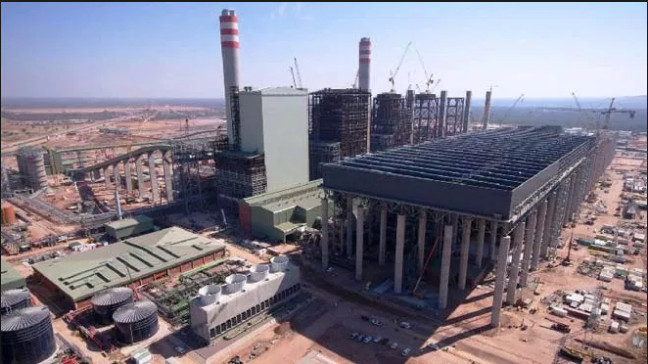
South Africa was able to produced more electricity than it needed when white-minority rule ended in 1994, but the government didn’t foresee how sharply demand would spike as the economy expanded and previously neglected black areas were connected to the grid. Eskom announced a series of multi-billion dollar investments after the government awoke to the severity of the problem in the mid-2000s, but the projects came too late and took too long to build. The first wide-scale outages occurred in late 2005. The Medupi and Kusile coal-fired plants, which were supposed to add almost 9,600 megawatts to the grid and be fully operational in 2015, are still years away from completion. Their projected costs have more than doubled to 292.5 billion rand ($21.5 billion).
3. Where was management?
The utility went through repeated board and management changes during the almost nine years Jacob Zuma was South Africa’s president. Investigations by lawmakers and the nation’s graft ombudsman alleged that the upheaval was part of an orchestrated attempt by Zuma’s allies to raid Eskom’s coffers with his tacit consent. Accusations that the utility was looted are now being investigated by a judicial commission. Zuma and his allies deny wrongdoing. Eskom’s board and management were replaced in January 2018, the month after Cyril Ramaphosa succeeded Zuma as head of the ruling party, the African National Congress. Since then, there’s been a concerted effort to stamp out graft, and a number of senior executives and staff have left the company. Ramaphosa was named president in February 2018, after the ANC forced Zuma to step down.
4. How precarious is Eskom’s financial position?
Very. By its own admission, it’s in a “death spiral.” It is saddled with 419 billion rand worth of debt that it’s battling to service, and it anticipates showing a loss of about 20 billion rand for the year ending in March. Sales volumes are at a decade low and continue to fall as the economy stagnates. Increasing numbers of businesses and middle-class consumers have moved off the grid as the price of renewable energy drops. Meanwhile, near-bankrupt municipalities are falling behind in in paying their bills as many customers in impoverished townships default on their debts or steal power through illegal connections.
—From: Bloomberg.