NASA says Mars has liquid water

For the first time, NASA has confirmed the existence of liquid water on the surface of Mars, according to new research announced Monday. The finding stems from data and analysis by NASA’s Mars Reconnaissance Orbiter.

The Mars Reconnaissance Orbiter (MRO) has verified that the dark, seasonal streaks that have appeared on Mars’ surface come from briny water flows.

MRO found evidence of narrow channels containing water cut into cliff walls through Mars’ equatorial band, though the source and chemistry of the water is yet unknown. The streaks, or recurring slope lineae, appear during the warmer summer months on the Red Planet. They disappear when the temperature drops.

The findings advance the potentiality for life on Mars, researchers said. While it is likely that life exists in the crust of Mars, the new findings further the possibility of life closer to the surface of the planet, Alfred McEwen, a planetary scientist with Arizona State University, said during a NASA press conference.

Scientists had previously run into difficulties analyzing the streaks, which measure less than 16 feet, or 5 meters, wide. The MRO’s instruments were able to process trace measurements, and scientists successfully observed the findings thanks to a computer program that can focus in on individual pixels. MRO’s data was then compared with high-resolution images of the slopes. Scientists found a match between their locations and the presence of hydrated salts.

“We’re not claiming that we found … evidence of liquid water. We found hydrated salts,” said Lujendra Ojha, a graduate student at Georgia Institute of Technology and lead author of the report, published in the journal Nature Geosciences.

While NASA has rushed to announce the findings, Ojha expressed reserve.

“It’s a little bit over-the-top announcement by NASA,” Ojha said. “There’s so many mysteries to be solved about RSL (recurring slope line).”

The presence of water on Mars in the form of ice caps has been known for years. However, proof of liquid water on the Red Planet will have major ramifications for the study of Mars. It may mean that microbial life may still survive under the Martian surface, if there ever was any in the first place.

NASA’s announcement confirming that it found evidence of water flowing on the surface Mars was welcomed mostly by publicists at 20th Century Fox looking to promote “The Martian,” the upcoming Ridley Scott film starring Matt Damon.

Source: RT

SA ranks last in maths and science

The World Economic Forum (WEF) has released its Global Information Technology Report 2015, which ranked South Africa last in the quality of mathematics and science education.

South Africa also finished close to last – 139 out of 143 countries – when looking at the overall quality of its education system.

The WEF’s Global Information Technology Report 2015 ranks SA’s mathematics and science education quality lower than Angola, the Dominican Republic, and Mozambique.

It should be noted that these rankings are based on the perceptions of business leaders, and make use of the WEF’s annual “Executive Opinion Survey” to establish how well a country’s education system is performing.

In this survey the opinions of business leaders are gathered on a variety of topics.

The WEF’s education quality rankings are an assessment of the quality of mathematics and science graduates.

The alchemism of modern physics

In his international bestseller, A brief history of time, the most famous physicist of our time, Stephen Hawking, stated that the last/final matryoshka doll in the field of Physics has been unpacked – Planck’s Constant. With this accomplished, he writes that the what of the Universe would thus soon be answered, automatically.

Because, from here, it follows that it would simply be a question of a “discussion” between “philosophers, scientists, and just ordinary people… ” to unravel the why of the Universe/Existence – and once that has been done, “we would know the mind of God”.

But alas… were the whole caboodle only that simple.

A thought experiment: imagine a massive cosmic cataclysm, in our teeny tiny sector of the Universe, destroys all life on planet Earth, in an instant. Now the question: would the Rover Mars lander still exist, after said cosmic cataclysm… which killed us all?

Disciples of scientific realism would tend to say yes, because they believe in the existence of an “external reality”. Idealists, on the other hand, would tend to say no, because “reality” is seen as a “creation” of the human mind. This dichotomy in the hard sciences would, roughly, translate into the positivist-interpretivist paradigm in social science research – the famous battle lines of the infamous “paradigm wars” that have been raging since the mid-80s.

But alas, both abovementioned positions are right, or wrong… simultaneously. For if we are all dead, the very question – “does the Rover Mars lander still exist?” – can neither be posed, nor answered… for we are all (already) dead by then, remember? Yet is very safe to assume that it does indeed (still) exist, for people see other people die around them every day, and the world/existence/reality stays the same nonetheless, mostly. So, we could safely assume that the last living soul on this planet (before said cosmic cataclysm wipes him/her out) will know that the Rover Mars lander is still all forlorn, yet “real” on Mars. But, once s/he is no more, there is no certainty about its existence anymore.

This means that “knowledge of” is bound to “looking” (like said last person on Earth), not “knowing”. This is not unlike the famous Schrödinger’s Cat thought experiment to explain the sheer complexity of the paradox underpinning quantum mechanics. In other words, an inevitable “two-state” state of “knowing” must be accepted. Ditto the existence of God – where faith is “looking”. The more knowledgeable reader will recognize Kantian (epis/-ontological) trancendental idealism, especially as it pertains to Husserl’s “intentionality-bound” phenomenology, at play here.

So, what does this all have to do with the (most) famous physicists of age? Well, it’s all about them dreaming/promising to finally determine only one “state of existence”, e.g. Hawking’s “knowing the mind of God”.

Hawking does indeed have an epis/-ontological “two-state” position… for as he wrote:

“Yet if there really is a complete unified theory, it would presumably determine our actions. And so the theory itself would determine the outcome of our search for it!”

Nudge nudge, equal-outcome Egalitarianism. But, be that as it may…

It means that he both holds onto a realist, as well as an idealist position. In other words, humans “created” the (ultimate) “truth”, i.e. scientific idealism/aestheticism, yet also “discovered” it… as in Platonic mathematics (scientific realism). But then, didn’t he promise that Planck’s Constant would “dissolve” one of these states, permanently?

Enter the film Interstellar – lauded and applauded by the likes of Hawking and Kip Thorne – the latter being the “science” advisor of the film. The plot line is very simple. A “dustbowl dystopia” (fatally) threatens humanity’s future. The protagonist, Cooper (and his trusted robot, TARS) are sent into space to save the physical existence of the human race. They, predictably, land up in the middle of a black hole – where TARS mysteriously, “discovers” (nudge nudge Platonic mathematics) the secret to (anti)gravity… thereby saving humanity. Now this is all fine and dandy, were it not for the alchemist nonsense when, after TARS has found the answer to (anti)gravity in the “external reality” of the black hole, it, TARS, answers Coop’s question: “How did they create it?”, with the answer: “You’ve created it.”

In other words, both “states” of the (final) Truth are accepted, yet Hawking’s matryoshka doll (Planck’s Constant) won the day, by “looking” into the box in which Schrödinger’s Cat “hides” – thus “dissolving” one of its states (of its being/existence).. and then we all lived in Lala Land afterwards.

Meaning that – apart from the huge elephant in the room, causality – modern physics simply hasn’t comprehended what the brilliant philosopher of science, Thomas Kuhn, has been trying to tell them since…

Ergo, modern physics is trying to have its (Utopian) cake – by “dissolving” the Cartesian Clock versus Quantum Theory paradigm – and eat it.

This is Alchemism, not Science.

First woman to head CERN

Italian physicist Fabiola Gianotti was chosen on Tuesday to head the CERN particle physics research centre that houses the giant LHC “Big Bang” machine, making her the first woman nominated to lead a top global scientific institution in the field.

Gianotti, who won world attention in 2012 for her leadership role in CERN’s discovery of the long-sought “Higgs boson”, will take up the post in January 2016 as scientists there look to new findings on the origin and make-up of the universe.

Her appointment was decided at a meeting of the centre’s ruling council, made up of representatives of its 20 member states, a CERN announcement said. It remains to be formalised at a further meeting in December.

Gianotti, 52 and a researcher at CERN near Geneva since she joined it with a doctorate from the University of Milan in 1987, will replace Rolf Heuer, who steered the centre through the initially-troubled launch of the Large Hadron Collider.

The machine was primarily built to find the Higgs – a theoretical particle and related energy field which was thought to have made formation of the physical universe possible by converting matter into mass.

In the LHC, now awaiting relaunch with twice the power in spring next year, elementary particles are smashed together at close to the speed of light, creating billions of tiny “Big Bangs” and their aftermath.

Gianotti in 2009 became project leader of the Atlas collaboration, one of the two major teams working separately to spot the Higgs in the LHC data.

With her counterpart from the CMS team, she detailed the finding of the Higgs – named for the British physicist who predicted its existence in 1964 – before a global television audience in July 2012.

The discovery brought a Nobel Prize in 2013 for Peter Higgs, the British theorist, and Francois Englert, a Belgian physicist working on the same idea with two other colleagues in the early 1960s and who also posited the existence of the boson.

Gianotti, an accomplished pianist who once considered devoting her life to music, said she was honoured to be named to head the sprawling institute – which links some 10 000 scientists on site and around the globe – along the Franco-Swiss border outside Geneva.

“CERN is a centre of scientific excellence and a source of pride and inspiration for physicists from all over the world, a cradle for technology and innovation, and a shining concrete example of scientific cooperation and peace,” she said.

When collisions in the LHC are resumed, scientists will be looking for evidence helping to resolve other major questions including the dark matter thought to make up about a quarter of the universe and dark energy accounting for some 70 percent.

Source: Reuters

South Africa needs maths and science pupils: Zuma

ArrayThe government’s biggest challenge is to make maths and science exciting and popular for school pupils, President Jacob Zuma said on Friday.

“Science offers students the ability to access a wealth of knowledge and information, which will contribute to an overall understanding of how and why things work the way they do,” he said in a speech prepared for delivery.

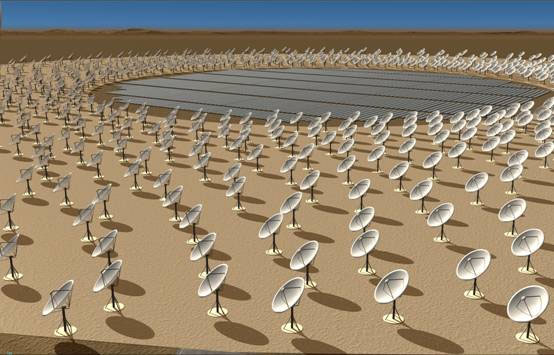
“Through science, you will be able to explain the mechanics and reasons behind the daily functioning of complex systems, which range from the human body to sophisticated modern methods of transport up to the workings of the Square Kilometre Array telescope that our country won the bid to construct.”

Zuma was speaking to finalists of the Eskom Expo for Young Scientists. He was hosting them as part of National Children’s Day at the Sefako Makgatho Presidential Guest House, IN Pretoria.

Zuma said that by producing more science and technology graduates, the country was assured of a bright future economically.

“It means our economy will have all the scientists, technologists, engineers, artisans and other skills that we need for economic development.

“It also means we will have all the expertise we need to prevent and cure diseases or to fight poverty through better agricultural methods,” he said. – Sapa

‘Science will solve apartheid problems’

Confused deputy-president

Problems inherited from the apartheid era can be solved through research, Deputy President Kgalema Motlanthe said – without irony – on Saturday, as South Africa struggles with ever worsening maths en science results since 1994.

South Africa has hit rock bottom in an international measure of the quality of maths and science education recently.

Concern is mounting whether the education system is producing a sufficient number of graduates in the hard sciences to support South Africa’s growth and development.

The World Economic Forum’s annual report on financial development, released in 2012, placed South Africa last in a ranking of 62 countries in the quality of maths and science education.

The 2011 census results, released on Tuesday, showed that  a decade ago mostly white 2.7% of men and 2% of women who had tertiary qualifications in South Africa had qualifications in the fields of natural, physical and mathematical sciences. By 2011, this had declined to 2% of men and 1.8% of women, due to racial discrimination against whites.

“Inevitably, most if not all the historically inherited challenges constituting a dead weight on our development ambitions can only be addressed through the research agenda of our national research institutes,” Motlanthe told a summit on science and technology in Polokwane, Limpopo.

Motlanthe said national research institutes had the task to remain relevant to the developmental agenda through the use of science, technology and innovation.

“In other words harnessing the force of science and technology to meet our developmental needs is among the surest ways out of the current quagmire of under-development,” he said.

Motlanthe said through the National Development Plan, government laid out the parameters within which each social partner could make a contribution towards the achievement of the country’s shared vision.

“This shared vision entails the reduction of poverty, stimulating economic growth, effecting economic transformation and creating employment.”  He said South Africa needed to do more in mobilising resources for the task of producing quality education for both teachers and learners alike.

“Only a sound and quality education system with strong emphasis on mathematics and science can serve as a reliable feeder for tertiary institutions…,” he said.

Motlanthe said research projects were carried out disparately without knowledge sharing and co-ordination to avoid duplication.

“Our national research efforts lack a central framework or institute to define and identify the most immediate projects, resulting in duplication, wastage and inefficient use of funding.”  The lack of collaboration robbed the country of the benefits which would accrue from research.

Research institutes could commission a study of the systemic failure in the governance system and how best could government address its problems, he said.

Motlanthe said under-utilisation of existing research institutes by government often led to wasteful expenditure in that each government department commissioned research in common areas.

“I submit that the benefits of science, technology and innovation are not only potentially immense for us but also, and more crucially, constitute the pre-conditions for South Africa’s development.” – SAPA/praag

SA science website outdated since 2008 despite R16 million grant

saastaDespite a R16-million grant, most information on the SA Agency for Science and Technology Advancement’s website has not been updated in years.

A member of the public visiting the South African Agency for Science and Technology Advancement’s (Saasta’s) website for information about science in the country will find information that is outdated, and in some cases dating back to 2008. This is despite the fact that last year the agency received a parliamentary grant of more than R16-million. Only two links are up to date.

Saasta – a business unit of the National Research Foundation – is mandated with science and technology communication but despite a parliamentary grant, that since 2009 has averaged R15-million annually, it does not appear to have the resources to update its website. The site is an important avenue for people interested in science in South Africa.

Science communication has been highlighted as a way to increase interest among school learners in science, technology and engineering, and to encourage them to pursue these subjects in secondary and tertiary education.

Since the 2010/11 financial year, nearly R50 000 has been spent on upgrading and adding new information to the site, with the most recent being information about National Science Week 2013, which went up last week. However, the main page calls for entries in competitions, whose closing dates were in 2011. Also, according to the “Events” pages, the only events that Saasta has organised since 2009 were a staff meeting and a “Science Unlimited KwaZulu-Natal” event in 2010.

Head of corporate communications at Saasta Ina Roos told the Mail & Guardian that she was in charge of updating content, and pointed to the call for National Science Week proposals. “We don’t have a specific budget for the website,” she said, adding that the information and communications technology co-ordinator resigned last year and that a new person had just been appointed.

Beverley Damonse, group executive for corporate relations and science engagement at the National Research Foundation (NRF) and formerly executive director of Saasta, acknowledged “there is room for improvement”. However, she said: “The largest percentage of [Saasta] funding is contract [funding] … Contract funds are directed to specific projects” rather than core activities.

“Science communication is still a developing area … There are pockets of excellence driving science communications, but [Saasta] is not fully resourced in terms of a science communication entity,” Damonse said, adding that the focus has been on “educators and learners because of the science support needed in the system”.

Numerous attempts to contact Saasta managing director Dr Jabu Nukeri were unsuccessful. – M&G

Second last in the world, SA’s maths and science

South Africa’s maths and science education has been ranked second last in the world, ahead of Yemen, according to a World Economic Forum report.

The quality of the country’s general education system ranked 140 out of 144 countries, while internet access in schools is ranked at 111 out of 143 countries, stated the World Economic Forum’s Global Information Technology Report 2013.

“Going up two positions, South Africa is in 70th place. Despite a sharp improvement in the development of its ICT infrastructure (59th) – notably in terms of international Internet bandwidth capacity (66th) – and a strong uptake by the business community (33rd), the ICT impacts (92nd), particularly the social ones (112th), remain limited.

“The perception of a lack of clear government vision (105th) to orchestrate and implement a holistic ICT strategy for the country, coupled with deficiencies in the educational system for some segments of the population (102nd), play negatively in this process and outweigh a rather positive political and regulatory framework for ICT development (21st) and pro-business environment (55th),” the report read.

It is the latest indictment on South Africa’s education system since the 2011 Progress in International Reading Literature Study (Pirls) which indicated that most South African grade five learners have not yet acquired basic literacy skills.

“Forty-three percent of South African grade five learners failed to reach the lowest international benchmark, in contrast to 5% of grade four learners internationally. This means that they have not yet mastered the basic reading skills required to access and retrieve information for reading comprehension purposes,” the Pirls report stated.

It further revealed that about 90% of the grade four learners tested attained the lowest international benchmark.

Learners tested in Sepedi and Tshivenda achieved the lowest results, according to the study. – M&G

Maths and science ‘too hard’

The steady decline over the past five years in the number of matric pupils studying science has education experts worried.

The number of pupils studying science fell from 229934 in 2008 to 182083 this year.

Though there has been a slight increase in the number of matrics doing maths – from 229371 last year to 230194 this year, this is well below the 2008 figure of 317270.

Enrolment in maths literacy courses has increased from 283000 in 2008 to 297074.

Minister of Basic Education Angie Motshekga said in Pretoria yesterday that it would seem that many pupils have switched from maths to maths literacy to increase their chances of passing the final exams.

“It is an area of great concern to us.

“Despite the fact that we want to encourage pupils to enrol for mathematics, we have more pupils going for maths literacy,” she said, adding that maths had a higher failure rate than other subjects.

Motshekga said she had asked that a maths and science summit be convened to find ways in which pupils’ interest in these subjects could be increased.

Education analyst Professor Graeme Bloch said it was disturbing that, even with high-profile science projects such as the Square Kilometre Array radio telescope in the Karoo making national headlines, children did not want to be scientists.

“We have a problem and we need a complete rethink,” he said.

“It might be teaching issues, but they would not be easy to solve.

“We need to start asking deep questions and we need community engagement on this matter,” Bloch said.

This year has been particularly challenging for education. Schools have been closed for months in Northern Cape because of service delivery protests, and the Limpopo textbook fiasco has crippled education in that province.

“It has been a very dramatic year … but we are confident,” said Motshekga.

“With the support and mitigating efforts we put in place, we should be able to get children through matric safely without having to sacrifice my head,” she said.

She said all the provinces were ready for the exams and that many schools have installed CCTV camera systems, hi-tech access control and alarm systems to avoid security breaches.

Many past matric results have been compromised by the leaking of examination papers.

A total of 527335 full-time and 120352 part-time pupils will sit for the National Senior Certificate final examinations, which begin on Monday. – timeslive.co.za

Astronomy installation in South Africa ‘changes character of Africa’ – Pandor

South Africa as the major location for the Square Kilometre Array (SKA) telescope changes the character of Africa, Minister of Science and Technology Naledi Pandor said on Friday.

“Who comes to Africa to actually do their best research? People come here to examine us, to find out how poor we are, to look at diseases that we have, they never come here to say ‘I want to do Nobel science work’,” she said.

“But they are gonna be coming to do that with the SKA. An absolutely different image of the continent. Not here to exploit our diamonds, our gold, our platinum but here to say I want to do iconic research on an iconic instrument… “

Pandor was speaking at a The New Age business breakfast in Sandton.

She said that her department would like to involve all countries on the African continent to become part of the astrology sciences project.

She was excited at the potential of astronomy to be a valuable vehicle to encourage a greater interest in scientific careers among the youth.

Pandor said her department found that astronomy was proving to be an unrivalled instrument for science education in terms of the excitement it generates amongst the youth.

She said she was working with the department of basic education to ensure that schools in the rural areas have laboratories.

The treasury provided significant funding for the infrastructure for laboratories, she said.

“We will be supporting the department of basic education wherever we can… We work together in a number of areas that we have initiated,” she said.

“The pipeline is important to us — so we will support where we can.”

Pandor also took the time to praise women in science making a difference in the science industry.