Young black women adore Obama

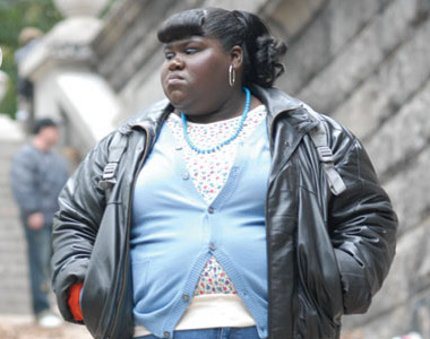
An Obama supporter

While Obama carried the youth vote overall, his support declined from 2008 among all young voters and among key subgroups. In particular, Obama lost ground among young whites, men and independents.

Only 44% of white voters under 30 backed Obama, while 51% voted for Romney. This is a substantial change compared with 2008, when Obama carried the young white vote by 10 points (54% to 44%). Far more young blacks and Hispanics backed Obama than Romney, and there was little fall off in his support among these groups from 2008.

Obama also lost support among young men. Overall, 53% of men under 30 supported Obama, down from 62% in 2008. Fully 66% of young women voted for Obama, similar to the 69% who voted for him in 2008.

However, Obama lost support among both white men and women. Overall, 41% of white men supported Obama while 54% supported Romney. In 2008, Obama won the vote among white men, 52% to 46%. While white women voted for Obama over McCain by a 56% to 42% margin four years ago, they were divided this year (48% voted for Obama, 49% for Romney).

Surprisingly, Obama’s vote also declined among young black men, by 14 points, while holding steady among young black women. – Pew Reasearch

Deep South states reject black president

Before Election Day, there was widespread suspicion that enough white voters would balk at voting for an African-American candidate for president that the polls would be proved wrong.

It didn’t turn out that way.

Barack Obama won a convincing popular and electoral victory Tuesday. According to exit polls, the Illinois senator did better with white voters than the past two Democratic nominees, Massachusetts Sen. John Kerry and Vice President Al Gore, did in the 2004 and 2000 elections.

However, while Obama was improving on Kerry’s performance in most states — including such critical battlegrounds as Pennsylvania, Ohio, Michigan, Indiana and North Carolina — he did worse than Kerry among white voters in a handful of states — especially Alabama, Mississippi and Louisiana.

In Louisiana, Obama’s support among white voters was 10 percentage points below what Kerry received. That was the sharpest decline in white support for the Democratic ticket from 2004 to 2008 recorded in any state.

In other words, white voters in a select group of Deep South states proved especially resistant to Obama’s appeal, said David Bositis, an analyst at the Joint Center for Political and Economic Studies in Washington, who looked at the racial patterns in the 2008 exit polls. The exit polls, as in the past, were conducted by Edison/Mitofsky for a consortium of news agencies

“They are moving contrary to the rest of the country,” said Bositis, who said Obama’s race — and the historic pattern of racially polarized voting in these states — seemed the most obvious reason. How else, he said, to explain how Kerry, a quintessential East Coast liberal, did better than Obama with white voters in those states on his way to losing the presidency, than Obama did on his way to winning it?

Nationally, Obama won 43 percent of the white vote: 46 percent of white women and 41 percent of white men. He ran 12 percentage points behind Republican John McCain with white voters.

That’s the same percentage gap by which Gore trailed George W. Bush in the virtual dead-heat election of 2000, but it’s five points smaller than the Democrats’ deficit four years ago.

Obama built his margin by increasing the turnout and percentage of the African-American vote and dramatically improving the party’s performance with Hispanic voters. Obama also did especially well with younger and more-educated voters.

But according to demographer William Frey of the Brookings Institution in Washington, none of that diminishes how important it was for Obama to shave some points off the usual Republican advantage with white voters. And, Frey said, Obama’s big gains were among white men — usually the toughest constituency for Democrats — where he narrowed the Democratic deficit by nine percentage points.

“A lot of Obama’s demographic gains were among Hispanics, young people, the college-educated, but there is also this big chunk of white men who are almost always very reliably Republican,” Frey said. “To some degree they went to him this time — not because of any transformational change, but because of the economy.”

Charles Gallagher, a sociologist at La Salle University in Philadelphia who has studied white racial attitudes, seconded Frey’s assessment.

“What did it take for white America to want to vote for a black man? If there had not been this collapse of the economy, there would have been no Barack Obama mandate,” Gallagher said. “Class trumped race.”

White support in N.O.

Except perhaps, Frey said, in the Deep South states where Obama fared so poorly. Those states, Frey said, remain the most culturally Southern and demographically unchanged.

Frey said that 57 percent of all eligible voters in Louisiana and 60 percent in Alabama are Southern-born white people. In North Carolina, the percentage is only a little more than half, and in Virginia, Georgia and Florida, it’s well below half.

Obama won North Carolina with 35 percent of the white vote. He won Virginia with 39 percent of the white vote. And he won Florida with 42 percent of the white vote. He lost Georgia with 23 percent of the white vote.

Meanwhile, in every state with a large enough black population to create an adequate sample for exit polling, Obama’s black support was above 90 percent, often in the high 90s. In Alabama and Mississippi, Obama won 98 percent of the black vote; in Louisiana, he won 94 percent.

In Orleans Parish, according to a precinct analysis by University of New Orleans political scientist Edward Chervenak, white voters behaved very differently than white voters in the rest of the state.

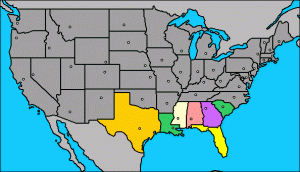
According to the national exit polls, Obama won 14 percent of the white vote in Louisiana — 10 percentage points less than Kerry won in 2004 — and a lower percentage than in any state except Alabama, where Obama carried 10 percent of the white vote, and Mississippi, where he won 11 percent.

But Chervenak found that even though Kerry lost the whitest precincts in Orleans Parish in 2004 by three percentage points, Obama won those same precincts by a sliver of a percent.

Chervenak said the outcome comported with his own yard-sign observations.

Even in predominantly white neighborhoods, he said, “I saw far more Obama signs than McCain signs.”

Lower appeal elsewhere

Outside New Orleans, the white vote in Louisiana took on very different contours.

“Once you get above I-12, voters are just culturally conservative Christians who just have a natural affinity for the Republican Party,” Chervenak said. And, he said, “certainly race is a consideration. The fact is that a liberal African-American candidate is just not attractive to a large number of white voters in Louisiana.”

And unlike the results in many states, younger white voters in Louisiana, Mississippi and Alabama were hardly more likely to vote for Obama than older white voters.

By contrast, in North Carolina, Obama won 35 percent of the white vote overall, but 56 percent of white voters age 18 to 29. Similarly, in Indiana, he won 45 percent of the white vote and 57 percent of younger white voters.

Steve Suitts, vice president of the Atlanta-based Southern Education Foundation, said Tuesday’s results reveal again “how distinct the South is from the nation as a whole in racial voting.”

“We’re just maybe a few generations behind the rest of the country in understanding what (the Rev. Martin Luther) King told us about it’s not the color of your skin, but the content of your character,” said Suitts, who supported Obama.

Jonathan Tilove can be reached at jtilove@timespicayune.com or 202.383.7827.

Maths and science ‘too hard’

The steady decline over the past five years in the number of matric pupils studying science has education experts worried.

The number of pupils studying science fell from 229934 in 2008 to 182083 this year.

Though there has been a slight increase in the number of matrics doing maths – from 229371 last year to 230194 this year, this is well below the 2008 figure of 317270.

Enrolment in maths literacy courses has increased from 283000 in 2008 to 297074.

Minister of Basic Education Angie Motshekga said in Pretoria yesterday that it would seem that many pupils have switched from maths to maths literacy to increase their chances of passing the final exams.

“It is an area of great concern to us.

“Despite the fact that we want to encourage pupils to enrol for mathematics, we have more pupils going for maths literacy,” she said, adding that maths had a higher failure rate than other subjects.

Motshekga said she had asked that a maths and science summit be convened to find ways in which pupils’ interest in these subjects could be increased.

Education analyst Professor Graeme Bloch said it was disturbing that, even with high-profile science projects such as the Square Kilometre Array radio telescope in the Karoo making national headlines, children did not want to be scientists.

“We have a problem and we need a complete rethink,” he said.

“It might be teaching issues, but they would not be easy to solve.

“We need to start asking deep questions and we need community engagement on this matter,” Bloch said.

This year has been particularly challenging for education. Schools have been closed for months in Northern Cape because of service delivery protests, and the Limpopo textbook fiasco has crippled education in that province.

“It has been a very dramatic year … but we are confident,” said Motshekga.

“With the support and mitigating efforts we put in place, we should be able to get children through matric safely without having to sacrifice my head,” she said.

She said all the provinces were ready for the exams and that many schools have installed CCTV camera systems, hi-tech access control and alarm systems to avoid security breaches.

Many past matric results have been compromised by the leaking of examination papers.

A total of 527335 full-time and 120352 part-time pupils will sit for the National Senior Certificate final examinations, which begin on Monday. – timeslive.co.za

Black Americans feel less empowered under Obama

Four years after Barack Obama was elected president, this is not exactly a “post-racial” America.

A new study from Washington University in St. Louis finds that under Obama, many black Americans feel less free than whites when it comes to political participation.

From 2005 to 2011, only 45 percent of blacks said they believed the government would allow them to make a public speech, while 67 percent of whites believed they could, the study found.

The study found that while the election of Obama initially boosted feelings of political empowerment among black Americans, those sentiments significantly faded in the years that followed—especially among conservative and religious blacks.

These two groups make up a large segment of the black population, with 56 percent of blacks identifying as “born again,” and 39 percent of blacks as “somewhat conservative,” according to the study.

“First we saw the ’empowerment effect,’ the boost that happens when a member of your group gets elected to an important political position,” says study author James L. Gibson, a professor of government and African-American studies at Washington University. Gibson’s findings are based on national surveys conducted between 2005 and 2011.

A new study from Washington University in St. Louis finds that under Obama, many black Americans feel less free than whites when it comes to political participation.

In 2009, the year after Obama was elected, 71 percent of blacks reported feeling as free to speak one’s mind as they used to.

“But then perceptions of political freedom deteriorated among conservative and religious blacks,” says Gibson. By 2011, the percentage of blacks who felt as free to speak their mind had dropped to 56 percent, back to pre-Obama levels. (White Americans also reported feeling less free to speak one’s mind under Obama, but the decline was far less than among blacks).

In part, says Gibson, this can be attributed to “ideological polarization.” That split may have begun when Obama dismissed Pennsylvania voters in 2008 who “cling to guns or religion.” But Gibson says many conservative and religions blacks likely believed when Obama was first elected that he would protect their interests as president. “Race produces a level of trust and confidence that one is on your side,” he says.

Over time, that confidence eroded. Gibson cites the contraception debate between the White House and some religious leaders that erupted last year. Black Americans, he notes, are traditionally conservative on social issues.

Another schism may have centered on gay marriage. The Democratic-leaning Coalition of African-American Pastors, for example, recently said they felt “marginalized” and “ignored” by Obama’s seemingly sudden support for same-sex marriage.

Religious fundamentalists and conservative blacks, Gibson says, “have seen their efforts to participate in public life [under Obama] being thwarted over and over and over again.”

Elizabeth Flock is a staff writer for U.S. News & World Report.

Racial goals for maths and reading

The Florida State Board of Education passed a plan that sets goals for students in math and reading based upon their race.

On Tuesday, the board passed a revised strategic plan that says that by 2018, it wants 90 percent of Asian students, 88 percent of white students, 81 percent of Hispanics and 74 percent of black students to be reading at or above grade level. For math, the goals are 92 percent of Asian kids to be proficient, whites at 86 percent, Hispanics at 80 percent and blacks at 74 percent. It also measures by other groupings, such as poverty and disabilities, reported the Palm Beach Post.

The plan has infuriated many community activists in Palm Beach County and across the state.

“To expect less from one demographic and more from another is just a little off-base,” Juan Lopez, magnet coordinator at John F. Kennedy Middle School in Riviera Beach, told the Palm Beach Post.

JFK Middle has a black student population of about 88 percent.

“Our kids, although they come from different socioeconomic backgrounds, they still have the ability to learn,” Lopez said. “To dumb down the expectations for one group, that seems a little unfair.”

Others in the community agreed with Lopez’s assessment. But the Florida Department of Education said the goals recognize that not every group is starting from the same point and are meant to be ambitious but realistic.

As an example, the percentage of white students scoring at or above grade level (as measured by whether they scored a 3 or higher on the reading FCAT) was 69 percent in 2011-2012, according to the state. For black students, it was 38 percent, and for Hispanics, it was 53 percent.

In addition, State Board of Education Chairwoman Kathleen Shanahan said that setting goals for different subgroups was needed to comply with terms of a waiver that Florida and 32 other states have from some provisions of the federal No Child Left Behind Act. These waivers were used to make the states independent from some federal regulations.

“We have set a very high goal for all students to reach in Florida,” Shanahan said.

But Palm Beach County School Board vice-chairwoman Debra Robinson isn’t buying the rationale.

“I’m somewhere between complete and utter disgust and anger and disappointment with humanity,” Robinson told the Post. She said she has been receiving complaints from upset black and Hispanic parents since the state board took its action this week.

Robinson called the state board’s actions essentially “proclaiming racism” and said she wants Palm Beach County to continue to educate every child with the same expectations, regardless of race. – CBS

Tutu, TRC, not the model to be followed, says IFP

Buthelezi

IFP leader says Archbishop Desmond Tutu’s Commission is not a model to be followed.

Delivering the second annual Desmond Tutu International Peace Lecture at the University of the Western Cape this week, Mrs Graca Machel spoke of the TRC as a moment for victims and perpetrators to look each other in the eye, and face the painful truth. Perhaps, she said, we need a similar institution again to deal with the great hurt we are inflicting on one another through rape and violence.

The premise that such initiative would bring healing in our society is predicated on the assumption that the first TRC brought reconciliation to South Africa. Unfortunately, that is not the case. Mrs Machel pointed out how many of our people still carry the wounds and scars of Apartheid and “We are harming one another because we can’t control our pain.”

I would like to believe that if a rapist were forced to look his victim in the eye, he would be inescapably struck by the intrinsic right to human dignity and security, and feel the overwhelming burden of remorse. But we know that, more often than not, rapists and abusers do look their victims in the eye, for in most cases they are not strangers, but family members or family friends.

Thus there is something lacking in the formula of bringing victims and perpetrators together in a formal environment. Perhaps we need to consider why the first TRC failed to establish reconciliation in our nation.

There is a popular misconception that the IFP refused to participate in the TRC process. On the contrary, we made a comprehensive submission, detailing the murders of some 400 IFP leaders and office bearers who were killed in a systematic plan of assassination during the internecine low intensity civil war waged by the ANC against other components of the liberation struggle. To date, none of those 400 murders has been solved.

I also appeared before the TRC, but I was not prepared to ask for amnesty, for I had done nothing wrong. I publicly stated that if I had committed any crime or had orchestrated any criminal acts, the State should charge me. When it comes to those political leaders who did seek amnesty, the TRC process ensured that we will never know the details of the criminal acts for which amnesty was sought.

The family of Mr Steve Biko described the TRC as “a vehicle for political expediency”. I was a Minister in President Mandela’s Cabinet when he informed us of his decision to appoint Archbishop Desmond Tutu as Chairperson of the TRC. Cabinet records will show that I objected even then, for the success and the credibility of the TRC depended on non-partisan leadership. Archbishop Tutu was aligned with the ANC and was a former patron of the UDF. How could the IFP expect fairness in the TRC process?

In the end, the TRC could not find one shred of evidence to link me, personally, to human rights’ violations. That is because I never once committed, ordered, ratified, sanctioned or condoned any violation of human rights. Nevertheless, the TRC sought to implicate me regardless, and I was forced to bring a lawsuit to rectify the preposterous findings in the TRC Report.

The TRC was not a definitive moment separating us from our past and allowing us to walk into democracy with a clean slate. It was valuable in exposing the horrors of Apartheid, but failed the far greater issue of black-on-black violence which had claimed some 20 000 lives. Thus we walk, still crippled by the lack of full reconciliation in our nation. There was somehow a lack of honesty behind the TRC process.

Similarly, a second TRC process to deal with the violence of the past eighteen years cannot be a definitive moment, separating us from this societal plague and allowing us to walk forward with a clean slate. The deeper issue, the missing part to the formula, still needs to be addressed.

I suspect that the rapist and the abuser fail to respect the intrinsic right to human dignity of their victim, because their own dignity has been compromised. It is difficult to respect a universal principle when that principle doesn’t seem to apply to your own life. This doesn’t excuse criminality, but it does explain why our country is locked in a perpetual cycle of violence.

As much as we tout the Constitution and the unassailable human rights of all our people, the fact remains that both poverty and corruption create daily infringements on our rights that tell us in a much louder voice â” the voice of experience â” that we don’t have an intrinsic, unassailable right to dignity, security, education, housing and healthcare.

If you were to tell someone who has been on the waiting-list for an RDP house for sixteen years that they have a fundamental and constitutionally protected human right to decent housing, would they be more inclined to listen to the words or the reality?

Our people are frustrated. They are not simply wounded by the scars of Apartheid. They are battered by the facts of life in a democratic South Africa; facts like poverty, a failing education system, high levels of crime, high unemployment, pervasive corruption, a struggling healthcare system. Need I continue?

Frustration exploded in widespread service delivery protests, and now it is exploding in strikes and the threat of strikes. But, all along, frustration has been the undercurrent to violence and crime. We must deal with the wounds of the present.

The results of the South African Social Attitudes Survey of the Human Sciences Research Council are revealing when it comes to understanding the frustration that separates our people.

Sixty-four percent of respondents feel that “people of different racial groups do not really trust or like each other”. Fifty-eight percent believe that people of other race groups are trying to get ahead economically at the expense of their own group. More than half feel that other race groups exclude their group from positions of power and responsibility, and almost half feel that their traditions and values are under threat because of the influence of other races.

This should challenge some conventional thinking. While many black South Africans feel deliberately excluded from the economy, so do many white South Africans. While many white South Africans feel their values are under threat, so do many black South Africans.

Somehow this is less about race than it is about opportunity, empowerment, inclusion and equality. For as long as our people are frustrated and see their human rights trampled by poverty and corruption, they will struggle to respect the human rights of their neighbour.

A process like the TRC presupposes a clear distinction between victim and perpetrator. I wonder how a second TRC process, to deal with the wounds of the present, would distinguish between the two.

Mangosuthu Buthelezi

07 October 2012

Despite radical affirmative action, racial income gap remains in South Africa

Inequalities in South Africa are threatening economic growth, with children born into poor families unlikely ever to escape poverty or reap the rewards of living in Africa’s largest economy.

The World Bank’s sobering assessment released last week found that a child’s gender and ethnicity at birth, combined with a lack of education, largely determine that person’s chances of success in life — even 18 years after the end of apartheid.

“South Africa, the continent’s largest economy by far and its only G-20 member, displays strikingly high and persistent inequality and marginalization for an upper middle-income country,” said the report.

Although South Africa has made great strides in transforming the economy, which has produced one of the continent’s fastest-growing black middle classes, poverty levels and unemployment remain high outside urban centres.

South Africa is often compared to Brazil, which also has a huge income gap, but while the Latin American country has narrowed the divide over the last decade, here the chasm is as deep as ever, the World Bank said.

The richest 10 percent of South Africans account for 58 percent of the nation’s income, while the bottom 10 percent accounts for 0.5 percent, the Bank said. The bottom half earns less than eight percent of the nation’s income.

The country will struggle to grow the economy until its riches are spread more evenly, the Bank said.

Sharp economic and social inequalities were especially visible along racial lines, said the report, with whites largely shielded from economic hardships thanks to privileges inherited from the fallen apartheid regime.

“Peering past the first-world living conditions of urban South Africa, it is not too hard to see the downcast situation of townships, informal settlements, and former homelands,” said Sandeep Mahajan, who headed the report.

“Our results show that a South African child not only has to work harder to overcome the disadvantages at birth due to circumstances, but having done so, finds that these reemerge when seeking employment as an adult,” he said.

The report said residents of these areas were usually unemployed or lacked the means to look for jobs, as they were disconnected from the job market.

Unemployment in the first quarter of 2012 rose to 25.2 percent, up from 23.9 percent in the previous quarter, and black people form the bulk of the jobless.

Modest economic growth, which averaged 3.2 percent since 1995, had proved “insufficient to absorb the wave of new entrants to the labour market from dismantling apartheid’s barriers”, the report said.

Labour analyst Andrew Levy said challenges of inequality were “deep rooted and not unique to South Africa”.

“History has shown that societies that have emerged from any kind of unjust system of governance struggle with inequality,” said Levy. But he added that the new government “could have done better”.

Much of the blame is laid on the education system.

The World Bank found that black children from rural areas with parents who did not finish school were most likely not to finish school or have access to health care.

Children in some parts of the country are forced to learn in open spaces or under trees, even though education is the government’s single biggest expenditure.

This year education campaigners took the government to court after schools across the poor northern province of Limpopo were left without textbooks, months into the academic year. More than one month after a court order, government has not delivered books to all the schools.

“The only way to reverse the trend of inequality is to invest in education,” said economist Azar Jammine. – Sapa

Also read Education under white rule was better – black South African activist-academic