Black Alabama pastor with AIDS sleeps with church members

A Black Alabama pastor is being sued after admitting that he had sex with multiple female members of his congregation. Worse, however, is that he declined to inform them he had AIDS.

The shocking news was revealed by the pastor himself, Reverend Juan Demetrius McFarland of the Shiloh Missionary Baptist Church. Starting in September this year, McFarland began recounting to parishioners – through his sermons – the fact that he tested positive for HIV back in 2003, going on to note that he has had AIDS since 2008.

This news alone was not enough to attract calls for McFarland to step aside. In fact, most black members of the Church supported the pastor and initiated efforts to help in in whatever way they could, according to a report by local NBC affiliate WSFA.

However, McFarland dropped a bombshell just a few Sundays ago, when he announced – again, in a sermon – that he’d had sex with women and did not tell them of the fact that he had AIDS. In another sermon, the pastor admitted he was abusing illegal drugs, the Associated Press reported.

“He concealed from the church that he had knowingly engaged in adultery in the church building with female members of Shiloh Missionary Baptist Church while knowingly having AIDS,” Church Deacon Nathan Williams Jr. said to WSFA.

For the Church’s deacons, that was the last straw. On October 5, they voted overwhelmingly to fire McFarland, though the pastor of 23 years insisted he would not step down. With McFarland remaining defiant, the deacons filed a lawsuit asking a judge to prevent the pastor from working and hand over control of the Church.

In their lawsuit, the deacons claim McFarland practiced “debauchery, sinfulness, hedonism, sexual misconduct, dishonesty, thievery and rejection of the Ten Commandments.”

McFarland could also face misdemeanor charges if it’s true that he knowingly spread a sexually transmitted disease.

“Our moves are going to come directly from counsel. We want peace and we want to do things right, legally,” Williams said to WSFA. “We are not looking to hurt him. We are looking to get the Church back. That’s our theme: Get the Church back. We want the Church back. That’s it.”

For his part, McFarland was dismissive of the lawsuit, telling the AP his attorney would be looking closely at it before he takes his next step. Still, the minister indicated he would not be leaving his post. He has even replaced the locks on the church doors and changed bank account numbers in order to evade financial consequences.

“I will command the pulpit from this day forward,” he said.

Despite previous support from churchgoers, attendance at McFarland’s sermons has dwindled considerably. This past Sunday, just 50 people attended the service – usually, there are 170 people every week.

Source: RT

Detroit bankruptcy: a cocktail of white flight and black corruption

A house in Detroit, mirroring the black city's decay
A house in Detroit, mirroring the black city’s decay

by Tom Krishner and Dee-Ann Durbin

The city of Detroit, which for years paid its bills with borrowed money, is the largest city in U.S. history to file for bankruptcy protection. Here’s a look at how the city spiraled into financial ruin and why it’s in so much trouble:

What happened?

For decades, Detroit paid its bills by borrowing money while struggling to provide the most basic of services for its residents. The city, which was about to default on a good chunk of its $14 billion-plus debt, now will get a second chance in a federal bankruptcy court-led restructuring. Detroit’s budget deficit this year alone is estimated at $380 million, and Kevin Orr, its state-appointed emergency manager, chose bankruptcy over diverting money from police, fire and other services to make debt payments. The move conserves cash so the city can operate, but it will hurt Detroit’s image for years. It also leaves creditors with pennies on the dollar and places in jeopardy the pension benefits of thousands of city retirees.

Kwame Kilpatrick, after his federal indictment on corruption charges
Mayor Kwame Kilpatrick, after his federal indictment on corruption charges

Why did it happen?

It took decades of decay to bring down the once-mighty industrial giant that put the world on wheels. The city grew to 1.8 million people in the 1950s, luring them with plentiful jobs that paid good wages to stamp out automobiles for sale across the globe. But like many American cities, Detroit’s fall began late that decade as developers starting building suburbs. Then came the 1967 race riots that accelerated the number of white residents who moved to the cities north of Eight Mile Road, considered the region’s racial dividing line. At the same time, auto companies began opening plants in other cities, and the rise of autos imported from Japan started to cut the size of the U.S. auto industry. Detroit’s property values fell, tax revenue dropped, police couldn’t control a growing murder rate, and many middle-class blacks fled the city for safer suburbs with better schools. By 2009, the auto industry collapsed along with the economy as a whole, eventually pulling the city down with it. Government corruption under former black Mayor Kwame Kilpatrick only made things worse. In the 2000 census, Detroit’s population fell under 1 million in as the exodus continued. Today it’s barely above 700,000.

Did the auto industry’s fall drag down Detroit?

It’s a big factor. The city is littered with abandoned factories built in the postwar boom years, most of which have multiple stories. As the Japanese auto invasion began cutting into Detroit’s sales, General Motors, Chrysler, Ford and hundreds of auto parts companies looked outside the city to build one-story plants that could handle modern assembly lines. With every downturn, more companies abandoned the city, leaving the hulking buildings to squatters. Detroit’s tax base continued to erode. By the time the auto industry melted down in 2009, only a few factories from GM and Chrysler were left. GM is the only one with headquarters in Detroit, though it has huge research and testing centers with thousands of jobs outside the city.

Where else has this happened?

Before Detroit, the largest local government bankruptcy filing was in Jefferson County, Ala., in November 2011. The county cited more than $4 billion in debt, mostly from corrupt deals involving sewer financing that fell apart when the home mortgage crisis hit in 2008. The county is still trying to clean up the mess. Last month, commissioners sought a compromise that calls for paying creditors a little over half the money they’re due and raising sewer rates. They hope to exit bankruptcy by December. Jefferson County has nearly 700,000 people, which is similar in size to Detroit, and includes the city of Birmingham. The economic crisis also caused bankruptcies of smaller cities. The California cities of Stockton, San Bernardino, and Mammoth Lakes all filed for bankruptcy last year. Stockton and San Bernardino were hit by plummeting home values during the recession, which cut property and sales taxes, while Mammoth Lakes was overwhelmed by a $43 million breach-of-contract judgment brought against it by a developer.

General Motors rebounded after bankruptcy: can Detroit follow?

Maybe. In GM’s 2009 government-funded bankruptcy, the company was split in two, with money-making assets staying at GM and decrepit plants and billions in debt going to a separate company. GM reduced its debt from $46 billion to $8 billion and used the bankruptcy to close factories, shed brands and get more concessions from union workers. The new, leaner company has since racked up $17.2 billion in profits and added jobs in Detroit. For the city, the comeback will be much harder. Its decaying neighborhoods can’t be sent elsewhere. But creditors whom Detroit owes more than $14 billion will have to take pennies on the dollar. Thousands of retired city workers could lose at least part of their pension benefits. Concessions could be forced upon dozens of city unions, including pay and benefit cuts. Free of these financial burdens, Detroit will be able to concentrate its limited dollars on services such as basic police and fire protection. Better services could bring more people and lure more business investment. Already the downtown and an area to the north called Midtown are seeing business and residential growth — signs that Detroit has a future. – AP

Deep South states reject black president

Before Election Day, there was widespread suspicion that enough white voters would balk at voting for an African-American candidate for president that the polls would be proved wrong.

It didn’t turn out that way.

Barack Obama won a convincing popular and electoral victory Tuesday. According to exit polls, the Illinois senator did better with white voters than the past two Democratic nominees, Massachusetts Sen. John Kerry and Vice President Al Gore, did in the 2004 and 2000 elections.

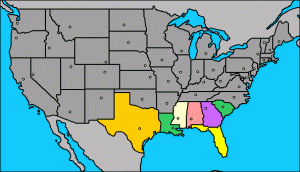
However, while Obama was improving on Kerry’s performance in most states — including such critical battlegrounds as Pennsylvania, Ohio, Michigan, Indiana and North Carolina — he did worse than Kerry among white voters in a handful of states — especially Alabama, Mississippi and Louisiana.

In Louisiana, Obama’s support among white voters was 10 percentage points below what Kerry received. That was the sharpest decline in white support for the Democratic ticket from 2004 to 2008 recorded in any state.

In other words, white voters in a select group of Deep South states proved especially resistant to Obama’s appeal, said David Bositis, an analyst at the Joint Center for Political and Economic Studies in Washington, who looked at the racial patterns in the 2008 exit polls. The exit polls, as in the past, were conducted by Edison/Mitofsky for a consortium of news agencies

“They are moving contrary to the rest of the country,” said Bositis, who said Obama’s race — and the historic pattern of racially polarized voting in these states — seemed the most obvious reason. How else, he said, to explain how Kerry, a quintessential East Coast liberal, did better than Obama with white voters in those states on his way to losing the presidency, than Obama did on his way to winning it?

Nationally, Obama won 43 percent of the white vote: 46 percent of white women and 41 percent of white men. He ran 12 percentage points behind Republican John McCain with white voters.

That’s the same percentage gap by which Gore trailed George W. Bush in the virtual dead-heat election of 2000, but it’s five points smaller than the Democrats’ deficit four years ago.

Obama built his margin by increasing the turnout and percentage of the African-American vote and dramatically improving the party’s performance with Hispanic voters. Obama also did especially well with younger and more-educated voters.

But according to demographer William Frey of the Brookings Institution in Washington, none of that diminishes how important it was for Obama to shave some points off the usual Republican advantage with white voters. And, Frey said, Obama’s big gains were among white men — usually the toughest constituency for Democrats — where he narrowed the Democratic deficit by nine percentage points.

“A lot of Obama’s demographic gains were among Hispanics, young people, the college-educated, but there is also this big chunk of white men who are almost always very reliably Republican,” Frey said. “To some degree they went to him this time — not because of any transformational change, but because of the economy.”

Charles Gallagher, a sociologist at La Salle University in Philadelphia who has studied white racial attitudes, seconded Frey’s assessment.

“What did it take for white America to want to vote for a black man? If there had not been this collapse of the economy, there would have been no Barack Obama mandate,” Gallagher said. “Class trumped race.”

White support in N.O.

Except perhaps, Frey said, in the Deep South states where Obama fared so poorly. Those states, Frey said, remain the most culturally Southern and demographically unchanged.

Frey said that 57 percent of all eligible voters in Louisiana and 60 percent in Alabama are Southern-born white people. In North Carolina, the percentage is only a little more than half, and in Virginia, Georgia and Florida, it’s well below half.

Obama won North Carolina with 35 percent of the white vote. He won Virginia with 39 percent of the white vote. And he won Florida with 42 percent of the white vote. He lost Georgia with 23 percent of the white vote.

Meanwhile, in every state with a large enough black population to create an adequate sample for exit polling, Obama’s black support was above 90 percent, often in the high 90s. In Alabama and Mississippi, Obama won 98 percent of the black vote; in Louisiana, he won 94 percent.

In Orleans Parish, according to a precinct analysis by University of New Orleans political scientist Edward Chervenak, white voters behaved very differently than white voters in the rest of the state.

According to the national exit polls, Obama won 14 percent of the white vote in Louisiana — 10 percentage points less than Kerry won in 2004 — and a lower percentage than in any state except Alabama, where Obama carried 10 percent of the white vote, and Mississippi, where he won 11 percent.

But Chervenak found that even though Kerry lost the whitest precincts in Orleans Parish in 2004 by three percentage points, Obama won those same precincts by a sliver of a percent.

Chervenak said the outcome comported with his own yard-sign observations.

Even in predominantly white neighborhoods, he said, “I saw far more Obama signs than McCain signs.”

Lower appeal elsewhere

Outside New Orleans, the white vote in Louisiana took on very different contours.

“Once you get above I-12, voters are just culturally conservative Christians who just have a natural affinity for the Republican Party,” Chervenak said. And, he said, “certainly race is a consideration. The fact is that a liberal African-American candidate is just not attractive to a large number of white voters in Louisiana.”

And unlike the results in many states, younger white voters in Louisiana, Mississippi and Alabama were hardly more likely to vote for Obama than older white voters.

By contrast, in North Carolina, Obama won 35 percent of the white vote overall, but 56 percent of white voters age 18 to 29. Similarly, in Indiana, he won 45 percent of the white vote and 57 percent of younger white voters.

Steve Suitts, vice president of the Atlanta-based Southern Education Foundation, said Tuesday’s results reveal again “how distinct the South is from the nation as a whole in racial voting.”

“We’re just maybe a few generations behind the rest of the country in understanding what (the Rev. Martin Luther) King told us about it’s not the color of your skin, but the content of your character,” said Suitts, who supported Obama.

Jonathan Tilove can be reached at jtilove@timespicayune.com or 202.383.7827.