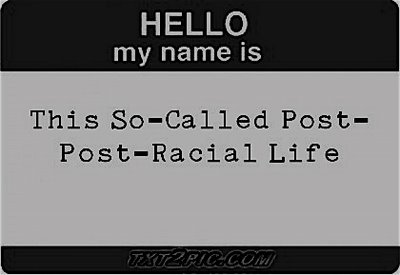
The movie industry really has me, Roschelle, second guessing this post racial era we’ve been living in since the last presidential election. Hollywood. The industry is viewed by many as the most progressively liberal set of folks (producers, directors, movie stars, etc.) you ever want to meet. But they are not post-racial enough.
What do Robert DeNiro, Ron Perlman, Tyne Daly, Cuba Gooding, Jr., Justin Chambers, George Lucas, Halle Berry, Sidney Poitier, James Earl Jones, and Alfre Woodard all have in common? All these Hollywood heavy hitters have husbands/wives/significant others to someone of a different race than their own.
I’ll use the black white dichotomy for this argument. Although, the same applies regarding other races and ethnic groups.
You see the thing is out of every actor or actress I mentioned with the exception of Halle Berry none of these stars have been in a role that would have their love interest, mate or spouse someone of another race.
Sure Sidney Poitier ruffled a few feathers in Guess Who’s Coming to Dinner. It was too much for many people to take in. Taboo. Unthinkable. And I guess that still applies today.
I certainly consider myself a movie buff. So, if my knowledge of movies is too limited and I’ve overlooked a blockbuster that depicted an interracial relationship worthy of mention please let me know. I hardly think Billy Bob banging Halle or Denzel with his part time lover in Training Day (oh, how I hated that movie) make the grade.
I’m not asking to be subjected to another typical racially charged plot. The interracial couple and all the challenges they face in a society that’s, for the most part, completely unaccepting of their relationship and spend the next 120 minutes of the movie making their lives miserable. That’s just more of the same. And with all due respect, we’re past all that stuff anyway. This is post racial America!
It’s as if Hollywood frowns on this reality as much as some of us. Harrison Ford, Brad Pitt, Anthony Hopkins could never come home to a woman of color and sit around the dinner table with their biracial children, get a good night’s sleep and wake the next morning to begin a family vacation that ends in disaster…or a wholesome made for TV movie about family life in the Midwest…or be the parents of the next guy who battles the Decepticons along with the Transformers.
Gabrielle Union, Lynn Whitfield, Thandie Newton, and Cicely Tyson would never be viewed as authentic as they kissed their white mate good bye as he went off to foil some terrorist plot, pull off a big jewelry heist, coach a bunch of misfits into the winniest team in high school football history or save the planet from aliens!
I understand that movies have to be seen and gross mega bucks to be considered blockbusters or worthy of the little gold statue by the Academy. Is that the problem? Are the execs fearful that releasing these types of movies might land them in the soup line?
Life isn’t cookie cutter. Love isn’t monochromatic nor are those we choose to love. Black people love white people and brown people love yellow people and yellow people love red people.
The entertainment industry owe it to us to be true to the ideology of mixing. Maybe even help make the idea of interracial relationships less foreign by changing the humdrum family dynamics found in just about every movie I’ve ever seen. Or am I being unrealistic?