UN condemns armed attacks on Main Supply Road of CAR

The United Nations peacekeeping operation in the Central African Republic (CAR) today condemned a recent series of armed attacks perpetrated by rebel elements.

“The United Nations Multidimensional Integrated Stabilization Mission in the Central African Republic (MINUSCA) strongly condemns the marked increase of armed attacks on the Main Supply Road 1 (MSR1) attributable to members of the rebel group Front démocratique du peuple centrafricain (FDPC),” said a press release issued today.

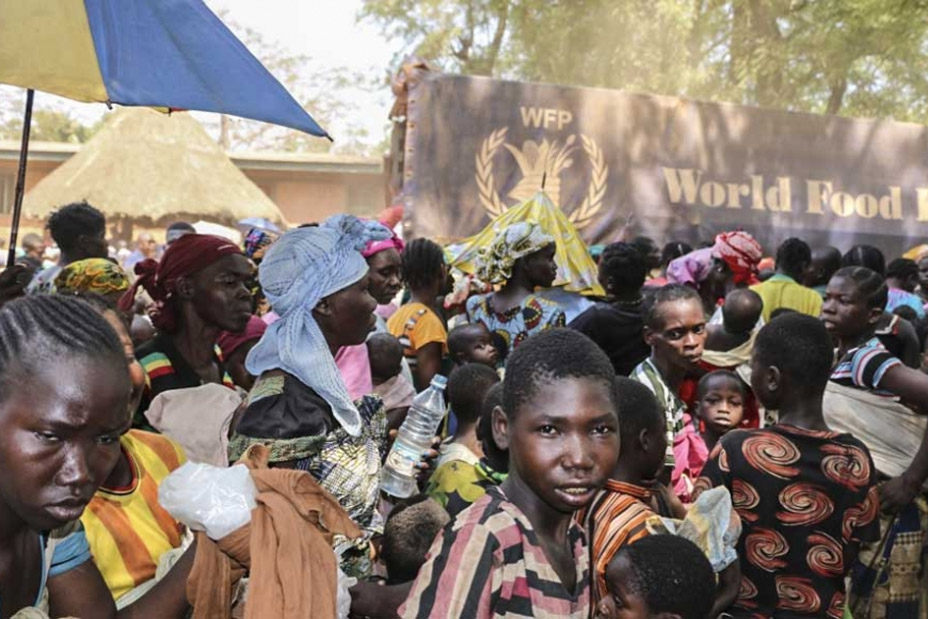
The latest incident took place over the weekend when gun shots were fired against a convoy with World Food Programme (WFP) supplies, escorted by MINUSCA peacekeepers, in the North-Western part of the country.

The driver was fatally wounded after being shot by three times in the chest and his truck shoved on the side, causing serious injuries to other passengers.

“This violence goes against the current momentum aimed at peace and national reconciliation following the conclusions and recommendations of the Bangui Forum and of the agreement signed between the government and armed groups on the cessation of hostilities and on disarmament,” underlines the Mission.

MINUSCA added that it will reinforce the “robust measures” aimed at raising the level of security on this vital route that supplies the Central African Republic.

More than two years of civil war and sectarian violence have displaced thousands of people in CAR amid ongoing clashes between the mainly Muslim Séléka alliance and anti-Balaka militia, which are mostly Christian. The UN estimates that some 450,000 people remain displaced inside the country while thousands of others have sought asylum across the borders. – UN News Centre

Cannibal in Central African Republic eats his enemy’s leg

mcentafrThe BBC reports that “a man who ate another man’s flesh in the Central African Republic has told the broadcaster that he was seeking ‘revenge’ for the murder of family members”.

The man, who calls himself “Mad Dog”, was in a Christian mob who attacked a Muslim in the capital Bangui.

He said he had been “angry” because Muslims killed his pregnant wife, his-sister-in law and her baby.

At least 1,000 people have been killed since violence broke out in the Christian-majority country in December.

Tens of thousands have also been forced to flee their homes in the sectarian conflict.

‘Magic’ powers

“Mad Dog” told the BBC’s Paul Wood he had seen his victim sitting on a minibus and decided to follow him.

More and more people joined him until he was at the head of a mob of some 20 youths, he said.

They forced the bus driver to stop and dragged the Muslim man out on the street, where he was beaten and stabbed before being set on fire.

Footage of the incident shows “Mad Dog” eating the man’s leg.

According to eyewitnesses, no-one tried to intervene.

Some people in the Central African Republic wear amulets containing the flesh of men they have killed because they believe it makes them invincible. – extract from bbc.co.uk

Fighting between Muslims and Christians leaves 3 dead in Central African Republic

Internally displaced refugees in the Central African Republic, being cared for by a Western aid agency

Fighting brorke out between Muslims and Christians in Central African Republic’s capital, causing the deaths of at least three people on Wednesday. According to reports, angry residents threw grenades and set dwellings alight.

French and African troops sent to the country have struggled to stop the internecine violence between Muslim Seleka rebels, who seized power in March, and Christian self-defence militia. The fighting killed more than 1 000 people in December.

Residents of Bangui said that Seleka militiamen in civilian clothes threw grenades at Christian homes in a northern district of the city, burning them to the ground. Christian youths then launched reprisal attacks, torching nearby Muslim dwellings.

“The Muslims came and set fire to the houses … everyone was affected,” said Aristide Yenga, resident of the Ngou Simon neighbourhood in the north of the capital Bangui.

“This morning they began shooting and when we heard that we left for the larger (displaced persons’) camps.”

The corpse of a Seleka fighter with his left hand cut off and missing lay in the middle of a large dirt avenue following the attacks. A resident of the neighbourhood who asked not to be named said that two other Muslims had been killed there during the night.

No peacekeepers were present, although a French helicopter flew overhead, according to eyewitness reports.

Despite the ongoing faction fighting, interim President Michel Djotodia called for reconciliation during a New Year’s speech on Wednesday, suggesting everyone should return to their homes.

In the meantime, the president of the neighbouring Republic of Congo, Denis Sassou-Nguesso, warned of the “tragic and fatal” consequences for the region of CAR’s descent into civil war.

“It is imperative that we avoid such a disastrous outcome,” he said in a speech on Wednesday.

A doctor of the French NGO, Médécins Sans Frontières, at Bangui airport where it provides refuge for over 100,000 displaced people said it had received around 15 injured and two dead.

“Among the two dead was an adolescent of 12 years with a gash on his skull,” said MSF’s Gaetan Adouaka.

It was not clear if those killed were the Muslims from the northern district. The previous day a four-month-old baby died from a gunshot wound, the charity said in an earlier statement.

Aid workers say they are battling to provide for the country’s more than 800,000 displaced people, most of whom are now living in crowded refugee camps, because the constant violence is disrupting supplies.

Others have fled via boats across the Congo River or by air to other countries.

The Central African Republic is one of Africa’s poorest states despite enjoying abundant mineral resources.  SInce independence from France in 1960, five coups have taken place. – News agencies and praag

Central African Republic ‘on brink of genocide’

The United States is calling for deeper international involvement to halt violence in Central African Republic, amid growing alarm that the impoverished nation is on the brink of a possible genocide.

US Secretary of State John Kerry on Wednesday unveiled $40 million in new funding to help the country, with the bulk of the aid going to support the African Union-led peacekeeping mission known as MISCA.

“It’s a very, very serious situation right now,” a top State Department official told AFP, asking not to be named.

“It will require extensive, continued and deepened international commitment working with the CAR government to address the humanitarian crisis, to strength MISCA so that it can carry out its security mission, civil protection mission and lay the ground work for” elections set to take place in February 2015, the official added.

In the latest in a long line of rebellions and coups, the Seleka rebel coalition ousted president Francois Bozize in March and put the CAR’s first Muslim leader, President Michel Djotodia, in power.

But the move has unleashed unprecedented sectarian bloodshed, with fighting between the mainly Muslim former rebels who seized power in March and militia groups set up to protect Christian communities, which make up about 80 percent of the population.

The unrest has displaced almost 400,000 of the country’s estimated 4.6 million people, left 2.3 million in need of assistance and some 1.1 million scrambling to find food, according to the latest UN figures.

central-african-republicFrance’s Foreign Minister Laurent Fabius said Thursday that the country was “on the verge of genocide,” while a Kerry deputy told US lawmakers this week that it was in a “pre-genocidal” phase.

“The needs are so extensive, it’s really hard to say one is greater than the others,” the US official said in an interview.

“One area there’s going to be a serious need in over the coming year is in food aid, and that’s because the population has been so terrorized and traumatized by what’s happening in the country, that it’s had a serious impact on the planting season and necessarily that’s going to cause greater food insecurity in the months ahead.”

The US is supporting moves at the United Nations to boost an AU-led force to some 3,652 troops made up of soldiers from Chad, Cameroon, Gabon, Congo-Brazzaville and Equatorial Guinea with a contribution also expected from Burundi.

“The mandate is excessively broad given the very extensive challenge in front of them,” the official said, stressing that it was felt the AU force would be better placed to restore order and stability than a UN peacekeeping mission.

Apart from being quicker to set up and equip, “often the UN missions are more peacekeeping and this is not a peacekeeping situation, this is more enforcement,” he said.

The UN Security Council plans to vote in early December on a resolution to allow CAR’s neighbors, the African Union and France to intervene in the sprawling nation.

French President Francois Hollande said Paris was planning to “significantly increase” its contingent in the country, where it already has 400 soldiers in place to help protect the airport in Bangui and French nationals. – AFP

CAR welcomes SA’s involvement

South Africa’s foreign policy regarding the embattled Central African Republic (CAR) remains unchanged, President Jacob Zuma said on Sunday.

A meeting clarified a number of issues, Zuma said after hosting a top-level CAR delegation, led by Prime Minister Nicolas Tiangaye at the Mahlamba Ndlopfu presidential residence in Pretoria.


“We received the prime minister of the CAR as an envoy from the president currently leading that country. Michel Djotodia (Seleka’s rebel leader) had indicated that he would want to send a delegation to come and see me,” said Zuma.


“We are very happy with the message brought by Tiangaye. We have had a very good discussion with the prime minister. We think it (the Pretoria meeting) has helped to clarify certain things and also to deal with the relations between the two countries.”


Zuma said South Africa recognised the CAR’s transitional government, based on the January 2013 agreement signed in Libreville, Gabon.


Part of the transitional road map endorsed by the regional Economic Community of Central African States bloc was the formation of a national transitional council. That council subsequently elected Djotodia as interim president of the country.


“Once the forces that were fighting President Bozize took over, the leader said the constitution was suspended, as well as Parliament and the judiciary. That is the government we said we are not going to recognise, with everybody else,” Zuma said.


“There was a regional meeting which changed the status of the (Djotodia) authority. We did not say there was anyone who could not be elected to the transitional authority. The Libreville agreement, which is legal, is what is operating now.”


Bozize appointed Tiangaye, a widely respected lawyer and human rights activist, prime minister in January following the Libreville ceasefire agreement.


He kept his job when the Seleka rebels made the final push for Bangui, forcing Francois Bozize into exile at the end of March.


Tiangaye is part of the transitional government meant to prepare for elections within 18 months.


On Sunday, Tiangaye said his trip sought to cement bilateral relations between South Africa and his country. Speaking in French, Tiangaye offered condolences for the deaths of 13 South African soldiers on March 23.


“The message I brought is a message of calm and peace. We would like to take that unfortunate incident as a page of history that we will now turn to open a new one,” he said through a translator.


Tiangaye said it was regrettable there had been “a personalised relationship” between South Africa and Bozize.


“We regret that the past relations with the former president (Bozize) were more personalised, and we are now aiming at improving these relations to be more at a state level,” he said.


“It was not the fault of President Zuma or the government of South Africa. It was because President Bozize was hiding the nature of the relationship between the two countries.”


He said his visit to Pretoria, with a senior delegation from the strife-torn country, would mark the beginning of a new phase in the relationship.

“We are convinced we have now entered a new chapter and that the relationship will be more transparent to both countries. This is the message that I transmitted to President Zuma and the people of South Africa on behalf of the people of the CAR,” he said. – SAPA