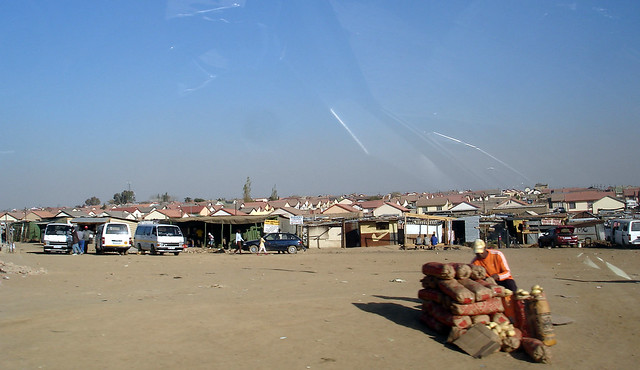
Africa’s fast-growing cities are failing

Over the next 16 years, all of the world’s 10 fastest growing cities are going to be in Africa. If this growth is a process of people voting with their feet, as last year’s winner of the Nobel Prize in Economics Paul Romer once put it, these cities are winning.

Yet urbanisation in many developing countries, particularly in sub-Saharan Africa, is not delivering the benefits of people and firms clustering together. Historically, cities have been the drivers of productivity and engines of economic growth. One key factor preventing this potential from being unlocked is how cities are governed. It matters who makes the decisions and how they do it. It also matters how the decisions are subsequently implemented.

Cross-city experiences, which we detail in our newest policy paper, have shown that tangible policy options which target underlying institutions can lead to better governance outcomes.

We highlight three elements of the institutions of urban governance: allocation of responsibility, capacity, and legitimacy.

Deciding who decides

First, the most effectively run cities have institutions with clearly defined mandates. Take Cairo. The city has 18 government entities and four parastatal agencies, leading to overlapping and missed mandates. This fragmentation has affected the overall efficiency and operation of Cairo’s transportation system, which relies heavily on private cars and taxis. The result has been widespread congestion. Many trips take more than double the time they would if the traffic flowed freely.

Clearly defined responsibilities and mandates can be achieved through several approaches. The most powerful way of dealing with fragmentation is by creating a single agency responsible for a service or policy decision. To overcome fragmentation, the government of Lagos in Nigeria created an agency to coordinate the work of all transport-related entities. The Lagos Metropolitan Area Transport Authority also awards concessions and levies transport user fees. And it manages major arterial roads throughout the metropolitan region.

This institutional change has improved the clarity of functions in Lagos, paving the way for tangible improvements the city’s transportation. For example, the transport authority has worked with the World Bank to improve the city’s bus service. This included the implementation of a pilot bus franchise scheme along the Iyana-Ipaja-Ikotun corridor, which carries more than 100 000 people every day.

However, the creation of a single entity may not always be feasible or desirable. Softer governance arrangements, such as coordination committees, may sometimes be required. These committees can be temporary, formed and run only when required and subsequently disbanded. Or they can be more permanent. Medellin in Colombia has a committee responsible for integrated housing planning. It brings together the heads of the city’s planning, housing, environmental and public works departments to streamline policy on housing.

Building capacity

Second, municipal governments need the capacity to implement decisions. Again, larger institutional reforms can support this. Revenue reform in Kampala, the Ugandan capital, is a good example.

The Kampala Capital City Authority established a directorate to collect revenue. It was set up separately from the Directorate of Finance. Through this, the city authority was able to dedicate sufficient human and financial resources to revenue collection. As a result, it increased its own-source revenue by nearly 200% in four years.

Other options that may be easier to implement than full institutional reform include establishing strong internal coordination mechanisms to manage programmes and projects. For example, in 2013 Baghdad’s Deputy Mayor created a steering committee to improve the city’s sewerage system. The committee brought together various senior city staff and helped improve the timeliness and overall streamlining of decision making. This contributed towards significant improvements to the city’s sewerage network, including a new competitive bidding system and higher citizen satisfaction.

Adequate legitimacy

Thirdly, effectively making and implementing decisions requires sufficient legitimacy. Legitimacy can be derived from predetermined procedures, like elections. But elections can be difficult to organise and can be very costly.

There are other ways of building legitimacy. These include participatory budgeting. This has been used extensively by municipalities in Brazil. After a series of consultation processes with citizens, the final municipal budget is determined based on priority rankings of projects, considering their technical and financial feasibility. The city isn’t legally bound to invest in the projects selected. Nevertheless the mechanism creates an established channel for identifying priority projects for people. And evidence shows that participatory budgeting does affect municipal spending patterns.

Simply improving public communication can also be a useful and potentially more cost-effective option for building local legitimacy. It can generate public buy-in as well as acting as a mechanism for the municipal government to receive feedback. It can also be a powerful way to increase compliance. For example, Lagos increased tax compliance on business-related taxes by working on its direct relationships and improved communication with the city’s key private sector associations. This led to an increase in business-related taxes. These rose from an estimated 30-40% in 2005 to over 80% by 2015 among large companies.

Urbanisation provides a important opportunity for unlocking economic growth. The challenge for urban leaders is how to effectively govern rapidly growing cities. This requires that critical decisions are made and implemented in a timely manner, and are supported by the majority of citizens.

Shahrukh Wani (@ShahrukhWani) contributed to this article. He is an economist in IGC’s Cities that Work team, based at the Blavatnik School of Government.The Conversation

Astrid R.N. Haas, Senior Country Economist (Cities) and Manager of Cities that Work, International Growth Centre, with assistance from Shahrukh Wani, who is an economist in IGC’s Cities that Work team, based at the Blavatnik School of Government.The Conversation

This article is republished from The Conversation under a Creative Commons license. Read the original article.

Russia, Egypt discuss Gaza

Russian President Vladimir Putin is due to meet with his Egyptian counterpart, Abdel Fattah Sisi, in the Russian resort city of Sochi to discuss a wide range of political and economic issues, including the ongoing Gaza conflict, Egypt’s food deliveries to Russia and Russian military exports to Egypt, according to the Kremlin.

“The discussion will address urgent matters, linked to the development of Russian-Egyptian relations in various spheres,” a Kremlin official said.

The leaders are expected to study in great depth a wide range of bilateral economic issues, such as the creation of a free trade zone between Egypt and the Russia-led Customs Union, which also includes Belarus and Kazakhstan.

“The last year’s trade turnover was roughly at $3 billion. In the first half of this year, [this figure] almost doubled [some $2.5 billion],” the Kremlin said.

Following its embargo on agricultural products from the United States and the European Union, Russia has been looking for alternatives, and Egypt said it was willing to boost its fruits and vegetables exports. In return, Russia could profit from Egypt’s high demand for wheat.

Moscow and Cairo are also discussing deliveries of Russia’s high-tech military products, including 24 Mikoyan MiG-29 fighter jets, as well as its Kornet anti-tank missile systems, attack helicopters Kamov Ka-25, Mil Mi-28 and Mi-25.

Russia and Egypt, which is brokering an end to the ongoing Gaza armed conflict, have been keeping in touch on the situation in this highly volatile region, with the Russian president praising Cairo’s efforts toward a long-term armistice between the Israeli and the Palestinians.

Last week, President Putin in a phone conversation with Abdel Sisi lauded Egypt for mediating negotiations between the warring parties. Both leaders agreed to “encourage a nationwide dialogue, aimed at settling contentious issues through political means,” according to the Kremlin.

Source: RIA Novosti

At least 14 dead in Egyptian car bomb explosion

Scene of the explosion at Mansoura, north of Cairo

At least 14 people are believed to have died in a large explosion that destroyed a police headquarters in a Nile Delta city north of Cairo early Tuesday morning, according to the state news agency and a security official. Some 200 people were injured in the blast.

The Egyptian government accused the Muslim Brotherhood of orchestrating the attack. Cabinet spokesman Sherief Shawki said Prime Minister Hazem el-Beblawi had officially declared the group a terrorist organisation.

The Muslim Brotherhood, however, condemned the attack in an emailed statement from the group’s London press office released hours after the explosion.

“The Muslim Brotherhood condemns in the strongest possible terms the attack on the police headquarters in Mansoura (region),” the statement said.

“The Muslim Brotherhood considers this act as a direct attack on the unity of the Egyptian people and demands an enquiry forthwith so that the perpetrators of this crime may be brought to justice.”

Among the injured from the blast at Daqahliya security headquarters in the Nile Delta province of Mansour, was the police chief of the province General Sami al-Meih.

Most of those killed were policemen inside the security headquarters. Many bodies are still believed to be buried under the debris and the death toll is expected to rise, the official said.

An initial investigation indicated that the explosion was the result of a car bomb.

The attack came a day after an Al-Qaida-inspired group called on police and army to desert or face death at the hands of its fighters.

Ansar Beit al-Maqdis, or the Champions of Jerusalem, said it considers Egyptian troops to be infidels because they answer to the secular-leaning, military-backed government.

The group and others based in the Sinai have been blamed for a surge of attacks against security forces since the July coup that toppled the country’s Islamist president, Mohammed Morsi. In response, Egypt’s armed forces launched a military offensive against militants in the Northern Sinai province in August.

Speaking at a public forum on Monday, military spokesman Ahmed Mohammed Ali said so far the operations have resulted in the killing of 184 militants and the arrest of 803 others. He said about 25 percent of those killed and arrested are foreign fighters, but didn’t provide further details.

Ansar Beit al-Maqdis is believed to have ties with Palestinian militants in the Gaza Strip, and officials have said other foreign militants have found refuge in Sinai during the ongoing turmoil. – AP, Reuters, dpa

Egyptian Islamists attack churches

A burnt-out Coptic Church in Egypt

by Hamza Hendawi

After torching a Franciscan school, Islamists paraded three nuns on the streets like “prisoners of war” before a Muslim woman offered them refuge. Two other women working at the school were sexually harassed and abused as they fought their way through a mob.

In the four days since security forces cleared two sit-in camps by supporters of Egypt’s ousted president, Islamists have attacked dozens of Coptic churches along with homes and businesses owned by the Christian minority. The campaign of intimidation appears to be a warning to Christians outside Cairo to stand down from political activism.

Christians have long suffered from discrimination and violence in Muslim majority Egypt, where they make up 10 percent of the 90 million population. Attacks increased after the Islamists rose to power in the wake of the 2011 Arab Spring uprising that drove Hosni Mubarak from power, emboldening extremists. But Christians have come further under fire since President Mohammed Morsi was ousted on July 3, sparking a wave of Islamist anger led by Morsi’s Muslim Brotherhood.

Nearly 40 churches have been looted and torched, while 23 others have been attacked and heavily damaged since Wednesday, when chaos erupted after Egypt’s military-backed interim administration moved in to clear two camps packed with protesters calling for Morsi’s reinstatement, killing scores of protesters and sparking deadly clashes nationwide.

One of the world’s oldest Christian communities has generally kept a low-profile, but has become more politically active since Mubarak was ousted and Christians sought to ensure fair treatment in the aftermath.

Many Morsi supporters say Christians played a disproportionately large role in the days of mass rallies, with millions demanding that he step down ahead of the coup.

Despite the violence, Egypt’s Coptic Christian church renewed its commitment to the new political order on Friday, saying in a statement that it stood by the army and the police in their fight against “the armed violent groups and black terrorism.”

While the Christians of Egypt have endured attacks by extremists, they have drawn closer to moderate Muslims in some places, in a rare show of solidarity.

Hundreds from both communities thronged two monasteries in the province of Bani Suef south of Cairo to thwart what they had expected to be imminent attacks on Saturday, local activist Girgis Waheeb said. Activists reported similar incidents elsewhere in regions south of Cairo, but not enough to provide effective protection of churches and monasteries.

Waheeb, other activists and victims of the latest wave of attacks blame the police as much as hard-line Islamists for what happened. The attacks, they said, coincided with assaults on police stations in provinces like Bani Suef and Minya, leaving most police pinned down to defend their stations or reinforcing others rather than rushing to the rescue of Christians under attack.

Another Christian activist, Ezzat Ibrahim of Minya, a province also south of Cairo where Christians make up around 35 percent of the population, said police have melted away from seven of the region’s nine districts, leaving the extremists to act with near impunity.

Two Christians have been killed since Wednesday, including a taxi driver who strayed into a protest by Morsi supporters in Alexandria and another man who was shot to death by Islamists in the southern province of Sohag, according to security officials, who spoke on condition of anonymity because they weren’t authorized to release the information.

The attacks served as a reminder that while on the defensive in Cairo, Islamists maintain influence and the ability to stage violence in provincial strongholds with a large minority of Christians.

Gamaa Islamiya, the hard-line Islamist group that wields considerable influence in provinces south of Cairo, denied any link to the attacks. The Muslim Brotherhood, which has led the defiant protest against Morsi’s ouster, has condemned the attacks, spokesman Mourad Ali said.

Sister Manal is the principal of the Franciscan school in Bani Suef. She was having breakfast with two visiting nuns when news broke of the clearance of the two sit-in camps by police, killing hundreds. In an ordeal that lasted about six hours, she, sisters Abeer and Demiana and a handful of school employees saw a mob break into the school through the wall and windows, loot its contents, knock off the cross on the street gate and replace it with a black banner resembling the flag of al-Qaida.

By the time the Islamists ordered them out, fire was raging at every corner of the 115-year-old main building and two recent additions. Money saved for a new school was gone, said Manal, and every computer, projector, desk and chair was hauled away. Frantic SOS calls to the police, including senior officers with children at the school, produced promises of quick response but no one came.

The Islamists gave her just enough time to grab some clothes.

In an hourlong telephone interview with The Associated Press, Manal, 47, recounted her ordeal while trapped at the school with others as the fire raged in the ground floor and a battle between police and Islamists went on out on the street. At times she was overwhelmed by the toxic fumes from the fire in the library or the whiffs of tears gas used by the police outside.

Sister Manal recalled being told a week earlier by the policeman father of one pupil that her school was targeted by hard-line Islamists convinced that it was giving an inappropriate education to Muslim children. She paid no attention, comfortable in the belief that a school that had an equal number of Muslim and Christian pupils could not be targeted by Muslim extremists. She was wrong.

The school has a high-profile location. It is across the road from the main railway station and adjacent to a busy bus terminal that in recent weeks attracted a large number of Islamists headed to Cairo to join the larger of two sit-in camps by Morsi’s supporters. The area of the school is also in one of Bani Suef’s main bastions of Islamists from Morsi’s Muslim Brotherhood and ultraconservative Salafis.

“We are nuns. We rely on God and the angels to protect us,” she said. “At the end, they paraded us like prisoners of war and hurled abuse at us as they led us from one alley to another without telling us where they were taking us,” she said. A Muslim woman who once taught at the school spotted Manal and the two other nuns as they walked past her home, attracting a crowd of curious onlookers.

“I remembered her, her name is Saadiyah. She offered to take us in and said she can protect us since her son-in-law was a policeman. We accepted her offer,” she said. Two Christian women employed by the school, siblings Wardah and Bedour, had to fight their way out of the mob, while groped, hit and insulted by the extremists. “I looked at that and it was very nasty,” said Manal.

The incident at the Franciscan school was repeated at Minya where a Catholic school was razed to the ground by an arson attack and a Christian orphanage was also torched.

“I am terrified and unable to focus,” said Boulos Fahmy, the pastor of a Catholic church a short distance away from Manal’s school. “I am expecting an attack on my church any time now,” he said on Saturday.

Bishoy Alfons Naguib, a 33-year-old businessman from Minya, has a similarly harrowing story.

His home supplies store on a main commercial street in the provincial capital, also called Minya, was torched this week and the flames consumed everything inside.

“A neighbor called me and said the store was on fire. When I arrived, three extremists with knifes approached me menacingly when they realized I was the owner,” recounted Naguib. His father and brother pleaded with the men to spare him. Luckily, he said, someone shouted that a Christian boy was filming the proceedings using his cell phone, so the crowd rushed toward the boy shouting “Nusrani, Nusrani,” the Quranic word for Christians which has become a derogatory way of referring to them in today’s Egypt.

Naguib ran up a nearby building where he has an apartment and locked himself in. After waiting there for a while, he left the apartment, ran up to the roof and jumped to the one next door building from which he exited at a safe distance from the crowd.

“On our Mustafa Fahmy street, the Islamists had earlier painted a red X on Muslim stores and a black X on Christian stores,” he said. “You can be sure that the ones with a red X are intact.”

In Fayoum, an oasis province southwest of Cairo, Islamists looted and torched five churches, according to Bishop Ibram, the local head of the Coptic Orthodox church, by far the largest of Egypt’s Christian denominations. He said he had instructed Christians and clerics alike not to try to resist the mobs of Islamists, fearing any loss of life.

“The looters were so diligent that they came back to one of the five churches they had ransacked to see if they can get more,” he told the AP. “They were loading our chairs and benches on trucks and when they had no space for more, they destroyed them.” – AP

Thousands march in Morocco in support of Egyptian Islamists

Protest in Rabat
Protest in Rabat

Around 10,000 people took part in a demonstration in the Moroccan capital, Rabat, on Sunday in support of Islamists in Egypt locked in a deadly showdown with security forces.

The crowd carried banners condemning the police operations that have cost hundreds of lives among demonstrators demanding the reinstatement of Egypt’s army-ousted Islamist president Mohamed Morsi and posters showing the dead in makeshift morgues in Cairo.

“Soldiers should be carrying out their duty of protecting the nation’s territory instead of killing their own people,” said Driss Leghroudi, a 33-year-old academic.

“History is repeating itself. It happened in Algeria in 1992 (with its civil war) … It’s Saudi Arabia which is behind it” in Egypt, he charged, as the crowd chanted for the expulsion of the Egyptian ambassador to Morocco.

Morocco initially adopted a neutral stand after last month’s toppling of Morsi but the authorities in Rabat have since expressed alarm over the carnage resulting from a security crackdown to remove Morsi’s supporters from the streets.

More than 750 people have been killed in violence across Egypt since Wednesday, official figures show. – AFP

Egypt’s Christians terrified after church attacks

Coptic Christians in Egypt

Egypt’s Christians are living in fear after a string of attacks against churches, businesses and homes they say were carried out by angry supporters of ousted Islamist president Mohamed Morsi.

As police dispersed Morsi supporters from two Cairo squares on Wednesday, attackers torched churches across the country in an apparent response.

“People are terrified; no one dares leave home,” Marco, a 27-year-old engineer, told AFP by phone from the central city of Sohag.

The city has become a ghost town, he said, describing an atmosphere of terror where attackers “know where the Copts live” and torched several churches before turning to homes.

The Maspero Youth Union, a Coptic Christian youth movement, denounced what it called a “retaliation war” against the religious minority, which makes up around 10 percent of Egypt’s population.

The group accused Morsi supporters of targeting them in response to Coptic Pope Tawadros II’s support for the July 3 coup that ousted the Islamist leader.

The Egyptian Initiative for Personal Rights (EIPR), a local NGO, says at least 25 churches were torched on Wednesday and Thursday, and that attackers also targeted Christian schools, shops and homes across all 27 provinces.

Iraq’s Chaldean Christian archbishop Louis Sako told AFP that one of his community’s churches was among those targeted on Wednesday.

“This is a real disaster,” he said, saying the region is a “dangerous volcano.”

For Marco, the attacks against the churches were not a surprise –Christian religious buildings have been targeted before.

It was the torching of Coptic Christian homes and the looting of their businesses that shocked him.

The attackers were “people chanting pro-Morsi slogans and wearing headbands with the phrase ‘Muslim Brotherhood’ written on them,” he said.

The Maspero Youth Union, which documented abuses against Christians during Morsi’s one year in office, also laid blame for the attacks on supporters of the ousted leader.

“Maspero Youth Union condemns the terrorism Copts are facing now in Egypt after supporters of ousted president Mohamed Morsi waged a retaliation war against Copts and their churches, homes and businesses,” the group said.

“Copts were attacked in nine governorates, causing panic, losses and destruction for no reason and no crimes they committed except being Christians.”

Morsi’s supporters have often accused Christians of supporting president Hosni Mubarak, who was ousted in Egypt’s 2011 uprising. Ironically, Christians were also targeted when Mubarak was in power.

On Thursday, the country’s interim army-installed government described attacks on Egypt’s Christians as a “red line” and pledged that authorities would “respond forcefully” to any new attack.

Shortly afterwards, the defence minister General Abdel Fattah al-Sisi, the army chief who led the coup, pledged that the army would pay for the rebuilding of the churches attacked on Wednesday.

On Thursday morning, interim prime minister Hazem Beblawi also announced he had met with Coptic Pope Tawadros II to express solidarity in the wake of the attacks.

And state news agency MENA reported that 80 Morsi loyalists had been arrested and turned over to military courts for their alleged involvement in torching churches in Suez province on Wednesday.

The Muslim Brotherhood had little to say on the issue, with spokesman Gehad el-Haddad suggesting the authorities were behind the violence.

“Military coup regime is resorting to instigating sectarian violence exactly as they did when Mubarak was about to fall,” he tweeted.

The government’s promises have so far failed to convince Christians and activists that authorities would prevent future attacks.

“The state must intervene to protect the population. Concrete action is needed after all the big speeches,” said Ishak Ibrahim, an EIPR researcher on religious issues.

He described a “discourse of hatred” against Christians throughout the country, more from the Salafists, the most conservative of Islamists, rather than members of the Muslim Brotherhood.

And he pointed out that most of the attacks had taken place outside the major cities, in areas where security presence is often minimal.

“Families who are too scared to go out to get supplies are waiting for something concrete,” added Karem, another resident of Sohag.

“Right now as we speak, attacks against Christians are continuing,” he said.

“No one is protecting us!” – AFP

Almost 280 dead after Egyptian police storm protestors

Egyptian protest
Egyptian protest

Egypt was under a tense state of emergency Thursday after security forces stormed the Cairo protest camps supporting ousted Islamist president Mohamed Morsi, in a bloody assault that sparked violence across the country which officials said claimed 278 lives.

The army-backed interim government imposed a month-long nationwide state of emergency, and curfews in Cairo and 13 other provinces after the violence on Wednesday.

Gory photographs and video images of the Cairo bloodbath dominated social media networks, as world powers called for restraint and condemned the show of force by security forces.

At least four churches were attacked, with Christian activists accusing Morsi loyalists of waging “a war of retaliation against Copts in Egypt”.

Hours after tear gas canisters first rained down on tents of protesters in the sprawling Rabaa al-Adawiya camp in eastern Cairo, an AFP correspondent counted at least 124 bodies in makeshift morgues there.

In a field hospital, its floors slippery with blood, doctors struggled to cope with the casualties, leaving the hopeless cases, even if still alive.

The health ministry said 235 civilians were killed in the Cairo crackdown and in subsequent clashes across Egypt. The interior ministry added that 43 security personnel had lost their lives.

Morsi’s Muslim Brotherhood spoke of 2,200 dead overall and more than 10,000 wounded.

Among those killed in Cairo was 17-year-old Asmaa al-Beltagui, daughter of wanted Muslim Brotherhood leader Mohammed al-Beltagui, a spokesman for Morsi’s movement said.

Britain’s Sky News said a veteran cameraman, Briton Mick Deane, was shot and killed while covering the assaults.

The violence prompted vice president and Nobel laureate Mohamed ElBaradei to resign, saying his conscience was troubled over the loss of life, “particularly as I believe it could have been avoided”.

“It has become too difficult to continue bearing responsibility for decisions I do not agree with and whose consequences I fear,” he said.

The state of emergency went into effect at 4:00 pm (1400 GMT) on Wednesday, with daily overnight curfews from 7:00 pm to 6:00 am.

The dramatic descent on the squares shortly after dawn came as a surprise to many. Security officials had originally spoken of gradually dispersing the sit-ins over several days.

Shortly after dawn on Wednesday, witnesses and an AFP correspondent said security forces fired tear gas before surging into Rabaa al-Adawiya, sparking pandemonium among the thousands of protesters who had set up the camp soon after Morsi was ousted in a military coup on July 3.

Men in gas masks rushed to grab each canister and dunk them in containers of water, as the main stage near the mosque of the camp blared Islamic anthems and protesters chanted “Allahu Akbar” (God is greatest).

Many Morsi supporters were given safe passage out of the camp, some flashing victory signs as they left through a security corridor.

A security official told AFP that hundreds of people were taking advantage of the safe passage offer, but that some diehards had stayed behind to fight on.

By Wednesday evening, a security official said Rabaa al-Adawiya was “totally under control”, adding: “There are no more clashes”.

In the smaller of the protest camps, at Al-Nahda square in central Cairo, police said they had control of the area after two hours.

Television footage showed flattened tents, as women and children flanked by police and army troops were led out of the square.

Dozens rounded up in the dispersal were shown sitting on the ground, handcuffed and surrounded by security forces.

Authorities later said calm had been restored across the country.

Use of force widely condemned

Europe’s leading powers, along with Iran, Qatar and Turkey, strongly denounced the use of force by the interim government.

The White House said Washington, which provides Egypt with $1.3 billion in annual military aid, “strongly condemns” the violence against the protesters and opposes the imposition of a state of emergency.

Interim prime minister Hazem al-Beblawi praised the police for their “self-restraint” and said the government remained committed to an army-drafted roadmap that calls for elections in 2014.

The Muslim Brotherhood urged Egyptians to take to the streets in their thousands to denounce the “massacre”.

“This is not an attempt to disperse, but a bloody attempt to crush all voices of opposition to the military coup,” Brotherhood spokesman Gehad al-Haddad said on Twitter.

Interior Minister Mohamed Ibrahim said no more protests would be tolerated.

The anger against the Islamist movement was evident as residents of several neighbourhoods clashed with Morsi loyalists.

Clashes also erupted between security forces and Morsi supporters in the northern provinces of Alexandria and Beheira, the canal provinces of Suez and Ismailiya, and the central provinces of Assiut and Menya.

In Alexandria, hundreds of angry Morsi supporters marched through the streets armed with wooden clubs chanting “Morsi is my president”.

An AFP reporter said they set fire to tyres and tore down pictures of army chief Abdel Fattah al-Sisi, who led the coup against Morsi.

It was a dramatic turn of events for the Muslim Brotherhood, who just over a year ago celebrated Morsi’s victory as Egypt’s first elected president.

His turbulent year in power, marred by political turmoil, deadly clashes and a crippling economic crisis, turned many against the Islamist movement, with millions taking to the streets on June 30 to call for his removal. – AFP

Egypt: Security forces move in

Army moves in
Army moves in

Security forces backed by bulldozers moved in on Wednesday on two huge protest camps set up in Cairo by supporters of Egypt’s ousted president Mohamed Morsi, launching a long-threatened crackdown that left dozens dead and injured.

The operation began shortly after dawn when security forces surrounded the sprawling Rabaa al-Adawiya camp in east Cairo and a similar one at Al-Nahda square, in the centre of the capital.

Witnesses and an AFP correspondent said police rained canisters of tear gas down onto tents before entering Rabaa al-Adawiya, sparking pandemonium among the thousands of protesters who set up the camp soon after Morsi was ousted by the army on 3 July.

Men in gas masks rushed to grab each canister and dunk them in containers of water, as the main stage near the mosque of the camp blared Islamic anthems and protesters chanted “Allahu Akbar” (God is greatest).

Clashes quickly erupted between protesters and security forces on one side of the camp, as automatic fire could be heard. It was not immediately clear who was doing the shooting.

Television footage showed injured people being carried to a makeshift medical centre as well as police dragging away protesters, who have defied numerous ultimatums to end their demonstrations.

Protest leaders wearing gas masks stood defiantly on a stage while crowds of people wearing face masks stood amid the swirling tear gas as bulldozers began dismantling the camp.

Egypt’s interior ministry mid-morning said security forces have “total control” over Al-Nahda Square, the smaller of the two camps.

“Police forces have managed to remove most of the tents in the square,” the ministry said.

A security official told AFP that dozens of Morsi supporters had been arrested with the help of residents of the area.

Television footage showed protesters who had been rounded up sitting in the ground handcuffed and surrounded by security forces.

Families, with their children, carrying plastic bags were seen being escorted out of the square by police.

Railway authorities announced that all trains had been grounded to prevent protesters from moving outside of Cairo and reassembling.

Morsi’s Muslim Brotherhood urged Egyptians to take to the streets in their thousands to denounce the “massacre”.

“This is not an attempt to disperse, but a bloody attempt to crush all voices of opposition to the military coup,” Brotherhood spokesperson Gehad al-Haddad said on Twitter.

The Rabaa al-Adawiya protest camp, where several Brotherhood leaders are staying, “is calling on Egyptians to take to the streets to stop the massacre,” Haddad said.

In a separate tweet, Haddad said at least 250 people were killed and over 5000 injured in the crackdown. There was no immediate independent confirmation of the tolls.

An AFP correspondent counted 17 bodies at a makeshift morgue at Rabaa al-Adawiya, adding that many appeared to have died from gunshot wounds.

Egypt’s interior ministry said two members of the security forces were killed in the operation.

The crackdown came just hours after the United States urged the military-backed interim government to allow Morsi supporters to protest freely.

State Department deputy spokesperson Marie Harf said Washington regarded freedom to protest as a “key part” of the democratic process but would be concerned by reports of violence.

The United States, which provides $1.5-billion in mostly military aid to Egypt every year, maintains close ties to the Egyptian military but says it favours a rapid return to elected civilian rule.

Morsi, Egypt’s first elected president, was overthrown by the military on 3 July with popular backing.

His supporters had said nothing short of his reinstatement would persuade them to disperse.

Clashes between pro- and anti-Morsi demonstrators and security forces have killed more than 250 people since the end of June.

On Monday, the judiciary extended Morsi’s detention for a further 15 days pending an investigation into his collaboration with Palestinian group Hamas.

The Muslim Brotherhood, banned in 1954 and repressed by successive governments, won both parliamentary and presidential elections in 2011 after the ouster of veteran strongman Hosni Mubarak.

Prosecutors have set an 25 August date for the trial of the Brotherhood Supreme Guide Mohammed Badie and his two deputies. – AFP

EU’s Ashton visits Morsi

EU's Ashton
EU’s Ashton

European Union foreign policy chief Catherine Ashton said on Tuesday she found that deposed Egyptian President Mohamed Morsi was well and had access to television and newspapers when she visited him.

Sources told AFP that Ashton had left Cairo in a military helicopter heading to the undisclosed location where Morsi is being held.

Ashton was speaking to journalists after meeting Morsi on Monday night. “I’ve tried to make sure that his family know he is well,” said Ashton.

Ashton, who is trying to mediate a resolution to Egypt’s political crisis, added: “I said I wouldn’t come unless I could see him (Morsi).” Asked about a media report that she had offered Morsi a “safe exit”, she replied: “I did nothing of the kind.”

Spokeswoman Maja Kocijancic said on her Twitter feed that Ashton and Morsi had an “in-depth discussion” lasting two hours.

Morsi is in army detention at an undisclosed location, facing charges of conspiring with Islamist group Hamas to carry out “hostile acts.”

Ashton was on her second visit to Egypt since widespread political unrest gripped the country following Morsi’s ouster on July 3. – Voice of Russia/dpa


Muslim Brotherhood leader vows to reinstate Morsi in Egypt

Mohammed Badie
Mohammed Badie, leader of the Muslim Brotherhood

The head of Egypt’s Muslim Brotherhood Friday vowed that the group’s followers would hold open-ended protests to press for the reinstatement of ousted Islamist president Mohammed Morsi, as violence mounted in the country.

“All the measures taken (by the army) are invalid,” Mohammed Badie said at a massive Cairo rally. “The millions supporting Morsi will stay in the squares until the president of Egypt is reinstated.”

Badie, who is the spiritual leader of the Brotherhood to which Morsi belongs, denied media reports he had been arrested.

His influential deputy, Khayrat al-Shater, was arrested Friday in Cairo on charges of inciting violence against opponents, the official Middle East News Agency reported.

The army ousted Morsi on Wednesday following unprecedented protests by millions of Egyptians who demanded his resignation and early presidential elections. Several leading Islamists have since been detained.

The former president’s backers staged huge protests across Egypt, demanding his reinstatement.

“The situation is very clear. The democratic process in Egypt has been assassinated by a coup d’etat against the first democratically elected president,” Omar Ibrahim, a school teacher attending the pro-Morsi rally in the Cairo area of Nasr City, told dpa.

“But I can assure you that the Egyptian people will defend their revolution.”

Violence on Friday in the wake of Morsi’s overthrow left 17 people dead and 315 injured in Cairo and other areas, state television reported, citing the Health Ministry. There were no details on how and where the casualties occurred.

The broadcaster reported clashes between Morsi’s opponents and backers in Alexandria, Egypt’s second most populous city, the Nile Delta provinces of Damietta and Beheira, and the coastal city of Suez.

One person was reported killed and 66 injured in fighting between the two sides near the Nile-side TV building in Cairo near Tahrir Square, where Morsi’s opponents continued to celebrate his removal.

The army positioned tanks and armoured vehicles outside the building apparently to prevent potential attacks.

There were clashes in al-Arish, a city in the Sinai Peninsula near Israel. A police car was torched in the violence.

State television said the army had foiled an attempt by Morsi’s supporters to storm the city hall of the Suez Canal city of Ismailia. No casualties were reported.

Egypt’s top Muslim cleric, Ahmed al-Tayyeb, appealed for calm.

“I call on all Egyptians to avoid bloodshed. I entreat to God to put an end to this ugly sedition,” al-Tayyeb, head of the prestigious Sunni al-Azhar institution, said in a televised statement.

Earlier Friday, gunmen attacked army and police checkpoints in Sinai, killing one soldier and injuring three others, a security official said.

The attacks prompted Egyptian authorities to indefinitely close the Rafah border crossing with the Palestinian Gaza Strip. Troops deployed in Suez and South Sinai provinces were put on maximum alert following the assaults.

Interim President Adli Mansour, sworn in Thursday, has dissolved the Islamist-dominated Shura Council, which served as a temporary legislature.

Mansour appointed Refaat Shehata, outgoing intelligence service chief, as presidential advisor on security and named Mohamed Farid as new intelligence chief.

The African Union Peace and Security Council suspended Egypt on Friday from the 54-nation bloc, citing an unconstitutional power grab in the North African nation.

Cairo said it “deeply regretted” the bloc’s decision.

“We deeply regret this decision, which has been taken on the basis of unrealistic information,” Foreign Ministry spokesman Badr Abdel-Atti said.

Morsi became Egypt’s first democratically elected president last year after winning the polls with a narrow margin.

The opposition accused him of being keen on tightening the Muslim Brotherhood’s hold on power and becoming a dictator. – dpa

Water wars: ‘No Nile, no Egypt’

Egypt’s foreign minister, vowing not to give up “a single drop of water from the Nile”, said on Sunday he would go to Addis Ababa to discuss a giant dam that Ethiopia has begun building in defiance of Cairo’s objections.

Speaking to Egypt’s state news agency MENA two days after the Ethiopian government flatly rejected a request from Cairo to halt the project, Mohamed Kamel Amr said Egyptians view any obstacle to the river’s flow as a threat to national survival.

“No Nile – no Egypt,” he said, highlighting the pressure on the Egyptian government, whose popularity is wilting in the face of economic troubles, to prevent the hydro power plant cutting already stretched water supplies for its 84 million people.

Last week, Ethiopia summoned the Egyptian ambassador after politicians in Cairo were shown on television suggesting military action or supporting Ethiopian rebels – a mark of the threat felt in Cairo from the plan to dam the Blue Nile, the tributary that supplies the bulk of water downstream in Egypt.

“Egypt won’t give up on a single drop of water from the Nile or any part of what arrives into Egypt from this water in terms of quantity and quality,” Amr told MENA, noting that Egypt has little rain and is effectively desert without its great river.

Speaking at a news conference, he declined to detail the action Egypt might take next but noted Ethiopian assurances that Africa’s biggest hydro station would not cut water supplies.

“We have a plan for action, which will start soon,” Amr said. “We’ll talk to Ethiopia and we’ll see what comes of it.

“Ethiopia has said it will not harm Egypt, not even by a liter of water. We are looking at … this being implemented.”

Countries that share the Nile have long argued over the use of its waters, repeatedly raising fears that the disputes could eventually boil over into war. Egypt, struggling with a shortage of cash and bitter internal political divisions following a 2011 revolution, called on Ethiopia to stop work after engineers began diverting the course of the Blue Nile late last month.

In Addis Ababa, a government spokesman called that request a “non-starter” and dismissed threats from Cairo of “sabotage” and “destabilization”, saying attempts by Egypt under its previous military rulers to undermine Ethiopian leaders had failed.

The possible downstream effects of the $4.7-billion Grand Renaissance Dam, some 40 km (25 miles) from Ethiopia’s border with Sudan, have been disputed and full details are unclear.

While letting water through such dams – of which Egypt, Sudan and Ethiopia already have several – may not reduce its flow greatly, the filling of the reservoir behind any new dam means cutting the river’s flow for a time. Evaporation from reservoirs can also permanently reduce water flowing downstream.

Now 21 percent complete, the new dam on the Blue Nile will eventually have capacity of 6,000 megawatts and is central to Ethiopia’s plans to become Africa’s leading exporter of power.

Sudan, which borders Egypt and Ethiopia and also gets much of its water from the Nile, said it supported the project.

“The Grand Renaissance Dam brings many benefits and blessings for us,” Information Minister Ahmed Belal Osman told reporters in Khartoum.

He gave no details, but Sudanese officials have said the dam will enable Ethiopia to export power to Sudan, a country with frequent outages and one of its closest allies in Africa. – Reuters