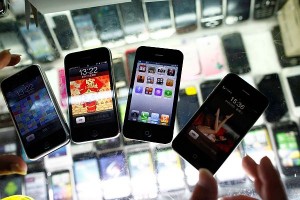
 Everywhere I look outside my home I see people busy on their high tech devices, while driving, while walking, while shopping, while in groups of friends, while in restaurants, while waiting in doctor offices and hospitals, while sitting in toilets – everywhere. While connected electronically, they are inattentive to and disconnected in physical reality.
People have been steadily manipulated to become technology addicted. Technology is the opiate of the masses.
This results in technology servitude. I am referring to a loss of personal freedom and independence because of uncontrolled consumption of many kinds of devices that eat up time and money. Most people do not use independent, critical thinking to question whether their quality of life is actually improved by the incessant use of technology products that are marketed more aggressively than just about anything else.
I for one have worked successfully to greatly limit my use of technological innovations, to keep myself as unconnected as possible and to maximize my privacy and independence. I do not have a smart phone; I do not participate in social networking; I do not have any Apple product, nothing like an IPod, IPad and similar devices. I have never used Twitter or anything similar, or sent a text message. I do use the Internet judiciously on an old laptop. Email is good and more than enough for me. I very rarely use an old cell phone.
So what have I gained? Time, privacy and no obsession to constantly be in touch, connected, available, informed about others. Call me old fashioned, but I feel a lot more in control of my life than most people that I see conspicuously using their many modern devices. They have lost freedom and do not seem to care about that. When I take my daily long walks I have no device turned on, no desire to communicate, nor to listen to music; I want to be in the moment, only sensing the world around me, unfiltered and uninterrupted by any technology.
I am not hooked by advancing technology, not tethered to constantly improved devices, not curious about the next generation of highly priced but really unnecessary products, not logged on and online all the time. I have no apps or games.
Those who think interactions with people through technology devices are the real thing have lost their sanity. Technology limits and distorts human, social interactions. Worse yet, people have lost ability and talent for actually conversing to people face to face, responding to nonverbal nuances, or through intimate writing with more than just a few words.
Consider these findings: “Researchers from the University of Glasgow found that half of the study participants reported checking their email once an hour, while some individuals check up to 30 to 40 times an hour. An AOL study revealed that 59 percent of PDA users check every single time an email arrives and 83 percent check email every day on vacation.”
A 2010 survey found that 61 percent of Americans (even higher among young people) say they are addicted to the Internet. Another survey reported that “addicted” was the word most commonly used by people to describe their relationship to technology. One study found that people had a harder time resisting the allure of social media than they did for sex, sleep, cigarettes, and alcohol.
A recent study by the Pew Research Center’s Internet and American Life Project found that 44 percent of cellphone owners had slept with their phone next to their bed. Worse, 67 percent had experienced “phantom rings,” checking their phone even when it was not ringing or vibrating. A little good news: the proportion of cellphone owners who said they “could live without it” increased to 37 percent from 29 percent in 2006.
The main goal of technology companies is to get you to spend more money and time on their products, not to actually improve your quality of life. They have successfully created a cultural disease that has gone viral. Consumers willingly surrender their freedom, money and time in pursuit of what exactly? To keep pace with their peers? To appear modern and sophisticated? To not miss out on the latest information? To stay plugged in? I do not get it.
I see people as trapped in a pathological relationship with time-sucking technology, where they serve technology more than technology serves them. I call this technology servitude. Richard Fernandez, an executive coach at Google acknowledged that “we can be swept away by our technologies.” Welcome to virtual living. To break the grand digital delusion people must consider how lives long ago could be terrific without all the technology regalia pushed today.
What is a healthy use of technology devices? That is the crucial question. Who is really in charge of my life? That is what people need to ask themselves if they are to have any chance of breaking up delusions about their use of technology. When they can live happily without using so much technology for a day or a week, then they can regain control and personal freedom and become the master of technology. Discover what there is to enjoy in life that is free of technology. Mae West is famous for proclaiming the wisdom that “too much of a good thing is wonderful.” Time to discover that it does not work for technology.
As to globalization of technology servitude: Is this worldwide progress what is best for humanity? Is downloaded global dehumanization being sucked up? Time for global digital dieting.
Joel S. Hirschhorn blogs at www.delusionaldemocracy.com


