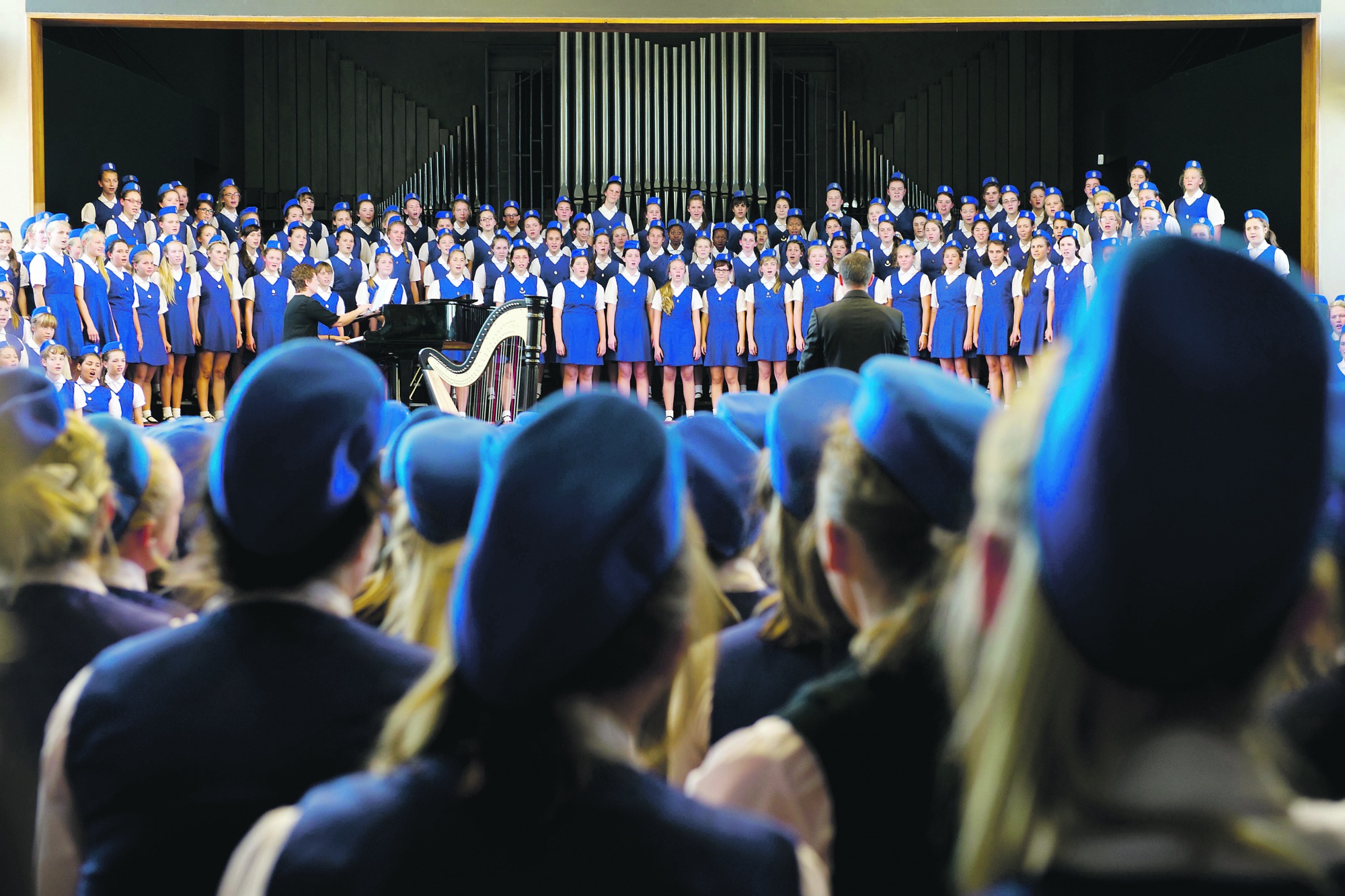
The Education Department of the Gauteng province has decided to force 124 Afrikaans schools to become parallel medium as a first step to eradicating Afrikaans as an educational language in schools. The Department released the following statement by its MEC, Panyaza Lesufi, today.
Gauteng DoE to convert 124 Afrikaans schools to parallel medium – Panyaza Lesufi
Panyaza Lesufi |
14 May 2015
MEC also says twinning of township with suburban schools to start, announces outcome of Curro and food poisoning investigations
Briefing by Gauteng Education MEC Panyaza Lesufi on the outcome of two investigations: Curro School & Emma Primary, May 14 2015
Good morning Ladies and Gentlemen.
Thank you for joining us.
We have convened this media briefing today, to give feedback on two critical independent investigations we have commissioned as the Gauteng Department of Education.
These investigations relate to the death of three learners as a result of alleged food poisoning at Emma Primary School in Winterveld and allegations regarding racial segregation of learners at Curro Foundation School.
We also want to provide an update on the department’s Twinning of Schools Programme and to clarify uncertainties around our decision to convert some schools in the province from single to parallel medium schools.
Emma Primary School Investigation
Following the death of three learners on 25 September 2014 at Emma Primary School, allegedly due to food poisoning, we commissioned an external investigation into the circumstances surrounding the death of all three learners.
The incident was widely reported in the media and some of the allegations were that all three learners passed away after eating food provided by the School through its School Nutrition Programme (“the feeding scheme”).
The investigation commissioned by the Department has since been concluded. This is the summary of the findings of that investigation.
The autopsy report and toxicology laboratory results have confirmed that the cause of death in respect of three learners was indeed poison ingestion.
On the day in question, one of the three learners had brought to the school food from home and a bottle of juice. The food was shared by all three learners during the school break.
Traces of the poison were not found in any of the food provided to learners by the school’s feeding scheme. Therefore, the cause of death in respect of all three learners was not the food provided to learners by the school’s feeding scheme.
The investigation has concluded therefore that there is no merit in the allegation that all three learners lost their lives as a result of food provided by the school’s feeding scheme.
The matter was reported to the Police and it is currently a subject of police investigation.
Curro Foundation School Investigation
In January this year we received complaints with regard to allegations of racial segregation at Curro Foundation School in Roodeplaat. It was alleged that some classes were made up of only black learners and white learners were grouped together separately.
The issues that arose at the school in relation to these allegations were from a petition that was signed by certain parents of learners in Grade R at the school. The petition was signed by thirty two parents and was handed to the principal of the school. The petition set out the concerns of parents regarding the allocation of pupils to the grade R classes along what appeared to be racial lines.
Out of extreme concern, we instructed Harris Nupen Molebatse Attorneys to conduct a thorough investigation that will contain clear findings which will complement specific recommendations to matters relating to Education Laws, South African Schools Act, Employment Equity Act and other relevant laws.
The findings of the investigation confirmed the allegations that there was indeed segregation of learners at the school. This was confirmed by Curro Management and they admitted that his was as a result of pressure from certain white parents.
This is unacceptable, discriminatory and contrary to the provisions of Section 9 of the Constitution. It is also in contravention of Section 6 of the Equity Act. By segregating the learners based on their race, the school acted in a manner that was discriminatory and as a result violated section 7(c) of the Equality Act.
The school has admitted that its practice of segregation was wrong and they have acted quickly to reallocate learners of minority racial groups throughout the three English classes in Grade R after the submission of the petition. In so doing, they have acted swiftly and they have also taken the steps of apologising, both to parents and publicly in the media.
The fact that the school has apologised for what took place and corrected the problem, appears to be an acceptance that what transpired was discriminatory and problematic.
The department acknowledges that diversity training has taken place at the school, however, we recommend that this training be conducted on an annual basis for all School Management and educators at the school.
Twinning of Schools Programme
The Rationale
While the Gauteng Province is commended on having the highest learner performance in the country; the Gauteng Department of Education is equally aware of the challenges faced by schools in the Province, such as insufficient infrastructure and resources, and a lack of social cohesion due to the low levels of integration and interaction between learners at different schools.
The Department recognises that the continuing disparities in accessing resources and quality education perpetuate socio-economic disadvantage, thereby reinforcing and entrenching historical inequality. This is demonstrated by the unequal distribution of resources and quality education in Township and former Model C schools.
Therefore, the Twinning Programme has been developed in terms of the Department’s ‘Reorganization of Schools Strategy,’ which is aimed at achieving an optimal level of performance in all of the schools in the Province.
The Process
The Department has conducted extensive research which has revealed that the management and governance of a school, through its School Governing Body, largely determine the policies, values and other matters critical to the overall philosophy of the school, and it is through this structure that the objectives of Twinning can be met.
The Department intends to achieve its objectives through a legal, structured, and methodical approach. Thus, ‘Twinning’ will involve the creation of a single School Governing Body to govern two schools – one, a township school, and the other a suburban school.
The programme has been carefully structured, with the best interests of the schools and its learners in mind. Research and consultations with all of the affected stakeholders have preceded the process, to ensure that the programme yields a favourable outcome for all of the schools involved.
The recent SGB elections has impacted on the work of the team as the team is now required to begin new consultation processes with newly elected SGBs.
The team has successfully consulted with the following schools and work is in progress to twin them:
Bovet Primary School and Lyndhurst Primary School – soon to be gazetted
Cultura High School and Zithobeni Secondary School- notice of intention is soon to be published
Sandown High School and Alexander Secondary School – notice of intention is soon to be published
The Expected Outcome
As part of the Department’s ‘Ten Pillars Programme’, the twinned schools will be provided with additional focus and support in respect of Curriculum and Assessment Development; Teacher Provisioning and Support; Leadership and Management; Infrastructure Development and Maintenance; Planning, Finances and Resourcing; Information and Communication Technology (ICT) in Education; Social Cohesion; School Functionality, including Community Involvement; Skills Development; and Access to Quality Early Childhood Development.
The Department will provide the twinned schools with iPads and smartboards, and they will become completely digital. The twinned schools will also be provided with a coach, which will ensure that it operates optimally and with a high level of skill and knowledge. The learners, teachers, and parents alike, will also be afforded an opportunity to interact and engage with people from different backgrounds, which is essential to the broader integration of South African Society.
Ultimately, the Twinning Program is expected to transform the education system, and the Department is determined to ensure its ultimate success.
Conversion of Single Medium Schools to Parallel Medium Schools
Due to the increasing demand for space in our schools and the influx of learners from other provinces into Gauteng, the department has taken a decision to utilise available space to admit these learners. This therefore calls for the maximum usage of all available space to accommodate learners, informed by our constitutional obligation to place all learners who require admission into our schools. In view of this, the Department has developed a strategy to convert 124 single medium schools to parallel medium schools as a means to address overcrowding in most of our schools.
This rationale is supported by the following:
- The existence of high quality infrastructure which is under–utilised in communities where the population demographic profile has changed over the years
- Schools need to serve the communities within which they exist and reflect the changing demographics of those communities
- GDE has a moral obligation and authority to provide access to schooling where space is available as required by the South African Schools Act no 84 of 1996
The whole process will be done within the confines of the law. The department will soon start consultation processes with all the affected schools. The consultation process will involve meetings with all the affected principals, unions and school governing bodies to take them through the process, including the envisaged gains and address potential fears and challenges.
Statement issued by the Gauteng Department of Education, May 14 2015