A perfectly timed surge at the finish helped Johan Cronje claim bronze and the first ever medal for South Africa in the men’s 1,500 metre event at the IAAF World Championships in Moscow on Sunday.
Cronje, the national record-holder in the 1,500m, clocked 3 minutes 36.83 seconds just behind Kenyan Asbel Kiprop who won in 3.36.28, and American Matthew Centrowitz in second with 3:36.78.
Not only was it the first time a South African featured in the top eight of the event at the world championships, it was also the only medal the South African team claimed at the Moscow games.
After the race, Cronje said had not expected to be up on the podium.
“I believed in myself – but I wouldn’t have put money on myself”, said Cronje.
Cronje found himself boxed in during the race, and fancied with a better approach he could have grabbed silver.
“I’m a bit disappointed I was a few split-seconds from second.
“I think if I wasn’t boxed in I could have snatched that one, but I had a terrible tactical race,” said the Bloemfontein speedster who had initially expected a fast race.
Asbel Kiprop took control of the race from the gun, pulling the field through 400m, and Cronje found himself boxed in on the kerb initially in fifth, then dropping back to eighth with 300m to go.
“I couldn’t go fast as everyone was on my right and I had Centrowitz ahead.
“It was only the last 60 I had to go past as that’s when it opened up [on the inside].”
Cronje said he thought the tactics in the final would be different from his previous expectations.
“I realised that everyone was in there as individuals, the Kenyans weren’t going to run as a team, so they were watching each other and would also have Centrowtiz on their mind, so perhaps they would forget a guy like myself or Brannen from Canada,” said Cronje.
“Before the race I knew it could be slow: I had to be upfront and I had to be wide, and everything I knew I didn’t do.
After 900m Cronje said he had to break free from the group.
“It was stupid I was swearing at myself [for being boxed in], saying Johan this is your only opportunity, use it.
“I was sitting, sitting — looking right — [I] couldn’t get a gap and saw Centrowitz and knew he was a fast finisher, so I would stick with him.
“When he moved out and around, I saw the guys inside were looking outside - so I waited.
“As soon as you look outside your body moves out and I waited for that 20 centimetres to open up and I moved through on the inside,” added Cronje who is a semi-professional athlete, who is an investment specialist in his day job.
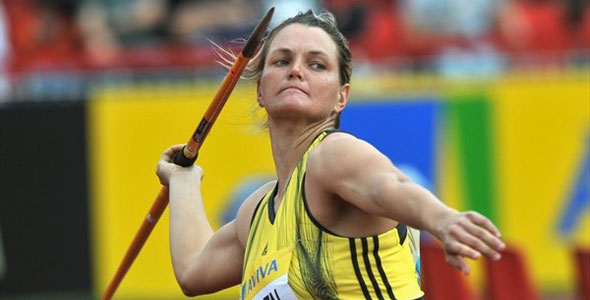
In the women’s javelin, once again Sunette Viljoen, the defending javelin bronze medalist from Daegu, threw her best distance with her opening trial.
Viljoen threw 63.58 metres, which was good enough for a sixth place overall after failing to improve on her first attempt.
It was a performance far below her season best of 64.51m set with the first throw of the qualification round, and her personal best of 69.35m set in New York in May of last year.
A visibly distressed Viljoen walked through the post-race zone without sharing any thoughts.
South Africa’s sole medal placed them 33rd and last on the medal table, compared to a ninth place in Berlin and 17th in Daegu. – Sapa