
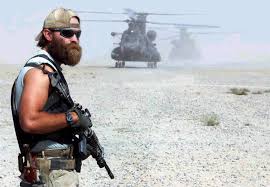
 Since September 11, 2001, U.S. Special Operations forces have grown in every conceivable way, from their numbers to their budget.
Most telling, however, has been the exponential rise in special ops deployments globally. This presence — now, in nearly 70% of the world’s nations — provides new evidence of the size and scope of a secret war.
In the waning days of the Bush presidency, Special Operations forces were reportedly deployed in about 60 countries around the world. By 2010, that number had swelled to 75, according to Karen DeYoung and Greg Jaffe of the Washington Post. In 2011, Special Operations Command (SOCOM) spokesman Colonel Tim Nye told TomDispatch that the total would reach 120. Today, that figure has risen higher still.
In 2013, elite U.S. forces were deployed in 134 countries around the globe, according to Major Matthew Robert Bockholt of SOCOM Public Affairs. This 123% increase during the Obama years demonstrates how, in addition to conventional wars and a CIA drone campaign, public diplomacy and extensive electronic spying, the U.S. has engaged in still another significant and growing form of overseas power projection. Conducted largely in the shadows by America’s most elite troops, the vast majority of these missions take place far from prying eyes, media scrutiny, or any type of outside oversight, increasing the chances of unforeseen blowback and catastrophic consequences.
Formally established in 1987, Special Operations Command has grown steadily in the post-9/11 era. SOCOM is reportedly on track to reach 72,000 personnel in 2014, up from 33,000 in 2001. Funding for the command has also jumped exponentially as its baseline budget, $2.3 billion in 2001, hit $6.9 billion in 2013 ($10.4 billion, if you add in supplemental funding). Personnel deployments abroad have skyrocketed, too, from 4,900 “man-years” in 2001 to 11,500 in 2013.
According to SOCOM: “SOF [Special Operations forces] were deployed to 134 countries” during fiscal year 2013.”
Last year, Special Operations Command chief Admiral William McRaven explained his vision for special ops globalization. In a statement to the House Armed Services Committee, he said:
“USSOCOM is enhancing its global network of SOF to support our interagency and international partners in order to gain expanded situational awareness of emerging threats and opportunities. The network enables small, persistent presence in critical locations, and facilitates engagement where necessary or appropriate…”
While that “presence” may be small, the reach and influence of those Special Operations forces are another matter. The 12% jump in national deployments — from 120 to 134 — during McRaven’s tenure reflects his desire to put boots on the ground just about everywhere on Earth. SOCOM will not name the nations involved, citing host nation sensitivities and the safety of American personnel, but the deployments we do know about shed at least some light on the full range of missions being carried out by America’s secret military.
Last April and May, for instance, Special Ops personnel took part in training exercises in Djibouti, Malawi, and the Seychelles Islands in the Indian Ocean. In June, U.S. Navy SEALs joined Iraqi, Jordanian, Lebanese, and other allied Mideast forces for irregular warfare simulations in Aqaba, Jordan. The next month, Green Berets traveled to Trinidad and Tobago to carry out small unit tactical exercises with local forces. In August, Green Berets conducted explosives training with Honduran sailors. In September, according to media reports, U.S. Special Operations forces joined elite troops from the 10 member countries of the Association of Southeast Asian Nations — Indonesia, Malaysia, the Philippines, Singapore, Thailand, Brunei, Vietnam, Laos, Myanmar (Burma), and Cambodia — as well as their counterparts from Australia, New Zealand, Japan, South Korea, China, India, and Russia for a US-Indonesian joint-funded counterterrorism exercise held at a training center in Sentul, West Java.
And today South Sudan — a nation the U.S. shepherded into being, has supported economically and militarily (despite its reliance on child soldiers), and has used as a hush-hush base for Special Operations forces — is being torn apart by violence and sliding toward civil war.
As retired Army Colonel Andrew Bacevich, professor of history and international relations at Boston University, has noted, the utilization of Special Operations forces during the Obama years has decreased military accountability, strengthened the “imperial presidency,” and set the stage for a war without end. “In short, handing war to the special operators severs an already too tenuous link between war and politics; it becomes war for its own sake.”
In his blueprint for the future, SOCOM 2020, Admiral McRaven has touted the globalization of U.S. special ops as a means to “project power, promote stability, and prevent conflict.” Last year, SOCOM may have done just the opposite in 134 places.
Source: TomDispatch