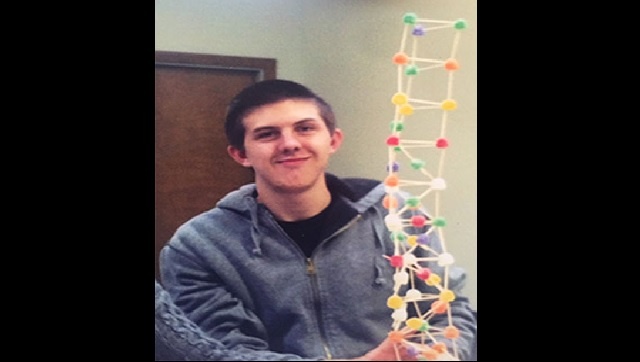
After an independent autopsy showed that Zachary Hammond was shot by police from behind, the family of the unarmed South Carolina teen is wondering at the lack of national outrage in this case. Hammond was white.
According to the police in Seneca, South Carolina, an officer shot Hammond “in self-defense” when the teen allegedly tried to run him over with a car during a drug arrest. An officer approached Hammond’s car in the parking lot of a Hardee’s restaurant on July 26, after an undercover officer arranged a marijuana buy with the teen’s date, 23-year-old Tori Morton. The initial police report mentions finding a bag of marijuana on Morton – who was charged with simple possession – but makes no note of the lethal shooting.
The official autopsy confirmed Hammond was shot twice, but did not say from what angle. Hammond’s family arranged for an independent autopsy, which showed the 19-year-old had been shot from above and behind, suggesting that the official police story was inaccurate.
Speaking to reporters on Tuesday, attorney for Hammond’s family Eric Bland said that Hammond had been shot in the left rear shoulder, and through the back of his chest, indicating the officer fired from the side of a stopped car, through the open window. Bland says Hammond was on a first date with Morton, who was eating ice cream at the time, and that the police should have never used deadly force.
Seneca is a city of 8,200 in the northwestern corner of South Carolina, near the university town of Clemson, and about 30 miles west of Greenville.
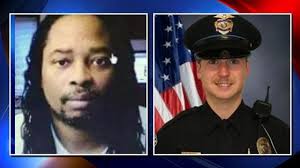
Hammond’s death came a week after Samuel Dubose was killed in Cincinnati, Ohio under very similar circumstances. University of Cincinnati police officer Raymond Tensing said Dubose was trying to run him over with his car, and that he fired in self-defense. Once Tensing’s body camera footage was released, showing otherwise, the officer was indicted for murder. Tensing is white; Dubose was black.
Dubose’s killing has attracted national attention, but Hammond’s was barely noticed. According to the Los Angeles Times, while Dubose’s name was mentioned in over 43,000 tweets between July 26 and August 4, Hammond’s appeared in 289 tweets in the same time period.
Bland, the attorney for Hammond’s family, finds the discrepancy “very disturbing.”
“An unarmed white teenager whose life is wrongfully taken at the hands of overzealous police is the same and equal to an unarmed black teenager whose life is wrongfully taken at the hands of overzealous police,” he told the LA Times.
Police in Seneca are standing by their officer, though. Speaking to the Greenville News last week, Chief John Covington said the officer “actually had his hand on or very close to the car, possibly pushed off from the car,” and the teen “was not shot from behind.”
“The attorney wasn’t there either,” Covington said. “He’s got to put his spin on things. His clients are the parents and they’re grieving. I understand that. My heart goes out to them.”
Seneca police’s refusal to publish the official autopsy results or name the officer involved in the fatal shooting has raised eyebrows. The Charleston Post and Courier filed an open records request for the officer’s name, and the copy of the official incident report, neither of which have been released by the police. – RT.COM