Obama to Africa: Don’t trust foreign powers

obamacapetownPresident Obama pledged $7 billion in aid Sunday to provide electricity to sub-Saharan Africa, as he warned Africans to be wary of exploitation by other countries, including the U.S.

“I’m calling for America to up our game when it comes to Africa,” Mr. Obama said in a speech at the University of Capetown in South Africa, midway through his weeklong tour of the continent. “We want to unleash the power of entrepreneurship and markets to create opportunity here in Africa.

Funds from the electricity initiative, dubbed Power Africa, will be distributed over the next five years to six countries: Ethiopia, Ghana, Kenya, Liberia, Nigeria and Tanzania. Mr. Obama said the U.S. wants to help Africa without interfering like colonial powers did in the past.

“You will always find the extended hand of a friend in the United States of America,” he said.

But on his three-nation tour, the president also has been warning Africans not to automatically trust foreign powers offering help, including the U.S.

“When we look at what other countries are doing in Africa, I think our only advice is make sure it’s a good deal for Africa,” Mr. Obama told reporters in Johannesburg.

“If somebody says they want to come build something here, are they hiring African workers? If somebody says that they want to help you develop your natural resources, how much of the money is staying in Africa? … Don’t just assume that folks come here and they’re automatically benefiting Africans. And that includes the United States. Ask questions in terms of what we do.”

Although Mr. Obama has been emphasizing initiatives such as food security and international funding to combat AIDS, much of his African trip has been overshadowed by his inability to meet over the weekend with the critically ill Nelson Mandela, 94, hospitalized with a lung infection.

The president and his aides held out the possibility of a meeting with Mr. Mandela until Saturday, when Mr. Obama decided to meet instead with several members of the civil rights icon’s family, saying he didn’t want to intrude at the hospital. He praised Mr. Mandela as a “hero for the world” and said America’s prayers were with him.

Mr. Obama told the audience at the University of Capetown that Mr. Mandela inspired his first political act, when he was a 19-year-old student at Occidental College in California.

He said he was motivated to give a short speech about divesting from South African companies after learning about Mr. Mandela and other political prisoners fighting for equality in South Africa.

“My own government in the United States was not standing on their side,” Mr. Obama said. “That’s why I got involved in what was known as the divestment movement in the United States. It was the first time I ever attached myself to a cause.

“I know now that something inside me was stirring at that time, something important,” he said. “And that was the belief that I could be part of something bigger than myself, that my own salvation was bound up with those of others.”

Earlier Sunday, Mr. Obama and his family toured the South African prison that held Mr. Mandela. The president wrote in a visitors log that they were “deeply humbled” by the experience, although this was Obama’s second visit to the prison.

Mr. Obama, first lady Michelle Obama, daughters Malia and Sasha, and the Obamas’ niece Leslie Robinson arrived on Robben Island after a five-minute helicopter flight from Capetown on Marine One. They were accompanied by a press helicopter and a contingent of Secret Service agents.

They got a tour of the prison, where Mr. Mandela spent 27 years as a political prisoner, from 83-year-old former inmate Ahmed Kathrada. They also saw the small cell that Mr. Mandela once occupied.

The president and first lady paused at the prison’s logbook, and Mr. Obama wrote the following entry:

“On behalf of our family we’re deeply humbled to stand where men of such courage faced down injustice and refused to yield. The world is grateful for the heroes of Robben Island, who remind us that no shackles or cells can match the strength of the human spirit. Barack Obama and Michelle Obama, 30 June 2013.” – Washington Times
Obama’s ‘power trip’ to Africa

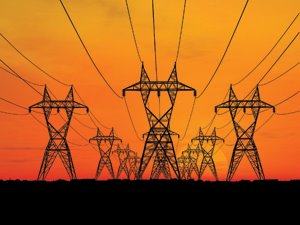
pylonsMr Obama is arriving in Africa this time with a few tricks up his sleeve. He will announce the creation of a new fund, Power Africa, to support the development of electricity infrastructure with a mix of state and private investment as well as initiatives to promote trade. His trip coincides with talks in Addis Ababa on renewing the Clinton era African Growth and Opportunity Act, which gave thousands of African products duty-free access to the US.

Nearly 600 million Africans face energy poverty, the in­ability to cook with modern cooking fuels and a lack of mini­mum lighting for productive activities at sunset.  This energy gap impacts a variety of health, education and economic outcomes:  Vaccines cannot be properly refrigerated, girls are pulled out of school to collect firewood, and small businesses cannot expand because of energy limitations.

As the Obama team considers a policy legacy for Africa during its second term starting in 2013, advisors believe a strong U.S. commitment to close the energy poverty gap in Africa can benefit the global economy.

With strategic interventions, the U.S. could address this energy poverty gap while at the same time create markets and increase investments for American businesses.  If the White House leverages private investment by rationalizing U.S. government tools, such as the Overseas Private Investment Corporation, and engages proactively with African environmental powers, the U.S. could make a significant contribution to accomplishing this achievable goal.

For the past couple of decades, U.S. companies have piled into Asia to reach new consumers. Now companies such as General Electric Co., General Motors Co. and Procter & Gamble Co. are expanding in the long-neglected frontier market of Africa.

GE on Friday signed an agreement to build a 400-megawatt gas-fired power plant in Tanzania. The East African country, where U.S. President Barack Obama plans to visit next week, is one of many on the continent that is seeking more electricity to meet growing demand from businesses and consumers.

Meanwhile, P&G is investing more than $150 million in its South African factories to expand the supply of its diapers and other products in southern and eastern Africa. And GM in October plans to start selling newly licensed Isuzu trucks in Kenya, Nigeria and Angola.

Until recently, most U.S. companies concentrated investment in the continent’s biggest economies, such as South Africa and Nigeria, or those with mineral wealth, like Angola. But as they seek new consumers, U.S. companies are branching out across the continent.

“People are finding that there are opportunities beyond the biggest markets in Africa, and part of it is because year-after-year growth in Africa has been stronger than on almost any other continent,” says Clay Lowery, a vice president at Rock Creek Global Advisors, an economic-policy consulting firm in Washington.

By 2018, five of the world’s fastest-growing economies will be in sub-Saharan Africa, according to the International Monetary Fund. U.S. companies invested $48.5 billion in Africa in the decade through 2011, according to the United Nations Conference on Trade and Development, more than companies from any other nation did. But China and India are catching up, pumping billions of dollars into Africa in each of the past few years.

President Obama’s visit to Senegal, South Africa and Tanzania beginning Wednesday is expected to bolster efforts to burrow into the continent’s smaller, more fragmented markets.

U.S. officials for years have urged American corporations to pursue opportunities in Africa to keep pace with the Chinese, Indian and Brazilian companies already here. On a trip to Senegal last August, then-Secretary of State Hillary Clinton touted U.S. businesses’ “sustainable partnerships in Africa that add value rather than extract it,” a thinly veiled reference to Chinese companies, which largely are focused on resource-related investments to support China’s economy.

U.S. corporations aren’t strangers to Africa. Companies including Coca-Cola Co. and Exxon Mobil Corp. have long invested on the continent and have been expanding. Since 2000, the U.S. African Growth and Opportunity Act has boosted African manufacturers, allowing them to export clothing to the U.S. duty free.

But many U.S. companies are only now waking up to Africa’s new consumer class, a byproduct of steady growth and more stable governments.

Stronger commercial relationships, some analysts say, could strengthen diplomatic ties with many African countries, as happened in China, India and elsewhere in Asia.

“We were never focused on Africa in any way,” says Witney Schneidman, a former U.S. diplomat and now a senior adviser for Africa for law firm Covington & Burling LLP. “Are corporates the agents of change?”

Africa is far from being the next Asia, however. The continent has a sixth of the world’s population but fuels less than 3% of the global economy. Africa also received less than 3% of global foreign direct investment in 2011, according to the U.N.

But the continent is growing fast from its low base. The IMF projects that sub-Saharan Africa’s economy will expand 5.6% this year, compared with 3.6% world-wide. The African Development Bank estimates that the continent’s emerging middle class may already be 300 million strong. – FT/WSJ/Brookings