
In what is believed to be the first time since the 1940s, the entire British defense staff will be here March 25 to discuss long-range strategy and the impact of budget cuts with their U.S. counterparts, according to U.S. and British sources.
The meeting is reminiscent of the Combined Chiefs of Staff, when British and American military leaders joined forces during World War II. Both nations are undergoing significant budgetary reductions and will continue to rely on each other in future years for support. Understanding what capabilities will survive and won’t is essential to long-term strategic planning.
“The relationship military to military is very strong. We have common interest in how we meet the financial constraints placed on both nations, but also on issues like how we manage the drawdown in Afghanistan and also how we reconfigure post Afghanistan,” said Sir Gerald Howarth, a member of parliament and the ex-defense minister responsible for international security affairs from 2010 to 2012.
“We have a huge amount of strategic issues to discuss where we have a very large level of common interest,” he said.
A Defence Ministry spokesman characterized the meeting as private and declined further comment.
In the U.S., spokesmen for the Office of the Secretary of Defense and the Joint Chiefs of Staff did not respond to questions.
U.S. and British military leaders regularly discuss ongoing issues. What’s different about this series of meetings is they will focus not on immediate budget, program or operational issues, but the strategic future of the Anglo-American alliance, including deepening cooperation.
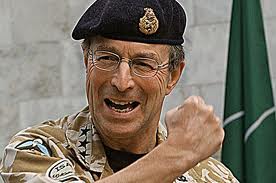
In addition to the U.S. Joint Chiefs, British attendees are expected to include Gen. Sir David Richards, chief of the Defence Staff; Gen. Sir Nicholas Houghton, vice chief of the Defence Staff, who will take over as chief when Richards retires later this year; Air Chief Marshal Sir Stephen Dalton, chief of the Air Staff; Adm. Sir George Zambellas, incoming Navy first sea lord; Gen. Sir Peter Wall, chief of the General Staff; and Air Chief Marshal Sir Stuart Peach, commander of Joint Forces Command, sources said.
The U.S. and U.K. regularly share the most sensitive military intelligence, technology and equipment, including submarine-launched nuclear ballistic missiles. Britain over the past decade in particular has shaped its capabilities to dovetail with U.S. forces.
The British are the leading developmental partner on the U.S.-led F-35 fighter program with Lockheed Martin and have in their inventory Boeing C-17 transports, Chinook and Apache helicopters and Lockheed C-130 cargo aircraft. In addition, the Royal Air Force is buying highly sensitive RC-135 Rivet Joint intelligence planes produced by L-3 Communications in the U.S., making London the only international customer for that program.
The meeting comes as the Pentagon faces $500 billion in spending cuts over the coming decade, which will force senior leaders to make difficult choices. The British delegation arrives with particular experience in that area, having faced even deeper budget cuts — in percentage terms — over the past several years, forcing major reforms to force structure, organization and acquisition programs in that time.
U.S. and British forces routinely train together and have fought side-by-side over the past decade in Afghanistan and Iraq. In Afghanistan, British Lt. Gen. Nick Carter serves as the deputy commander to U.S. Marine Gen. Joseph Dunford, commander of NATO forces.
“On the day-to-day business of military cooperation, the relationship between the U.S. [NATO] commander and the British second in command is another good example of working in partnership,” Howarth said.
The two militaries regularly participate in personnel exchanges. – Defence News