Lord Rothschild warns dark clouds are gathering in Europe, Russia, ME

Lord Rothschild characterized the geopolitical situation in the world as the most dangerous since the end of WWII, warning investors about a forthcoming crisis

Lord Rothschild has warned about the dark cloud on the horizon for the global economy, characterizing the geopolitical situation as the most dangerous since the end of World War II.

“We are confronted by a geopolitical situation perhaps as dangerous as any we have faced since World War II: chaos and extremism in the Middle East, Russian aggression and expansion, and a weakened Europe threatened by horrendous unemployment, in no small measure caused by a failure to tackle structural reforms in many of the countries which form part of the European Union,” wrote Jacob Rothschild, a British investment banker and a member of the prominent Rothschild family, in an annual Strategic Report of RIT Capital Partners plc (RIT).

RIT is an investment trust that has been investing “in a widely diversified, international portfolio” delivering high returns to shareholders since 1988.

According to the company’s website, RIT has more than doubled its net asset value per share and share price over the past ten years.

Although Rothschild’s RIT can currently boast the highest level of its share price, not everything is rosy in the garden for the global economy, emphasized Lord Rothschild: “The world economy grew at a disappointing and uneven rate in 2014 after six years of monetary stimulus and extraordinarily low interest rates.”

Furthermore, the value of paper money has reduced substantially, as countries were trying to generate growth by lowering the value of their currencies, particularly the Euro and the Yen, which have lost over 12 percent against the US Dollar during the last year. The undesirable consequences of such monetary experiments are hard to predict, noted Lord Rothschild.

It seems that Rothschild’s concerns are shared by the EU member states as well: at the end of 2014 several European countries demonstrated a revived interest in gold as a monetary policy instrument and focused on repatriating their bullion gold reserves from abroad, citing issues of economic stagnation and an unprecedented level of money printing in the world.

However, Jacob Rothschild underscored that the majority of companies are reporting profits exceeding forecasts together with steady earnings growth.

The banker believes that “the combination of a more competitive Euro and an aggressive program of quantitative easing and the yields available on equities, may well lead to even higher valuations.”

Source: Sputnik News
Barclays Africa shows profits rising

BARCLAYS on Thursday reported its African banking operations showed good profit growth during the third quarter. If sustained, the bank could show earnings slightly above full-year consensus when it reports results for the 2014 financial year.

The UK parent group said Barclays Africa Group showed improvement in bad debts in the South African home loan book and good loan growth in corporate and investment banking.

Barclays said the Africa banking operations grew profits 11% — which was marginally better than the I-Net Bridge consensus of 10.6% — on constant currency basis in the nine months ended last month. The firm reported a profit before tax of £756m for the Africa banking operations.

“Consensus for the full year is 11%. It’s a little bit ahead … There is obviously some corporate lending. I think that’s for infrastructure in the rest of Africa,” PSG Wealth portfolio manager Adrian Cloete said on Thursday.

Out of all the business divisions at Barclays Africa Group, which include retail and business banking, wealth, investment, management and insurance, the corporate banking division had the fastest growth in earnings in the first half of this year and seems it continues to steam ahead.

Barclays Africa Group has indicated it is investing in the corporate and investment banking division and deploying its capability in the rest of Africa.

In the third-quarter update on Thursday Barclays said there were more improvements in the South African mortgage portfolio. The South African operations of Barclays Africa Group have been working on improving the state of its mortgage book.

In the 2012 financial year the operations of Barclays Africa Group in SA reported a decline in earnings hit by bad debts on its mortgage portfolio. In 2011 the bank had underestimated the bad debts on home loans as it lowered its cover for bad debts to 17.1% from 19.1% in 2010. After this misjudgment it upped the nonperforming loans coverage ratio to 28.5% in the 2012 financial year.

With the improvements on the mortgage book, this has been lowered to 26.9% in the first half of the 2014 financial year.

“I think they really cleaned up the book (home loan) and they are taking a lot of action. It seems it’s much better provided for and being managed much better,” Mr Cloete said.

In the third-quarter update Barclays Africa Group said its return on equity had improved in the third quarter compared to 16.1% in the first half, a sign that earnings were growing. Barclays Africa group hopes to grow its return on equity to 18%-20% next year.

Barclays Africa Group shares finished flat at R171 at the end of trade on the JSE on Thursday. The JSE all share index ended down 1% Thursday.

For the year to date, Barclays Africa Group’s shares have so far been the best performer among major banks in SA with the stock rising about 29.3%.

Source: Business Day

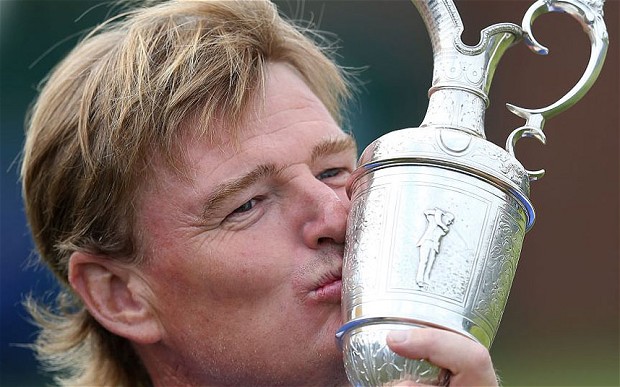
Ernie Els made R179 million ($18.2 million) last year

ernie-els2
Ernie Els

Ernie Els was South Africa’s highest-earning sportsman in 2012, making 179 million rand ($18.2 million) last year, according to the country’s Sunday Times newspaper.

The four-time major champion earned $14.7 million from endorsements and commercial work like golf course design, and the remaining $3.5 million in tournament winnings, boosted by his victory at the British Open, according to the rich list compiled by the newspaper.

The top four on the South African sports list were golfers. Louis Oosthuizen, the 2010 British Open champion, made $9.8 million in 2012, Retief Goosen $6 million and Charl Schwartzel $5.9 million.

However, they are some way off Tiger Woods, whom Forbes magazine rated in June as global sport’s highest-earning athlete during the preceding 12 months with $78.1 million.

The South African newspaper said its list was compiled using interviews with leading agents as well as figures from the U.S. PGA and other sports bodies.

While the Sunday Times’ ranking underlined the earning power of golf, it also showed the financial pull of cricket’s Indian Premier League and European and Japanese rugby clubs for South African sports stars.

Cricketer Jacques Kallis makes $305,000 a year playing for his country and $1 million a year from the IPL’s Kolkata Knight Riders. Kallis was No. 6 on the list behind English Premier League footballer Steven Pienaar, who makes an estimated $5 million a year.

Seam bowler Chris Morris is the starkest example of how the IPL is the “land of milk and silly money,” according to the paper. Morris makes $40,000 a season from his Johannesburg-based Lions team, but $625,000 from the IPL’s Chennai Super Kings following this year’s draft.

Rugby players are also profiting from deals with foreign clubs.

Springboks wing JP Pietersen rocketed into the top 10 after signing a $1.1 million per season contract with Japan’s Panasonic Wild Knights. That deal was over five times more than what he makes a year in South Africa off his provincial and national contracts combined, the newspaper said. – AP