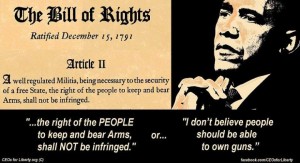
Zuma calls for gun control

President Jacob Zuma thinks disarming whites may be a long-term solution to the country’s cop killing spree eventhough police officers are killed by blacks.

He was visiting the family of a Johannesburg black traffic officer gunned down last week.

Zuma called on South Africans to suggest alternative ways to stem the country’s violence.

“I just thought I should raise this matter because it is unprecedented that within months you can have (the number of) police killed (at) more than 50. I think a few days ago they were saying about 53. I think by December it could be 100. Is that what you want to see? I don’t think so. And that’s the issue that’s concerning us.”

Police Commissioner Riah Phiyega said recently that more than 14,000 weapons had been destroyed, and there was more still to be done.

Fifty-four police officers have been murdered this year.

According to materials released by the South African Police Service (SAPS) to the South African History Archive (SAHA) under the Promotion of Access to Information Act, the problem of lost and stolen firearms is rampant amongst police detachments across the country.

The statistics that were released suggest that 18,196 police firearms have been lost or stolen during the 5 year period beginning 1 April 2005 and ending on 31 March 2011.

The sheer volume of the missing weapons, shocking as it may be, is perhaps not the most worrisome trend revealed by the statistics. The concentration of missing weapons in particular regions and police stations show that systemic checks and balances designed to prevent the loss or theft of police firearms have not reached all corners of South Africa.

The Northern Cape had 232 firearms lost or stolen over the course of the five years, making it the province with the fewest missing weapons. Comparatively, Gauteng Province saw 6,163 firearms go missing over the same period. Certainly, the difference in population between these provinces accounts for a portion of the large discrepancy.

However, the fact that over 2,700 weapons went missing in Gauteng in a single year (2006/2007) is hair-raising.

Zuma nevertheless plans to target legal gun owners, mostly whites.

Nearly 20 stations in black areas have lost in excess of 100 weapons in a single year. For example, one police station in Umtata in the Eastern Cape had 638 firearms go missing in 2008/2009. The same station lost a total of 2 firearms during the other four years of the five year period.

The financial consequences for SAPS are monumental. In materials that were released to SAHA under a separate request for information, the average cost of replacing a pistol exceeded R 5,000 between the 2006/2007 year and 2010/2011.

No exact figure was provided on the total value of pistols lost or stolen. However, when these documents are read together, it appears that the cost of replacing every missing weapon would exceed R 90 million.

Interpol Chiefs says arm citizens globally against terror

Ronald Noble
Ronald Noble

Interpol Secretary General Ronald Noble told ABC News that one of the only ways to prevent terrorists from hitting soft targets was to arm citizens globally, noting that the Westgate mall siege would have been averted far quicker if it had taken place in gun-friendly areas like Denver or Texas.

Noble’s statements are a powerful rebuttal to the anti-gun lobby, especially given his background. The Interpol chief was formerly the head of all law enforcement for the U.S. Treasury Department.

Stressing that an “armed citizenry” was the only option besides turning soft targets like shopping malls into enclaves surrounded by “extraordinary security” perimeters, Noble suggested that the siege in Kenya, which dragged on for days and ended in the slaughter of 60 civilians, represented a huge public relations blow for gun control advocates.

“Ask yourself: If that was Denver, Col., if that was Texas, would those guys have been able to spend hours, days, shooting people randomly?” Noble said, referring to states with pro-gun traditions. “What I’m saying is it makes police around the world question their views on gun control. It makes citizens question their views on gun control. You have to ask yourself, ‘Is an armed citizenry more necessary now than it was in the past with an evolving threat of terrorism?’ This is something that has to be discussed.”

“For me it’s a profound question,” he continued. “People are quick to say ‘gun control, people shouldn’t be armed,’ etc., etc. I think they have to ask themselves: ‘Where would you have wanted to be? In a city where there was gun control and no citizens armed if you’re in a Westgate mall, or in a place like Denver or Texas?’”

As we reported last month, an off-duty SAS soldier armed with a handgun helped save at least 100 lives during the Westgate siege, returning to the building a dozen times to rescue hostages.

Noble’s argument that guns in the hands of responsible citizens can prevent bloodshed is backed by hard statistics.

According to a 1993 National Self- Defense Survey conducted by Gary Kleck, Ph.D., a professor in the School of Criminology and Criminal Justice at Florida State University in Tallahassee, Americans use guns to defend themselves against a confrontation with a criminal up to 2.5 million times a year. This means that every day in America some 6,800 people use guns to protect themselves.

Scholars Clayton E. Cramer and David Burnett have documented how “a great number of tragedies — murders, rapes, assaults, robberies — have been thwarted by self-defense gun uses.” – prisonplanet.com

Teachers armed at US district school

teachersarmedWhen classes at Clarksville High Connecticut resume, more than 20 teachers and other employees in the US school district will be carrying concealed weapons.

After a school shooting in Connecticut last December that left 20 children and six teachers dead, the idea of arming schoolhouses against gunmen was hotly debated across the country.

The National Rifle Association declared it the best response to serious threats. But even in the most conservative states, most proposals faltered in the face of resistance from educators or warnings from insurance companies that schools would face higher premiums.

Making use of a little-known Arkansas law that allows licensed, armed security guards on campus, assistant principal Cheyne Dougan and other teachers at the school will be considered guards.

“The plan we’ve been given in the past is, ‘Well, lock your doors, turn off your lights and hope for the best,'” Superintendent David Hopkins said. But as deadly incidents continued to happen in schools, he explained, the district decided, “That’s not a plan.”

In strongly conservative Arkansas, where gun ownership is common and gun laws are permissive, no school district had ever used the law to arm teachers on the job, according to the state’s department of education. The closest was the Lake Hamilton School, which for years has kept several guns locked up in case of emergency. Only a handful of trained administrators – not teachers – have access to the weapons.

Flood of calls from parents
Clarksville, a community of 9 200 people about 160km north-west of Little Rock, is going further.

The town isn’t known for having dangerous schools. But Hopkins said he faced a flood of calls from parents worried about safety after the attack last year at Sandy Hook Elementary School in Newtown, Connecticut.

Hopkins said he and other school leaders didn’t see why the district couldn’t rely on its own staff and teachers to protect students rather than hire someone.

State officials are not blocking Clarksville’s plan, but Arkansas Education Commissioner Tom Kimbrell is opposed to the idea of arming teachers and staff. He prefers to hire law enforcement officers as school resource officers.

There are other dissenters, too. Donna Morey, former president of the Arkansas Education Association, called the idea of arming teachers “awful”. The risk of a student accidentally getting shot or obtaining a gun outweighs any benefits, she said.

“We just think educators should be in the business of educating students, not carrying a weapon,” Morey said.

Gun stipends
Participants in the programme are given a one-time $1 100 stipend to purchase a handgun and holster. Hopkins said the district is paying about $50 000 for ammunition and for training that is narrowly tailored for teachers to respond to shooters on campus.

Sydney Whitkanack, who will enter seventh grade this fall, said she’s grown up around firearms and doesn’t mind if teachers or staff are armed at school.

“If they’re concealed, then it’s no big deal,” said Whitkanack. “It’s not like someone’s going to know ‘Oh, they have a firearm.'”

The district will post signs at each school about the armed guards, but the identities of faculty and staff carrying weapons will be kept secret, Hopkins said.

Those who participate in the programme will continue to receive regular training, he said.

Sherry Wommack said the programme is one reason she’s taking her son, an incoming eighth-grader, out of Clarksville’s schools before the school year begins. Wommack said she doesn’t believe teachers should make life-or-death choices involving students.

“I think police officers are trained to make those decisions, not teachers,” Wommack said. – Sapa-AP

Armed revolution 44% of Republicans say

Nearly half of Republican voters beileve that armed revolution may soon be coming to the United States, a new poll by Fairleigh Dickinson University has found.

Think of it as an alternate definition for the term “gun control.”

Nearly half of all Republicans surveyed said they believed that “an armed revolution in order to protect liberties might be necessary in the next few years,” a new poll

While 44% of registered Republican voters indicated that they believed armed rebellion would soon be a reality in the U.S., just 18% of Democrats agreed. As for Independent voters, 27% indicated that guns would soon be used to settle the country’s political problems.

The partisan gap on the question of whether armed revolution will soon play a role in America’s political history mirrors the differences in opinion on gun control. While 50% of those surveyed said that new gun control legislation was necessary to protect the public, just 24% of Republicans said new laws were needed. A whopping 73% of Democrats favored new legislation, the survey found.

“If there was a bipartisan moment after Sandy Hook to pass gun control legislation, it’s past,” Dan Cassino, a professor of political science at Fairleigh Dickinson, said in a press release. “Partisan views have strongly re-asserted themselves, and there’s no sign that they’ll get any weaker.”

Conspiracy theorists would also seem to have partisan leanings, according to the poll. Asked whether they agreed or disagreed with the statement: “Some people are hiding the truth about the school shooting at Sandy Hook Elementary in order to advance a political agenda,” 45% of Republicans said they either agreed or weren’t sure, compared with 29% of Democrats.

“The differences in views of gun legislation are really a function of differences in what people believe guns are for,” Cassino said. “If you truly believe an armed revolution is possible in the near future, you need weapons and you’re going to be wary about government efforts to take them away.” – Daily News


‘Hign Noon’ rallies across the US

Pro-gun activists held “high noon” rallies across the United States on Saturday to defend the right to own firearms that they say is being threatened by President Barack Obama’s gun-control proposals.

The U.S. debate over gun control erupted 20 first-graders and six adults at an elementary school in Newtown, Connecticut, were killed with an assault rifle.

“We are law-abiding citizens, business owners, military, and we are not going to be responsible for other people’s criminal actions,” former Marine Damon Locke said to applause at a Florida rally he had helped organize.

Some in the crowd of about 1,000 in Brooksville, about an hour north of Tampa, hoisted signs that said: “Stop the Gun Grabbers” and “Gun control isn’t about guns, it’s about control.”

Obama and gun-control advocates have begun a push to reinstitute a U.S. assault weapons ban following the Connecticut massacre. A number of other states have taken up gun legislation, and New York, with among the strictest gun control laws in the country, broadened its assault weapons ban on Tuesday.

Obama has also called for a ban on high-capacity magazines and more stringent background checks for gun purchasers.

In Connecticut, a rally for gun rights drew about 1,000 people at the state Capitol, where lawmakers have reacted to the Newtown shooting with proposals to tighten gun-control rules, including limiting access to assault weapons and high-capacity magazines.

That did not sit well with gun owner Jessie Buchanan, who attended the rally in Hartford.

“They could take away the 10-round magazine today and tomorrow it would be the five-round and the next day it would be the whole thing,” Buchanan said.

In Denver, the mood was defiant as about 500 people, including families with children, gathered in unseasonably warm weather outside the state Capitol.

“I have earned the right to have my guns,” said Don Dobyns, an Air Force veteran and former police officer from Colorado Springs, who was among the rally organizers.

Sporting a shirt that read, “Girls with guns,” 31-year-old Jennifer Burk said, “My parents didn’t raise a victim and the government shouldn’t try and make me one.”

Gun-control advocates say U.S. civilians have no justifiable need for assault weapons or high-capacity magazines, and they say more background checks will help keep guns out of the hands of criminals.

The reaction has been fierce from gun supporters such as the National Rifle Association, who point to a right to bear arms that is enshrined in the Second Amendment to the U.S. Constitution and which they do not want to see watered down.

On Sunday, gun-control advocates plan to hold a National Gun Prevention Sabbath, where they say 150 houses of worship will call on the faithful to advocate for an “actionable plan to prevent gun violence.”

People who have lost loved ones to gun violence will display their photographs, organizers said. – Reuters


Obama to move on gun control

President Barack Obama is launching the most sweeping effort to curb American gun violence in nearly two decades, and New York lawmakers easily passed the toughest gun control law in the country, as gun control advocates move to act swiftly after a massacre at an elementary school last month.

Obama is urging a reluctant Congress to ban military-style assault weapons and high-capacity ammunition magazines like those used in the Dec. 14 massacre of 20 elementary school children in Newtown, Connecticut.

The broad package Obama will announce Wednesday is also expected to include more than a dozen steps the president can take on his own through executive action. Those measures will provide a pathway for skirting opposing lawmakers, but they will be limited in scope, and in some cases, focused simply on enforcing existing laws.

But Congress would have to approve the bans on assault weapons and ammunition magazines holding more than 10 bullets, along with a requirement for universal background checks on gun buyers. Some gun control advocates worry that opposition from Republicans and conservative Democrats, as well as the National Rifle Association, will be too great to overcome.

The NRA released an online video Tuesday that called Obama an “elitist hypocrite” for having armed Secret Service agents protect his daughters at school while not committing to installing armed guards in all schools.

White House officials signaled that Obama would seek to rally public support for the measures he puts forward, perhaps holding events around the country or relying on Organizing for America, his still-operational presidential campaign.

For many Americans, gun ownership is a cherished right protected by the Second Amendment of the U.S. Constitution. Others argue that the country’s founders in the 18th century could never have envisioned the sort of high-powered assault weapons used in the Newtown attack.

White House officials, seeking to avoid setting the president up for failure, have emphasized that no single measure – even an assault weapons ban – would solve a scourge of gun violence across the country. But without such a ban, or other sweeping Congress-approved measures, it’s unclear whether executive actions alone can make any noticeable difference.

“It is a simple fact that there are limits to what can be done within existing law,” White House spokesman Jay Carney said Tuesday. “Congress has to act on the kinds of measures we’ve already mentioned because the power to do that is reserved by Congress.”

Obama will announce his proposals in a midday event at the White House, flanked by children who wrote to him about gun violence following the massacre of 20 students and six adults at Sandy Hook Elementary School. Law enforcement officials, mayors from across the country and supportive congressional lawmakers are also expected to attend.

According to a lobbyist briefed Tuesday, Obama will present a three-part plan focused on gun violence, education and mental health.

The president will call for a focus on universal background checks. Some 40 percent of gun sales take place without background checks, including those by private sellers at gun shows or over the Internet, according to the Brady Campaign to Prevent Gun Violence.

The president will call for banning assault weapons and limiting ammunition magazines to 10 rounds or fewer, and also propose a federal statute to stop “straw man” purchases of guns and crack down on trafficking rings. He’ll order federal agencies to conduct more research on gun use and crimes, something Republican congressional majorities have limited through language in budget bills, the lobbyist said.

Obama has pledged urgent action to prevent future mass shootings, and his plan – coming just one month after the Newtown attacks – is swift by Washington standards.

The president’s framework is based on recommendations from Vice President Joe Biden, who led a wide-ranging task force on gun violence. Beyond the gun control measures, Biden also gave Obama suggestions for improving mental health care and addressing violent images in video games, movies and television.

The vice president’s proposals included 19 steps that could be achieved through executive action.

Obama may order the Justice Department to crack down on people who lie on background checks; only a tiny number are now prosecuted. Such a step has support from the National Rifle Association, which has consistently argued that existing laws must be enforced before new ones are considered.

He also could take steps ordering federal agencies to make more data on gun crimes available and conduct more research on the issue, something Republican congressional majorities have limited through language in budget bills. And he may order tougher penalties against gun trafficking and give schools flexibility to use grant money to improve safety.

Gun control proponent Rep. Bobby Scott, a Democrat who met with Biden on Monday, said the president is also likely to take executive action to ensure better state reporting of mental health and other records that go into the federal background check database. But he, too, acknowledged there were clear limits to what Obama can do without Congress’ say-so.

“You can’t change the law through executive order,” Scott said.

States and cities have been moving against gun violence as well.

New York’s Assembly voted 104-43 on Tuesday to approve a law calling for a tougher assault weapons ban and provisions to try to keep guns out of the hands of the mentally ill who make threats. Democratic Gov. Andrew Cuomo quickly signed the measure into law.

“Common sense can win,” Cuomo said. “You can overpower the extremists with intelligence and with reason and with common sense.”

The NRA criticized the bill in statement. “These gun control schemes have failed in the past and will have no impact on public safety and crime,” the group said.

The measure also calls for restrictions on ammunition and the sale of guns.

Under current state law, assault weapons are defined by having two “military rifle” features such as folding stock, muzzle flash suppressor or bayonet mount. The proposal reduces that to one feature and includes the popular pistol grip.

Private sales of assault weapons to someone other than an immediate family will be subject to a background check through a dealer. New Yorkers also would be barred from buying assault weapons over the Internet, and failing to safely store a weapon could lead to a misdemeanor charge.

Ammunition magazines will be restricted to seven bullets, from the current 10, and current owners of higher-capacity magazines will have a year to sell them out of state. An owner caught at home with eight or more bullets in a magazine will face a misdemeanor charge.

White House officials signaled that Obama would seek to rally public support for the measures he puts forward Wednesday, perhaps holding events around the country or relying on Organizing for America, his still-operational presidential campaign.

“The president’s success in using this strategy, I think, is pretty notable,” Carney said of Obama’s efforts to engage the public in previous legislative fights.

Still, it’s unclear how much political capital Obama will exert in pressing for congressional action.

The White House and Congress will soon be consumed by three looming fiscal deadlines, each of which is expected to be contentious. And the president has also pledged to tackle comprehensive immigration reform early this year, another effort that will require Republicans’ support and one in which Obama may be more likely to get their backing.

Sen. Mitch McConnell, the chamber’s top Republican, has warned the White House that it will be at least three months before the Senate considers gun legislation. And Senate Majority Leader Harry Reid, a Democrat, has said immigration, not gun control, is at the top of his priority list after the fiscal fights. – AP

Gun sales soar

Owners of guns have been stocking up because they are concerned about a potential tightening of regulations on assault weapons in the president’s second term.

In October the number of background checks on people applying to buy guns, an indicator of future sales, increased by 18.4 per cent.

There was a similar jump when President Obama was first elected in 2008. A total of 12.7 million background checks were carried out that year, up from 11.2 million the year before, and the number has been rising since then.

Shares in weapons manufacturers like Smith & Wesson and Sturm, Ruger also surged after Mr Obama’s re-election.

During the election campaign Mr Obama mostly steered clear of discussing gun control, but in a presidential debate on Oct 16 he gave his clearest statement yet on the issue.

He said: “What I’m trying to do is to get a broader conversation about how do we reduce the violence generally. Part of it is seeing if we can get an assault weapons ban reintroduced.”

President Bill Clinton introduced had restrictions limiting the use of semi-automatic weapons in 1994, but the ban expired in 2004. Under the Clinton-era ban magazines with more than 10 rounds, and weapons with threaded barrels, pistol grips and bayonets were prohibited.

Mr Obama would still have to get any new restrictions past Republicans in Congress, but gun owners say they fear a limiting of their right to bear arms which is enshrined in the Second Amendment to the Constitution.

Mel Bernstein, owner of Dragonman Arms in Colorado Springs, told KOAA-TV that sales of semi-automatic weapons had boomed in recent days.

He said: “We’re going from normally six to eight guns a day, to 25. I stocked up, I got a stockpile of these AK-47s, we’re selling these like hot cakes. Luckily I had an idea of what was going on because it happened with Clinton.”

Mr Bernstein said he normally orders up to 7,000 rounds a week from distributors but could now only get hold of 3,000 because of demand.

John Kielbasa, owner of Fernwood Firearms in Hankins, New York, told CNN: “Sales are up. I had a guy waiting here first thing in the morning (the day after the election.) He came in, bought two AK-47s. It’s going to be good for me for business.” – The Telegraph

Obama, Romney silent on gun control after theater shooting

The shooting that killed 12 people at a Colorado movie theater sidetracked the U.S. presidential race but President Barack Obama and Republican challenger Mitt Romney both stayed away from the polarizing topic of gun control.

The massacre Friday obliged both candidates to cast aside the increasingly bitter tone of the race and reach for a rare moment of American harmony. Obama and Romney swiftly stripped their day of overt campaigning that surely would have seemed crass given the enormity of the tragedy.

“There are going to be other days for politics,” Obama said from one key electoral state, Florida. From another one, New Hampshire, Romney said much the same.

A man opened fire on people watching the new Batman movie in an Aurora, Colorado, theater outside Denver. Twelve people were killed and dozens more were wounded by a suspect said to be using an assault rifle, a shotgun and a handgun in the attack.

“This is a time for each of us to look into our hearts and remember how much we love one another, and how much we love and how much we care for our great country,” Romney said at a podium stripped of campaign paraphernalia, in front of a large American flag.

Amid their calls for unity and prayer, neither Obama nor Romney said anything of gun control, an issue that has been all but absent from the campaign debate this year. Both men have shifted with the times, moving away from stances that favored tougher gun control laws.

The issue may rise anew.

New York City Mayor Michael Bloomberg, a gun control advocate, said, “You know, soothing words are nice, but maybe it’s time that the two people who want to be president of the United States stand up and tell us what they are going to do about it.”

Twenty years ago, polls showed that a substantial majority of Americans – nearly 80 percent in 1990 – supported stricter limits on guns. Now Americans appear evenly divided between those who want tougher restrictions and those who want to stick with current laws.

Gun rights groups are a powerful lobby in the United States, where easy access to guns is a way of life in many of the more conservative and rural areas. The right to bear arms is guaranteed by the U.S. Constitution, alongside such basic rights as free speech and freedom of religion.

During his 2008 presidential campaign, Obama called for reinstating a federal ban on assault weapons that began during the administration of former President Bill Clinton and expired under President George W. Bush. But since his election he hasn’t tried to get that done or pushed other gun control proposals, either.

The powerful National Rifle Association has attacked Obama as an anti-gun zealot nonetheless.

At the same time, the president has deeply disappointed gun-control advocates. In its most recent assessment, in 2010, the Brady Center to Prevent Gun Violence failed Obama on seven issues it deemed important.

“As someone who has suffered the lasting impact of gun violence, and president of Brady, I can tell you that we don’t want sympathy. We want action,” Dan Gross, president of the Brady Campaign to Prevent Gun Violence, said in a statement.

As a U.S. senator, Obama voted to leave gun makers and dealers open to civil lawsuits, and as an Illinois state lawmaker he supported a ban on all forms of semiautomatic weapons and tighter state restrictions generally on firearms.

Romney backed some gun control measures when he was governor of Massachusetts, and when he challenged Sen. Edward Kennedy in 1994 he declared, “I don’t line up with the NRA.”

This spring, competing for the Republican presidential nomination, Romney told the NRA he was a guardian of the Second Amendment of the Constitution that guarantees the right to bear arms.

Following last year’s killing of six people and the wounding of Rep. Gabrielle Giffords in Tucson, Arizona, Obama called for a series of steps to “keep those irresponsible, law-breaking few from getting their hands on a gun in the first place.”

Among those steps was a better background check system. And White House spokesman Jay Carney said Friday that system has improved.

But the administration has offered no legislation or detailed updates about how it is pursuing the president’s previous promises.

“The president believes that we need to take common-sense measures that protect Second Amendment rights of Americans, while ensuring that those who should not have guns under existing law do not get them,” Carney said.

Others, including Mayor Bloomberg, were looking for more specificity. The question is simple, he said in a radio interview: “What are they going to do about guns?” – AP