Don’t get ‘Grubered’ by W’s groupies

On Fox News’ “The Five,” one female host energetically involved in genuflecting to George Bush turned to another, a former prosecutor and lingerie model, to solicit her “constitutional take” – those are shudder quotes – on President Barack Obama’s impending executive amnesty. A better constitutional authority on presidential powers than Kimberly G-string is Jonathan Turley, professor of law at George Washington University.

For some time, now, Turley, a liberal, has been warning of “the expansion of executive power,” even testifying – to no avail – on Capitol Hill, numerous times, to the rise of an “über-presidency,” in the person of Obama.

ilana_nuut2In what was a further twist of the screw for Democrats, the talented Turley was selected by House Speaker John Boehner “to represent [the House of Representative] in a lawsuit against the Obama administration.” While the “suit challenges changes the administration made to Obamacare without congressional authorization,” as reported by the Powerline blog, it must, by logical extension, delve into the “shift toward the concentration of executive power” and the consolidation of the “imperial presidency.”

Still, the powerhouse conservatives at Powerline are already grumbling that Turley – “a hero of the left” during the equally violative George-Bush era – is too much of an extremist when it comes to “restricting presidential power.” Turley, you see, is nothing if not consistent. He has applied to Obama’s predecessor the same constitutional principles he is applying to Obama and has made clear that the “imperial presidency” didn’t launch with President Obama. In particular, Turley has contended that Bush’s “counter-terrorism efforts were lawless and unconstitutional” and that Bush committed war crimes.

At the time, the professor had fretted a lot over the cruelty of dunking Abu Zubaydah or placing bugs in the bug-phobic prison cell of this al-Qaida operations chief – hardly a violation of the natural law. Indeed, in Turley, the GOP has a stickler for the letter of the law, not the higher moral law. If anything, Turley’s torture tempest provided a cover for complicit journalists, jurists, politicians and pointy heads, who all skirted the real issue: the imperative to prosecute Bush, Cheney, Clinton and Kerry for invading Iraq and vanquishing an innocent people.

Into the Cannibal's Pot

Tapping Turley to prosecute Obama’s overreach is a clever strategic move on the part of the Republicans. Powerline conservatives need not worry excessively about the liberal professor’s case against Bush’s enhanced interrogation methods. Torturing the torture issue served to throw the country off-scent, to the great advantage of the puppet master himself; it concealed an unjust war, waged by Bush with Democratic assent. Of this war crime, most Democrats were as guilty as Republicans.

Barack Obama’s cringe-factor has crescendoed – so much so that conservatives feel comfortable about dusting off an equally awful dictator, Bush 43, and presenting him and his dynasty to the public for another round. However, when James Madison spoke of “war as the true nurse of executive aggrandizement,” he was speaking not only of Obama.

“Speak softly but carry a big stick – the stick being executive power,” preached another Republican tyrant, Teddy Roosevelt. While Turley will be tackling the constitutional quagmire posed by Obamacare, immigration is the latest legislative stick with which Americans are being stuck.

Greg Gutfeld, the one and only neoconservative on that current-affairs show mentioned who entertains and occasionally edifies, is correct about the “broken” inchoate verbiage: “Our immigration system is broken” is a euphemism for the refusal to enforce immigration law (against certain ethno-racial groups). It is statist semantics; Orwellian Newspeak; a linguistic trick to lead Americans to believe urgent action is required.

The structure of the Obama argument for this Brownian legislative motion around immigration is that: 1) Congress has failed to do anything, ergo, he must do something. 2) Matters can’t be left as is, “broken.”

The premiss for each is wrong:

On No. 1: From the fact Congress has not passed an immigration bill – it doesn’t follow that one has to be passed.

On No. 2: That some sectional interests in the U.S. have bought or acquired special privileges and favors doesn’t mean that all Americans need an immigration bill. (The New York Times has some ideas about the politics of immigration reform, which it did – surprise, surprise! – voice in “The Big Money Behind the Push for an Immigration Overhaul.”)

Back on “The Five,” Georgie-Porgie groupie Dana Perino was waxing fat about “W’s” socialist-realism style paintings. W’s art is not quite “murderabilia” – “collectibles related to murders, murderers or other violent crimes” – but it is certainly the “artwork” of a mass murderer (ask ordinary, innocent Iraqis). No wonder the art of Bush Jr. has the same solipsistic, barren quality present in the paintings of John Wayne Gacy Jr. (See for yourself.)

So: Don’t get “Grubered” by immigration illogic.

And don’t get “Grubered” by GOPers who’re trying to rehabilitate their preferred tyrant.

© 2014 by Ilana Mercer


Like Ilana Mercer’s Facebook page

Read Ilana in German on Junge Freiheit.
China warns US as Republicans vow to stand and fight

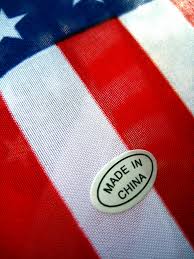
China, the biggest foreign creditor of the United States, has waded into the American budget crisis, warning Congress that it must resolve the political impasse over the debt ceiling without further delay.

The Chinese Vice Foreign Minister, Zhu Guangyao, told America’s deadlocked politicians on Monday that “the clock is ticking” and called on them to approve an extension of the national borrowing limit before the federal government is projected to run out of cash on 17 October.

uschina“We ask that the United States earnestly takes steps to resolve in a timely way the political issues around the debt ceiling and prevent a US debt default to ensure the safety of Chinese investments in the United States,”  Mr Zhu told reporters in Beijing. “This is the United States’ responsibility,” he added.

The American government entered its seventh day of shutdown on Monday, following the failure of Congress to approve the national budget a week ago. And there was little sign of progress on the still more crucial issue of the fast-approaching “debt ceiling”  deadline. Yet rather than indicating  a willingness to negotiate, the Republican Speaker of the House of Representatives, John Boehner, stated on Sunday that it was “time for us to stand and fight” over the budget. He added that a default was “the path we’re on”. American stock markets opened down in response to the belligerent comments yesterday, with the S&P 500 Index of leading shares shedding 0.5 per cent.

In September 2008 China eclipsed Japan to become the biggest single foreign creditor of the US federal government. The US administration estimates that the China government holds at least $1.3 trillion of its bonds. The total could be higher because Beijing is known to hold American debt through intermediaries. And, in total, the Beijing authorities have $3.5trn of dollar-denominated assets, which would also be hit hard in the event of a default.

These vast foreign exchange holdings are a by-product of China’s closed financial system and persistent current account surplus, which means that most foreign currency that enters the country accumulates with the central bank. The central bank then invests the money in normally “safe” dollar assets. The vast dollar reserves are also a legacy of China’s policy in recent decades of artificially holding down the value of its currency, the renminbi, in order to boost the overseas sales of its politically influential export industry.

However, economists have criticised the popular idea that China could exert political or economic leverage over Washington by threatening to sell its dollar investments, since such a drastic shift would ultimately serve to undermine the paper value of Beijing’s own vast investment portfolio. Nevertheless, China’s creditor position and its status as the world’s second largest economy gives its voice some authority in Washington and Mr Zhu made it clear that private representations had already been made. “The US is clearly aware of China’s concerns about the financial stalemate and China’s request for the US to ensure the safety of Chinese investments,” he said yesterday.

Since the global financial crisis, which led to a sharp depreciation in the value of the dollar against the renminbi, the authorities in Beijing have been concerned about the fact that so much of their national reserves are held in the form of the American currency. China has been promoting the idea of a new reserve currency to replace the greenback, with some analysts suggesting that the renminbi could one day take its place.

Mr Zhu stressed that it was vital, not only for China but the wider global economy, for America to resolve its budget impasse. “Safeguarding the debt is of vital importance to the economy of the US and the world,” he said. Referring to a similar deadlock in 2011, which led to a downgrade of the US AAA credit rating by the Standard & Poor’s agency, Mr Zhu said: “We hope the United States fully understands the lessons of history.”

The concerns over the stability of the dollar come at a time of geo-political flux. Barack Obama has sought to “pivot” his foreign policy to Asia to counter China’s growing military influence. But the shutdown has forced the US President to cancel his visit to Asia this week to attend a summit. – The Independent

US Senate passes comprehensive immigration reform

In a vote hailed by US Pres

The United States senate

ident Barack Obama, the Senate on Thursday passed comprehensive immigration reform that would put 11 million undocumented people on a path to earning citizenship.

Chants of “Yes we did!” erupted from the public galleries after senators voted 68-32 to approve the landmark legislation, which pours unprecedented resources into border security, revamps legal immigration and requires a 13-year wait before those without papers can apply to become US citizens.

Fourteen Republicans joined a unanimous Democratic side in what Senate Majority Leader Harry Reid deemed a historic vote.

As Vice President Joe Biden presided over the chamber, Reid took the rare move of calling on members to cast votes from their Senate desks.

“We’ve taken giant steps forward towards solving our immigration problem today,” an elated Senator Chuck Schumer, one of the four Democrats who crafted the bill with four Republicans in the so-called “Gang of 8,” told reporters.

The measure now faces a rocky road in the Republican-led House of Representatives, but Schumer and Republican Gang of 8 Senator John McCain made a direct appeal to their colleagues on the other side of the US Capitol: work with us to achieve the most important immigration reform in a quarter century.

“To our friends in the House, we ask for your consideration, and we stand ready to sit down and negotiate with you,” McCain said.

“We may have different views on different aspects of this issue but we should all of us here have the same goal, and that is to take 11 million people out of the shadows, secure our borders, and make sure this is a nation of opportunity and freedom.”

Obama welcomed the Senate vote and urged the House to follow suit.

“Today, with a strong bipartisan vote, the United States Senate delivered for the American people, bringing us a critical step closer to fixing our broken immigration system once and for all,” Obama said.

But the president warned the bill’s supporters to “keep a watchful eye” on efforts to scupper reform, saying “now is the time when opponents will try their hardest to pull this bipartisan effort apart.”

The bill’s authors spent months crafting the 1,000-plus-page document, which pours $46 billion into border security and other efforts, including electronic employment verification and a modernized entry-exit system.

It requires immigrants to pass background checks, pay fees, fines and back taxes, learn English, gain employment, and as Reid said, “stay out of trouble.”

The bill was debated for three weeks on the Senate floor and dozens of amendments were added as Republicans squared off against one another over the merits of the legislation.

Obama hopes to sign immigration reform into law this year, but several House Republicans have said the bill will be dead in the water without significant changes, particularly on border security.

“The House is not going to take up and vote on whatever the Senate passes,” Republican House Speaker John Boehner told reporters.

“We’re going to do our own bill, through regular order, and it’ll be legislation that reflects the will of our majority and the will of the American people.”

Opponents have said the bill is too costly, or argue that loopholes will prevent authorities from gaining full operational control of the border before the citizenship process begins.

“The one thing people are going to be very unhappy with is if they vote for this bill, we document all of these undocumented workers, but then we get 10 million more come into the country,” Senator Rand Paul told AFP.

Shortly before the vote, Senator Marco Rubio, perhaps the legislation’s most forceful advocate and a potential 2016 presidential candidate, made the closing arguments.

Rubio cited his own parents’ flight from Cuba to Florida as reflective of a journey millions of immigrants have taken to a new life in a country whose work ethic, rule of law and opportunity quickly changes them for the better.

“Because well before they became citizens, in their hearts they had already become Americans,” Rubio said.

Mexico welcomed passage of the bill, with the foreign ministry saying in a statement that it had the potential to improve the lives of millions of Mexicans living in the United States.

Earlier this week however Foreign Minister Jose Antonio Meade criticized provisions that would tighten security along the US-Mexico border.

Building more “walls” would not solve the immigration issue, he argued. – AFP