SA must learn new anthem and fly AU flag

President Jacob Zuma on Sunday urged South Africans to learn the African Union anthem, and asked companies and institutions to fly the African Union flag alongside that of the national flag.

“On this 21st year of being part of the AU, we must begin a new chapter and formalise the promotion of the AU and our African identity in every aspect of life,” Zuma said while speaking at an Africa Day event at the University of Pretoria.

“Starting today, every school, church or community choir and individuals, must practice the African Union anthem so that we can sing it at all our important gatherings and celebrations.”

We urge South African institutions and companies to begin flying the African Union flag together with the South African flag.”

Africa Day is officially celebrated on May 25 to commemorate the formation of the Organisation of African Unity (OAU), now known as the African Union (AU).

South Africa joined the OAU on May 23, 1994.

Zuma said South Africans should reclaim their African identity which was suppressed during the apartheid era.

South Africa would continue working with the AU to advance peace and stability on the continent.

“We are proud of our modest contribution to the success of the continent through involvement in peacemaking, peacekeeping as well as reconstruction and development, working within the ambit of the African Union with other sister countries,” said Zuma.

“We continue to work together as Africans to find solutions in the Democratic Republic of Congo, Somalia, Mali, Sudan, the Central African Republic and other parts of the continent facing challenges such as Burundi in recent weeks.”

While the continent continued to show advancements on the economic front, more work needed to be done, said Zuma.

“Africa is one of the fastest growing regions in the world. We have a sound socio-economic development plan in the form of the New Partnership for Africa’s Development, NEPAD. We have clear programmes to advance infrastructure development, industrialisation and advancement in agriculture, health and other social programmes,” he said.

“The challenge is to make the growth inclusive and for it to translate into an improved quality of life for the one billion Africans who inhabit our continent.”

Source: ANA

UN celebrates World Toilet Day and multilingualism

multilingualismThe United Nations General Assembly adopted a resolution to mark “World Toilet Day.” The day will be celebrated November 19.

“The amusement and laughter likely to follow the designation of 19 November as ‘World Toilet Day’ would all be worthwhile if people’s attention was drawn to the fact that 2.5 billion people lacked proper sanitation and 1.1 billion were forced to defecate in the open, the General Assembly heard today,” a U.N. press release reads.

“Ending open defecation will lead to a 35 per cent reduction in diarrhoea, which results in over 750,000 deaths of children under five years of age every year,” Singapore’s representative said as he tabled a draft resolution on Sanitation for All, one of four adopted by consensus today. Apart from establishing World Toilet Day, the text also urged Member States and the United Nations system to encourage behavioural change, to introduce policies that would increase sanitation among the poor, and to accelerate progress towards attaining Millennium Development Goal 7.

Tajikistan’s representative, speaking also on behalf of Finland, Thailand and Hungary — the Steering Committee of the Group of Friends of Water — underlined the need for accelerated, bolder action on sanitation. He also called for expansion of the water agenda beyond securing water, hygiene and sanitation for all, to address other matters, like water-resource management, water quality and wastewater.

The Assembly went on to adopt a draft resolution on multilingualism, which emphasized the paramount importance of equality among the six official languages of the United Nations. It underlined the need for full implementation of the resolutions establishing arrangements for the official and working languages of the United Nations, as well as the Secretariat’s responsibility for the equitable integration of multilingualism into is activities.

By other terms, the Assembly emphasized the importance of making use of all the official languages and of ensuring their full and equitable treatment in all activities of the Department of Public Information, with a view to eliminating the disparity between the use of English and that of the other five. It reaffirmed the need for full parity among the six official languages, and for linguistic diversity on all United Nations-related materials on the web, in documentation and conference services, in human resources management, as well as in United Nations field offices and peacekeeping operations.

Taking up a draft titled “Causes of conflict and the promotion of durable peace and sustainable development in Africa” (document A/67/L.59/Rev.1), the Assembly called upon the United Nations system and Member States to support peace-consolidation mechanisms and processes, to assist in post-conflict countries, to support efforts by African countries to promote political, social and economic inclusion, to support the African Union and to deliver expeditiously on commitments to ensure the full and speedy implementation of the political declaration on Africa’s development needs, as well as implementation of the New Partnership for Africa’s Development (NEPAD).

Nawaf Salam ( Lebanon), Acting President of the Assembly, then announced that consideration of the draft resolution “New Partnership for Africa’s Development: progress in implementation and international support” (document A/67/L.57/Rev.1) would be postponed for one week.

Also today, the Assembly elected Timor-Leste, by acclamation, as a Vice-President representing the Group of Asian States for the Assembly’s sixty-eighth session, following the resignation of the representative of Uzbekistan.

The General Assembly will reconvene at a time and date to be announced. – The Weekly Standard

South Africa turns to hydropower

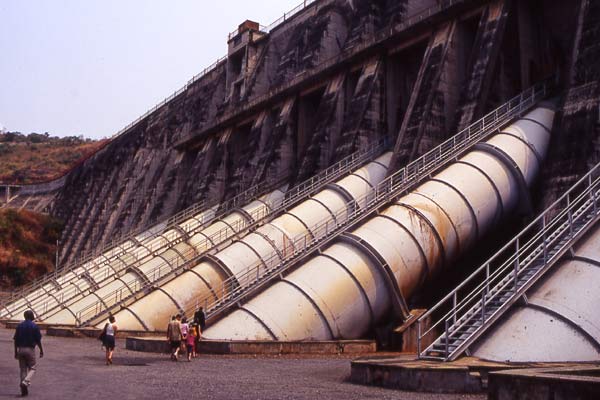
Cabinet announced yesterday it had approved a treaty between SA and the Democratic Republic of the Congo for the development of the Grand Inga hydroelectric project.

The project to exploit the Congo River for hydropower of 40,000 MW — nearly the size of SA’s current installed capacity — would be developed in phases. The additional source of electricity would be a welcome relief for SA, which is struggling to keep up with increasing demand.

Cabinet spokesman Jimmy Manyi said the purpose of the treaty was to develop an enabling framework linking Congo and SA into the Grand Inga projects, and to allow the countries to jointly explore economic feasibility for the project.

“The project will form part of SA’s government strategy to promote renewable energy in the region, contribute to a reduction of carbon emissions, ensure security of supply and to develop energy infrastructure on the continent and the Southern African Development Community region in particular,” Mr Manyi said.

The treaty could thrust Eskom into a central role in the project. Eskom yesterday declined to comment on Grand Inga, but the power utility has been contemplating its role in regional power projects.

In a speech in Pretoria on Friday, Eskom CE Brian Dames said there was potential for SA to source power from other countries in the region.

Mr Dames said the problem with big projects in the region was that none of them were bankable unless Eskom, which is Africa’s largest power utility, bought the power.

“We see ourselves in the role of buying the power,” he said.

“If opportunities arise to work in partnership with other players to be on the investment side of some of the projects, we would look at those. We are already working with independent power producers in the region ,” he said.

SA, through the integrated resource plan for electricity (IRP2010), has committed itself to a huge rollout of clean power in the period up to 2030, Mr Dames said.

“We have done a modelling exercise on the IRP2010, making certain assumptions about the role of Eskom and of independent power producers. We have found that as it stands, the plan would be extremely difficult to finance, and the cost of implementing it in its entirety out to 2030 might not be affordable for SA,” said Mr Dames.

The cost of the renewable energy, and the nuclear plans, might simply be too steep. SA was committed to reducing its carbon emissions and Eskom supported that.

He said SA was keen to leverage hydro in the north and gas fields in the east and west, as well as the extensive land which the region has available for solar generation.