
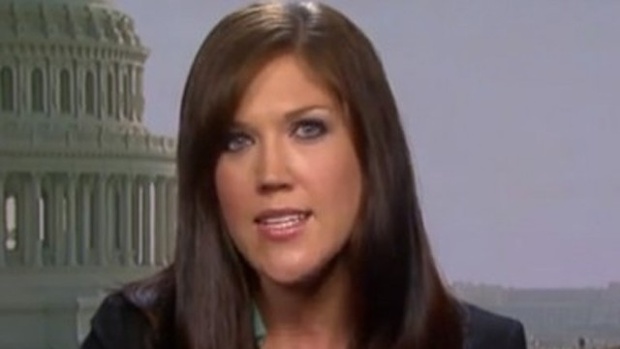
The Syria “researcher” at the center of a week-long controversy surrounding her academic credentials and her work with the Syrian opposition, admitted for the first time to The Daily Beast she was never enrolled in a Ph.D. program despite representations she made to the press and multiple organizations for whom she worked.
She nevertheless asked reporters to call her “doctor”.
Elizabeth O’Bagy, whose work on the Syrian opposition was hailed by Secretary of State John Kerry and Sen. John McCain (R-AZ), was suddenly fired from her job as the lead Syria researcher at the Institute for the Study of War (ISW) on Sept. 10 after her bosses came under scrutiny.
O’Bagy confirmed to The Daily Beast that she was only enrolled in a master’s program at Georgetown and had applied to join the joint MA/Ph.D. program but was never accepted.
The controversy surrounding O’Bagy first began after she published an op-ed in The Wall Street Journal Aug. 30 that included her affiliation with ISW but did not mention her work with the Syrian Emergency Task Force, a nonprofit organization that works directly with the Syrian opposition as well as with the State Department. Some reports accused the Journal and O’Bagy of hiding her work with the Syrian rebels.
The Task Force initially waited to make any judgment about O’Bagy, but asked for her resignation on Monday after conducting their own internal investigation.
“The Syrian Emergency Task Force announced officially today that Elizabeth O’Bagy is no longer working with the organization,” the group’s executive director Mouaz Moustafa told The Daily Beast in a statement Monday.
O’Bagy’s latest admission, that she was never a Ph.D. student in any way, comes after a series of articles in which O’Bagy claimed, falsely, that she was enrolled in the joint MA/Ph.D. program.
Kim Kagan, the Neo-Conservative president of ISW, told The Daily Beast that when she made the decision to fire O’Bagy, she was still under the impression O’Bagy’s deception was solely about defending her Ph.D. dissertation. Only after dismissing her did Kagan learn from Georgetown that O’Bagy had never been enrolled in the joint MA/Ph.D. program in the first place. Kagan’s version is hard to believe though.
O’Bagy went from a graduate student and intern to a pundit making regular appearances on Fox News and being published in Foreign Policy, The Atlantic, and well, The Wall Street Journal. She was promoted to Senior Analyst and then to Syria Team Lead at ISW, and had become known as a go-to expert on the Syrian rebels among foreign policy experts.
Kagan, friend and hagiographer to David Petraeus, counselor to Stanley McChrystal, sister-in-law to Robert Kagan and wife of Frederick Kagan, pro-war hawk and author of the so-called “surge strategy” that convinced a failure-stunned George W. Bush to put 20,000 more troops in harms way in Iraq in 2007, should know better. Rumours abound that O’Bagy never even made it to Syria.
Kagan, the consumate imperialist, often likened American generals to Napoleon and Patton, but doesn’t have the same credibility these days, now that Afghanistan and Iraq are largely viewed as failures by the American public.
O’Bagy obviously provided a fresh face and the right tone to sell war.

