‘Black Jesus’ castrated by mob after human sacrifices

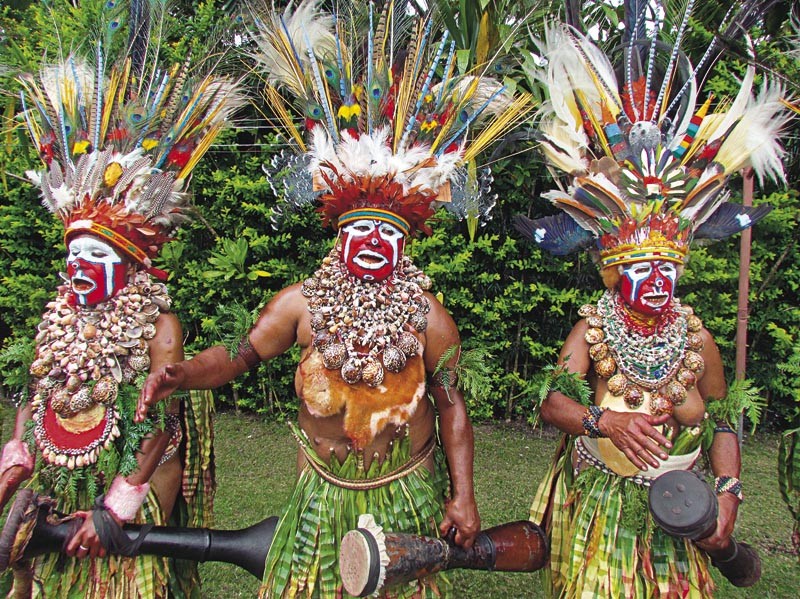
Steven Tari (middle) in 2007

An infamous Papua New Guinea cult leader known as “Black Jesus” was castrated by an angry mob after being hacked to death for killing young girls as sacrifices, reports said on Monday.

Steven Tari, a convicted rapist who was suspected of cannibalism, was killed in a remote PNG village last week, with gory details of his death emerging.

The National newspaper said Tari, who had been on the run since escaping from a prison in Madang in the Pacific nation’s east during a mass break-out with 48 others in March, was hunted down by 80 men.

It said he was killed, castrated and then dragged with a cane tied around his neck to a shallow pit where his body was dumped.

The corpse was dug up by police, prison and health workers on Friday. Juith Gawi, a doctor at Modilion Hospital, said he had multiple knife wounds.

“He was chopped and slashed with bush knives on both arms and legs, chest and stomach which revealed his intestines. He was also castrated,” Gawi said.

Tari, a failed Lutheran pastor who was widely known as Black Jesus, was found guilty in 2010 of raping girls who belonged to his Christian-based sect and sentenced to up to 10 years.

At the time, he had thousands of village followers, including a core of armed warriors to protect him, in what is commonly referred to in PNG as a “cargo cult”.

As part of his “culture ministry”, he preached that young girls were to be “married” to him as it was God’s prophecy.

The National said villagers where he was hiding became fed up with cult beliefs and practices, which included “the killing of young girls as sacrifices”.

Local police official Ray Ban said Tari and his followers offered Rose Wagum, 15, last week as a “sacrifice”. She was found with stab wounds and reportedly died of blood loss.

The group also tried to offer another 14-year-old girl but were stopped by the mob which eventually killed Tari.

The National said Wagum’s aunt was the first known “flower girl” for Tari and found young virgins for him, and it was she who took her niece to his camp to be sacrificed.

Ban said at least one other girl was still missing.

“Tari is dead and this cult worship dies with him,” Ban said.

“Stop this worship now. If I hear any more cult worship here, I will return with my men.”

When he was captured in 2007, there were widespread allegations that Tari’s cult also practised cannibalism along with sacrificial blood rituals, but police only charged him with rape.

PNG is a sprawling nation where black magic, sorcery and cannibalism sometimes occur.

Last year, police arrested dozens of people linked to an alleged cannibal cult accused of killing at least seven people, eating their brains raw and making soup from their penises. – AFP
Papua New Guinea considers death penalty for medicine murders, rape

Papua New Guinea is considering introducing the death penalty for sorcery killings and rape after a spate of horrific crimes against women drew international condemnation, reports said Monday.

Attorney-General Kerenga Kua said public opinion had swung in favour of capital punishment after a series of brutal sorcery-related murders including beheadings and torchings, and the gang rape of a US academic.

The crimes have prompted an international outcry and Kua said he had received more than 100 petitions from human rights and other groups across the globe calling for urgent action on the violence against women.

“Those horrific, brutal, gruesome killings of the type that a woman was burnt alive to her death should attract death penalty,” The National newspaper reported Kua as saying.

“Most of the people are ready for it and they want it now as they are fed up of the law and order problems in this country and they want to see a more liberal use of the death penalty.”

In February a 20-year-old mother accused of witchcraft was stripped and burned alive in front of a crowd at a village market. Earlier this month an elderly woman was beheaded after being accused of black magic.

Also this month, an Australian was murdered and his friend sexually assaulted by a group of men, followed barely a week later by the ambush of the US researcher, her husband and their guide on a wilderness track.

She was stripped, had her hair cut to the scalp and was gang-raped by a group of nine men armed with rifles and knives before a sound in the forest frightened them away.

Kua said he had been monitoring the public mood on the issue and it was time the government “did something radical” to halt the crimes, which have undermined PNG’s standing as a tourism and investment destination.

“My job is simply to do what the people want me to do. I cannot shut my eyes to the people’s request. I’m not deaf, I’m listening; if they want it we will give it to them,” he said.

The offences of treason, piracy and wilful murder are already punishable by death in the impoverished Pacific nation, but the country has not carried out an execution since 1954.

The Catholic Church condemned Kua’s remarks as “giving in to the same vengeful streak in PNG culture that is part of our current problem”, and said the death penalty would not be a deterrent to violent crime.

“Those who commit these offences do not believe that they will be caught and even less be actually sentenced,” said Archbishop Douglas Young in a statement.

“The major deterrent to crime is not the severity of punishment but its certainty.”

Young said the government needed to strengthen police capacity to “find, arrest and prosecute offenders”.

“Give the clear message, if you do this you will be caught and you will be punished. Change cultural norms that encourage the protection of offenders,” he said.

“Let’s turn our attention to policies that will genuinely address the plague of violence in PNG, not those that serve only to further brutalise the nation.” – AFP