Obama to ‘celebrate Mandela’s legacy’

Barack Obama on Air Force One

US President Barack Obama flies to South Africa Friday hoping to pay homage to the legacy of his critically ill hero Nelson Mandela, who is fighting for his life in hospital.

Mandela’s ill health means the two men, who shattered racial boundaries on either side of the Atlantic, are not expected to have a long-anticipated meeting for the cameras.

Still, reflections on Mandela’s extraordinary journey from prisoner to president are likely to permeate Obama’s three-day stay.

Mandela, who turns 95 next month, was rushed to hospital three weeks ago with a recurrent lung disease and has since appeared close to death.

On the eve of the visit, South Africa’s first black president was said to be in a critical condition, but had stabilised since a scare forced his successor Jacob Zuma to cancel a trip to neighbouring Mozambique.

“He is much better today,” said Zuma after seeing Mandela on Thursday for the second time in less than 24 hours.

Yet South Africans, including Mandela’s family, remain braced for the worst.

“I won’t lie. It doesn’t look good,” daughter Makaziwe Mandela said. But “if we speak to him he responds and tries to open his eyes — he’s still there.”

“Anything is imminent, but I want to emphasise again that it is only God who knows when the time to go is,” she told local radio.

Meanwhile Obama, the United States’s first black president, led a chorus of support for the man he dubbed a “hero for the world.”

Mandela’s plight has lent a deeply poignant tone to the visit, around which Obama has built a three-nation Africa tour, and his plans could yet be upended by sudden developments in the ex-president’s condition.

“The president will be speaking to the legacy of Nelson Mandela and that will be a significant part of our time in South Africa,” said deputy national security advisor Ben Rhodes.

“The president will treasure any opportunity he has to celebrate that legacy.”

The White House says it is in the hands of the Mandela family and the South African authorities on any aspect of the visit.

“We will obviously be very deferential to the developments that take place and the wishes of the family and the South African government,” Rhodes said.

A visit by Obama to Mandela’s former jail cell on Robben Island, off Cape Town on Sunday would now take on extra “profundity”, he added.

Speaking in Senegal on the first leg of his long-awaited African trip, Obama described Mandela as “a personal hero.”

“I think he is a hero for the world, and if and when he passes from this place, one thing I think we all know is that his legacy is one that will linger on throughout the ages.”

The US president recalled how Mandela had inspired him to take up political activity, when he campaigned for the anti-apartheid movement as a student in the late 1970s.

South Africans have also been marking the life of a man who led their country out of centuries of white rule.

Outside Mandela’s hospital a wall of messages and flowers has become the focal point for a nation saying a long goodbye to one of the greatest figures of the 20th century.

“There is no sadness here. There is celebration. He is a giant,” said Nomhlahla Donry, 57, whose husband served time with the revered leader.

Mandela has been hospitalised four times since December, mostly for a stubborn lung infection.

The man once branded a terrorist by the United States and Britain walked free from prison near Cape Town in 1990.

He went on to negotiate an end to white minority rule and won South Africa’s first fully democratic elections in 1994.

He forged a path of racial reconciliation during his single term as president, before taking up a new role as a roving elder statesman and leading AIDS campaigner.

He stepped back from public life in 2004 and has not been seen in public since the football World Cup finals in South Africa in 2010.

But Mandela still draws vast global interest, interest which now appears to be wearing on his family.

Mandela’s oldest daughter Makaziwe on Thursday slammed the “crass” media frenzy around her critically ill father, likening the press to vultures.

“They violate all boundaries,” she said accusing the foreign press of “a racist element” by crossing cultural boundaries.

“It’s like truly vultures waiting when a lion has devoured a buffalo, waiting there you know for the last carcasses.”

With his health now fading, Mandela’s supporters are starting to show signs of resignation — while preparing to celebrate his legacy.

In the rural village of Qunu where he grew up amid cattle and mud-walled huts, 93-year-old Keqane Keledwane said she was not ready to say goodbye to her neighbour.

“I want him to get well. I don’t want to be the only one left behind,” said Keledwane, who lives across the road from Mandela’s house. “I wish him a long life, my old friend.” – AFP
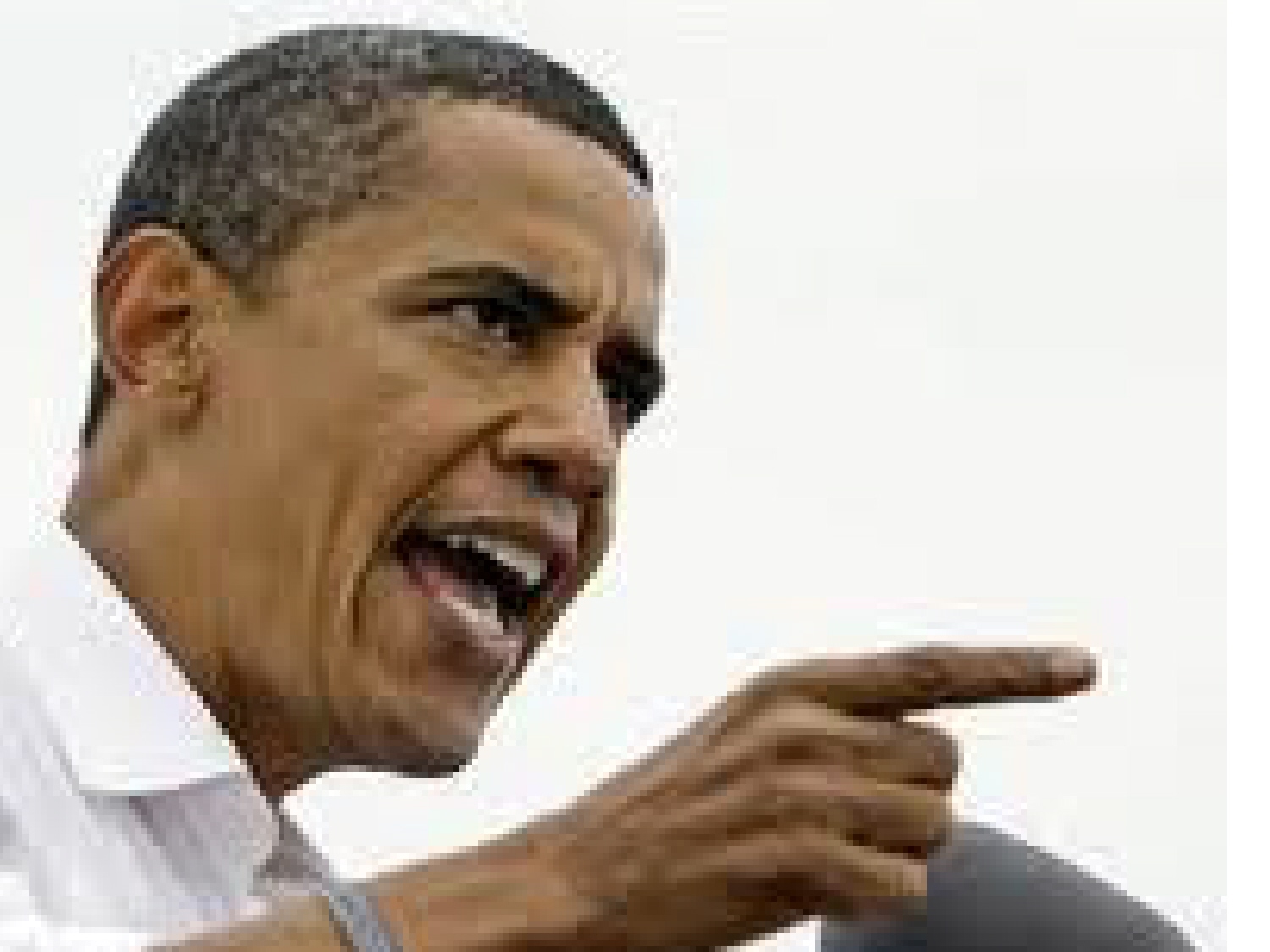
SA unions, parties to protest against Obama visit

Barack Obama
Barack Obama

US President Barack Obama’s upcoming visit to South Africa was condemned on Sunday by some trade unions, political parties, and civil society bodies.

“We categorically make it known that the visit of the US president to South Africa is an unwelcome visit that will be protested, picketed and resisted by all justice and peace-loving peoples of this country,” the organisations said in a joint statement on Sunday.

“Friendship with South Africa must be based on values of justice, freedom and equality, and these the US has offended, undermined and ridiculed through its actions in the global front,” they said.

The statement was issued by the National Unions of Metalworkers of SA, the SA Communist Party, the Young Communist League of SA, the SA Students’ Congress, the Muslim Students’ Association, the National Education, Health and Allied Workers’ Union, the Congress of SA Trade Unions, the Friends of Cuba Society, Boycott, Divestment and Sanctions against Israel in SA, and the World Federation of Trade Unions.

“Our rejection is based the US’s arrogant, selfish and oppressive foreign policies, treatment of workers and international trade relations that are rooted in war-mongering, neo-liberal super-exploitation, colonial racism and the disregard and destruction of the environment, thus making the realisation of a just and peaceful world impossible,” they said.

Obama’s visit later this month would be his first to South Africa since he was elected head of state.

“The US, under his leadership, has escalated its assault on human rights, militarisation of international relations and continuing galloping of world resources at the absolute expense of the environment and oppressed peoples of the world,” the organisations said.

Issues such as the US’s use of world resources, its role maintaining the underdevelopment of the African continent, and its contribution to global warming would be highlighted in the protests.

The public was invited to participate in a national day of action on June 28, where there would be a protest march from the Union Buildings in Pretoria to the US embassy from 10am.

There would also be a demonstration on June 29 against the University of Johannesburg’s decision to award Obama an honorary doctorate. It would be held at the university’s Soweto campus at 11am. – Sapa

South African Muslims want Obama arrested for war crimes

South African Muslims

The Muslim Lawyers Association (MLA) intends taking the NPA to court for refusing to arrest US President Barack Obama on his South African visit later this month.

“We will ask the court to review the decision neither to investigate or prosecute and to order them to commence a full investigation in terms of the Rome Statute,” MLA attorney Yousha Tayob said.

The MLA said it submitted a complaint to the national director of public prosecutions and the SA Police Service, calling for Obama to be “investigated, charged, arrested, and tried in a South African court for war crimes, crimes against humanity, and genocide”.

The MLA cited the Obama administration’s drone programme as the reason for its action.

The association said the complaint was made in terms of international customary law, as well as the implementation of the Rome Statute of the International Criminal Court, Act 2002 (the ICC Act).

“The [drone] programme is responsible for extra-judicial killings of both innocent civilians as well as US citizens abroad. The drone strike policy has continued unabated with total disregard for territorial sovereignty and this is cited as the primary reason that Obama should be investigated and tried for war crimes, crimes against humanity, and genocide,” the MLA said.

A drone is an unmanned aerial vehicle. In a recent speech Obama said the US used drones to target people it considered a threat to its national security when other measures were not possible.

The National Prosecuting Authority (NPA) confirmed receiving the MLA’s documents.

Tayob said the MLA received a letter of reply from the state attorney’s office on Wednesday.

“They have decided they are not commencing an investigation,” said Tayob.

The NPA was also not going to arrest or secure Obama’s attendance in a court room.

Tayob said the application for a review would be made next week, probably in the High Court in Pretoria.

The Media Review Network (MRN) was also opposed to Obama’s visit. Executive director Iqbal Jassat said the MRN planned a series of protests over Obama’s visits, over the US government’s use of drones, its failure to stop the “occupation of Muslim countries”, and its not shutting down the Guantanamo Bay detention centre as promised.

The MRN supports the MLA’s planned legal action.

“We have rallied behind these actions. Levels of pressure developed by civil society would force the US government to review the purpose of this visit and possibly lead to the cancellation,” said Jassat.

A row is reportedly also brewing over plans by the University of Johannesburg to award Obama an honorary degree.

According to a report in the Sunday Independent, students were split on this.

But deputy vice chancellor Tinyiko Maluleke said the process was a lengthy one, requiring high levels of consultation and agreement, and had not been finalised.

The process of nominating someone for an honorary degree began with discussions in the honorary degrees committee, where candidates had to receive 100 percent support.

From there, the nomination went to the senate, which consisted of senior academics and representatives of the Students’ Representative Committee. After that it, went to the council, which also consisted of student representatives.

At each stage, a certain amount of support was required.

“So when people say stuff has not been consulted or students have not been included, it’s simply not true. It’s a very lengthy process,” said Maluleke.

The same process applied to all nominees. – Sapa