SA stashes billions in Swiss banks

Hundreds of South Africans have stashed more than $2-billion (about R23-billion) in accounts at Swiss banking group HSBC, details of which have now emerged in a leak that shines a new spotlight on the secretive world of Swiss banking.

The information was dug out by a network of journalists in 45 countries operating under the banner of the International Consortium of Investigative Journalists. They used records first obtained by French newspaper Le Monde.

Another version of the records was obtained by the French government in 2010, which led to numerous prosecutions, but this is the first global release of the data.

It is not illegal to have a Swiss account, and not all South Africans who have them use them with duplicitous intent.

However, the list has also exposed the secret bank accounts in which crooks, tax dodgers, arms dealers, shady diamond dealers, politicians and celebrities stash their cash.

In all, $102-billion was stashed in Swiss accounts on behalf of more than 100000 people and entities from 203 countries.

There were 585 South Africans on the list, who held $2.09-billion in 2221 accounts.

The documents confirm that Fana Hlongwane – accused of being the bagman for bribes paid in South Africa’s arms deal – held a number of accounts with HSBC.

Hlongwane is listed as the beneficial owner of an account, Leynier Finance SA, that contained $888000. Two other accounts, which held $12-million at one point in 2006-2007, do not specify his role.

Hlongwane did not reply to requests for comment. Efforts to reach his lawyers failed.

Documents obtained by the Sunday Times in 2010 confirmed that Hlongwane, dubbed a playboy with a millionaire’s lifestyle, was indirectly paid millions by British defence company BAE.

Hlongwane was the special adviser to the late defence minister Joe Modise.

In December, Hlongwane told the arms deal inquiry that money did not change hands in the deal.

“Contrary to popular belief, I was never appointed or requested by the minister [Modise] to participate in the [strategic defence procurement package] in any manner, shape or form,” he said.

A number of other prominent South Africans, including directors of large JSE-listed companies, are also named as account holders.

But a US investigation in 2012 also showed that a number of shady individuals – including Latin-American drug cartels, and terrorists – used Swiss banks to launder millions.

Source: Timeslive
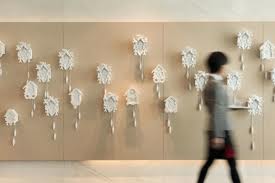
Swiss clocks tick past deadline to disclose hidden assets

swissclockSome 300 Swiss banks had until the end of Monday to determine whether to give the United States records of Americans hiding assets there as Washington threatens institutions with legal action for assisting those avoiding US taxes.

The US and Switzerland have been at odds in recent years, with Washington alleging that Swiss banks have helped US citizens hide billions of dollars in assets from authorities.

Pursuant to a deal between the nations, Swiss banks can avoid US prosecution by volunteering account information on American clients, along with paying a fine.

The penalty equals between 20 and 50 percent of the value of the undeclared accounts, based on when they were conceived. If a bank opened an undeclared account before 2009 – when the Swiss banking giant UBS was fined US$780 million by the US for tax evasion – it would face a lower penalty.

Notoriously secretive Swiss banks that do not disclose account information will face stiffer penalties and prosecution in the US if Washington finds they have hidden Americans’ assets.

Egon Vorfeld, managing partner at the Forum Finance Group SA, suggested smaller banking entities will feel the brunt of the high fines even though they are less likely to hide US citizen assets.

“Most of the larger banks are already cooperating, and it’s fairly clear which direction they are going,” Vorfeld told RT in an interview. “They have run the numbers and know exactly what they are doing. Perhaps some of the smaller banks could be affected because the fines – the worst of them – could be very onerous on them.”

Negotiator of the deal Swiss Finance Minister Eveline Widmer-Schlumpf has encouraged banks to comply, but experts are split on whether bending to Washington and offering disclosure is a good idea.

“If the United States is threatening all the Swiss banks that it will block their access to the US market and to conducting operations in dollars, let it say so clearly, and let Switzerland take the country before…the World Trade Organization for abusing its dominant position,” wrote business lawyer Douglas Hornung in a recent opinion piece in the Le Temps daily.

“But please, don’t give in to inexcusable blackmail and let us remain the proud masters of our destiny, and of our past. We have a choice,” he added.

Vorfeld told RT the issue of why the US feels it should be able to tell Swiss banks what to do comes down to its large footprint in global banking operations.

“The US has an awful lot of clout and is able to throw its weight around, and feels justified to do so. But clearly a lot of other people feel there is injustice in this supposed justice system, that a lot of the smaller banks will be possibly victims,” Vorfeld said, suggesting those smaller institutions are also more likely to possibly evade the US demand. RT