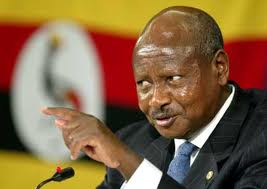
The Ugandan tabloid, Red Pepper, has named the country’s 200 top homosexuals, a day after President Yoweri Museveni signed into law a bill toughening penalties for gay people.
The list appeared under the headline: “Exposed”. Western governments have condemned Mr Museveni’s decision to approve the bill, but South Africa would not be drawn into the debate.
Homosexuality is also frowned upon by most South African blacks. The ANC fears that an open debate would upset their voters ahead of the coming elections.
Although same-sex relationships are legal in South Africa, the black majority are against such unions.
The Ugandan bill includes life sentences for gay sex and same-sex marriage, but a clause criminalising those who do not report gay people was removed as well as a proposed sentence of up to 14 years for first-time offenders.
But the passing of the bill has been popularly received in Uganda, where Museveni — in power for 28 years — faces reelection in 2016..
Earlier, government spokesman Ofwono Opondo told Reuters news agency Mr Museveni wanted “to demonstrate Uganda’s independence in the face of Western pressure and provocation”.
Uganda is a deeply conservative society where most people oppose homosexuality.
Homosexual acts were already illegal in Uganda, but the new law bans the promotion of homosexuality and covers lesbians for the first time.
There was applause when Yoweri Museveni spoke out againts gays: “Society can do something about it to discourage the trend”.
Last year the Red Pepper published photographs of retired gay British man Bernard Randall, taken from his stolen laptop, who then arrested and deported last month. The new list also includes some Ugandans still in the closet, the Associated Press news agency reported.
On Monday, US Secretary of State John Kerry said Mr Museveni’s decision would launch an internal review of US assistance programmes to Uganda.
Uganda receives a reported $400m in annual aid from the US.
Sweden’s Development Assistance Minister Hillevi Engstrom called Mr Museveni’s decision “terrible” and said that direct aid to Uganda, worth about $10.8m, could be withdrawn.
As a result of the new law, the Netherlands has stopped a $9.6m subsidy to Uganda’s judicial system.
Norway and Denmark said they would transfer direct aid – together totalling about $17m – to non-governmental organisations.
Sweden’s Finance Minister Anders Borg, who is visiting Uganda for meetings on trade and economic issues, has met with gay rights activists.
Homophobia is widespread in Uganda, where evangelical Christianity is on the rise.
Museveni earlier this month also signed into law anti-pornography and dress code legislation which outlaws “provocative” clothing.