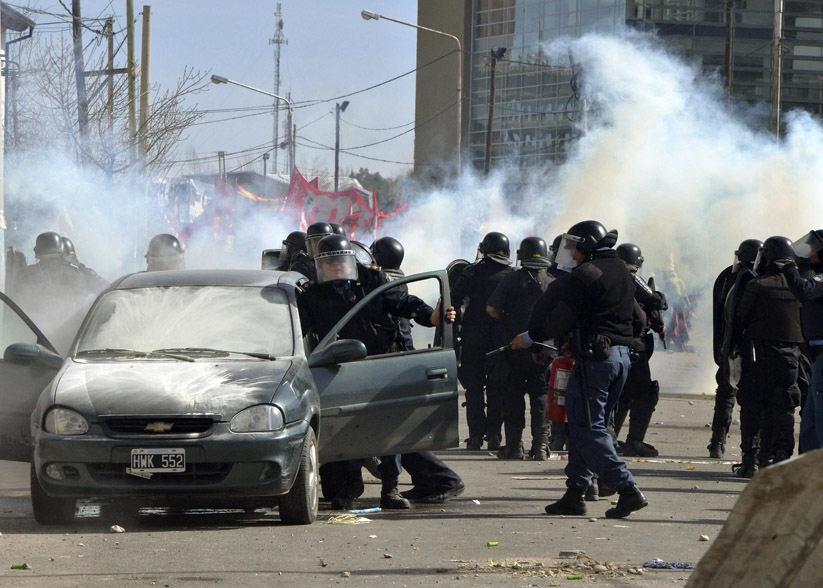
 The momentum of the anti-fracking movement is growing as concerned communities across the globe feel the threat of natural gas development. On October 19, activists around the world will join together for the second annual Global Frackdown, an international day of action and an opportunity to, as one unified community, send a message to protect our resources. In anticipation of this year’s Frackdown, we can’t help but point to the recent victories of the anti-fracking movement in Argentina as an inspiring example of global resistance.
According to the U.S. Energy Information Agency’s June 2013 report, Argentina has the second greatest amount of shale gas resources in the world after China. The country’s potential for natural gas and oil development is disconcerting, but while some aspire for Argentina to become a global leader in shale gas, some communities are standing up to fight back. They have sought international support and strategy, mobilized their communities and targeted legislators to keep fracking out. Their efforts have paid off. More than six municipalities in Argentina have enacted local bans.
Chubut Province is one area formerly threatened by natural gas development. Chubut is located in Patagonia, the southern-most region of Argentina.
The President of Argentina, Cristina Fernández de Kirchner, together with Governor Martín Buzzi, inaugurated new shale exploration activities in Chubut in February. But after just a few months of activism and mobilization efforts, anti-fracking groups achieved a victory: A court in Argentina recently ordered Yacimientos Petrolíferos Fiscales (YPF) to halt fracking in “La Greta”, an exploratory well close to Río Mayo in the Chubut province.
Entre Ríos, a province in northeast Argentina, was also recently granted an injunction against fracking. Entre Ríos is located above one of the world’s largest aquifers, which supplies drinking water for the region.
Hugo Rivas, president of the Proyecto Sur Paraná, points to the community solidarity that was required to achieve this fracking victory: “In the movement to free Entre Ríos of fracking, social, professional, cultural and political sectors have participated and united in this action.”
These kinds of community-based and globally supported efforts are needed to combat the oil and gas industry. Indeed, they fuel the anti-fracking fire. Join us in this year’s Global Frackdown to send out a message as a unified, international community: the movement’s momentum is growing, it is strong, and together we will not allow fracking to destroy our water, air and communities.
Jaime Hamre is an intern for Food & Water Watch’s international program.

 Twenty-nine people sentenced after a power station protest at which an undercover police officer was working have had their convictions quashed.