‘In vitro fertilization’ is Australia’s most popular search item on Google

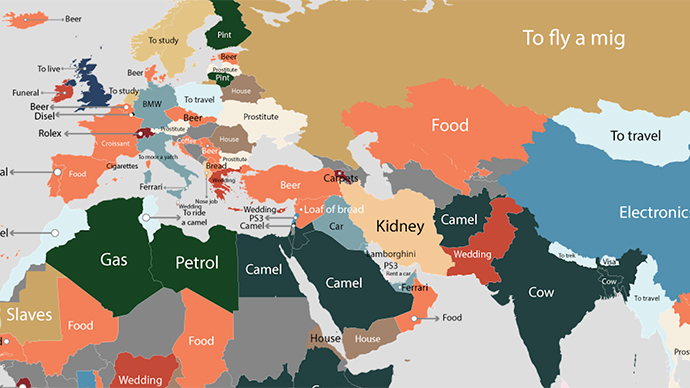
The cost of flying a MiG fighter in Russia, buying kidneys in Iran, prostitutes in Ukraine and rhinoplasty in S. Korea are just a few of the most popular Google requests worldwide, a new map shows. It does give some weird insights into the countries.

Fixr.com, a cost-estimating website has put together a map of the world with the most-Googled things in each country, using the autocomplete formula of “How much does * cost in [x country].”

The search results turned out to be hilarious and informative, and gave a peek into humanity’s cost obsessions per country.

“Looking at some of the most popular Google searches throughout the World reveals some cultural differences, but also many key similarities. It also provides insights into the sometimes strange things people think about when they are alone,” says fixr.com website.

Russians are most interested in “How much does it cost to fly a MiG [military aircraft] in Russia?”

Iranians are eager to sell or to buy kidneys, while the South Koreans are obsessed with their appearance and fixated on rhinoplasty (nose plastic surgery) costs.

The Chinese, Apple’s biggest iPhone market, desire iPhones, of course. On Tuesday, Apple said it sold more iPhones in China than in the US.

The cost of a prostitute is the most Googled demand in a range of countries, such as in Brazil, Ukraine, Bulgaria, Hong Kong, Colombia and Latvia. Slaves crop up in Mauritania, diamonds shine in Sierra Leone and cocaine fires up Honduras, Chile and Taiwan – these are some of the most Googled and weird demands in each of these countries.

Why Japanese people want watermelons or Armenians are obsessed with carpets is as yet a mystery.

Citizens of some countries Google simple ‘tradable’ things, such as cows (India and Bangladesh) or camels (Egypt, Israel and Afghanistan), and apparently, the most devoted McDonald’s fans are Big Mac-loving Serbians.

Ceremonies are another passion worldwide. And not only weddings (Cyprus, Greece) and honeymoons (Maldives), but funerals (Ireland) and divorces (Trinidad and Tobago).

Venezuelans desire “A Gallon of Gas,” while Australians long for babies – IVF (In vitro fertilization) is one of the most Googled searches down under.

The results are not considered to be a scientific report as Google autocomplete results are based on the searcher’s history, and the time and place of search. – RT.COM
Apple’s iPhone loses market share in China

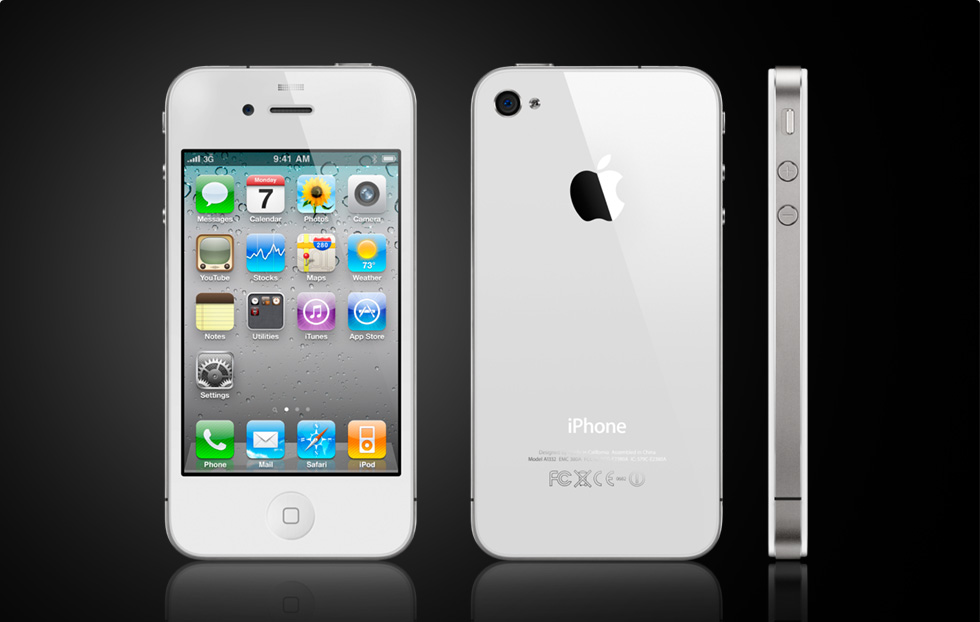
Apple iPhone 4
White Apple iPhone 4S

Apple Inc’s share of China’s booming smartphone market slipped for a second straight quarter in October-December, as it lost ground to cheaper local brands and as some shoppers held off until after the iPhone 4S launch last month.

China, the world’s largest mobile phone market, has not been easy for Apple, which is grappling with a lawsuit from a local firm over the iPad name and issues at its suppliers’ factories over wages and working conditions.

With the number of mobile subscribers set to top 1 billion in China this year, there is cut-throat competition among South Korea’s Samsung Electronics Co Ltd, Nokia, Apple and local firms Huawei Technologies Co Ltd and ZTE Corp.

While Apple regained its top spot as the world’s largest smartphone vendor in the fourth quarter and for last year as a whole, it slipped to 5th place in China, overtaken by ZTE. Apple’s China smartphone market share slid to 7.5 percent from 10.4 percent in July-September.

In the last quarter, Samsung knocked Nokia off the top slot, taking 24.3 percent of the market, more than three times Apple’s share, data from research firm Gartner showed. Nokia’s market share more than halved last year, from above 40 percent in the first quarter to below one fifth by the fourth quarter.

“Chinese handset makers have been actively promoting their smartphones with China’s three telecoms operators, so we saw ZTE and Huawei gain significant market share,” said Taipei-based Gartner analyst CK Lu.

Gartner said this week it expected Apple’s iPhone market share to slip for a couple of quarters as the novelty of its latest 4S model wears off.

In the first quarter of last year, ZTE had a market share of just 3 percent, but ended 2011 ranked 4th with more than 11 percent market share.

Chinese firms are gradually shifting up towards the higher end of the market, unveiling more feature-packed smartphones.

“If you want to sell handsets to the mass market, a simple rule of thumb in China is that the handset price has to be close to 70 percent of the monthly salary,” said Jayesh Easwaramony, an analyst with Frost & Sullivan in Singapore.

“Today, an iPhone is more than two months salary.”

This, said Easwaramony, gives the likes of Huawei and ZTE the opportunity to cater to a mass market that is captivated by the iPhone, but doesn’t have the purchasing power for it.

VALUE FOR MONEY

“The quality of Huawei’s phones is quite high and it’s good value for money compared to the iPhone,” said Dale Dai, a 28-year-old sales executive from Beijing.

Dai, who uses his Huawei phone to write weibo, or Chinese microblogs, surf the Internet and make calls, recently bought a new Honor smartphone for 1,800 yuan ($290), almost a third of the price of a new iPhone 4S at 4,988 yuan.

But given the sheer size of the Chinese market, just targeting the highest end users should be enough for Apple, though it’s not always been a smooth ride.

Last month, shoppers in Beijing threw eggs at the Apple store and fought with police when they were told the iPhone 4S would not be on sale as scheduled.

In Shenzhen, some genuine iPhones and iPads are smuggled in from Hong Kong, while sellers also take advantage of Apple’s popularity by packaging fake iPhones in iPhone 5 boxes – even before the 4S was launched.

In Hong Kong, Apple resorted to an online lottery reservation system for the 4S model after crowd control issues disrupted initial sales.

Analysts expect Apple to stem its slide in market share in China by signing up another carrier.

China Unicom, the country’s No.2 telecoms operator, is currently the only carrier to officially carry the iPhone. It has not officially given its iPhone sales, but analysts estimate it has sold around 3 million iPhones since signing a contract with Apple in 2009.

China Telecom Corp Ltd, the third and smallest operator, is expected to be next to clinch a similar deal with Apple later this year, and analysts predict it would sell about 1.4 million iPhones this year if it can reach a deal with Apple by May, rising to 2-4 million new iPhone users in 2013.

($1 = 6.3016 Chinese yuan)

– Reuters