#Charlottesville: Apple to donate money to anti-white cause

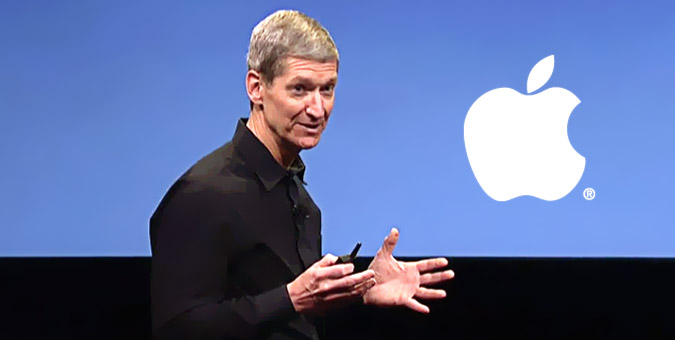
Apple Inc CEO Tim Cook is to donate millions of dollars to anti-white groups in the USA. Together with other liberal “business leaders”, Cook objects to President Donald Trump’s equally apportioning blame to both pro-white groups and AntiFa atttackers for the weekend’s violence in Charlottesville, Virginia.

“I disagree with the president and others who believe that there is a moral equivalence between white supremacists and Nazis, and those who oppose them by standing up for human rights. Equating the two runs counter to our ideals as Americans,” Cook wrote in a note late on Wednesday to employees, according to technology news website Recode.

Cook also said in the letter that Apple will donate $1 million apiece to the Southern Poverty Law Center and the Anti-Defamation League and will match two-for-one their donations to the organizations and other human rights groups until Sept. 30.

“Regardless of your political views, we must all stand together on this one point — that we are all equal. As a company, through our actions, our products and our voice, we will always work to ensure that everyone is treated equally and with respect,” Cook wrote.

Cook’s letter came hours after Trump disbanded two high-profile business advisory councils as several chief executives quit in protest over his remarks blaming weekend violence in Charlottesville, Virginia on anti-racism activists as well as white nationalists that left a 32-year-old woman dead.

“The events of the past several days have been deeply troubling for me, and I’ve heard from many people at Apple who are saddened, outraged or confused,” Cook said.

“What occurred in Charlottesville has no place in our country. Hate is a cancer, and left unchecked it destroys everything in its path. Its scars last generations. History has taught us this time and time again, both in the United States and countries around the world,” Cook added.

Earlier on Wednesday, the company was disabling Apple Pay on several websites that sell attire and items in support of white nationalists and hate groups, several tech news websites reported.

Apple joined social media networks Twitter Inc (TWTR.N) and LinkedIn, music service Spotify Ltd and security firm Cloudflare Inc that were cutting off services to hate groups or removing material that they said spread hate.

First US city to ban drones

Charlottesville, Va., has become the first city in the United States to formally pass an anti-drone resolution.

The resolution, passed Monday, “calls on the United States Congress and the General Assembly of the Commonwealth of Virginia to adopt legislation prohibiting information obtained from the domestic use of drones from being introduced into a Federal or State court,” and “pledges to abstain from similar uses with city-owned, leased, or borrowed drones.”

The resolution passed by a 3-2 vote and was brought to the city council by activist David Swanson and the Rutherford Institute, a civil liberties group based in the city. The measure also endorses a proposed two-year moratorium on drones in Virginia.

Councilmember Dede Smith, who voted in favor of the bill, says that drones are “pretty clearly a threat to our constitutional right to privacy.”

“If we don’t get out ahead of it to establish some guidelines for how drones are used, they will be used in a very invasive way and we’ll be left to try and pick up the pieces,” she says.

The passed resolution is much less restrictive than the draft Swanson originally introduced, which would have sought to declare the city a “No Drone Zone” and would have tried to banned all drones over Charlottesville airspace “to the extent compatible with federal law.” The draft would have also banned all Charlottesville municipal agencies from buying, leasing, borrowing, or testing any drones.

Councilmember Dave Norris says the city has a “long tradition of promoting civil liberties.”

“It’s just part of our culture here,” he says.

Charlottesville is located 120 miles southwest of Washington, D.C., and has a population of about 43,000. The city is home to the University of Virginia, which has not tried to obtain a waiver to test drones from the Federal Aviation Administration.

The move earned praise from the Electronic Privacy Information Center. Amie Stepanovich, a lawyer with the group, says that the “Charlottesville resolution demonstrates that people care about protecting their civil liberties and Fourth Amendment rights and are willing to devote the time necessary to closely examine this issue.”

“Lawmakers should be looking at [drone privacy] issues now in order to ensure that there are safeguards in place to protect individual privacy from these invasive technologies,” she says.

Smith admits that the final legislation won’t do anything to prevent federal- or state-operated drones from operating over Charlottesville’s skies, but that the symbolic move could push other cities to follow suit.

“With a lot of these resolutions, although they don’t have a lot of teeth to them, they can inspire other governments to pass similar measures,” she says. “You can get a critical mass and then it does have influence. One doesn’t do much, but a thousand of them might. We want this on [federal and state lawmakers’] radars.”

Vice Mayor Kristin Szakos, who voted against the resolution, says she “can imagine ways in which drones might be used for positive things” and that the move was premature.

“I think drones have been used for bad things, but it’s like banning airplanes because they can drop bombs,” she says. “At this point, the city isn’t even talking about using drones. It seems premature to me to ban them altogether.”