More drivers test positive for pot in Washington state after its legalization

MarijuanaNew figures from the Washington State Patrol show that more drivers have tested positive for marijuana since the state legalized the drug last year.

In the first six months of 2013, the patrol’s crime lab says, 745 people tested positive for marijuana. Typically there are about 1,000 positive pot tests on drivers in a full year.

Patrol spokesman Bob Calkins says it doesn’t necessarily mean there’s been a rash of people driving high. He says troopers are looking harder for drivers operating under the influence of pot, and they might be ordering more marijuana blood tests.

Of the 745 people who tested positive for marijuana in the first half of this year, the state patrol says a majority tested above the legal limit of 5 nanograms of active THC per milliliter of blood. The exact number was 420. – AP

Soweto man arrested for possession of dagga worth R300 000

A dagga haul in another case

A man was arrested in Soweto on Wednesday morning for possession of dagga with a street value of R300,000, Gauteng police said.

“Police this morning received information of a man who was allegedly transporting dagga to Soweto,” Warrant Officer Kay Makhubela said.

When the man arrived at the house where he would offload the drugs, police were waiting for him.

Five 80kg bags of dagga were confiscated.

The man would appear in the Protea Magistrate’s Court on Thursday. – Sapa

Uruguay legalises cannabis

daggalegalUruguay’s parliament voted to be the world’s first country to license and regulate production, distribution and sale of dagga for adult consumers.

Uruguay’s lower house of Congress voted for dagga legalisation. The law now needs to pass through Senate to become effective.

The unprecedented plan to create a legal marijuana market was approved by 50 of the 96 lawmakers present in the lower house of Congress just before midnight Wednesday after more than 13 hours of passionate debate. It now needs to pass through the Senate.

Legislators in the ruling coalition said legalising marijuana would help fight organised crime. They said putting the government at the center of a legal marijuana industry was worth trying because the global war on drugs had been a costly and bloody failure, and displacing illegal dealers through licensed sales could save money and lives.

They also hope to eliminate a legal contradiction in Uruguay, where it has been legal to use dagga but against the law to sell it, buy it, produce it or possess even one marijuana plant.

President Jose Mujica had postponed voting for six months to give supporters more time to rally public opinion. However, recent polls said two-thirds of Uruguayans remained opposed despite a “responsible regulation” campaign for the bill.

National party deputy Gerardo Amarilla said the government was underestimating the risk of marijuana, which he called a “gateway drug” for other chemical addictions that foster violent crimes.

“Ninety-eight percent of those who are today destroying themselves with base cocaine began with marijuana,” Amarilla said. “I believe that we’re risking too much. I have the sensation that we’re playing with fire.”

Activists
Dozens of pro-marijuana activists followed the debate from balconies overlooking the house floor, while others outside held signs and danced to reggae music.

“This law consecrates a reality that already exists: The marijuana sales market has existed for a long time, but illegally, buying it from traffickers, and in having plants in your house for which you can be thrown in jail,” said Camilo Collazo, a 25-year-old anthropology student. “We want to put an end to this, to clean up and normalise the situation.”

Mujica, for his part, said he never consumed marijuana, but that the regulations are necessary because many other people do. “Never in my life did I try it, nor do I have any idea what it is,” he told the local radio station Carve.

The heavy toll, costs and questionable results of military responses to illegal drugs have motivated marijuana legalisation initiatives in the US states of Colorado and Washington, and inspired many world leaders to re-think drug laws.

The secretary-general of the Organization of American States, Jose Miguel Inzulza, told Mujica last week that his members had no objections. Pope Francis, however, said during his visit to Brazil that the “liberalisation of drugs, which is being discussed in several Latin American countries, is not what will reduce the spread of chemical substances.”

New legislation
Under the legislation, Uruguay’s government would license growers, sellers and consumers, and update a confidential registry to keep people from buying more than 40 grams a month.

Carrying, growing or selling dagga without a license could bring prison terms, but licensed consumers could grow up to six plants at a time at home.

Growing clubs with up to 45 members each would be encouraged, fostering enough marijuana production to drive out unlicensed dealers and draw a line between dagga smokers and users of harder drugs.

The latest proposal “has some adjustments, aimed at strengthening the educational issue and prohibiting driving under the effects of cannabis,” ruling coalition deputy Sebastian Sabini said. “There will be self-growing clubs, and it will also be possible to buy marijuana in pharmacies” that is mass-produced by private companies.

An Institute for Regulation and Control of Cannabis would be created, with the power to grant licenses for all aspects of a legal industry to produce marijuana for recreational, medicinal or industrial use. – Sapa-AP

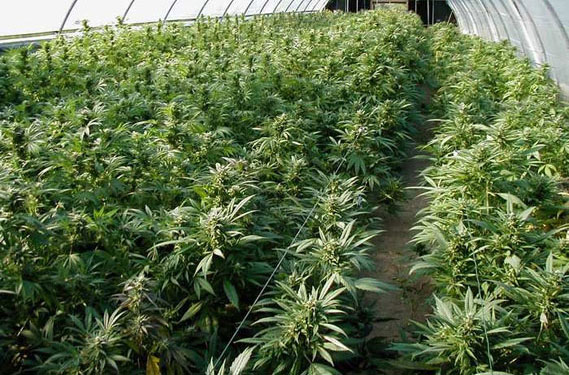
Northern Cape schools yield drugs and weapons

daggaPolice have seized dangerous weapons and dagga in nine schools in Galeshewe, Kimberley, Northern Cape police said on Wednesday.

Raids were conducted on Tuesday and Wednesday at the request of school principals and parents of pupils of various schools, Lieutenant Sergio Kock said.

“Classrooms, toilets, and storerooms on the school premises were searched… police confiscated several knives, pangas, broken mirrors, and other dangerous weapons,” he said in a statement.

Police also searched areas surrounding the schools where drugs were known to be sold.

“[We] confiscated 31 ‘fingers’ of dagga buried in a hole outside one of the mentioned houses. The dagga has a street value of approximately R3000.”

No arrests were made and pupils found in possession of dangerous weapons would face internal education department disciplinary processes. -sapa

Weed-smoking king joins DA

King Buyelekhaya Dalindyebo

Controversial AbaThembu King Buyelekhaya Dalindyebo has joined the DA, the party’s Eastern Cape leader said on Monday.

The self-confessed dagga-smoking Dalindyebo said he is not perturbed by being constantly associated with the illegal smoke.

“ (Smoking) dagga [marijuana] is a cultural behaviour. I am a Rastafarian by nature,” he told reporters at the Union Buildings in Pretoria.

“That (association with dagga) should not surprise you.”

“After a long meeting (on Monday) to discuss the DA’s values and the DA’s constitution, I can confirm that AbaThembu King Buyelekhaya Dalindyebo has joined the DA,” Athol Trollip said.

Trollip said earlier on Monday he was meeting the king near Mthatha.

Last month, Dalindyebo made headlines when he reportedly described the African National Congress and President Jacob Zuma as “corrupt hooligans”. He made the remarks in Qunu, in the Eastern Cape, at a prayer service for ailing former president Nelson Mandela.

Dalindyebo reportedly said the ANC had distorted the anti-apartheid icon’s legacy and behaved arrogantly. He said he would stop smoking dagga the day Zuma stopped being corrupt.

Dalindyebo also said he would join the Democratic Alliance as a birthday gift to Mandela. Mandela, who remains in a critical but stable condition in a Pretoria hospital, turns 95 on Thursday.

On Saturday, AbaThembu royal family spokesman Nkosi Daludumo Mtirara said the family had apologised to Zuma.

He said at the time that a resolution in September last year, to remove Dalindyebo as king, had not been finalised. – Sapa

Obama, pot win in Colorado, Washington

Colorado and Washington became the first US states to legalise the possession and sale of marijuana for recreational use on Tuesday in defiance of federal law.

Amendment 64 supporters were ecstatic at their gathering in Denver Tuesday night when news came down.

“Marijuana prohibition has failed in Colorado and it has failed in all sorts of other places,” Amendment 64 advocacy director Betty Aldworth told CBS4. “I’m so proud and so honored to have worked with this team of people and to live in a state where people recognize marijuana prohibition is a failure and we can do better.”

The amendment allows adults over 21 to possess as much as an ounce of pot. It also allows people to grow as many as six pot plants in secure, private areas.

Supporters believe legalization will generate tens of millions of dollars in tax revenue for Colorado.

The approval of the amendment puts Colorado in defiance of federal drug law.

“It’s still against federal law,” Gov. John Hickenlooper told CBS News anchor Scott Pelley about an hour later. “I’m not sure we can make it as legal as the voters would like us to do. But clearly the will of the voters spoke.”

Hickenlooper, who opposed the measure, said it’s “not immediately apparent” how the amendment will hold up against the national law.

Jeff Dorschner, spokesman for the U.S. Attorney’s office released a statement after the measure’s passage, saying the “Department of Justice’s enforcement of the Controlled Substances Act remains unchanged.”

“In enacting the Controlled Substances Act, Congress determined that marijuana is a Schedule I controlled substance. We are reviewing the ballot initiative and have no additional comment at this time,” Dorschner said.

State voters rejected recreational pot in 2006, but Aldworth said this measure comes at a time when voters have a different mindset, thanks in part to the burgeoning medical marijuana industry in several areas of the state.

“Amendment 64 is quite different from Amendment 44 in 2006 in that it envisions the regulated model for marijuana sales whereas Amendment 44 only decriminalized for adult use,” she said. “What we know is that Colorado voters have accepted the idea that we can regulate marijuana like alcohol successfully and we can make a safer, healthier and more just Colorado by doing so.”

The measure had the backing of the NAACP, the ACLU and the state public defender’s office, but most major state leaders came out in opposition.

Roger Sherman, the No on 64 campaign director, released a statement just after 9 p.m. on Election Day conceding the race:

“We knew all along this was an uphill battle against a well-funded national movement. We appreciate the efforts of Governor John Hickenlooper, former Governors Bill Owens and Bill Ritter, Attorney General John Suthers, Mayors Michael Hancock and Steve Hogan and countless other sheriffs, county commissioners, district attorneys and local elected officials who joined with the business community and citizens of Colorado to oppose this ill-conceived amendment.

“We can only hope that our concerns and fears about amending the Constitution to make Colorado the first state to legalize the recreational use of marijuana do not come true.”

The states of Oregon and Washington also had pot legalization amendments on the ballot, and at least one of those states — Washington — also approved their measure.

Colorado is already one of 17 states that allow marijuana use by people with certain medical conditions.